





How to eliminate harmful carcinogens and enjoy summer barbecues to the fullest?
 Author:
 Barbecuing is one of the most popular activities we can do over the summer. Warm summer evenings, smelling meat from the grill, relaxing with friends or family... well, who wouldn't love it! However, grilling has many pitfalls that we don't think about at such a time. This popular way of cooking meat and other delicacies can lead to the ingestion of large amounts of carcinogenic substances if not done properly or carefully. With a few simple steps, you can not only avoid grilling mistakes and substantially reduce the amount of grilling carcinogens, but you can also make grilled food taste even better.
Theoretical window - what are these grill carcinogens and how are they produced?
All meats are a source of protein, which implies that they contain amino acids and also contain creatine and sugars. If you grill meat at very high temperatures, these naturally produce molecules called heterocyclic amines (HCAs), toxic compounds that are also found in cigarette smoke, among other things. The second type of pollutant produced by barbecues are so-called polycyclic aromatic hydrocarbons (PAHs). These are formed when the fat and juices from the meat being prepared drip directly onto the hot surface or into the fire, causing flames and smoke in which these harmful substances are found. But that's not the only way PAHs can form. If meat is exposed to temperatures above 300 °C, PAHs are then formed directly on the surface of the food.
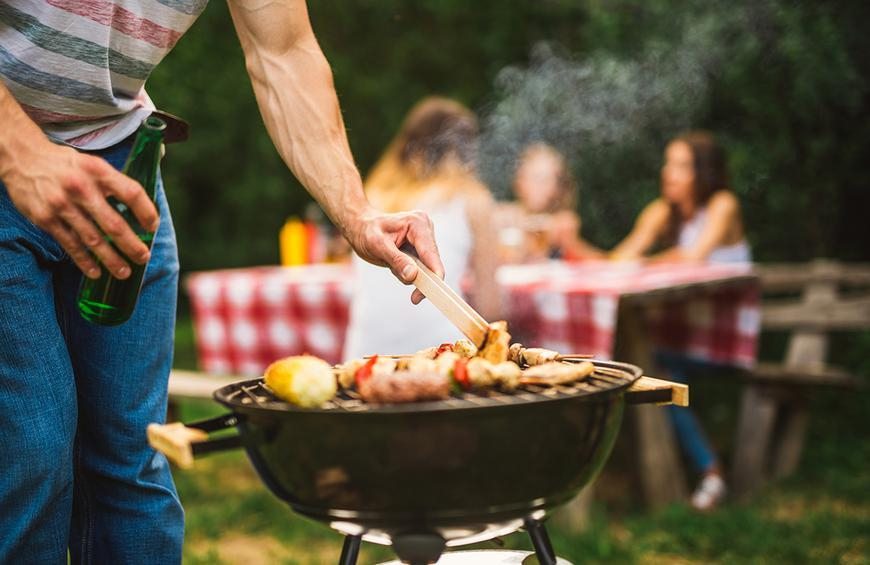
Heterocyclic amines (HCAs) and polycyclic aromatic hydrocarbons (PAHs) are chemicals that are formed during the cooking of animal foods (especially meat) at high temperatures. It is true that we cannot change what meat consists of. It just is. We also can't change the fact that meat can form chemicals that are really, really bad for you. What we can affect, however, is the total amount of HCAs and PAHs we consume. The easiest way to do this is to be in control, the entire process of preparing the meat - from the choice of species, to storage, to cooking.
When comparing different types of meat, the highest concentration of harmful carcinogens is found in bacon. The second highest proportion is then found in fattier pork (especially if fried), followed by beef and then poultry. But we've got great news for people who mainly grill vegetables or plant-based meat substitutes. Fruits and vegetables don't contain creatine, so they can't produce harmful substances during grilling. So all vegetarians and vegans who love to grill can rejoice.
As for fish and seafood, they are healthier on the grill than other types of meat. This is because grilling them is very quick and takes much less time than preparing, for example, chicken or pork. The shorter the grilling time, the fewer carcinogens are produced. For the record, heavily cooked meat contains up to 3.5 times more harmful substances than medium-rare meat. So even fish and seafood are great choices for grilling!
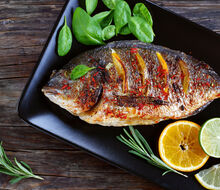
The good news is that you don't have to give up grilling because of the carcinogens it produces, even if you love grilled meat. However, there are certain guidelines you need to follow to reduce or even eliminate the production of carcinogens. Below are some simple steps to help minimize your exposure to cancer-causing compounds before, during and after grilling, and we believe many of these steps will also lead to improved flavor in grilled foods. So cheers to that!
Simple tips to reduce the production of carcinogens during grilling
Marinade
Research suggests that if you marinate meat in a suitable marinade before grilling, you can reduce the production of carcinogens by up to 70%. Avoid store-bought marinades, however, as these often contain added sugar, which will in turn boost carcinogen production. A suitable marinade should have something acidic in the base - ideally vinegar, wine or lemon juice. Add garlic, ginger and onion. Onions and garlic are not only a great way to flavour food, but they also have the amazing property of effectively destroying carcinogens. Don't forget herbs such as basil, mint, rosemary, sage, oregano or thyme, which research shows have powerful anti-cancer effects. Most of these herbs are rich in three compounds - carnosic acid, carnosol and rosmarinic acid - all of which are powerful antioxidants. You can also add oil to your marinade, but don't overdo it and choose types that are suitable for cooking at higher temperatures (such as avocado or rapeseed oil).
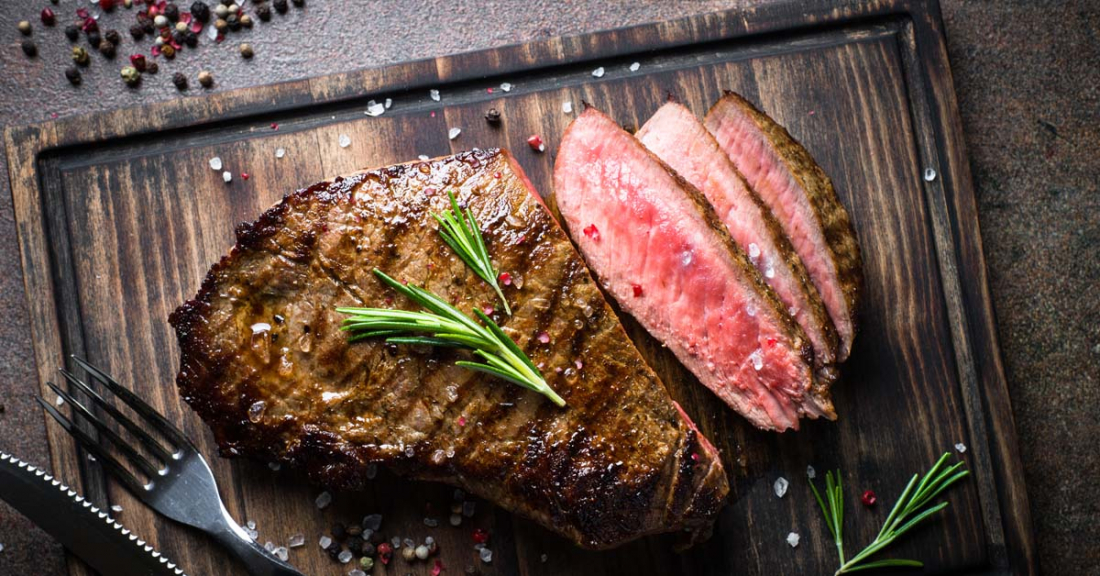
It has been scientifically proven that using these ingredients can reduce HCA (heterocyclic amine) levels by up to 95%. Of course, the length of marinating also plays a role - a few minutes certainly won't save anything. Ideally, it is a good idea to marinate the meat at least 24 hours in advance or overnight. In any case, too much of anything is bad for you. Experts agree that marinating meat for too long breaks down the antioxidants and renders the whole process meaningless.
Use foil or grill trays
To prevent the fat from the meat from dripping directly into the fire, which produces harmful PAHs that then get trapped in the meat, it is advisable to use grill trays or plain foil. You can also use baking paper and try cooking in papillote. This is particularly suitable for fish, but you can also use it for meat.
Choose lean meat and cut into smaller pieces
It is advisable to select leaner cuts of meat for the grill, or trim off large fatty parts. I know, that's not really possible with neck meat. It doesn't hurt once in a while, but if you're indulging on a regular basis, it's not exactly the best thing for your health (or, for that matter, your slim line). Also try to avoid pre-made burger mixes, sausages and sausage. Sausages, being a type of ultra-processed food, have nothing to do with a healthy diet and God knows what's actually in them. If you're a burger lover, it's best to have lean beef ground and the burger mixed and seasoned at home so you can see what's really in it. It is also advisable to cut the meat into smaller pieces, which will make it quicker to cook and, as you know from the introduction, the shorter the cooking time, the fewer carcinogens it will produce. Skewers are a great choice. Remember to turn the meat regularly and do not put the meat directly over the highest flame.

Don't forget the vegetables
As already mentioned - vegetables do not contain creatine and sugars, so they do not produce any harmful substances when grilled. Throw whatever you have on hand on the grill - zucchini, eggplant, onions, corn, potatoes, carrots or tomatoes. Not only will you have a great meal, but you'll also add variety to your barbecue and in many cases (carrots and tomatoes, for example) the cooking will even increase the concentration of health-giving substances. For example, skewers are great, where you use different vegetables and cut the meat into smaller pieces, thus combining the pleasant with the useful and making it look beautiful.
Try something new!
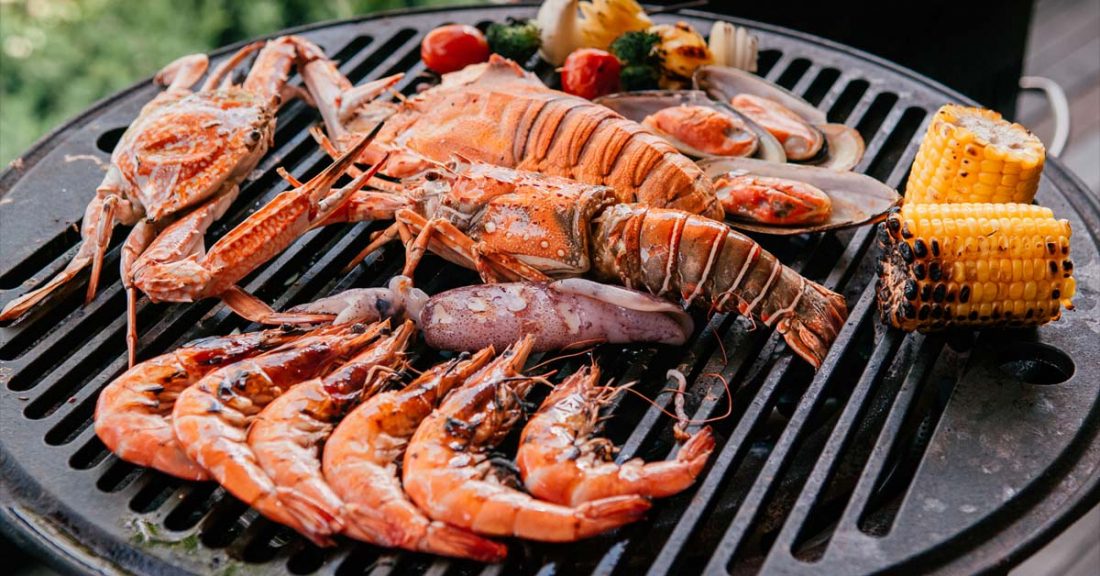
Don't be afraid to experiment and, in addition to meat and vegetables, try grilling something new. Try prawns, some interesting fish, tofu, tempeh or even cheese. Maybe a grilled trout, a salad with halloumi cheese and grilled peaches, marinated tofu, or maybe shrimp skewers with pineapple? Not only will you try something new and enrich your diet, but you'll also enjoy it! Don't be afraid to let your imagination run wild and throw something on the grill that you don't normally do. If you do decide to grill cheese, keep in mind that cheese is a rich source of fat. If there is such an option, don't be afraid to opt for rather light versions that will save some of that fat. Unlike other "light products", this designation does not (usually) mean that the cheese is cheated or enhanced by additives.
Wash the grill well after grilling
It's pretty clear that the last thing you want to do after a barbecue is to take the grill and wash it well. However, a well-cleaned grill is the basis for healthy grilling and it's much better to do it right away, as this will prevent grease and food residue from drying on the grill and not coming off at all. They will then burn unnecessarily the next time you use it, start to char and catch on the new food you put on the grill next time. So go ahead and wash the grill now - you'll thank yourself for it the next time you grill. Wipe the grill clean of dust and pollen with a wet cloth before using it - you won't go wrong.
You can also find many healthy saucesin our shop that you can use when grilling!
Recommended
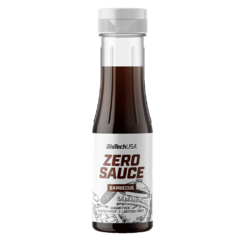
BiotechUSA Zero Sauce
What to take away from the article?
Barbecuing is a favourite activity for many of us over the summer. And not to be! After all, it's a great way to spend time outdoors in good company and with great food. However, many people make unnecessary mistakes when grilling, which create carcinogenic and toxic substances that are fatally harmful to our health. In today's article, we've given some tips on how to eliminate or at least significantly reduce the production of these harmful substances, so that we can enjoy our summer barbecues without too much stress and, most importantly, make them as stress-free as possible so that they are not unnecessarily harmful to our health. We know that it is good to marinate meat in a more acidic marinade and add onions, garlic and herbs. It is also important to use trays, to turn the meat regularly and to cut it into smaller pieces to reduce the time needed to cook it and its exposure to harmful substances. Grilled vegetables or fish are also a great choice. Equally important is a good cleaning of the grill, which is an important foundation for any barbecue.
Sources:
Nerurkar, P. V., Le Marchand, L., & Cooney, R. V. (1999). Effects of marinating with Asian marinades or western barbecue sauce on PhIP and MeIQx formation in barbecued beef. Nutrition and cancer, 34(2), 147-152. https://doi.org/10.1207/S15327914NC3402_4
Puangsombat, K., Gadgil, P., Houser, T. A., Hunt, M. C., & Smith, J. S. (2012). Occurrence of heterocyclic amines in cooked meat products. Meat science, 90(3), 739-746. https://doi.org/10.1016/j.meatsci.2011.11.005
https://www.dana-farber.org/legacy/uploadedFiles/Library/adult-care/treatment-and-support/support/nutrition-services/safe-summer-grilling.pdf
Smith, J. S., Ameri, F., & Gadgil, P. (2008). Effect of marinades on the formation of heterocyclic amines in grilled beef steaks. Journal of food science, 73(6), T100-T105. https://doi.org/10.1111/j.1750-3841.2008.00856.x
No posts have been made yet.








