





Everything you need to know about amino acids and BCAAs
 Author:
 Amino acids are one of the key topics discussed not only in strength sports. Yet, few athletes are familiar with what they are, what they are, how to supplement them and which ones serve what purpose. So our article today will be a sort of complete guide to get you acquainted with the subject in every important detail.
Article content:
What are amino acids? What is their importance?
Although professional textbooks differ slightly in their definitions of amino acids, the lay understanding is very simple. Amino acids (abbreviated as AMK) are the basic building blocks of proteins and represent the smallest unit that makes up a protein. Amino acids combine with each other by peptide bonding to form so-called peptides, which then combine to form proteins. Although there are hundreds of proteins, they can only ever be made up of 20 different amino acids, which are known as proteinogenic amino acids.
Their importance is extremely broad - while some are associated with muscle growth, for example, others are responsible for the production of a wide range of enzymes, neurotransmitters and hormones, some are important for cardiovascular health and others have antioxidant properties. In short, these are substances without which we would not be able to function fully and therefore there can be little doubt about their importance in the diet.

Although you may not realise it, every meal containing protein must also contain amino acids.
How are amino acids broken down?
In fact, both numbers are correct - there are 20 "essential" amino acids that make up proteins, and to these are sometimes added less important amino acids such as selenocysteine, pyrrolysine and N-formylmethionine, which have uses only in very specific situations and are not so common. And although amino acids can be divided according to a number of criteria, the division into essential and non-essential is the most common:
Essential amino acids
Essential amino acids are those amino acids that the body cannot synthesize (create) on its own and thus must be taken from the diet or from dietary supplements. The most well-known essential amino acids include:
- BCAA, which is an acronym in sports nutrition referring to the trio of leucine, isoleucine and valine. These essential amino acids also differ in their branched side chains and thus have slightly different metabolism. These amino acids are involved in proteosynthesis and are also responsible for proper recovery after training, so they are of great importance in sports supplementation.
- Histidine, which is a semi-essential amino acid important primarily for tissue repair and the immune system. The body can produce it, but only in less than the required amount.
- Lysine, which has antiviral effects and helps optimize the functioning of the immune system. It is recommended, among other things, for cold sores, which we have also discussed in our separate article.
- Methionine is one of the three sulphur-containing amino acids - so it is important for skin and hair health, for example.
- Phenylalanine, which is a precursor to a number of neurotransmitters including the well-known dopamine.
- Threonine, which is an amino acid that supports proper metabolic functioning.
- Tryptophan, which is also involved in the production of a number of neurotransmitters that promote, for example, proper sleep.
Non-essential amino acids
The remaining amino acids are referred to as non-essential amino acids and, as you can probably guess, the body can make them on its own. This occurs either by metabolism of essential amino acids (for example, tyrosine is formed from phenylalanine) or by protein breakdown. While there are nine essential amino acids, there are 11 non-essential ones, and these are:
- Alanine, which is very important for proper energy production during prolonged sports training.
- Arginine, which is behind the increased production of NO, a substance that promotes proper blood flow during training. At the same time, it can also promote erections and optimize the functioning of the immune system.
Recommended
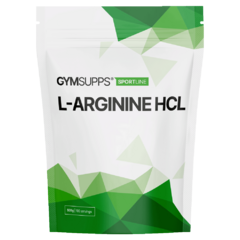
GymSupps L-Arginine HCL
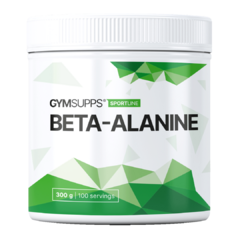
GymSupps Beta Alanine
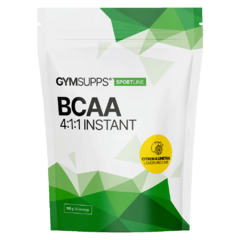
GymSupps BCAA 4:1:1 Instant
- Asparagine and aspartic acid, which are involved in the proper transmission of nerve impulses and metabolism.
- Cysteine, which has a number of antioxidant properties that fight free radicals.
- Glutamine and glutamic acid, which support, for example, the functioning of the digestive system and the immune system.
- Glycine, which is an amino acid behind the secretion of growth hormone and also helps regulate blood glucose levels.
- Proline, which is involved in the synthesis of collagen, among other things.
- Serine, which supports the proper functioning of the immune system.
- Tyrosine, which is important for the proper functioning of the central nervous system.

Although non-essential amino acids can be synthesised by the body itself, they are also abundant in commonly available foods.
Further subdivision of amino acids
You may be thinking that the above list of amino acids does not cover all the amino acids in existence. More experienced athletes may have thought of beta-alanine or taurine. Of course, there are more amino acids, with over 300 currently known. However, only the aforementioned 20 (or 23) are found in the form of L-alpha-amino acids, which are the most abundant. Of course, it would be unrealistic to mention all the representatives, but we will mention other AMAs important for athletes in the next parts of the article.
Can we also find amino acids in food?
Of course. Since amino acids are the basic building blocks of proteins, it can be said that every food containing protein also necessarily contains amino acids. However, it is important to know that the vast majority of animal proteins such as meat, eggs or dairy products contain the full spectrum of amino acids. Plant proteins are a bit worse off, as they usually do not contain the full spectrum. Fortunately, this can be reliably solved, for example, by combining several different plant protein sources that complement each other well.


If you look at the packaging of your protein, you should find a complete list of the amino acids it contains.
What supplements can I buy amino acids in?
If you have a varied and balanced diet every day, you definitely don't have to worry about being deficient in certain amino acids. However, especially for athletes, it can be very beneficial to supplement specific amino acids. In fact, a whole range of amino acids can provide a number of benefits in the form of better recovery, a healthier microbiome and proper blood circulation before training. If you want to include amino acids in your supplementation, you generally have 4 options:
Amino acids alone
A number of different amino acids have a great effect provided they are supplemented separately. Examples of such amino acids include:
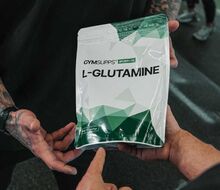
- Glutamine, as it is the most abundant amino acid in muscle. It plays an important role in protein metabolism and, when used for a long time, helps to optimize the intestinal microflora, thus contributing to the proper functioning of the immune system. Dietary supplements containing only glutamine are usually relatively inexpensive and it is advisable to take at least 5 grams per day ideally after training.
- Leucine, which is considered one of the most important supplements ever for its ability to jumpstart proteosynthesis. However, some information suggests that leucine is not as effective when taken without the other two branched chain amino acids represented in BCAAs. Therefore, its supplementation is definitely not necessary.
- Lysine, which has a rather interesting antiviral effect. Using supplements containing leucine is especially advisable for those of you who often suffer from cold sores or other viral diseases.
- Tyrosine, which is used in supplement form to increase physical and mental performance. It can be used before training and at work with increased mental strain.
- Beta-alanine, which as a beta-amino acid is used primarily before training to increase performance and delay fatigue. This amino acid is responsible, among other things, for the burning sensation in the ears of pre-workout mixtures. It can be taken either as a stand-alone supplement or in complex pre-workouts.

- Arginine, which is also used before training. It increases NO production and thus improves blood circulation and nutrient supply to the muscle. It can be taken in supplement form, but new studies suggest that taking citrulline, which gradually replaces arginine, is more effective.
BCAAS
If you don't want to take amino acids before a workout, but rather want to protect muscle mass from catabolism and give your muscles energy during hard, intense workouts, pure BCAAs (Branched-Chain Amino Acids) - a combination of leucine, isoleucine and valine - are a great choice. At the same time, these supplements are able to stimulate proteosynthesis, which can contribute to muscle growth. You can watch our information-packed video about BCAAs, which we created in collaboration with Pavel Samek. You can get them in our separate category.

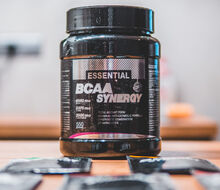
EAA
EAAs are a combination of all essential amino acids. In a single dose of EAAs you are able to cover all the essential amino acids that the body cannot create on its own. Some athletes do not recommend these supplements too much, claiming that supplementation with BCAAs alone is more effective, but some people find these supplements suitable.
Quality pre-workout supplements
The last option is to reach for quality pre-workout mixes. These contain a range of amino acids in addition to various stimulants - usually chosen for their ability to delay fatigue, promote blood flow or aid recovery. Namely, beta-alanine or arginine are widely used. If your primary goal is to maximize performance in training, these supplements are the right choice.
Recommended
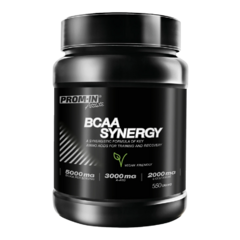
Prom-in BCAA Synergy
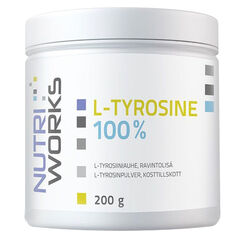
NutriWorks L-Tyrosine

Big Zone Bulletproof EAA's
GymSupps BCAA 4:1:1 Instant
What to take away from today's article?
The main thing you should take away from today's article is that amino acids are the basic building blocks of proteins and can be divided into essential and non-essential. While the essential ones cannot be manufactured by the body and must be ingested through food or supplements, the non-essential ones can be synthesized by the body itself. Many animal foods contain the full spectrum of amino acids, while plant foods should be combined to ensure that all amino acids are present. If you want to supplement amino acids and reap the benefits they bring, you can buy them either as stand-alone amino acids, in the form of BCAAs, EAAs or as part of a quality pre-workout supplement.
No posts have been made yet.








