





Why (not) can supplementing with BCAAs be better than supplementing with all EAAs?
 Author:
 [AUTHOR:Pavel Samek / Prom-in]
Why are the new supplements based on essential amino acids, abbreviated EAA, almost displacing the previously very popular BCAA? We have probably the hottest fitness debate in the last few years.
In truth, the reason is obvious and I've discussed it many times, so I don't need to dissect it further. However, I propose to clarify how amino acids work from a physiology perspective and what I think is worth taking.
But I will stress the first thing right at the beginning. BCAAs are an advanced supplement whose potential is only used by a certain part of athletes! EAAs are, in my opinion, a supplement that de facto only makes sense for people who have a certain type of allergy. For the other 99% of people, it is far more appropriate to consume complete protein (such as whey protein isolate) or hydrolyzed peptides (even faster absorption than free amino acids) as a source of all proteinogenic amino acids.
So why take these free amino acid based supplements at all? I mean, BCAAs or the new EAAs? From what I have written above, taking both seems unnecessary. It doesn't have to be. Again, I prefer to point out that for most people these are pretty expendable supplements. But to the point. So where is the truth? Or rather, how do the facts speak?
EAA versus BCAA or similar supplements yet different
As we have come to expect in fitness, quite a few people misunderstand or deliberately misrepresent the facts and even basic physiology. It's a little different with EAAs. There, it's currently about business and about purposefully misinforming people. But let's take this in order.
EAAs versus PROTEINOGENIC AMINO ACIDS
There is one thing that EAA sellers don't talk about. I purposely write vendors because from my perspective, and I'll say it again, this is all about business, not about trying to offer a functional product. For the people recommending these supplements, again, it is plain ignorance. Let's face it, no offense, but what kind of education does your favorite influencer have?
Nothing, I won't nitpick anymore and let's look at the facts. It takes about 20 amino acids to make muscle protein. These are considered the so-called proteinogenic amino acids and include leucine, isoleucine, valine, lysine, methionine, methionine, phenylalanine, threonine, tryptophan, tryptophan, histidine, cysteine, tyrosine, arginine, glutamic acid, aspartic acid, serine, asparagine, glutamine, alanine, proline and glycine.

Of these twenty, the first nine are considered essential amino acids, or EAAs for short. Essential because our bodies cannot make them, which means we must obtain them from food or supplements (while non-essential amino acids can be synthesized from other amino acids).
9 essential amino acids (EAAs):
- Leucine*
- Isoleucine*
- Valine*
- Lysine
- Methionine
- Phenylalanine
- Threonine
- Tryptophan
- Histidine
*Branched Chain Amino Acids (BCAA)
Of the nine EAAs, three are so-called BCAAs: leucine, isoleucine and valine. However, this does not mean that they are the same as the other six EAAs. In fact, they have a difference in chemical structure that makes them unique and, and this is getting to the point, particularly effective for stimulating muscle protein synthesis!
What makes BCAAs special and what makes them different from other EAAs?
All nine amino acids listed above are essential, but only leucine, isoleucine and valine have a branched-chain chemical structure. What does this actually mean? Very simply: the BCAAs are the only amino acids with a "branched" V-shaped structure at one end, while none of the other six EAAs have this specificity. But the important thing is that this specificity of chemical structure is extremely significant. In fact, the structure and shape of an amino acid largely determines how the body works with it. It is very important to us that the branched structure allows leucine, isoleucine and valine to bypass the liver completely and thus be very available.
And that's what's important! The other EAAs must pass through the liver after ingestion. Once in the liver, the body decides whether to a) send the amino acids to the muscles or b) convert those amino acids to glucose.
Either of these two scenarios can happen with the remaining six EAAs, whereas only one thing can happen with the three BCAAs (leucine, isoleucine, valine), and that is that they bypass the liver and get express to the muscle cells!
Thus, EAAs that are not named leucine, isoleucine or valine do not provide the benefit of rapid availability!
The key player here, as we know, is leucine. We now know that leucine stimulates MPS (muscle protein synthesis) better than any other amino acid. And so we want leucine to get to the muscles and fire up MPS as quickly as possible.
We've got the basics out of the way, and now I can explain why I think taking BCAAs makes sense, whereas a mixture of all nine EAAs more or less misses the point.
As I suggest above, at a particular time, taking six EAAs is at least useless (it may even be anti-productive, but that's for another article). And what is that particular time? Try answering that first, when do you take BCAAs, hence a mixture of all EAAs? I'll answer for you. You take them in the period around your workouts. Why would you take them at other times as well, right? You probably don't take these supplements at times when you are starving? Or am I wrong?
Why is that important? Simply because studies... ? for an explanation, see below.
The above shows that BCAAs are superior to EAAs. So why do some studies claim otherwise?

The explanation is simple! The studies compare taking only BCAAs or only EAAs, and on an empty stomach without any other nutrients! Which almost never happens in practice.
There is a huge problem with the "empty stomach" method: in practice, you never take one or the other supplement. Or do you? As we know, in the fitness method we use timing of food intake and so does supplementation. So it can be assumed that you are not completely fasting at the time you take BCAAs or EAAs. I'm almost certain of that ? And that's the important thing. Most studies are based on ensuring identical (read unrealistic in practice) conditions. Researchers have to apply functional substances like BCAAs or creatine on an empty stomach without any additional nutrients; otherwise it's hard to prove what the real benefit is, if any. Another limiting factor is that most scientists do not exercise and hence have no practical experience. Unfortunately, this makes their study designs flawed from the start in many cases.
So let's back up a bit. Amino acids are just the building blocks of protein, which means that every protein you eat is broken down into amino acids, including EAAs. Therefore, we have another and significantly more relevant discussion about whether it's really necessary to take free amino acids. Again, a topic for another article, and would probably hit supplements such as Arginine, Glutamine, Lysine and others. So maybe next time. Anyway, most of us get enough of all proteinogenic amino acids from diet and protein supplements.
Now I may be harsh, but due to the fact that you get enough amino acids from diet as well, and as we explained above, only BCAAs have a specific structure, making and selling some sort of EAA blends is just pulling money out of your pocket from my point of view.
So, a few examples or what I repeat endlessly: read the ingredients!
I have taken several EAA products and critically studied the ingredients.
You don't have to do the same, I saved you the time and did it for you. ?
The first EAA product from one company (this company also offers standalone BCAAs, of course, probably for those who know physiology) promises 6.9 grams of essential amino acids for about 30 CZK per serving - except that 6 of these grams are actually BCAAs. The six remaining amino acids add up to less than a gram, so the de facto dose is just for the label. Just no one is bothering with the ingredients here, but the main thing is that the label says EAA.
Another brand offers over 11 grams of EAAs, where BCAAs make up less than half. However, their formula is incomplete. It only contains 8 essential amino acids and unfortunately, again, few people read the ingredients. What relevance the intake of about 6 g of essential amino acids in addition to BCAAs can have is questionable. For me, it is rather burdensome in a certain situation.
Recommended
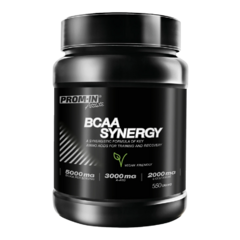
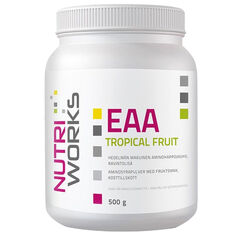

The third product, which has all the EAAs in a ten gram dose, thus appears to be complete. However, its price is quite high. Significantly higher than the product containing only BCAAs, and the really functional ones at that, as we explained above. What the ratio of all amino acids is designed according to was a mystery to me. But then I looked at the price list of ingredients. Yes you guessed right, it was built to save as much as possible.
My summary: read and do the math. Then you can answer for yourself why companies offer EAA.
But back to serious analysis of the "new" studies speaking in favor of EAA. Fundamental question: Why did EAA supplements provide better MPS support than BCAAs in a portion of the studies?
The answer is simple. If you are fasting. I mean really fasted! Which in practice is just in the morning after waking up. So at this point, using EAAs provides more benefit than BCAAs! That's the only time when there is some way to justify using an EAA blend. Yes, that's it, period.
Oddly enough, a significantly better way is to supplement with a complete protein in the morning. And it can even be supplemented with just BCAAs. Why? The point of taking BCAAs is to maximize muscle growth by boosting MPS in the presence of all 20 proteinogenic amino acids. If you don't have enough of all 20 amino acids, it won't matter how much EAAs or BCAAs you take, because neither will sufficiently increase MPS alone! However, when compared, EAAs are more effective than BCAAs taken alone. But this is only true when taken on an empty stomach, and then the more essential amino acids the better applies here. So 9 is better than 3 at the moment.

However, when you compare supplementing with BCAAs versus EAAs along with complete proteins that provide all 20 proteinogenic amino acids, BCAAs are the better way to go due to their unique structure that ensures they are immediately available. In fact, a study that worked with the use of BCAAs during meals confirmed that adding BCAAs to a meal led to higher amounts of protein in the muscles. It should be noted that this was not a meal that was rich in BCAAs per se.
So let's get into the practice of when to take BCAAs if we assess that we need them.
Since neither BCAAs nor even EAAs provide all of the amino acids needed to make muscle protein, you need to know when to use BCAAs (I won't go into EAAs) for them to provide a truly ergogenic (performance enhancing) effect.
Basic tips for using BCAAs:
- Pre-exercise - they will energize the muscles and delay fatigue.
- After exercise - to increase muscle protein synthesis (MPS). A practical study confirmed that the addition of 3-5g of free leucine to whey protein increased muscle mass gains in the long term.
- With meals throughout the day - to increase the leucine content of the meal for greater MPS. Controversial in athletes consuming animal diets.
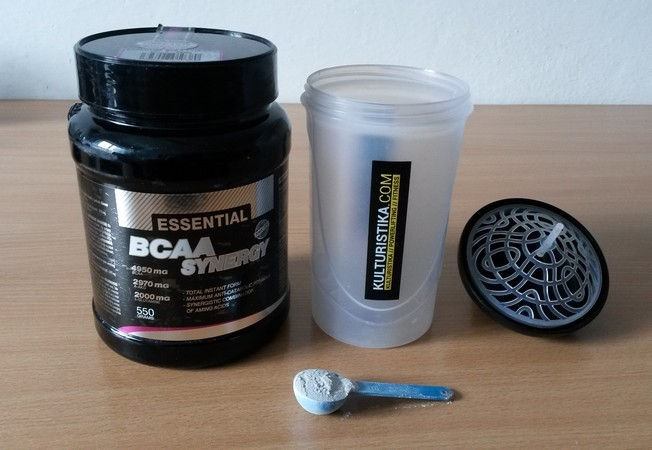
So... BCAAs or EAAs? Personal opinion in conclusion.
The choice is yours, but in my opinion, BCAAs are definitely a better choice than EAAs. Leucine, isoleucine and valine are the only three amino acids you need at specific times. Taking them in a mixture with six other amino acids that don't have the specific structure typical of BCAAs is a waste of money in my opinion. I'll leave aside whether or not BCAAs are a yes or no at all. For me, yes, for advanced athletes. Again, I've written about this several times before.
One last addendum, or what is important from my point of view and not talked about. EAA's can even put unnecessary stress on the body during exercise, which is why I don't recommend their use during exercise. If anything, take them after your workout!
Reference:
- Wolfe, R. R. retain, Amino Aids and Muscle protein synthesis in humans: myth and reality. Joura of tne International Society ov Sport Nutrition 14(30): 2017.
- Zhyn, L., et al. Effect of branched-chain amino acids to reduced-protein diet on skeletal muscle protein synthesis and degradation in the fed and fasted states in the piglet model. Nutrients 9(17): 2017.
- Samuelsson, H., et al. Intake of branched-chain or essential amino acids attenuates the elevation in muscle levels of PGC-1^4 mRNA caused by resistance training.
- Jackman, S. R., et al. Branched-chain amino acid ingestion stimulates muscle myofibrillar protein synthesis following resistance exercise in humans. Frontiers In Physiology 8:390, 2017.
- Moberg, M., et al. Activation of mTORC1 by leucine is potentiated by branched-chain amino acids and even more so by essential amino acids following resistance exercise. Am J Physiol Cell Physiol 310:C874-C884, 2016.
No posts have been made yet.








