





Doubts around carnitine - is it really absolutely ineffective and useless, or do we just not know how it actually works and what to expect from it?
 Author:
 Carnitine is a supplement that is wrapped in question marks. Opinions about it are really absolutely contradictory -is it a supplement supporting fat burning with additional benefits for the body, a complete uselessness or, according to some, even a dangerous supplement. But this is quite normal. After all, nowadays it is fashionable to question supplements that are researched and functional, and instead look for new miracle methods and products. Let's be clear today and tell ourselves how it really is with carnitine, what we can expect from it - will it help us lose weight or should we be afraid of it? What is the truth and what are just unsubstantiated facts?
WHAT IS L-CARNITINE?
Although L-carnitine is often referred to as an amino acid, it is not actually an amino acid. This substance is very specific and is considered to be "in between" a vitamin and an amino acid. When it was first studied in the 1950s, it was labeled vitamin BT, probably because it is related to the B vitamins.
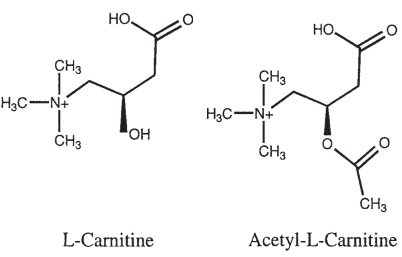
L-carnitine is formed in the liver and kidneys from the amino acids lysine and methionine. But these are certainly not the only places where L-carnitine can be found in the body. It can also be found in muscles (including the heart), the brain, and in sperm. In terms of food sources, L-carnitine is mainly found in meat (especially red meat) and other animal products, but it can also be found in plant sources such as avocados and soybeans.
Carnitine is found in two forms - D-carnitine and L-carnitine. The L-form is the form that is found in nature and is biologically active. In the composition of supplements you will mostly find L-carnitine, L-carnitine L-tartrate or Propionyl-L-carnitine. All these forms are very similar and practically equally effective. In contrast, the D-form is biologically inactive and is not sold as a supplement.
Another popular supplemental form of L-carnitine is acetyl L-carnitine, also known as acetylcarnitine or ALCAR. This is found in the body mainly in the central nervous system, where it plays a role in energy production and produces the important neurotransmitter acetylcholine. The acetyl group attached to the L-carnitine molecule increases its ability to cross the blood-brain barrier and enter the brain, where it acts as a powerful antioxidant. For this reason, some research suggests that L-carnitinemay have anti-aging and neurodegeneration effects.
WHAT DOES L-CARNITINE DO IN THE BODY?
L-carnitine helps transport fat, especially long-chain fatty acids, into the mitochondria of cells. Only there can they be oxidized and only then can the body use them as an energy source, i.e. for the production of adenosine triphosphate or ATP. L-carnitine does this "work" not only during exercise, but also during recovery. It then has a special effect during intense training, at least as studies suggest.
Without an adequate intake of L-carnitine, all the fat cannot be transferred to the mitochondria and therefore cannot be used for energy production. L-carnitine deficiency is not beneficial to health at all. It can lead to muscle weakness, growth problems, enlarged liver and many other unpleasant problems. This is one of the reasons why L-carnitine is considered a "conditionally essential" nutrient: In other words, the human body produces it on its own, but if it doesn't produce enough of it, health can be seriously compromised.
A study from Scotland concluded that, in addition to its fat-transporting abilities, L-carnitine also enhances the effects of insulin on muscle cells. This means that L-carnitine helps to keep blood glucose levels low, even after carbohydrate-rich meals, while also helping to balance glycogen levels. This is one reason why some experts recommend taking L-carnitine along with a post-workout meal. New studies are currently focusing mainly on how L-carnitine can improve athletic performance.
SO WHAT ARE THE EFFECTS OF L-CARNITINE ON HEALTH AND ATHLETIC PERFORMANCE?
L-Carnitine and its effects on fat burning are well known. But carnitine can be used in the bulking period as well, as it can limit fat gain and help you build "leaner" bulk. And if you are sculpting, then the role of L-Carnitine is well known - it helps to use stored fat so that the body burns it and uses it as energy. Let's break down the effects of L-carnitine in a little more detail.
FAT BURNING
Recent studies focus mainly on the effect of L-carnitine on improving athletic performance. One British study tested the effect of carnitine on fat burning and its conversion to energy in cyclists by dividing the subjects into two groups. One received L-carnitine twice a day - along with a high-carbohydrate breakfast and another dose after four hours. The other then consumed only carbohydrates. The research showed that during low-intensity running, the group taking L-carnitine burned up to 55% less muscle glycogen, while the group experienced an increase in the body's ability to burn fat by more than 50%. During the high-intensity ride, those taking L-carnitine had lower levels of lactic acid and higher levels of creatine phosphate, one of the primary building blocks of ATP.
GREATER RESISTANCE TO FATIGUE
Another study from Nottingham, tested subjects during a cycling test and concluded that those of the participants who took L-carnitine lasted up to 25% longer. This was due to the fact that they burned more fat while maintaining muscle glycogen.
CONSUMING CARBOHYDRATES WITHOUT GAINING FAT
In one of the studies looking at this issue, British researchers also found that despite the subjects taking in 640 more calories of fast carbohydrates in their daily diet, the subjects taking L-carnitine did not gain any extra body fat. In contrast, the group that consumed carbohydrates without L-carnitine gained an average of more than five pounds of body fat.

IMPROVED REGENERATION
Even several studies on human subjects have concluded that even low doses (around 1-2g per day) of L-carnitine significantly reduce muscle damage caused by heavy training. In addition, L-carnitine has also been shown to have a positive effect on recovery as well.
IMPROVED BLOOD CIRCULATION
Carnitine's effects on performance do not only lie in its ability to increase fat burning and reduce glycogen utilization, but it can also improve blood movement in the muscles. And the greater the blood flow, the more nutrients get to where they are needed during exercise.
INCREASE TESTOSTERONE LEVELS
Researchers at the University of Connecticut have found that L-carnitine increases the amount of testosterone receptors, which are known as androgen receptors, inside muscle cells. And they concluded that there was an increase in hormonal response to exercise. The more of these receptors you have in your cells, the more testosterone can bind to them, stimulating muscle growth and making them stronger.
ARE THERE ANY SIDE EFFECTS OF CARNITINE SUPPLEMENTATION?
We can also find opinions that L-carnitine is a harmful substance, how is it really? If you take L-Carnitine in reasonable doses, there are very few negative side effects. If you take a higher dose, some difficulties may occur - the main ones include nausea, abdominal discomfort, diarrhea and vomiting. In rare cases, muscle weakness may occur.
IS L-CARNITINE HARMFUL TO THE HEART?
A study has come to public attention which showed that L-carnitine supplementation may increase the risk of atherosclerosis. However, this study involved only 10 subjects. As a result, it has been subjected to much criticism from the scientific community and its result cannot be taken too seriously, given the very small number of subjects observed. Medical experts have also pointed to numerous studies involving far more than just 10 subjects, which conclude that L-carnitine supplementation actually has rather positive effects on the heart - that is, it reduces the risk of cardiovascular disease.
HOW TO TAKE L-CARNITINE?
The most important aspect that L-carnitine supplementation involves is the fact that it should be taken together with carbohydrates if the expected effects are to occur . Even as little as 1 gram of L-carnitine can be effective, but it is better to take a dose of 2-3 grams, with at least 30-40 grams of carbohydrates and 20-40 grams of protein to maximize the effect. This is especially true if you are taking L-carnitine, L-carnitine L-tartrate or propionyl-L-carnitine. Carnitine does not need to be cycled in any way. On the contrary, it should be taken long-term and regularly.
WHEN TO TAKE L-CARNITINE?
One of the best times to include L-carnitine is the post-workout period. However, you can take it with any other nutrient-dense food - i.e. carbohydrates and protein.
WHAT TO TAKE AWAY FROM THIS?
L-carnitine can be a very effective aid not only for fat reduction, but it also brings other health benefits. You just need to know when to take it correctly and what to expect from it. It is definitely not a magic pill that will burn your fat cells on its own. The key is to focus on a quality diet, have a well-designed workout and then you can benefit from the effects of L-carnitine. It's not right to denigrate its effects, and label it as non-functional, because L-carnitine is one of the most under-researched supplements and although it doesn't work directly, it can be a real support for fat reduction and overall health.
Recommended
Prom-in L-carnitin
Sources:
https://link.springer.com/article/10.1007/s00726-010-0770-5
https://physoc.onlinelibrary.wiley.com/doi/full/10.1113/jphysiol.2010.201343
https://www.ncbi.nlm.nih.gov/pubmed/11788381
https://europepmc.org/abstract/med/25289711
https://journals.lww.com/nsca-jscr/Abstract/2003/08000/The_Effects_of_L_Carnitine_L_Tartrate.5.aspx
https://www.ncbi.nlm.nih.gov/pubmed/11788381
https://www.tandfonline.com/doi/abs/10.1080/00071660120109980
https://www.nature.com/articles/nm.3145?foxtrotcallback=true
https://www.mayoclinicproceedings.org/article/S0025-6196%2813%2900127-4/fulltext
https://www.researchgate.net/publication/11545690_L-Carnitine_Changes_the_Levels_of_Insulin-like_Growth_Factors_IGFs_and_IGF_Binding_Proteins_in_Strept
No posts have been made yet.








