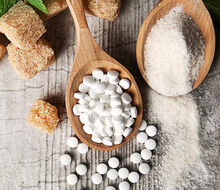
Corn syrup and coconut syrup - seemingly healthy sugar alternatives
 Author:
 Sugar consumption and the associated increase in health complications such as diabetes, insulin resistance and obesity are pushing a variety of alternative sweeteners to the fore. But of course, not all alternatives are actually better than regular sugar. In fact, it's not enough that they're beautifully named, or proudly labelled "natural" on their packaging. In our previous pieces, we've looked at chicory and maple syrup, and today we're looking straight at two liquid sugar alternatives - namely coconut and corn syrup.
Coconut syrup - a tempting sweetening option, but?
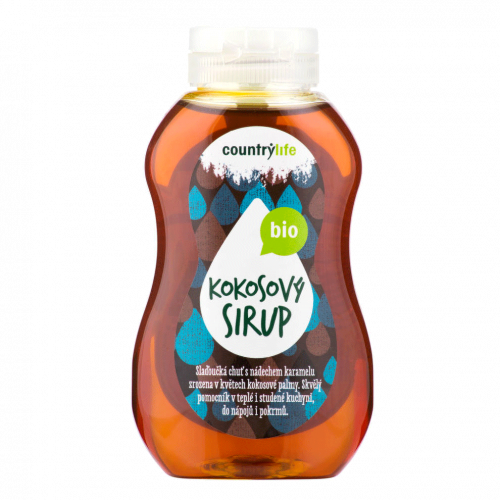
Coconut products are really hot right now. Coconut milk, coconut oil, coconut kefir, yogurt, chips... and of course the sugar that makes coconut syrup. Sounds super cool and healthy, right? Well, let's get our feet back on the ground. Up to ¾ of the coconut sugar content, which is also the base for coconut syrup, is sucrose, which is regular sugar. This, as you probably already know, is half glucose and fructose.
So there can be no question of calorie saving at all. Although coconut sugar and syrup taste, smell and add a very exotic and unusual flavour to food, they have less sweetness than sugar, so you have to use more of it. That might not matter so much, but we have to take into account the detail, which is the price. So when we put together the lower sweetness and the high price, the ratio doesn't quite work out.

While coconut sugar and coconut syrup are natural alternatives to sugar, they really don't fare much better than regular sugar. Coconut sugar contains only a fraction of the health-giving nutrients - the most notable being the minerals iron, zinc, calcium and potassium, along with some short-chain fatty acids such as polyphenols, and there are also some antioxidants.
However, all these substances are found in trace amounts, so there are definitely richer and more suitable sources of these nutrients. But let's not just talk in negatives - coconut sugar has a lower glycaemic index compared to regular table sugar. This is probably due to the fibre content of inulin.
| In 100 ml | |
| Energy value | 1651 KJ / 393 Kcal |
| Fats | 0,1 g |
| Carbohydrates | 98 g |
| Of which sugars | 98 g |
| Protein | 0 g |
| Salt | 0,18 g |
Sumasumarum, a coconut syrup that is made from coconut sugar, may look like a super fancy alternative to sugar, but in the end it doesn't actually offer any major benefit and nutritionally you won't get any improvement over table sugar either. It won't hurt you from time to time, but we wouldn't recommend it for regular consumption, even considering it's not the cheapest alternative.

And how's the corn syrup?
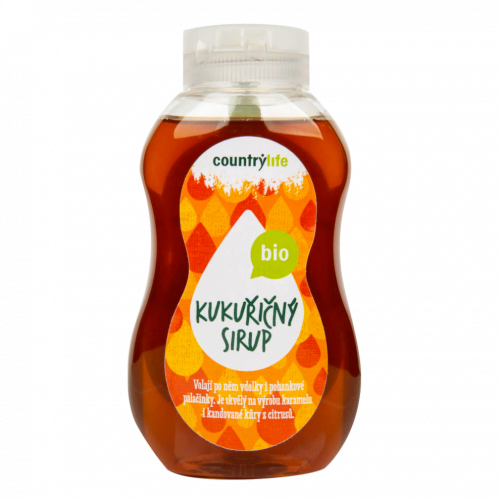
When you say corn syrup, most of us probably think of high-fructose corn syrup (HFCS), which is associated with a number of health negatives. However, there is a difference between high fructose corn syrup and regular corn syrup. Both products are made from corn starch, but regular corn syrup contains varying amounts of the sugars glucose, maltose and higher oligosaccharides depending on the quality, whereas high fructose corn syrup (HFCS) has some of the glucose converted to fructose enzymatically.
Studies have long looked at the negative effects of consuming large amounts of fructose in the form of HFCS, but regular corn syrup does not feature in these studies because it does not contain fructose.
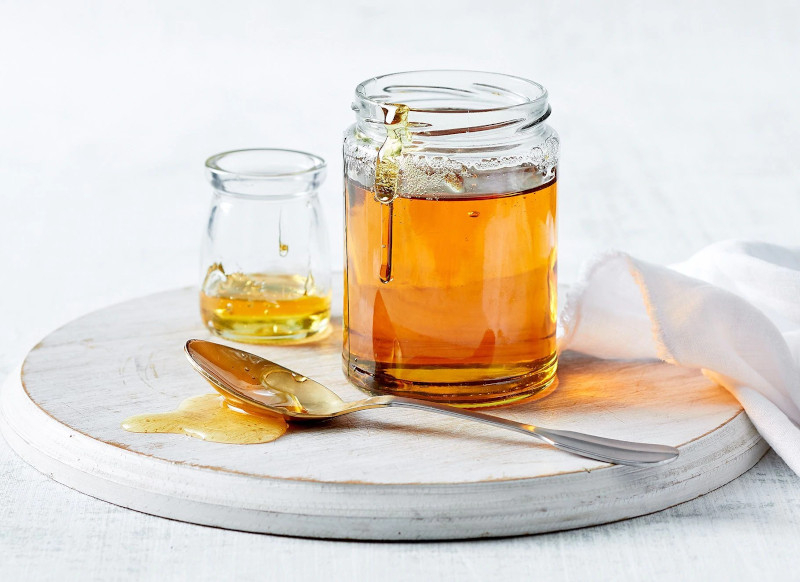
That doesn't necessarily mean that the corn syrup you buy at the store doesn't contain HFCS. Manufacturers sometimes add HFCS to regular corn syrup, but if this is the case, its content should be listed on the product packaging. Therefore, we recommend reading labels carefully.
| Per 100 ml | |
| Energy value | 1314 KJ / 314 Kcal |
| Fats | 0,5 g |
| Carbohydrates | 95 g |
| Of which sugars | 74 g |
| Protein | 1,3 g |
| Salt | 0 g |
Nutritionally speaking, we don't give the green light to corn syrup either. Even corn syrup still contains a lot of sugar and is actually no different from regular table corn syrup. It contains a fair amount of fibre, which makes it slightly lower on the glycaemic index.
It also contains a negligible percentage of minerals and antioxidants, but again we do not consider it to be a good source of these health-giving substances. Nor can we talk about calorie savings, because corn syrup is actually quite similar to regular table sugar in this respect. It has a neutral flavour and can therefore be used universally, but we definitely recommend looking for more suitable sweeteners such as chicory syrup or stevia.
Recommended

Nebbia Dámské kompresní tílko INTENSE Ultra 835
Vitamin C 100cps 1+1
Reflex Instant Mass Heavyweight

Nebbia Fitness overal 5” HAMMIES 603
What to take away from the article?
Coconut and corn syrup are other alternatives to regular sugar that appear to be healthier. Today, we took a closer look at both syrups and found that they're actually not particularly different from sugar - both nutritionally and in terms of health benefits.
Both syrups contain small amounts of fiber, minerals, and antioxidants, but we don't consider them to be god-awful sources of these health benefits. As far as alternative sweeteners go, there are definitely better options than coconut or corn syrup. You could try chicory syrup, for example, or some of the bulk, non-caloric alternatives to table sugar.
Sources:
https://www.sciencedirect.com/topics/agricultural-and-biological-sciences/corn-syrup
Tappy, L., & Mittendorfer, B. (2012). Fructose toxicity: is the science ready for public health actions?. Current opinion in clinical nutrition and metabolic care, 15(4), 357-361. https://doi.org/10.1097/MCO.0b013e328354727e
Kim, M., & Shin, H. K. (1996). The water-soluble extract of chicory reduces glucose uptake from the perfused jejunum in rats. The Journal of nutrition, 126(9), 2236-2242. https://doi.org/10.1093/jn/126.9.2236
Pourghassem Gargari, B., Dehghan, P., Aliasgharzadeh, A., & Asghari Jafar-Abadi, M. (2013). Effects of high performance inulin supplementation on glycemic control and antioxidant status in women with type 2 diabetes. Diabetes & metabolism journal, 37(2), 140-148.
Bae, Y. J., Bak, Y. K., Kim, B., Kim, M. S., Lee, J. H., & Sung, M. K. (2011). Coconut-derived D-xylose affects postprandial glucose and insulin responses in healthy individuals. Nutrition research and practice, 5(6), 533-539. https://doi.org/10.4162/nrp.2011.5.6.533
Yang Q, Zhang Z, Gregg EW, Flanders WD, Merritt R, Hu FB. Added Sugar Intake and Cardiovascular Disease Mortality Among US Adults. JAMA Intern Med. 2014;174(4):516-524. doi:10.1001/jamainternmed.2013.13563
No posts have been made yet.