Calcium | Does it make sense to supplement this very important element?
 Author:
 Few elements are as frequently inflected as calcium. It is spoken about quite commonly even among the general public, and with it are many myths and half-truths about calcium and its various sources circulating on the internet. In our article today, we will present the most important benefits of this element, dispel some myths and find out whether it is necessary to supplement it also in the form of supplements.
What is calcium anyway?
For non-food purposes, calcium is referred to as a very highly reactive element that belongs to the group of alkaline earth metals. And although it has an extremely wide range of uses in all walks of life, from metallurgy to lime production, its biological importance is central to us. Indeed, calcium is one of the essential biogenic elements without which no organism on the planet could be formed or function. Indeed, it is the most abundant mineral in the human body. As you may know, calcium is primarily responsible for the strength of bones, joints and teeth, but it is also found to some extent in muscles and blood. Although it is extremely important, there is no way the human body can produce it and therefore it must be taken in the diet.
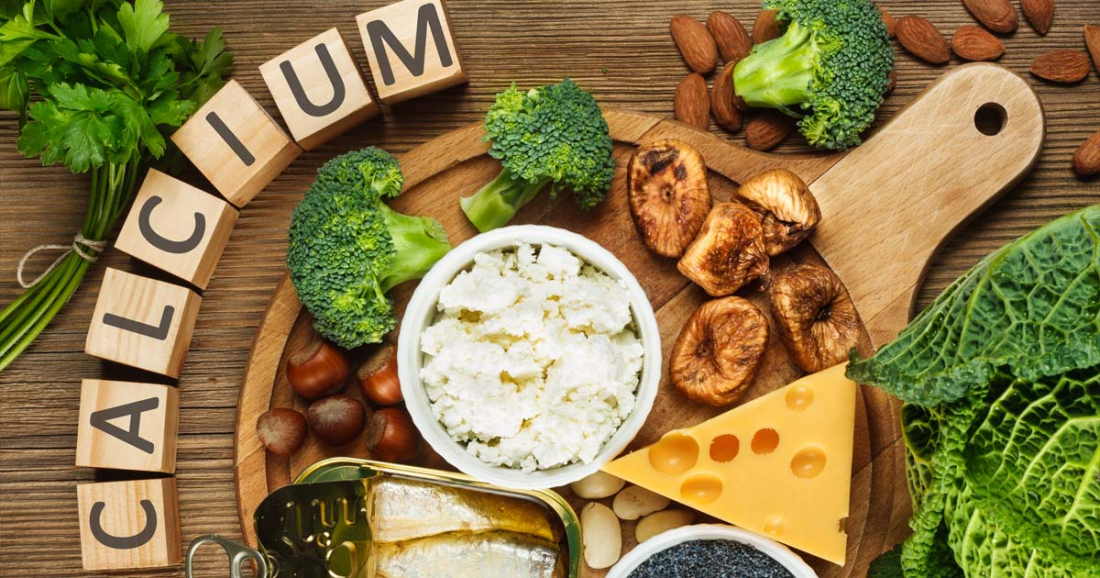
Our bodies cannot make calcium and therefore rely on food to provide sufficient amounts.
Effects and benefits of calcium
Calcium has a number of extremely important functions and although some of these are obvious and known to everyone, others are very interesting and often we are not even aware of them. It is definitely worth mentioning:
It is important for bone health
Everyone has heard of it. The vast majority of the calcium we have in our bodies is found in our bones and teeth. This mineral is indispensable for the growth and development of bones and teeth, and if we happen to be deficient in it, this can result in thinning of the bones (osteoporosis), as well as a greater susceptibility to tooth decay, frequent fractures and, in extreme cases, a reduction in height.

Calcium is indispensable for joint health and strength.
It influences the proper functioning of the heart
In addition to bones, calcium is also important for muscles, not excluding the heart. Some expert studies have even shown that a diet containing a large amount of calcium can reduce blood pressure levels. High blood pressure is one of the most common diseases of our time and, as it is a major threat to the heart, medication is needed to reduce it.
Prevents the onset of PMS
Some research has even found a correlation between the occurrence of premenstrual syndrome (PMS) in women and calcium and magnesium deficiency. The most common manifestations of these complications include fatigue, anxiety and negative emotions, headaches and joint pain, andirritability.
May improve skin quality
By having calcium not only in the bones and teeth, but also in the blood, it has a variety of other benefits. Among other things, there are studies that show the possibility of wrinkles due to bone loss in the facial bones. A regular and sufficient intake of calcium could thus, in theory, be a good help in maintaining a vital complexion.

If you want to have healthy skin, according to some findings, sufficient calcium intake is important.
How much calcium should we take in a day?
There is no one specific number that determines the recommended daily calcium intake for everyone. The most important determinants include gender, age and possibly whether or not you are currently breastfeeding. The data recommended by US governmental institutions differ only slightly from the professional Czech literature and therefore the following dosage can be recommended:
| Age | Amount of calcium |
| Children aged 1 to 5 years | 700-1000 mg |
| Children from 6 to 13 years | 800-1300 mg |
| Adolescents (approx. 14-25 years) | 1200 - 1500 mg |
| Men and women under 50 | 1000 mg |
| Men over 50 | 1000 - 1500 mg |
| Women over 50 | 1200 - 1500 mg |
| Pregnant and breastfeeding women | 1200 mg |
The data in this table was created as an average and comes from multiple sources. Of course, exceeding or failing to meet the recommended dose by a few milligrams is not a serious problem. Expert sources say that calcium is safe for adults aged 19 to 51 up to a dose of 2500 mg per day, so there is no need to worry about overdosing. Nor are you at risk of calcium deficiency unless you belong to one of the specific groups mentioned later in the article.
What foods to look for calcium in?
Calcium is extremely important, but fortunately it is present in sufficient quantities in the diet. Some of the most important sources that nutritionists recommend include:
- Milk and dairy products (cottage cheese, yogurt, cheese and whey protein).
- Vegetables (especially broccoli, kohlrabi or spinach)
- Oatmeal, a variety of nuts and seeds (especially poppy seeds)
- Mineral waters (Magnesia, Calcium and others)
- Fish (especially sardines and other small fish that are eaten with the skeleton)

The most important sources of calcium are definitely dairy products, which are both affordable and nutritious.
What to combine calcium with?
Vitamin D3 is one of the supplements that has been shown to increase calcium absorption. This vitamin is essential for, among other things, the normal functioning of the immune system, proper cell division in the body and contributes to the normal condition of teeth, bones and also optimises muscle function. The problem is that more recent studies (such as the one from 2018) show that the body cannot metabolize vitamin D if you don't have high enough levels of magnesium in your body. Because calcium, D3, and magnesium are so intertwined, you may occasionally come across supplements that combine all three nutrients.
Fortunately, vitamin D is deficient for our bodies. Our liver can store it for up to several months and only releases it when levels drop. Similarly, huge magnesium deficiencies are not very common in the population - especially not in athletes who supplement with nuts, legumes, avocados and other healthy foods or supplements. So taking all three supplements together is not necessary, although it is not a bad thing either.
Recommended
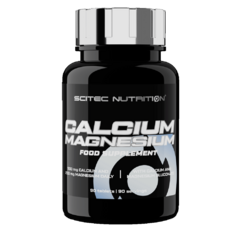
Scitec Calcium-Magnesium
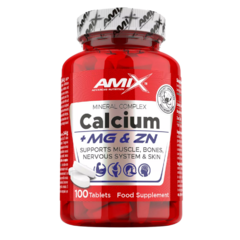
Amix Calcium + Mg & Zn
What causes excess calcium? And what about deficiency?
Fortunately, neither an excess nor a deficiency of calcium in the diet is common in the average person. These are rather rare cases, but they can still have very serious consequences.
Hypercalcemia, i.e. calcium excess, manifests itself first with constipation, which is later joined by fatigue, exhaustion and muscle weakness, which limits not only in training but also in everyday life. If it is suspected, a visit to the doctor is in order and he will probably require a urine test - it is the kidneys that try to expel as much calcium as possible from the body through the urine. This is associated with frequent thirst and, in extreme cases, heart palpitations and arrhythmias.
Hypocalcaemia, or calcium deficiency, on the other hand, often manifests itself in the form of cramps, impaired vision and tingling in the limbs. In the long term, it can lead to osteoporosis and greater susceptibility to tooth decay.

Are you often tired and do your muscles ache? Calcium deficiency may be to blame.
For whom does calcium supplementation make sense? And how to choose the right supplement?
Although we sell calcium supplements ourselves, we would venture to say that the vast majority of ordinary athletes do not need calcium supplements. Groups of people who are at risk of deficiency include vegans, people who are lactose intolerant, or people who do not seek out dairy products. For example, if you are an athlete who regularly takes whey protein, eats cottage cheese and vegetables, you don't need to worry about insufficient calcium intake. As a vegan or lactose-intolerant person, you can reach for fortified foods, as soy milk, for example, can be fortified with calcium and other essential nutrients.
However, if you would like to take a supplement at any cost, or if you have been advised to do so by your doctor, we think that a great choice is the Calcium Magnesium Zinc Complex from GreenFood, which relies on very popular and well-used forms of individual minerals.
No posts have been made yet.