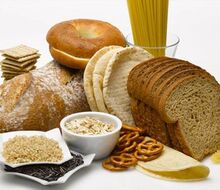
Carbohydrate consumption or fat reduction? Carbohydrates have their place in the diet too!
 Author:
 When you say "I'm losing weight and eating carbs", you will most likely make everyone present laugh, because nowadays carbs are considered the biggest demon of healthy eating and weight loss regimes in particular. But in reality, this is not true. Many studies conclude that carb-contamination during weight loss is at least as effective a strategy in the short term as a low-carb eating style, and in the long term, a carb-containing diet is even a much better choice!
People search over and over again for that "best dietary choice". The truth is that there is no universal one, although for most of us it will be a balanced distribution of individual macronutrients. The best "diet" is the one that gets you results and you are able to even stick to long term! If you know a bit about nutrition, then you will know that nothing is ever just black or just white in this industry and that there are millions of opinions on every issue. Low-fat diets used to be a hit, but the modern trend is low-carb. Supporters of both camps are waging an epic battle against each other, trying to prove that the diet they follow is better.
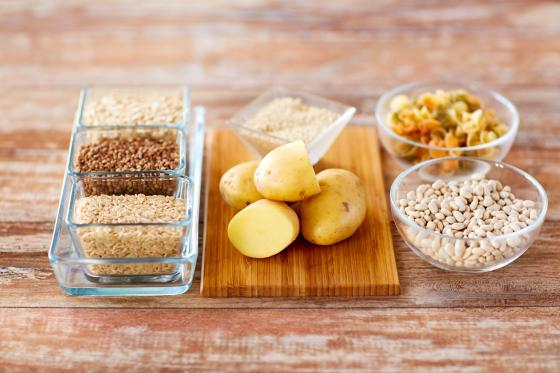
But every study looking at this issue will give you a different result, and every expert will recommend something different. In reality, each of the eating styles has its pros and its cons. However, which path you take is purely your decision, which is influenced by subjective feelings and body reactions. But if you like pastries and other carbohydrate side dishes, but you're just skipping them because they may be responsible for your fat stores, not because they're causing you any trouble... YOU'RE MAKING A MISTAKE. It's not the carbohydrate consumption itself that's at fault, it's the overall caloric excess , and it doesn't matter if those excess calories come from carbs, fat, or protein. So carbohydrates in themselves are not the bogeyman of weight loss diets and instead we'll look at a few reasons why we shouldn't be afraid of them.
THERE ARE NO CALORIES LIKE CALORIES, OR IT'S NOT JUST CARBS
If you want to lose weight, it matters much more about HOW MANY CALORIES you take in total than HOW MANY CARBOHYDRATES you take in. If you want to reduce weight, it comes down to creating CALORIC DEFICIT, not restricting carbs from your diet. Even the glycemic index doesn't play a role - i.e. whether to consume "fast" or "slow" carbs. In fact, each type has its own pros and ideal time of use. Carbs are definitely not a demon if you can control the amount you take in. Carbs are just as important a macronutrient as protein or fat, there's just an unnecessary hullabaloo around them now. Intake of all essential macronutrients should be balanced.
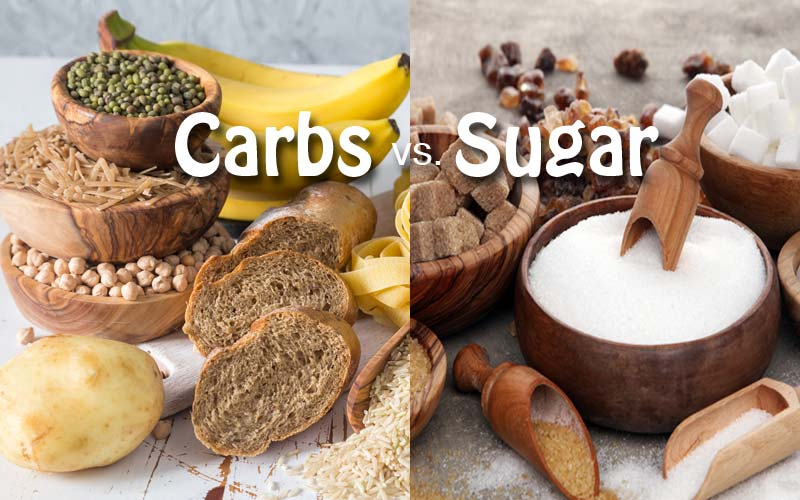
Polysaccharides - that is, complex carbohydrates - should have the largest representation in the diet. If you focus on good quality sources of complex carbohydrates, as well as fruit and vegetables that contain extra fibre and are also rich in vitamins and minerals (see next points), and manage to arrange your intake in such a way that your total calorie intake is in line with your goal (deficit - surplus), then there is certainly no reason to strictly exclude carbohydrates from your diet, not even because you want to reduce fat.
WHERE THERE'S CARBS, THERE'S FIBER
Fiber has always been, is, and will always be the domain of carbohydrate foods. Nothing against fat and protein, but look for fibre, which is an important component of your diet, and not just if you're trying to reduce weight, primarily in carbohydrates.
We have two types of fibre - soluble and insoluble. Foods that are rich in soluble fibre are great helpers in weight reduction. This is due to their ability to increase satiety. In addition, they can also help lower insulin levels, which can reduce overall food intake because insulin stimulates appetite. But insoluble fiber also plays an important role in fat reduction. This type of fibre adds 'bulk' to the meal, which is also important in the context of filling up with less food, as this ultimately leads to a reduction in overall intake. Insoluble fibre also helps in the passage of food through the digestive system, promoting regular stool formation and thus helping to prevent constipation.

There is good evidence that adequate fibre intake affects the amount of visceral fat, the fat that accumulates around the organs. Visceral fat is associated with the risk of developing obesity, cardiovascular disease and diabetes.
NOT ONLY PURE SUGARS, BUT ALSO VITAMINS AND MINERALS
Yes, carbohydrates are not only a source of energy (and fat storage creators, at that), but also a source of important micronutrients such as vitamins and minerals. In addition to fiber, carbohydrate foods contain other essential substances that the body needs for optimal function. Of course, all the time we're still talking about carbohydrates that are suitable for a healthy lifestyle - i.e. complex carbohydrates, fruits and vegetables. You can safely include the carbohydrate sources listed below in your diet as they are rich in fibre and other nutrients, so you will be doing your body a great service.
SUITABLE SOURCES
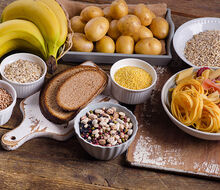
Cereals such as oats, rye, barley, buckwheat, rice, bulgur or quinoa. Even wholemeal bread is a good source, ideally containing the cereals listed. In addition, any vegetable that also contains a good amount of fibre is a good source. In this context, we should not forget legumes such as beans, peas, chickpeas, soya or lentils, which are rich in vegetable protein, among other things. There are also potatoes and, although many opponents may be knocking on their foreheads, fruit is also a good source of carbohydrates, especially local seasonal produce such as apples, pears, apricots, oranges, berries and citrus fruits.
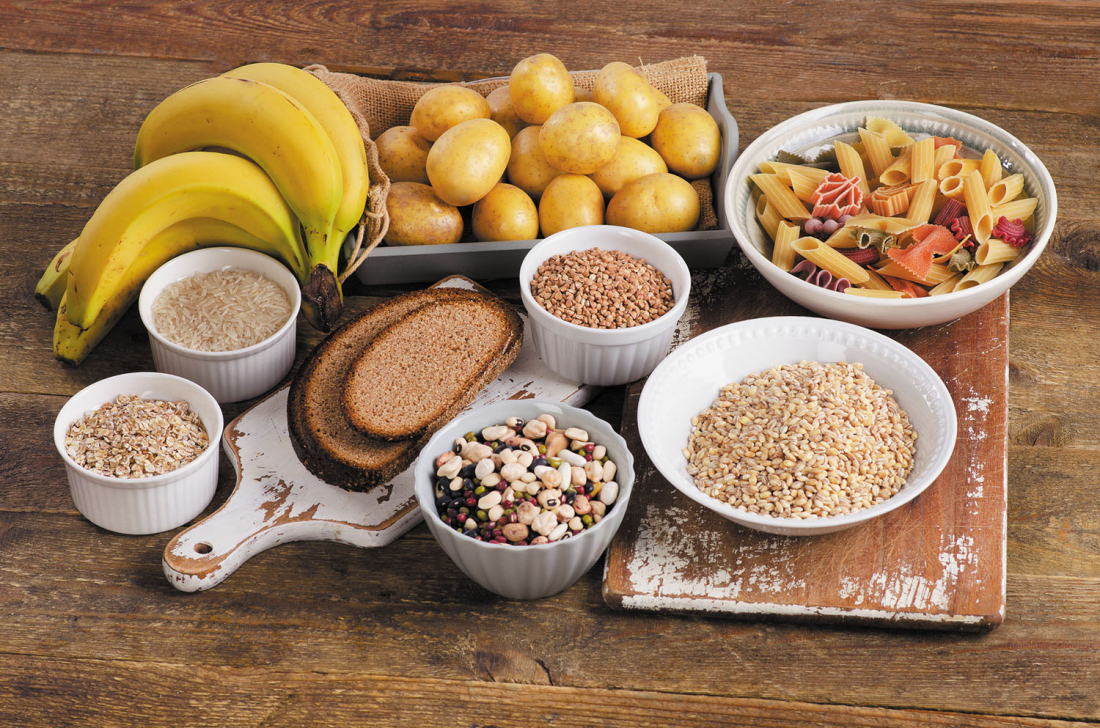
It is in these foods that you will find not only fibre but also plenty of vitamins and minerals, which are very important for overall health. As already mentioned, the bulk of your intake should be complex carbohydrates, whereas sugars should not exceed a daily intake of over 60g.
CARBOHYDRATES AGAINST MUSCLE LOSS
Consuming carbohydrates can protect your hard-built muscles by providing them with an alternative source of energy during training. If carbohydrate intake is very low and glycogen stores are depleted at the same time, the metabolism will start to use fats and proteins for energy during high-intensity exercise and strength training, both from the diet and from the body's muscle.Training with low glycogen levels, as well as training on low-carb diets, has been shown to cause an increase in protein degradation along with a decreased rate of protein synthesis in the muscles, which is not conducive to maintaining muscle mass, let alone promoting muscle growth.
In addition to glycogen replenishment, carbohydrates are of further importance to active athletes. This is because they allow you to exercise more intensely and for longer periods of time, which means you can burn a lot more calories! Carbohydrates act as fuel, allowing you to lift heavier weights, perform more reps, or increase the intensity of your workout, no matter what sport you're doing. This leads to your muscles being put under more strain, which is logically the pathway to higher muscle gains. And last but not least, the more calories you burn during your workout, the more fat you get rid of, IF you follow the principles of healthy eating.

OPTIMIZATION OF HORMONE LEVELS
You've probably heard this statement more in the context of eating a preponderance of fat. However, it is true that carbohydrates also have a significant effect on hormones. Carbohydrates increase levels of the hormone leptin, the hormone responsible for hunger, even more than fat. The longer you are in a calorie deficit and the more weight you lose, the more leptin levels drop. This drop makes hunger feelings "amplified", which can make fat reduction fundamentally more difficult. All it takes is a few weeks of dieting, or restricting calorie intake, and leptin levels can be significantly lower. Fortunately, the fluctuations can be brought back into balance very quickly, specifically within 12-24 hours, which occurs especially after consuming carbohydrates. Therefore, even during a weight loss program, so-called REFEED days are recommended, which consist of increasing macronutrient intake, often mainly by increasing carbohydrates.
However, the hormonal effects of carbohydrates are far from ending with leptin. Carbohydrates also suppress cortisol, a hormone that, when chronically elevated , can cause muscle loss, increased abdominal fat stores, water retention, and can also reduce thyroid hormone production and metabolic rate. Further, cortisol can have the effect of reducing testosterone and estrogen production, and also amplify how we perceive stress.
A LITTLE HELP FOR EVERYONE
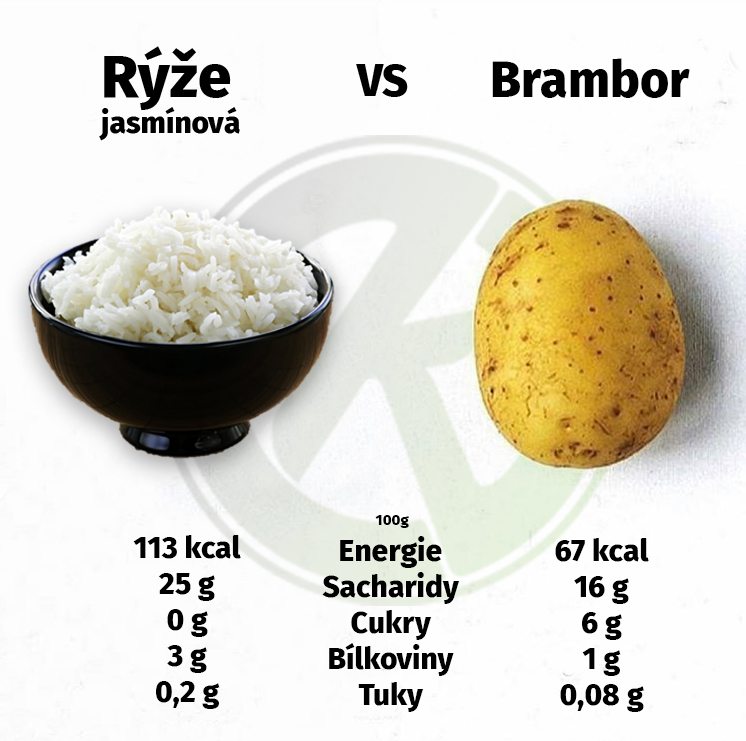
We've created an image for you to compare how cooked potatoes VS. cooked jasmine rice stacks up per 100g. Download the picture to your mobile phone and every time you're confused whether to choose potato or rice, just take a look and you'll know right away what to reach for! We have taken the values from the calorie tables.
CONCLUSION
The list of pros extending the list of why to include carbohydrates in your diet could, of course, be even more extensive. Carbohydrates are also important for the brain, preventing the development of diabetes and other diseases of civilization. A carbohydrate diet, compared to higher fat consumption, also helps keep cholesterol levels in a healthy range, which your heart and blood vessels will appreciate.
Whether or not you consume carbohydrates is relatively unimportant in the context of weight loss. What is important is creating CALORIC DEFICIT (i.e. consuming fewer calories than you expend), and whether you choose a low-fat or low-carbohydrate dietary option is entirely up to you. In fact, in the final comparison of results, you will usually end up with very similar fat loss, at least in terms of the results of the more comprehensive studies that have looked at this issue. The more significant differences will of course be determined on an individual basis. Anyway, no need to push yourself to extremes. Eating carbohydrates provides many benefits, especially if you are an active athlete, and if you learn to manipulate them, you can only benefit from eating them!
Recommended
Amix Isoprime CFM
Nutrend Carnitine 100000

Extrifit Carni Liquid 120000mg
Sources:
https://www.ncbi.nlm.nih.gov/pubmed/16476868
https://www.ncbi.nlm.nih.gov/pubmed/11126336
https://www.ncbi.nlm.nih.gov/pubmed/8923877
https://www.ncbi.nlm.nih.gov/pubmed/9024254
https://www.ncbi.nlm.nih.gov/pmc/articles/PMC4251481/
https://www.ncbi.nlm.nih.gov/pubmed/25514303
https://www.ncbi.nlm.nih.gov/pubmed/26530933
https://www.ncbi.nlm.nih.gov/pubmed/20489032
http://hortsci.ashspublications.org/content/25/12/1488.full.pdf
https://www.ncbi.nlm.nih.gov/pubmed/21681224
https://journals.plos.org/plosone/article?id=10.1371/journal.pone.0100652
https://www.nejm.org/doi/full/10.1056/NEJMoa0804748
No posts have been made yet.