





We bring you the 5 best methods of one-handed pull-ups!
 Author: Šárka Randáčková
 You can build a big back without machines and we'll give you the recipe below!
Benefits of one-arm pull-ups
Single-arm pull-ups build big backs and vice-like grips. They will also improve your posture.
Sure, mirror muscles like pectorals and arms are impressive, but a broad, strong back is the true sign of a high-performance body. That's what heads turn for.
The good news? You don't need any machines or complicated exercises to get this; all you need are pull-ups. Here are the five best one-arm variations.
1 - Croc Lunges
- (video at 00:08)
Kroc deadlifts were created to eliminate deadlift grip problems, but they do more than that. They add depth and width to the upper back.
These are heavy, high repetition deadlifts that are designed to demolish the grip and build upper back strength. While your technique may not be as "flawless" as typical single-arm pull-ups, it shouldn't be sloppy.
Here are some tips:
- Don't distort the path of the movement. Use a controlled tempo or break up the reps.
- To maximize the stretch in the broad muscles, fully extend the shoulders and pull the shoulders up and down.
- Pull your shoulder blades as close together as possible.
- Keep your shoulders higher than your hips. Use an adjustable bench at the lowest setting.
- Pull-ups are optional. They will help you lift more weight and build your posterior chain, but leave some grip and forearm strength gains in reserve. Alternate between using snatches and training without them.
- Perform two lighter warm-up sets of 8-10 reps, followed by one set with full effort. Rest for two minutes and repeat on the other side.
- Aim to reach 20 reps. Once you reach 25 with this weight, increase it. If you've reached the maximum weight of the single-arm in the gym, move on to 25 and 30 reps.
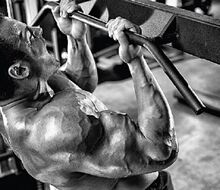
2 - Chest support pull-ups: method 10-6-10
- (video at 00:32)
Chest support squats are an incredible exercise because the bench prevents you from cheating while helping you maximize the quality of each muscle contraction. In comparison, one-arm pull-ups often resemble an angry teenager trying to start a lawnmower.
Before you dive specifically into the 10-6-10 method, keep the following advice in mind for all chest support pull-ups:
- To focus on the lats, imagine pulling your elbows to your hips. This will create a stronger "grip," especially in the lower lats.
- To emphasize the traps/rhomboids (upper back), use an overhand grip and roll your elbows out to the side at a 45-60 degree angle. You won't be as strong with this variation, so choose a lighter weight.
- On the bench, lunge forward and hang over the top of the bench. Maintain a neutral neck position. If you rotate your head, you will change the pattern of muscle engagement.
- Start lightly and squeeze. Approach chest support pull-ups as an isolation exercise.
- Set your bench angle at 45 degrees or less; a lower angle will hit your muscles harder. A greater incline will cause more tension in your upper back. Adjust as needed.
The 10-6-10 method has three phases:
- Phase One (isometric contraction): At the beginning of the series, hold for 10 seconds to maximize the mind-muscle connection. Press as hard as possible.
- Phase Two (deliberate reps). Try lowering the weight for 4 seconds (slowly). Do not pause at the bottom of the exercise with arms extended. Lift the dumbbell for 1 second (fast). Finish by squeezing the muscles at the top of the lift for one second.
- Phase Three (overload partial reps): Perform 10 partial reps to overload the tissues. You've already hacked the mind-muscle connection and used a slow tempo to create tons of metabolic stress. Ten partial reps at the end will finish your muscles and create tons of overload directly on the tissues to help you grow.
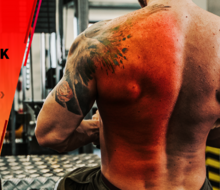
3 - Isodynamic pull-ups with chest support: ladder
- (video at 01:10)
You will never achieve maximum muscle growth in muscles you can't feel. It is important to use methods that maximize the mind-muscle connection. The isodynamic ladder is perfectly suited for this.
Here's how to proceed:
- Lie face down on an adjustable bench inclined at a 45-degree angle.
- Row with both one-armed arms up to your chest. Pause and hold the peak contraction for 2-3 seconds.
- Maintain the contraction with the left arm and perform 5 reps with the right arm. Pause for the last repetition and hold. Then perform 5 repetitions with the left arm.
- Continue with descending reps of 4-3-2-1, alternating arms.
- Choose a weight that you can do 8 reps with, aiming for a ladder with a descent from 5 to 1. If you complete the set, you will do a total of 15 reps with the weight for 8 reps. Do two sets and bail.
4 - J pull-ups with resistance bands
- (video at 01:50)
The "J" pull-ups are slightly modified classic one-arm pull-ups to optimize contraction of the broad muscle areas.
The anatomy of the muscle fibers is often overlooked. Specifically, which direction the fibers stretch. To maximize muscle development, train in accordance with the orientation of the muscle fibers.
Your lats extend from your shoulder down to your lumbar spine in a diagonal direction. To get the most out of rowing, let your weight travel in front of your body in a "J" shape. This will stretch and engage the hard-to-reach fibers located at the top of the shoulders.
So where's the place for the rubber? It puts additional resistance during the peak contraction of the pectoral muscles when the weight is close to your torso. The goal here is not to make the exercise significantly harder. Instead, the rubber (and the tension it creates at the end range) serves as a reminder to clench your muscles.
When you add the resistance of the rubber, you maximize the quality of the muscle contraction at the other end of the movement as well.
- Anchor the rubber against a non-moving object and wrap it around your wrist.
- Align your torso with the bench. Place the arm that is supporting you on the bench along with the same inner leg. Your outside leg will be on the ground.
- Clench the center of your body to prevent rotation of your torso.
- Let the dumbbell start directly under your forehead. Row it up and arc from your forehead back to your hip.
- Slightly pull your elbow back and around your rib cage to maximize contraction in the fly.
- Lower the weight back to its original position.
J-pull with resistance is tricky. Use 70-80% of your normal weight. The goal is not to have it as heavy as possible. The point is to extend your range of motion and improve contraction in the fly.
5 - Batwing pull-ups
-
(video at 02:24)
Most variations of one-handed pull-ups emphasize the lats. Batwing deadlifts emphasize the rhomboids, which are key for optimal posture and rear delts.
Your rhomboids are primarily responsible for contracting your shoulder blades. Most exercisers have their shoulder blades "stuck" to their rib cage due to poor chest mobility and a sedentary lifestyle.
Batwing pull-ups will teach you to optimize scapular retraction, helping you improve mobility and stability by enhancing scapular movement through muscular contraction.
- Lie on a bench with a low incline. Hold the weights directly under your shoulders.
- In the beginning, imagine letting your arms hang down as if your body is wrapping around the bench.
- Begin the movement by tensing your shoulder blades and pulling the weight back until your thumbs tickle your armpits.
- Pause for 2-3 seconds to strengthen the muscle contraction.
- Choose a light weight. The goal is not to lift as much weight as possible.
Recommended
Nebbia Crop mikina bez rukávů MUSCLE MOMMY 258
Nebbia ERA 28 Exkluzívní tričko 100
L-Arginine HCL 500g 1+1
Nebbia Crop mikina s dlouhým rukávem a kapucí GYM TIME 259
Source: www.t-nation.com - Dumbbell Row: The 5 Best Ways to Do It
Author: Eric Bach
Translated by Jaromír Uhlíř
Author: Šárka Randáčková No posts have been made yet.








