





The Royal Three alone are not enough for volume!
 Author: Šárka Randáčková
 Just deadlifts, bench press and squats are simply not enough for volume!
This is what you need to know...
- The deadlift has no eccentric part, especially when practiced with competition technique. There is no growth without lowering.
- A better option is the deadlift with legs extended and from a deficit. Here there will be better stretching and you will need to focus on the eccentric part of the exercise.
- Relying on just the bench press or using only a few variations will lead to overdevelopment of the front shoulders and triceps versus the pectorals.
- The guillotine press is much better for chest development than the traditional bench press.
- The squat is not the best for glute development. Given your leverage ratios, it may not be good for building quadriceps either.
- Squats never worked for Dorian Yates. He improved his quadriceps with squats on the multipress.
The royal three isn't enough
Training only deadlift, bench and squat for volume is simply not enough. It's not even enough for maximum strength.
I'm not disputing that these exercises are fantastic to get better at, nor that they are excellent for both volume and strength. Ultimately, to be good at them, you're going to have to spend a lot of time with the axle in your hand, which is never a bad thing.
However, most of you want maximum volume and to have no weaknesses. And for that, you need to do more than just settle for these three exercises.
Now, of course, you can start swinging the top triceps, but that has a few catches.:
- Every rule always has exceptions.
- I can name plenty of top triathletes who are far from practicing just the three basic exercises.
- What someone else does, especially someone in the category of absolutely exceptional individuals, won't apply to you.
But let's break it down one exercise at a time.
Deadlift is not enough
Because it's not a good volume exercise.
Of course it's a great overall strength exercise. It's also often used as a measure of it. Why not? It's fair. You're just lifting something off the ground.
I'm not saying you won't gain any mass with it. Of course you do. But it's not a great volume exercise in and of itself.
If you're doing it right, the deadlift bounces off the bottom with your legs, and the actual pulling of the weight doesn't start until somewhere near your knees. If you don't have your legs extended, you're not really pulling.
Most of the muscles involved are working isometrically/statically. However, the exercises with the most volume potential are those where the muscles are stretched in the eccentric part of the movement.
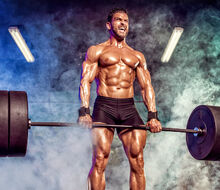
Equip yourself with exercises like biceps raises on the positive bench, pullovers, sissy squats, deadlifts with legs extended off the pedestal, shrugs, push-ups on the bars, etc.
This is what eccentric deadlift load specialist, Jonathan Mike, PhD, has to say about the eccentric deadlift:
In the deadlift, there is very little eccentric loading and the time under tension is very short. Especially if you take into account the time your muscles are really working hard, and not the total length of the exercise.
Time under tension is also a crucial variable. Even if your attempt takes 5 seconds, there are so many muscles working during a deadlift that the stimulation of each one is very short.
And the only real joint movement is around the hips (extension), and proportionally speaking, even less extension in the knees. And that's not exactly the definition of a volume exercise.
Finally, the deadlift takes more than it gives. It's a huge load for recovery, but it doesn't add proportionally as much to the muscles.
Does that mean you should eliminate the deadlift from your volume training? Absolutely not. I, for example, almost always have it in there because of its overall strength potential.
However, if you want a variation that is better for volume, train the deadlift with your legs extended from a deficit.
With this exercise, you can focus as much as possible on the stretch and eccentric portion of the movement, which will give you big gains in rear end volume.
Bench press not enough
We all love this exercise. That's why Monday is International Bench Press Day in all gyms around the world.
And it's undoubtedly a great exercise for pressing strength and upper body strength.
Practicing the bench press alone, without variations, will lead to overdevelopment of the front shoulders and triceps versus the pectoral muscles.
It's no coincidence that great benchers usually have pretty weak chests. Bodybuilders have excellent chests because the foundation of their training is usually not the big-axis bench.
The problem is also that most exercisers can't distinguish between how to bench train for maximum power, and how to train for muscle development.
If you're really concerned about chest volume, a better option is the guillotine press, where you lower the barbell to your neck.
Unfortunately, I now have 10,293 studies coming down on me proving that this variation causes shoulder cancer. But Vince Gironda built a great chest with its help, and as far as I know, no one's shoulders have ever exploded because of it.
People usually use such horrible technique in benching anyway (bounce, shoulder blades apart) that they can't actually train the chest with it.
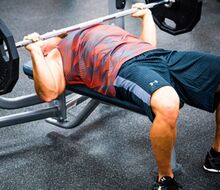
You can't rely on the bench press alone for chest development. For complete development, variations of one-arm presses and extensions (palms facing forward and focusing on stretching and contraction without overdoing it) will be much better.
The bench press is a great exercise for your volume and strength arsenal, but its legendary status is more of an overstatement in my opinion.
The squat is not enough
Despite its reputation as the king of exercises, the squat also has some limitations from a muscle-building perspective.
For most people, it won't be the best exercise for glute development, and given your leverage ratios, it may not be good for building quadriceps either.
The problem with all three of these royal exercises is that poor leverage ratios can make sure that you don't develop the muscles you want with the exercise. The squat here is no exception.
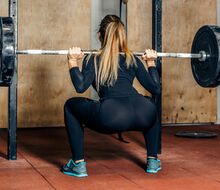
Squatting was a problem for me too. I got over 270 kg without a belt or bandages, but my thighs still lagged behind. And I often pulled something or even tore my quadriceps.
The experts kept telling me the same thing:
You need to improve your quadriceps development.
Finally, they recommended exercises like hacken squats and front squats.
Obviously, you have to train hard to perform well. But dedication alone may not make the squat a regal exercise for you.
Dorian Yates realized this quite early in his career. As much as he loved squats, they didn't work for his quadriceps. Squats on the multipress (yuck!) with his legs slightly in front of his body were much better for him.
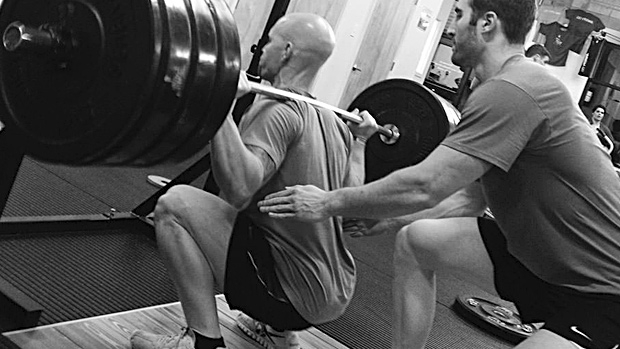
For maximum volume and strength, split your workout
- If you're a competitive bodybuilder, you may never even need the three basic exercises. If you're competing in a triathlon, you probably can't avoid them.
- But if you're a dude who just goes to the gym to get big, engage some common sense, and train what's most effective for you.
- If you're after maximum strength and volume, you need to separate the two parts of your training.
- Dedicate part of the year to volume training and use your new mass to maximize strength in the following part of the year. This is the most effective way to go.
- During volume, assess where your weaknesses are in muscle development and make improving them a priority. If you're like most people, small muscle usually means weak muscle.
Recommended
Nutrend BCAA 2:1:1 Powder
Excelent Protein Bar 85g 4+1
Nebbia Sportovní podprsenka STRONG BEAUTY 424
Nebbia FIT & SMART cyklistické šortky FIT 575
- Exercise the muscle groups several times a week with different exercises. Exercise a medium to higher number of repetitions and increase the volume of work during the training cycle.
- Set performance goals. For example, if you can do 8 x 100 kg on a front squat, your goal would be to do an eight with 115 kg.
- Once you decide to move into the strength portion of the year, start adding on effort in the three basic exercises. Add volume and take away frequency on these as well. Yes, do deadlifts, bench and squats once a week with more volume.
3 Volume and Strength Phases
This is how you can look at training:
- Volume. Less emphasis on the holy trinity, more emphasis on overall volume and improving muscle weaknesses.
- Basic building using the holy trinity. More emphasis on the three basic exercises using high volume work and submaximal intensity. Less emphasis on volume and supplemental exercises.
- Strength Peak. Increase intensity of core exercises and decrease volume of work.
Remember that to master recovery you will need to manipulate work volume, intensity and frequency. If the volume of work and frequency is high, the intensity will need to be low (intensity is a loaded percentage of the maximum per repetition).
If you want to train at a higher intensity and volume, you will need to cut back on frequency. Of course, strength peak also requires working with these variables.
Source: www.t-nation.com -The Big 3 Lifts Suck For Size Gains
Author.
Author: Šárka Randáčková No posts have been made yet.








