The best leg and butt exercises you can do at home
 Author:
 Here's a summary of the best leg and butt exercises you can do at home. Home training definitely does not have to be boring and stereotype, everyone can choose from a variety of exercises and can then build a workout of their choice.
Is it necessary to have some equipment at home?
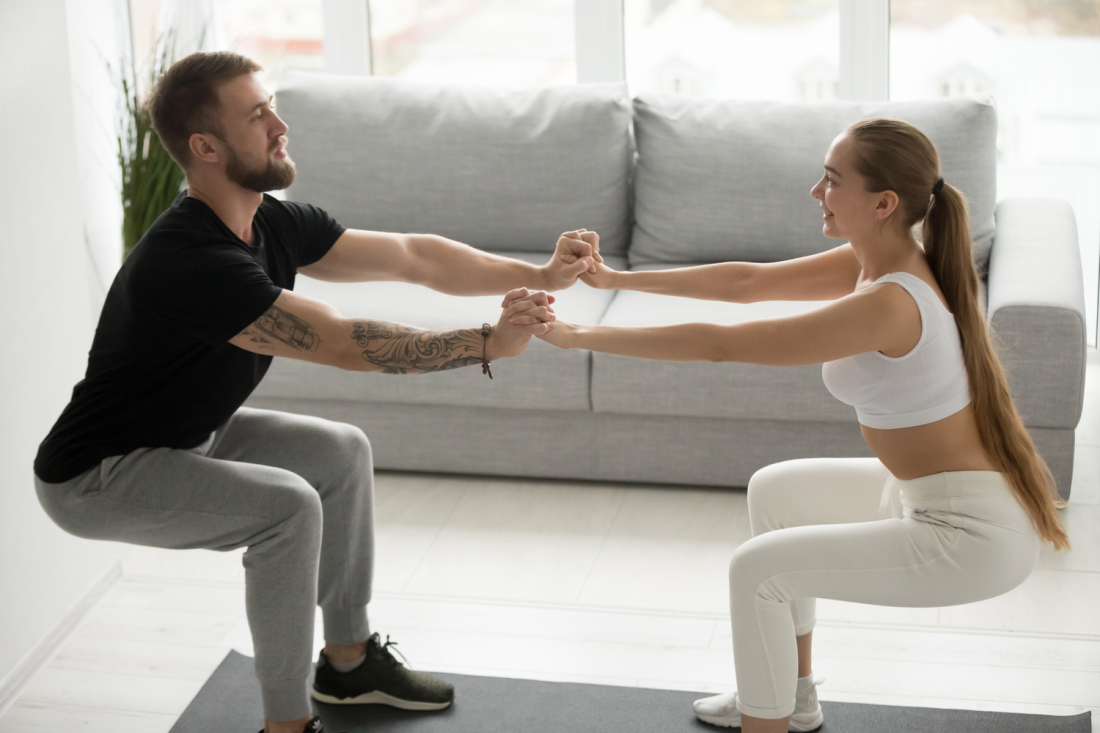
All of the exercises mentioned below can be done without any equipment, for more challenging exercises we can use one-piece rubber bands, resistance bands, ankle weights, water bottles or even our own children (they will serve as a great weight on their backs during squats and will have fun doing it).
Squats
The squat is rightly called the king of exercises and should not be missed in your leg workout. We should always make sure to keep a full range of motion and not do only half squats, and also make sure to keep our backs round and not tilt our heads when doing squats.
Classic squat
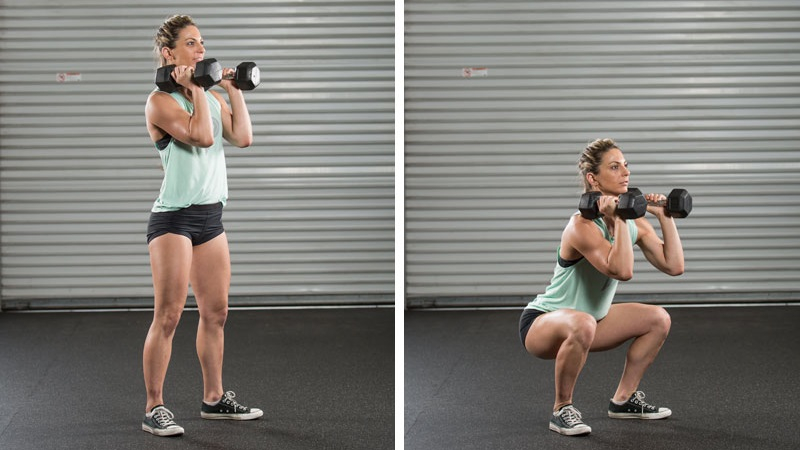
Exercise description. The arms can be crossed on the chest, joined in front of the body, behind the head or extended in front of the body. With a breath, we go as low as possible, as if we were about to sit down, back straight, not taking our heels off the ground. With an exhale, return to the starting position.
The weighted version: e.g. one-handers or water bottles can be used - the hands with the weight can be along the body or placed on the shoulders (elbows pointing towards the ground, not away from the body). If you choose a single piece of weight such as a kettlebell, hold it with both hands in front of your body as if you were performing a goblet squat. Another way to make the classic squat even more challenging is to use a resistance band.
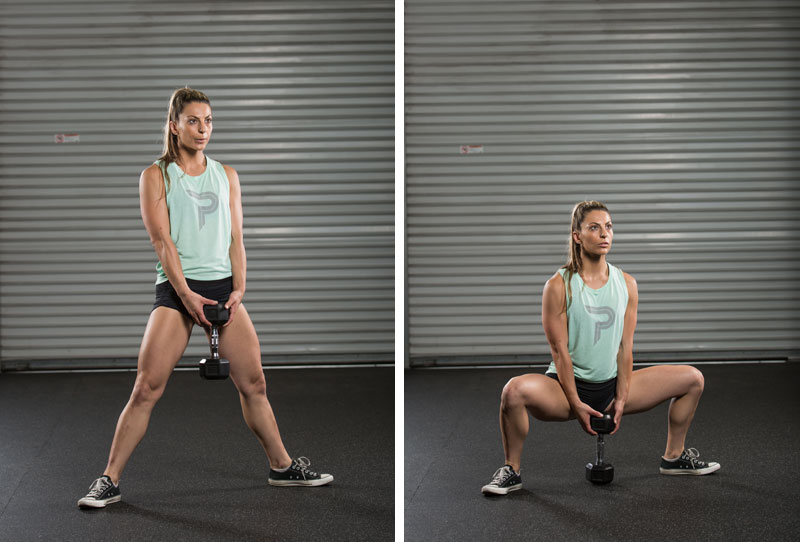
Sumo squat
Exercise description: unlike the classic squat, in the sumo squat your feet are further apart than shoulder width apart, toes turned out. This puts more load on the inner thighs. The hands can be joined in front of the body, behind the head or at the side. Inhaling, drop down into a squat position, knees pointing outwards, gaze forward, chest closed. With an exhale, rise up.
Weighted Variation: most often performed with a single-arm or kettlebell held in the outstretched arms between the legs or with both arms in front of the body.
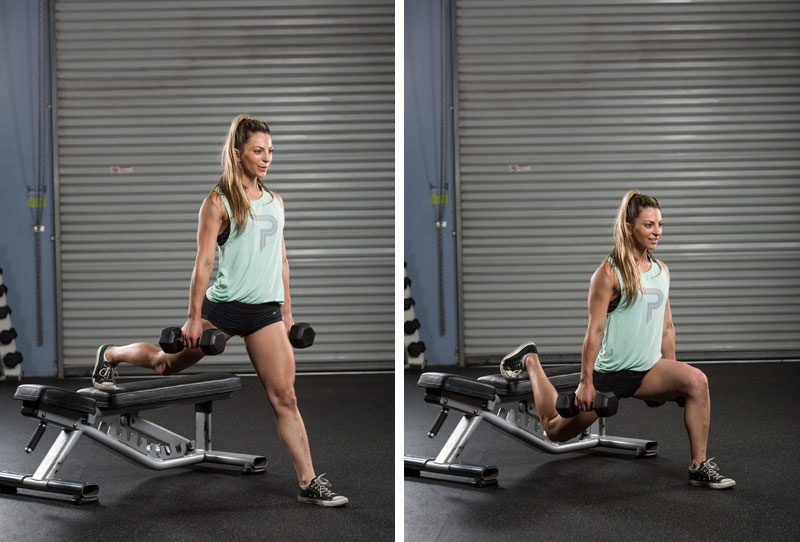
Bulgarian squat
Exercise description. Hands can be along the body, joined in front of the body or at the hip. Place one foot on the chair and rest it on the thigh or toe.
If we want to put more load on the quadriceps, we choose a shorter distance between the legs, if we want to put more load on the hamstrings, we choose a longer stride. We bend the front leg with a sigh and drop into a lunge, the gaze is forward, the body is upright. With an exhale, extend the knee of the leg standing on the ground. Perform several repetitions and switch legs.
Weighted Variation: hold two one-handed kettlebells or water bottles in hands along the body, if choosing one one-handed kettlebell or kettlebell, hold them with both hands in front of the body.
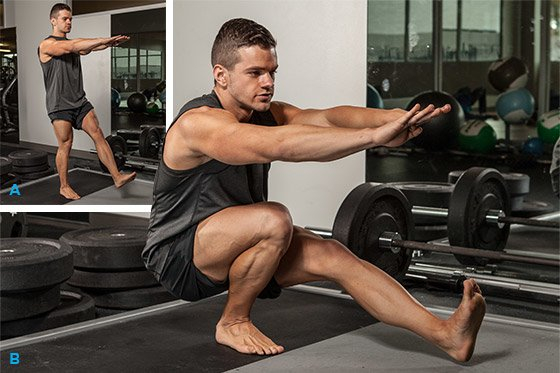
Squat on one leg
Exercise description: Stand on one leg and extend the other leg out in front of you. Lunge forward and with an exhale go down to a position where the back of the thigh touches the calf. Then, with an exhale, return to the starting position. Perform the given number of repetitions (e.g. 10) and switch legs.
Usually performed with a kettlebell or a single-arm kettlebell held with both hands in front of the body.
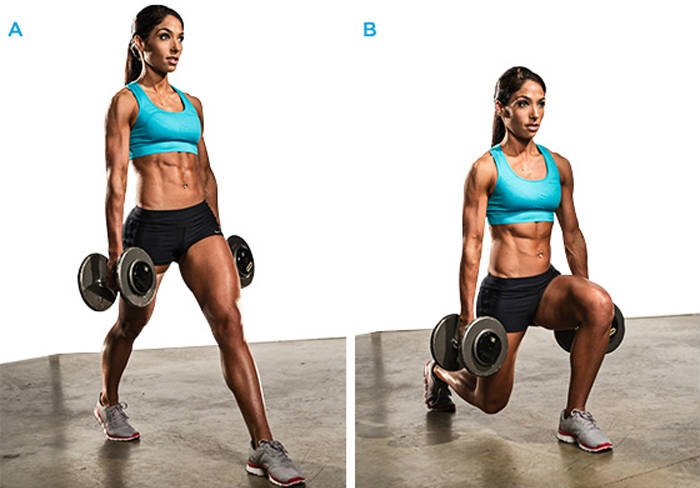
Lunges
Lunges are another very effective exercise to exercise the lower body. When performing them, we should keep our back straight, make sure we have enough depth and that we distribute the weight evenly on both legs and do not bend over. The knee of the front leg should not overtake the toe of the foot.
Attacks on the site
Exercise description: stand upright, torso is firm and gaze is forward. Step forward with one foot, hands may be along the body, joined in front of the body or at the hip. With a bend in the knees and an inhale we go down and with an exhale we go up to the starting position. Perform, for example, 10 repetitions and switch legs.
Two one-handled water bottles or water bottles held in the hands along the body.
Forward and backward lunges
Exercise description. The arms are held along the body, joined in front of the body or at the hip. In the case of a forward lunge, step forward with one foot (in the case of a backward lunge, step backward with one foot). Exhaling, return to the starting position. You can do a given number of repetitions on one leg and then alternate them or alternate one lunge each with the left and right leg.
Weighted variation: the hands with the single-arm kettlebells can be along the body or placed on the shoulders, in the case of a single kettlebell or single-arm kettlebell, hold them with both hands in front of the body. It is also possible to use a resistance rubber.
Lunges while walking
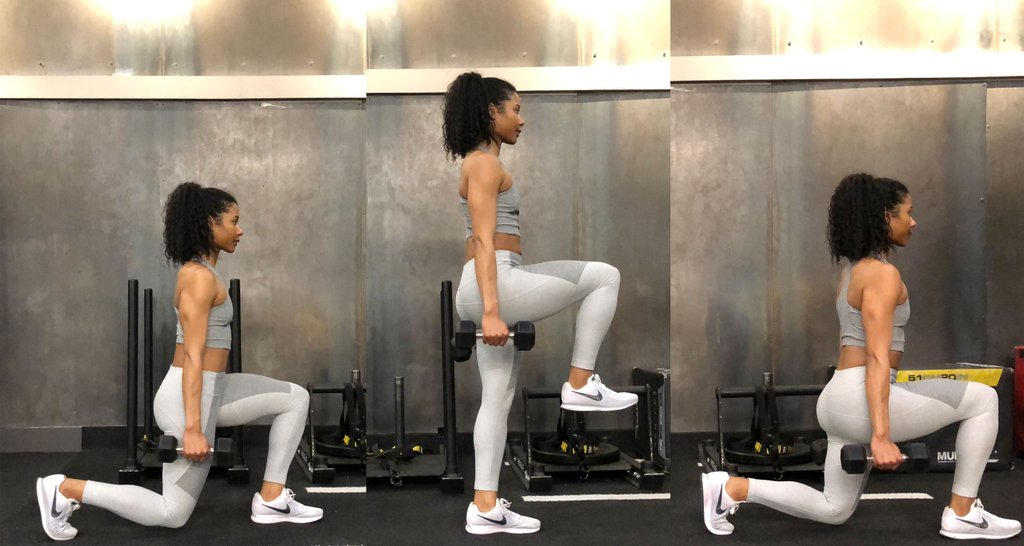
Exercise description: the basic position and placement of the arms are the same as in the previous lunges. With a breath, step forward with the right leg, the knee of the left leg goes down into a crouch (the knee movement stops above the ground). Step off the front leg and step forward with the back leg into the next lunge, and so on around and around.
Personally, I prefer a different modification of lunges while walking that looks like this: take a shorter step forward with the right foot and a longer step back with the left foot, then push off the front foot and take a shorter step forward with the back left foot and a longer step back with the right foot. Alternate legs in this style and advance forward.
Most often performed with one-handed balls held in the hands along the body, water bottles can be used at home
Lunges to the side
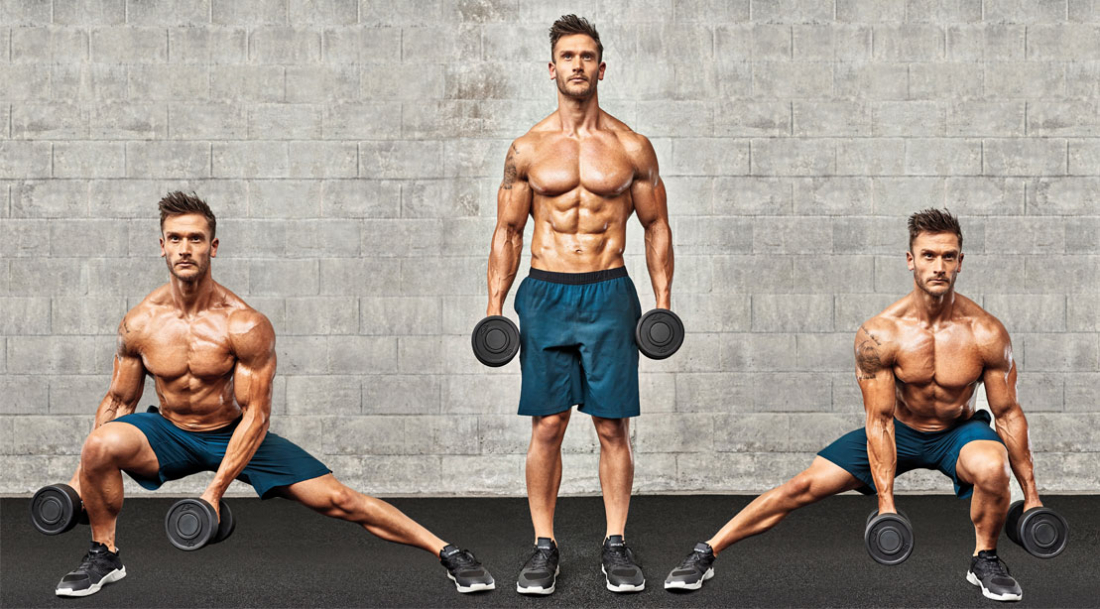
Exercise description: legs should be hip-width apart, torso braced, gaze forward, arms should be at the side or joined in front of the body. With an inhale, swing the right leg out to the side and transfer weight to it, then return to the starting position with an exhale. Then do the same on the left side.
The weighted version: you can take a single-arm kettlebell or water bottle in your hands in front of your body, or you can use two single-arm kettlebells and hold them along your body.
Burying
Stumbling is a great exercise for the hamstrings and glutes, whichever variation you perform, make sure you don't arch your back, perform the exercise with enough range of motion and intensity, and clench your glute muscles.
Kneeling stumbling
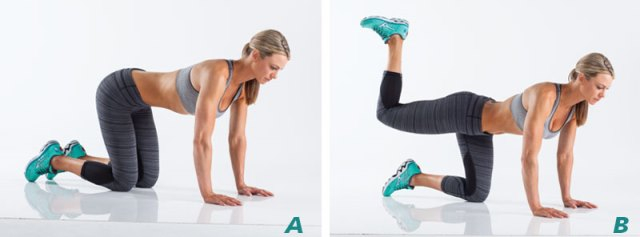
Exercise description: kneel on all fours, palms resting on the mat at shoulder level, knees directly under the hips. With an inhale, bring the knee to the chest, and with an exhale, push the leg back through and clench the butt. Repeat several times and switch legs. The exercise can also be performed by resting the elbows on the mat or by lifting the bent leg towards the ceiling (see picture below).
For a more challenging exercise, you can use a resistance band or ankle bands.
Stumbling while lying down
Exercise description: Lie on your stomach on a mat, fold your hands under your forehead, palms down, or stretch slightly bent in front of you, with the toes of your feet on the floor. Exhaling, bend both legs at the knee until the calves are perpendicular to the ground. With an inhale, return to the starting position.
Weighted version.
Kneeling bent leg raising
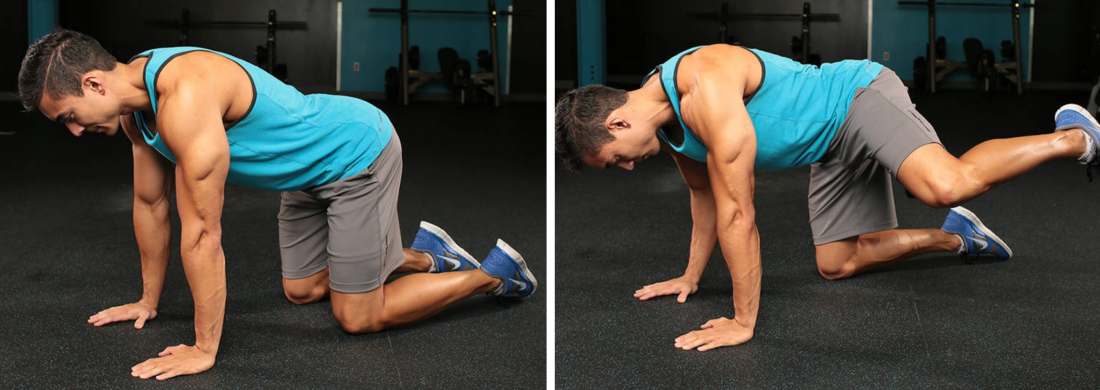
Exercise description: kneel on all fours, palms resting on the mat at shoulder level, eyes on the ground. With an exhale pull the bent leg to the side, with an inhale return. Perform a given number of repetitions on one leg and then switch legs.
Weighted version: resistance rubber or ankle bands can be used.
Pelvic raises
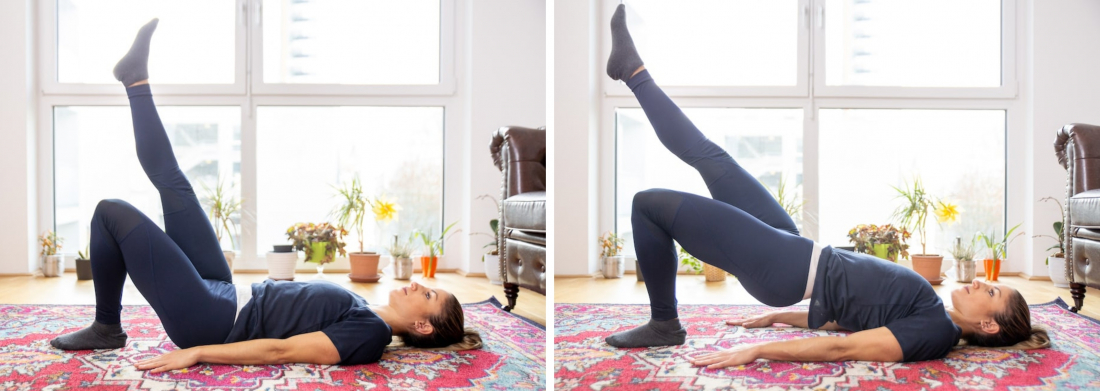
This exercise is great for activating the glutes, hamstrings, quadriceps and adductors, but also engages the lower back and lower abdominals. The movement should always be fluid and controlled, finishing with a contraction of the glutes in the top position. Keep the feet firmly on the ground, avoiding too much flexion at the hips, and if we are doing the exercise with single arms, they should be placed in the bend of the hips and held with the hands throughout the exercise.
Lifting the pelvis while lying down
Exercise description. Exhaling, lift the pelvis upwards, curl the buttocks in the upper position, returning to the starting position. For added difficulty, you can lift the pelvis with one leg extended upwards or rest the legs on an elevated position.
Use a resistance rubber band or one-arm bands.
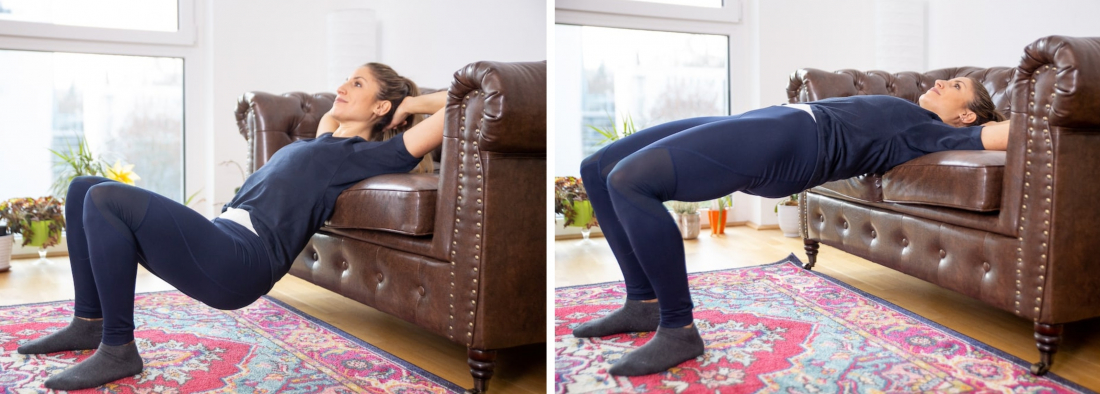
Hip thrust
Exercise description. The centre of the body is fixed, thelegs are bent, the calves and thighs are at a 90° angle, the knees are apart. With an inhale , we lower thebuttocks down, with an exhale and the buttocks clenched, we rise up. The head is not bent or tilted during the exercise.
Option with weights.
Calf raises
The calves must not be forgotten in home training. We should never forget to do calf raises, but always use the full range of motion, as can be seen in the video below.
Recommended
Nebbia Honey Bunny crop top 821
Express Energy Gel 80g 5+1
Nebbia FIT Activewear funkční tričko s krátkým rukávem 440
Calf raises standing on stairs
Exercise description: standing on the edge of the stairs, the middle of the body is fixed, looking forward. With an exhale, we go to the toe position, where we stay in the peak contraction for a few seconds, and then with a breath we return down, with our heels slightly below the level of the stairs.
For greater difficulty, we can take one or two one-armed handles.
Image and information sources: bodybuilding.com, shutterstock.com, acefitness.org, runtastic.com, yahoo.com, muscleandfitness.com, shapescale.com
No posts have been made yet.