





Special exercises for hamstrings and glutes
 Author:
 I'm a lover of lower body workouts, so I'm going to share with you some awesome exercises that focus primarily on the back of your lower body, specifically the hamstrings and glutes. These muscles are usually overlooked by traditional exercisers because they aren't seen in those popular photos in bathroom mirrors. But before you create an eight-day plan targeting your chest, shoulders, arms and abs, realize that just because you can't see them doesn't mean others can't. No one likes a flat butt.
Chain back
That chain starts with deadlifts, Romanian deadlifts (RDL) and glute ham raises (GHR). What if you can't deadlift because of a back injury? Or your gym doesn't have a GHR machine? Or what if you're sick of what you're doing and need a change? Here are some awesome exercises to spice up your life.
1. Split Stance RDL
The single leg RDL is great, but until you get to masterful balance, it can feel more like a sobriety test than a worthy way to add strength and muscle.
Introducing the split stance RDL.
I would classify this as a hybrid between a traditional RDL and one on one leg. If you do it right, the front leg should do the brunt of the work and the back leg should only supply stability so you don't end up like a little girl on pins for the first time.
You can easily adjust the difficulty by changing your stance.
Feet further apart = more stable = easier
Feet closer together = less stable = harder
Start with a proper wide stance and move your feet together as you get good at it. I like to have the toes of the back foot at the same time as the heels of the front foot. A narrower stance also allows for better hip positioning, without twisting the pelvis.
Try to put as little weight on the back leg as possible. You will have a lot to do with yourself in the beginning. This can serve as a good way to work your way up to a true RDL on one leg, or as a way to get more out of unilateral training, as stability won't be as much of an issue.
2. Eccentric One-Leg RDL
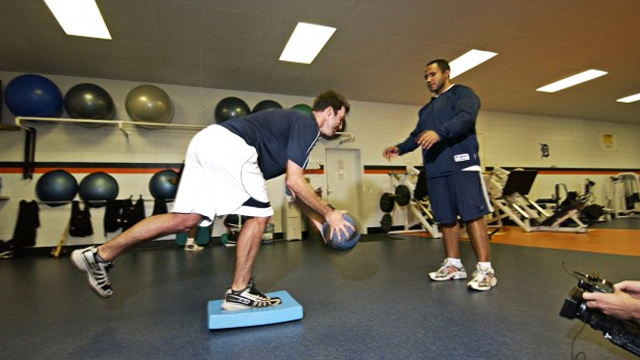
This variation requires more stability than a split stance RDL, but still less than a true single-leg RDL. Do the eccentric phase of the RDL on one leg, then put the other leg on the ground and lift the weight with either a traditional Dl or RDL. The choice is yours.
Like the split stance RDL, this can serve as an intermediate step on the way to the single leg RDL. For more advanced practitioners, this offers an interesting unilateral training effect, as it is possible to overload the eccentric component with a heavier weight than the full exercise on one leg would allow.
One of the key things about RDL on one leg is to realize that both legs have to work equally. The non-working leg can't just hang there; instead, you need to clench the butt cheek on the top leg and actively extend it from behind as the hip flexion occurs, just as you would in a bilateral RDL. Not only will this help with torso stabilization, but it will also ensure a neutral spine position.
Recommended
Nutrend 100% Whey Protein
Nebbia Volné baggy tepláky BOYFRIEND STYLE 432
Nexgen 60 kapslí 2+1
However, you should only try this variation if you have hip mobility and hamstring flexibility at a level where you can lower the axis to the ground without curling in your lower back, as it is strange and potentially dangerous to swap one leg for two with the axis in the air. If you can't do that, try something else instead.
3. RDL on one leg / deadlift - combination
Here's something from the other side of the stability equation. As the name implies, it's a combination of a single leg RDL and a big axis deadlift.
Technically, we could call this a Pendlay deadlift because the torso is parallel to the floor and each rep is performed from rest. I'm generally not a fan of pull-ups, because it's awfully easy to screw them up and make them kind of a goof on the dynamic/upright pull-up/shoulder shrug line.
However, in this case, the nature of the exercise prevents you from cheating because if you try to cheat, you lose your balance. In fact, this exercise is so technically demanding that it immediately exposes any deficiency in execution.
It's definitely not for beginners, but if you can do it, it's an incredibly effective exercise that will allow you to destroy your entire backside. If you build up enough stability to be able to perform it technically correctly, regular RDLs on one leg will feel like nothing, and you'll add some serious pounds when you get back to them.
4. Paused Hip Thrusters

My good friend and fellow author Bret "strong ass" Contreras has written lots and lots about hip thrusters, so I won't repeat what he's already said. If you want to find out more, read this.
I admit that when Bret first showed me the exercise, I wasn't sure if he was serious or if it was some kind of sick joke. I resisted them for a while because they looked a bit ridiculous and I figured my butt would do a good job of squatting, deadlifting, and working on one leg. Anyway, I'm a proponent of the old what was the fuss about. I've never felt such a contraction in my glutes before. And what's more enjoyable, the next day you don't feel like you spent the night in jail, which squats and lunges definitely ensure.
The biggest problem I see is that a lot of people use too much load and don't achieve full hip extension at the top of the movement, opting instead for lumbar hyperextension. This is not effective, not to mention an extreme risk to the lower back. To make sure this doesn't happen, I recommend pausing each rep in the top position for 1-3 seconds and reflecting on whether the glutes are doing their job. If you can't, you're loaded with too much. You're going to have to take it down a bit. So? I don't think there's any competition in the barbell.
In the video, you'll notice the twisted buffalo bar. It's not necessary at all costs, but if you have one handy, it will make your job easier when rolling the axle into position. If you don't have a buffalo bar, you can try lifting the reels up onto small steps.
If you're afraid of looking funny, get over it. What do you know, maybe that chick on the treadmill you're watching will notice how nicely you're transitioning and start talking to you.
5. Single-Leg Hip Thrusters
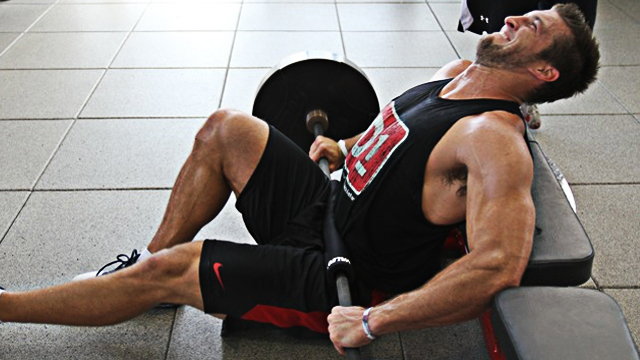
Once you're comfortable with regular hip thrusters, you can try the single-leg version, which is a more advanced version and will test unilateral hip extension and rotational stability.
The problem with this exercise is that you may have trouble adding weight. You can put chains or bands around your waist, but from a certain level you will need to use a large axle.
The problem is that if you have the axle balanced, like on a bilateral thrust, it will slide all over the place. Instead, you need to balance the axis over the foot you'll be working.
If you can do a bilateral thrust with a large axis, don't jump right into the single leg version. Learn it properly with your own weight first, because it's much more difficult and feels completely different.
6. Pull-up Inverted Row Hip Thruster Combo (Combination of a push-up, inverted pull-up, and deadlift)
This is a cool exercise with a terrible name.
I searched for a long time for a decent name that would catch on, like Mega Thrusters, Ladykillers, or Bruno Bootymakers, but I ended up boringly naming it exactly like what you practice. Shift, reverse pull-up, and hip thrust all in one. If you have an idea for a better name, I'm open to suggestions.
For you economists among the practitioners, it doesn't get much better than that. No back muscles left untouched.
For the upper body, it starts as a vertical pull-up and ends as a horizontal pull-up. I highly recommend using some sort of suspension system (TRX, rings, blast straps, etc) to allow the shoulders to rotate naturally and increase contraction in the upper back. If you don't have anything like that available, a trapeze bar will do the trick.
For the lower body, both glutes and hamstrings work because of the extreme range of motion. EMG measurements showed that increasing the range of motion of the hip thruster by elevating the feet and shoulders increased the involvement of the glutes and hamstrings compared to both floor versions.
Of course, the measurements were not done directly on this variation because I just made it up. But considering that the range of motion is even greater than anything tested, it might be even better. Anyway, after trying it out, I don't need any instrument to show me that it's cool.
You'll need to lift your legs higher than a regular bench to get the desired effect during the hip thruster portion of the movement. Ideally, start with your feet at shoulder height and your knees slightly bent so that your torso is parallel to the floor at the top of the rep.
If you feel up to it, try doing them one leg at a time. That's how I like them best.
Note: Before attempting any of these exercises, make sure you've mastered the basic version of the hip thrust, with your shoulders and feet elevated - which is a great exercise in itself.
7. Dumbbell Leg Curls (Hips Off Bench) (One Arm Stumble - Hips Off Bench)
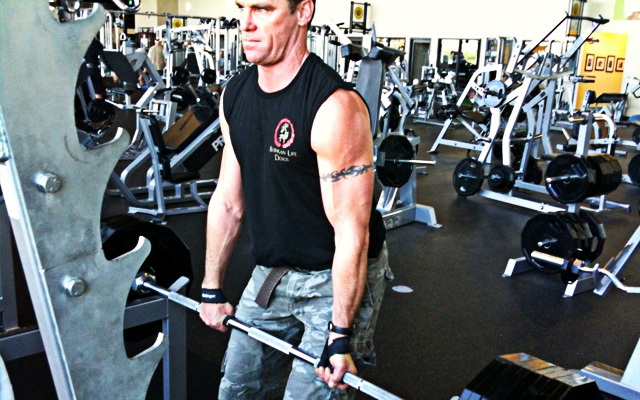
I love the one-arm stumble (stumbling while lying down, with the one-arm between the feet). In high school, when I worked out in the extremely crowded school gym, I would take the bench and the one-handed outside to the stairwell to avoid the crowds. I like it better than tripping on a machine because there's no specialized equipment needed, and you have the added element of squeezing the one-handed between your feet, which engages your adductors and calves.
To make it even better, try starting with your whole feet off the bench. The goal is to keep a straight line from head to knees for the duration of the set.
It may look easy, but it's brutal. The glutes get a workout to keep the hips from dropping and suddenly it's a world away from the normal stumbling on the machine.
Don't expect to put on too much weight here. For regular single-arm trenches I can handle 110 pounds for 15 reps, but once I take my feet off the bench I have trouble doing 6-8 reps with 25 pounds.
Keep your ankles as bent as possible, with the toes pointing towards your shins (This is a good tip for any kind of tripping). Also, stop each rep just before full extension so the hamstrings are under constant pressure.
You'll experience a devilish burn and pump. I warned you.
8. Single Leg Eccentric Stability Ball Leg Curls
I don't use the Stability Ball much, but I like it for tripping. The beauty of this exercise, compared to machine stumbling, is that the glutes have to do the work to keep the hips in extension while the hamstrings work to overcome the extension during the eccentric portion of the movement and bend the knee during the concentric portion of the movement.
This simultaneous hip extension and knee flexion is a good way to work up to a glute ham raise.
The problem with tripping on the stability ball is that it is hard to add weight. You can switch to a single leg version, but I've never been very good at it because the heel tends to curl, which makes the ball roll weird, and the rhythm of the series suffers as a result.
Instead, I prefer to use both feet for the concentric portion of the trench and one foot for the eccentric. Alternate legs on each rep and you'll improve your rotational stability.
The key is to keep your hips high for the duration of the series. You need to keep a straight line from your knees to your neck at all times.
If you look at how most people perform this exercise, you will notice that their hips drop, especially during the concentric phase of the movement. I think it devalues the exercise. If you can't do it properly, go for something lighter and build glute strength first.
Once you can do six reps with each leg during this variation, you should be able to do beautiful glute ham raises. If you don't have anywhere to do GHR, this is a good substitute.
Now it's up to you
I don't want to overwhelm you with gadgets and make you forget the basics, but I also realize that after a while of training, the old familiar stuff can start to get boring. I hope that by showing you some of these new exercises, I've reignited your enthusiasm for working your posterior chain and made training fun again. And that's what it's all about in the end, right?
Remember, although I can show you the exercises, I can't do the work for you. That's your job.
Support your performance with quality supplementation!
In our shop you can choose from a lot of proteins, gainers, amino acids(bcaa, glutamine, ...), vitamins and minerals, creatines,fat burners and much more. So don't hesitate and step up a notch!
Written by Ben Bruno , translated by Jaromír Uhliř
No posts have been made yet.








