The 8 best back exercises to help you build muscle!
 Author:
 Back pain and back problems are a common problem for many people today. A sedentary lifestyle, stress and lack of exercise can lead to low back pain and other unpleasant problems. One of the best ways to prevent these problems and strengthen your back muscles is to incorporate back-focused exercises into your workout regimen.
In this article, we'll take a look at the best back exercises to help you firm this important muscle group, relieve back pain, and create a round and developed back. Whether you workout at home or at the gym, you'll find back strengthening exercises that can help you achieve your exercise goals. Whether you are a beginner or an advanced exerciser, we have something for you. So let's start discovering the best back exercises.
Article Content:
- 1. Lat Pulldown
- 2. Bent-Over Dumbbell Rows
- 3.Overhead Pull-Ups
- 4. Machine Pull-Ups
- 5. Bent-Over Barbell Rows
- 6. Deadlift (Deadlift)
- 7. Pullover on the Pulley (Cable Pullover)
- 8. Cable Seated Rows
- Conclusion
1. Lat Pulldown:
Performance Description:
Sit on the machine with the top handle, grasp it shoulder width apart, straighten your back and pull the top handle down towards your chest. Then slowly back to the starting position.
Breathing:
Breathe normally as you withdraw the handrail and exhale as you return to the starting position.
Variations:
You can use different types of handles and vary your grip. Alternatively, you can practice on a machine with a one-handed handle.
2. Bent-Over Dumbbell Rows:
Description:
Stand with your feet shoulder-width apart, lean forward at the waist and grasp a one-handed barbell. Raise the barbell to the side of your chest and then lower it back down.
Breathing:
Breathe normally as you raise the one-handed bar and exhale as you lower it.
Variations:
You can use different types of one-handers and vary your grip. You can also do this exercise on one leg for more stability.
3. Pull-Ups:
Description of performance:
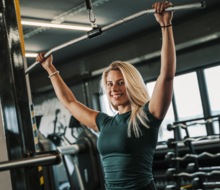
Stand under a horizontal bar or trapeze bar with your palms facing away from you (overhand grip). Grip the bar shoulder-width apart, with your hands slightly wider than shoulder-width apart. Hang from the bar with your legs hanging freely, your body should be vertical and your feet should not reach the ground.
When performing overhand bends:
- Push the shoulder blades downwards while pulling the shoulders back.
- When pulling the shoulders down, start the movement by pulling the elbows and upper back towards the bar.
- Try to bring your chin closer to the bar.
Once you reach the maximum point of pull where your chin is above the bar, begin to slowly lower your body back to the starting position. Remember to maintain control of the movement.
Breathing:
- Breathe normally as you begin the overhead push-ups.
- As you lift your body towards the bar, exhale and push your chin up towards the bar.
- When lowering the body back to the starting position, breathe normally.
Variations:
- Assisted push-ups: If you are not strong enough for full overhead push-ups, use a resistance band or partner to assist you in lifting your body.
- Negative Phase: Start at the top of the push-ups and slowly lower yourself down (negative phase of the exercise). This can help increase strength when lifting the body.
- Chin-Ups: Grasp the bar with an underhand grip (palms facing you). This grip will increase biceps involvement.
- Adding Weight: Adding discs to a weight belt or using a weighted vest can increase the resistance and therefore the difficulty of the exercise
4. Machine pulls
Description of design:
Sit on the machine for pull-ups and grasp the upper handles. Your feet should be firmly on the mat, knees slightly bent and back straight. Hold the top handles so that your arms are spread and your shoulders are straight. Begin the exercise by pulling the handrails down towards your abdomen, while simultaneously pushing your chest forward and creating a backward slope with your elbows. Hold the contraction in the top position for a moment and then slowly return the handrails back to the starting position.
Breathing:
- Breathe normally as you contract the handles toward your abdomen.
- Exhale as you contract in the top position of the exercise.
- Inspire as you return to the starting position.
Variations:
- Wide Grip: Grip the upper handles wide, which engages the muscles of the broad back (latissimus dorsi) more.
- Narrow grip: Grip the handrails narrowly, which strengthens the mid-back and mid-trapezius.
When performing machine pull-ups, focus on proper technique and gradually increase the load once you have sufficient strength and control over the exercise. This exercise helps develop strength and volume in the back of the upper body.
5. Bent-Over Barbell Rows:
Description of Execution:
Stand with your feet shoulder-width apart, lean forward at the waist, grasp the barbell with your arms extended and lift it to the side of your chest, then lower it back down.
Breathing:
Breathe normally as you lift the dumbbell and exhale as you lower it.
Variations:
You can perform the exercise with a fixed bar grip or use an EZ bar for variation.
6. Deadlift:
Description of execution:
Stand in front of a barbell on the floor with your feet shoulder width apart and the barbell placed in front of you. Position your feet so that your ankles are under the barbell and your feet are in a parallel line with each other. Grasp the dumbbell with your hands with a grip slightly wider than your shoulders. The inner sides of your forearms should be near the outer sides of your thighs. Bend forward at the waist, keeping your back straight and your head in a neutral position (gaze directed forward).
With your head and chest up, lift the barbell by standing and straightening at the hips and knees. Hold the dumbbell as close to your body as possible as you lift it. Stand upright with the dumbbell in your hands, body erect and shoulders pulled back. Your back should be in a neutral position and your abdominal muscles tight. Then lower the dumbbell back to the ground by bending your waist forward and bending your knees until the dumbbell reaches the ground.
Recommended breathing:
- Breathe normally as you lift the dumbbell or hold your breath briefly as you exhale. It is important to maintain a strong trunk and prevent loss of intra-abdominal pressure (abdominal muscle tension) during the lift.
- Exhale as you lower the dumbbell to the floor.
Variations:
- Sumo deadlift: Deadlift with your feet hip-width apart and a wider grip on the barbell.
- Block Pulls: A deadlift where the dumbbell is placed on a lifting block or larger trays, reducing the range of motion and allowing for a heavier load.
- Deficit Deadlift: A deadlift where you stand on a lifting block or mat, which increases the range of motion and engages the muscles more.
It is important to maintain proper technique during the deadlift and start with lower weights to prevent injury. You can gradually increase the weight as your strength and technique improve.
7. Pullover on pulley (Cable Pullover):
Description of design:
Lie down on a bench, grasp the top handle, and lift upwards, pulling your arms towards you. Then slowly back up to the starting position.
Breathing:
Breathe normally as you lift the handrail and exhale as you return to the starting position.
Variations:
You can vary the grip on the handrails or use different types of handrails for variation.
8. Cable Seated Rows:
Design Description:
Sit on the machine with the bottom bar, grasp it, straighten your back and pull the bottom bar towards you while keeping your back straight. Then slowly back to the starting position.
Breathing:
Breathe normally as you withdraw the handrail and exhale as you return to the starting position.
Variations:
You can perform different grips on the machine or use different types of handles.
Conclusion:
Back exercises are an essential part of any training plan, whether you want to firm this muscle group, relieve back pain or achieve round and developed back muscles. The important thing is to exercise sensibly, with proper technique and regularly. Keep in mind that back strength plays a key role not only in your exercise routine, but also in your daily life.
If you have problems with back pain, you should also consider back stretching exercises, which can help release tension and improve flexibility. However, back exercises should be part of your workout plan, regardless of whether you have a sore back or not.
Now that you have a list of the best back exercises, you can start building the strength and endurance of this important muscle group. Be patient, work towards your goals, and remember that a strong and healthy back is the key to overall health and comfort.
Recommended

Czech Virus Supreme Omega 3
Nebbia Tričko THE BASE 377
Nebbia Lifting Effect Bubble Butt legíny s vysokým pasem 587
Nebbia Legíny se síťkou s vysokým pasem IMPACT 479
No posts have been made yet.