





Taking a break from exercise doesn't have to mean losing muscle, fitness and strength!
 Author:
 For many of us, the quarantine and closure of fitness centers has disrupted consistency and routine. If you've used this enforced break as a recovery time because you don't enjoy or have the space for home exercise, you may have wondered after how well we actually start to lose muscle, strength and fitness. We've already given some tips on how to exercise at home, but today let's talk about how long it takes to start losing muscle and fitness and also give some tips on how to prevent it.
Loss of muscle mass and fitness are the nightmare of every demanding exerciser. After all, if you've been exercising for a while, you've certainly built up a decent muscle base and the idea of just losing it is probably not entirely appealing. However, the good news - a few days off from exercise is actually quite beneficial for you and can help you achieve your fitness goals in the long run, and we should even all apply such a rest workout once a year on a regular basis. We usually do it when we go somewhere on vacation, for example.

Well, but on the other hand, taking too long a break from exercise means that you start to lose both muscle and built up fitness, and you just really don't want that. At what point in time does muscle loss start to occur? A logical question, but a complicated one to answer. This is because it depends on a combination of several different factors, from age, gender, to the level and intensity of your workouts, to the length of time you've been exercising regularly. In most cases, three to four weeks off may not lead to significant muscle loss, but within a few days the tables are turned and strength and fitness start to fade. Let's look first at how long it takes to start losing built up muscle and later also at how top athletes compare to recreational athletes in terms of strength and fitness loss and what role gender, age and type of sport play.
How long does it take to start losing muscle mass?
The process of building muscle is a slow, continuous process, and once you gain it, your body doesn't let it disappear easily. Most studies report that the first loss of muscle mass occurs after two, more likely three weeks without any activity at first. So if you think that muscles disappear after three days without training, you are seriously mistaken. Moreover, the studies mainly use LBM - lean body mass- as a unit of measurement, i.e. body tissues that are not fat. If your LBM is decreasing, then it is generally assumed that you are losing muscle. However, muscle is not the only component that plays a role in LBM. Glycogen, a type of carbohydrate, is largely stored in muscle and contributes to its overall size. Each gram of glycogen is stored with an additional three to four grams of water, and together glycogen and water can increase muscle volume by about 16%.
When you stop training, one of the first things that happens is that the glycogen levels in your muscles drop. After just one week without exercise, muscle glycogen levels can drop by 20%, and after four weeks, glycogen levels can drop to half of normal during normal training loads. This drop in water and glycogen can cause a reduction in muscle volume of up to 10 percent over the course of a month. So it looks like you're losing muscle, but it's mainly a loss of glycogen and water that gives muscles volume.
Although studies have shown that muscle mass starts to disappear in about two or three weeks, it actually takes a little longer to start losing muscle in real terms. The good news is that as soon as you start exercising again, thanks to something called muscle memory, the muscles will reappear pretty quickly, maybe even faster than when you started exercising. A 2013 study out of Tokyo proved this. The researchers had two groups of athletes, one exercised for the entire research period, and the other was set up with 6 weeks of training, 3 off, twice, and the cycle ended with another 6 weeks of training (so 6-3-6-3-6).
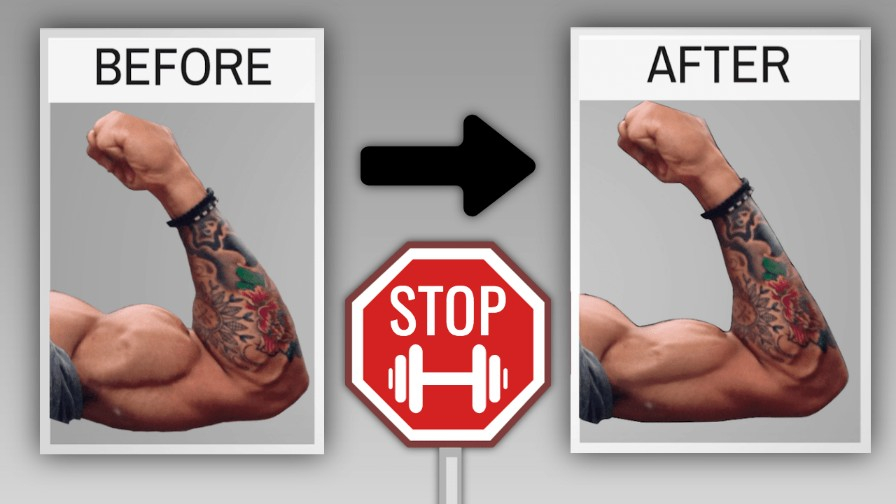
The result? Both groups gained exactly the same amount of muscle. So taking all the findings into account - you can take 1-2 weeks off with a clear conscience and your muscle mass won't be compromised. After three weeks there may be some minor losses, but they won't be too significant. After 4 weeks the losses will be noticeable unless you start exercising again. In fact, the moment you pick up a barbell again, you will start to gain muscle back, and probably even much faster than the initial muscle building process.
Of course, these assumptions assume regularity in training. If you spend a quarter of a year out of the gym and take a longer break 4 times a year, logically you won't make the same progress as someone who takes a break from exercise once a year. To build muscle, you obviously need to eat enough calories and protein. Your energy balance and macronutrient intake can have a significant impact on your ability to maintain muscle mass. If you are calorie deficient and not eating enough protein, muscle loss will be more pronounced and faster.
What about strength and conditioning?
Muscle strength in active athletes. According to a 2013 study, active athletes can begin to lose muscle strength in about three weeks if they stop loading them completely. Athletes typically lose less overall strength during a break (whether forced or voluntary) than untrained individuals. In general, it can take three to four weeks without training before you begin to experience a loss of strength.
In terms of fitness, we'll take to hand a study that examined 21 runners who participated in the 2016 Boston Marathon and then significantly reduced their training. Each of them reduced their typical training load by about 32 miles per week, to just 3-4 miles per week. After four weeks of reduced running intensity, the runners' fitness, logically, declined quite a bit. However, the researchers noted that an even greater decline would be seen when participants stopped running altogether. Even low intensity training, such as 3 or 4 miles per week, helped them maintain a certain level of fitness.
And we come to our favorite phrase, "something is better than nothing." If you're an athlete who has to cut back on exercise due to time constraints, injury, or any other reason, or the inability to create conditions for home exercise, maintaining at least a minimal level of activity can prevent you from losing all fitness.

What about casual athletes? According to a 2012 study, just as it was with trained athletes, with you take a break of about three weeks without starting to feel the loss of muscle strength significantly. However, it definitely shouldn't be longer than necessary. Athletes with lower training loads during periods of inactivity are slightly more likely to lose their previous progress.
But good news for both groups! A 2010 study concluded that both active and casual athletes have a great opportunity to reach their maximum fitness level significantly faster than when they started training from scratch, thanks to muscle memory.

Strength versus fitness
The human body is truly an amazing machine and can hold built up muscle for quite a while. So if you schedule a rest period of a few weeks, whether for a vacation, a time-press or a forced break, muscle strength shouldn't be significantly compromised. The results of studies show that muscle strength remains roughly the same during a month-long break - of course, fitness losses and declines will be individual. We already know from the previous paragraphs that athletes can start to lose muscle after about three weeks of absolute inactivity.
After that, we start losing fitness much faster than we lose muscle mass and strength. According to a 2012 study of athletes performing cardio activities, endurance declines between 4 and 25 percent after a 3- to 4-week break. Beginners can even lose all physical fitness and go back to zero after a four-week break. And that's really not an appealing prospect.
Recommended

Nebbia Fitness legíny s vysokým pasem GLUTE CHECK 613

Nebbia Tričko GYM ESSENTIALS 380
Aminogel 80g 5+1

Ashwagandha 100cps 1+1
Age and gender
Your age and gender can also play a fairly significant role in how quickly you lose fitness. As you get older, of course, it gets harder and harder to maintain muscle mass and fitness even harder. During a forced or voluntary break from exercise, older individuals have more difficulty maintaining strength and fitness.
A study involving 2,000 participants across all age generations (20 - 75 years) examined these subjects after the same set training load and the same break. During the six-month break, the older participants lost strength almost twice as fast as the younger ones. The study found no significant differences in strength loss between men and women in the same age groups. However, the older women returned to their baseline fitness level after the six-month break, meaning they lost all of their progress. Most likely the cause of the loss of strength in the older female participants is menopause and hormonal fluctuations. In fact, another 2009 study concluded that menopause causes a decline in estrogen, which reduces muscle mass and strength.
How long does it take to regain performance and fitness?
We've been looking at how long it takes to lose fitness and performance for a long time. Let's now look at how long it takes to regain fitness. According to a 2010 study, active athletes can return to their previous level of fitness faster than casual athletes after a break from exercise. In fact, active athletes can benefit from something called muscle memory and regain their original fitness much more easily. Some studies suggest that this happens at a genetic level. However, even recreational athletes with lower training loads won't fare too badly, and the return to their previous level will also be quicker than it was at the very beginning of their journey.
How to minimize the loss of muscle and strength?
Well, if you're facing a forced or voluntary break, you can rest easy, because with proper handling you may lose muscle with virtually no major consequences. In fact, you just need to follow three simple principles.
Eat enough calories
Your body's ability to build and maintain muscle is heavily influenced by how many calories you eat. You're probably already familiar with the term calorie balance, which indicates the ratio between calories in and calories out. If you eat more calories than you burn, you will be in what is called a caloric surplus. This is useful when you want to build muscle, but this strategy also leads to fat gain. Conversely, if you take in fewer calories than you expend, you will be in a caloric deficit. This strategy, in turn, is essential for fat loss, but it also slightly impairs the ability to synthesize muscle proteins and decreases anabolic and increases catabolic hormone levels.

One of the strongest stimulus for muscle growth is strength training, through it you can lose fat and build muscle even in a caloric deficit if you exercise sensibly. If you remove this stimulus, and the caloric deficit is too significant, the chances of losing muscle are unfortunately much higher. So if you're going to take a break from exercise, your intake should be at a weight maintenance level, i.e. your energy balance should be roughly balanced.
Eat enough protein
To the point of eating enough calories, we must necessarily add another priority and that is eating enough protein. It will not be news to you that protein is one of the key nutrients for muscle growth and maintenance. Generally when training in a calorie deficit, the need for protein increases, which is why any fitness professional will tell you that it is important to eat enough protein in your diet to ensure you retain as much muscle mass as possible. However, by taking a break from exercise, protein intake doesn't need to be too high, around 1.5 - 2g per kilogram of weight is sufficient . Protein also has a higher thermic effect and also a higher satiety than carbohydrates and fats, which can be a positive when trying to control cravings.
Stay active
Strength training is not the only kind of exercise that can maintain muscle mass. In fact, everyday activities such as walking, washing dishes, carrying groceries and the like provide more stimulus for muscle activity than most people realize. If you stop exercising for a while but stay active, you can hold your muscles very well. One of the fastest and most reliable ways to lose muscle is to move as little as possible. In cases where people are completely immobilized, they can lose 5 to 10 percent of their muscle mass in two weeks.

All the small daily movements during normal activities contribute to a decent stimulus to build muscle, and when you remove that stimulus, the result is rapid muscle loss. Even walking from the couch to the refrigerator will provide a small stimulus for muscle growth. If you are going to the gym for longer than 4 weeks, it is definitely advisable to incorporate regular training at least at home. Two - three strength training sessions at home per week of about 1/3 the volume of your normal workouts is enough to maintain the highest amount of muscle mass for eight - ten weeks before the muscle starts to fade. If you're going on holiday, don't wind up on the beach all day, but go for a good swim, play beach volleyball, or try some non-traditional sport, the options are countless.
Rest and get enough sleep
If the body doesn't get enough rest and sleep, it's stressing it out and costing it a lot of energy. We've discussed the importance of sleep for muscles, recovery and other bodily processes of reduction not excluding, in several previous articles, so you're already well aware that sleep is an extremely powerful weapon.

What to take away from the article?
There are many factors that influence how quickly we lose and regain fitness and strength. It also depends on what sport you play and for how long. If you give up strength training for a couple of weeks, the period of decline in performance will be much longer than that of cardiovascular exercise such as swimming, running and others. The bottom line and the key message is that if you allow yourself a few days, even weeks off, your progress will be virtually unaffected. On the contrary, it may help you push your training to an even higher level than before the break, whether it was planned or not.
The important thing is that to minimize losses, whether in terms of strength or fitness, it is advisable to maintain at least a minimum intensity of load and to ensure proper nutrient intake. If you are struggling with how to cope with the situation and forced or unforced time off or difficult training conditions, do not be afraid to reach out to a professional, a trainer, who can help you prepare a plan even for home workouts, so you do not have to lose strength or fitness at all.
Sources:
https://www.researchgate.net/publication/236590070_Detraining
https://www.pnas.org/content/107/34/15111
https://www.ncbi.nlm.nih.gov/pmc/articles/PMC3940510/
http://www.ismni.org/jmni/pdf/38/02MALTAIS.pdf
https://www.ncbi.nlm.nih.gov/pubmed/23529287
https://journals.physiology.org/doi/full/10.1152/japplphysiol.00911.2017
https://www.researchgate.net/publication/322791398_Human_Skeletal_Muscle_Possesses_an_Epigenetic_Memory_of_Hypertrophy
https://www.ncbi.nlm.nih.gov/pubmed/17901116
https://www.ncbi.nlm.nih.gov/pubmed/15084522
https://www.ncbi.nlm.nih.gov/pubmed/18955382
https://www.ncbi.nlm.nih.gov/pubmed/23107527
https://www.ncbi.nlm.nih.gov/pubmed/22150425 x
No posts have been made yet.








