





Calorie balance - the most effective tool for fat reduction or just another nutrition myth?
 Author:
 Nowadays, thanks to the advancement of not only scientific but also practical methods in fitness and healthy eating, there is much more to reducing weight than the old familiar phrase "eat less, move more" or is that not the case? Diet trends change very quickly - one day it's paleo, then it's low fat, then it's something else. Yet the principle of calorie balance is still the same. Let's talk about this basic (and still the most effective) way to reduce fat and how to improve it to make your reduction even faster, more significant and more functional.
Surely you understand the principle that whether you lose or gain weight is mainly determined by two basic aspects - the amount of food (calories) you take in and the amount of energy you expend. Of course, stress, sleep, hormones, genetics, daily activities and more also play a role, but energy expenditure and energy intake are the two basic aspects that can be used to influence your reduction.
CALORIE BALANCE = CALORIES IN - CALORIES OUT (CICO MODEL)
If your primary goal is fat reduction, you must achieve a negative caloric balance - that is, you take in fewer calories than you expend. If, on the other hand, your goal is to gain weight, your caloric balance must be positive - that is, you must take in more energy than you expend. If your energy balance is negative, or balanced, you are in maintenance mode. There is probably nothing incomprehensible about these mathematical equations.
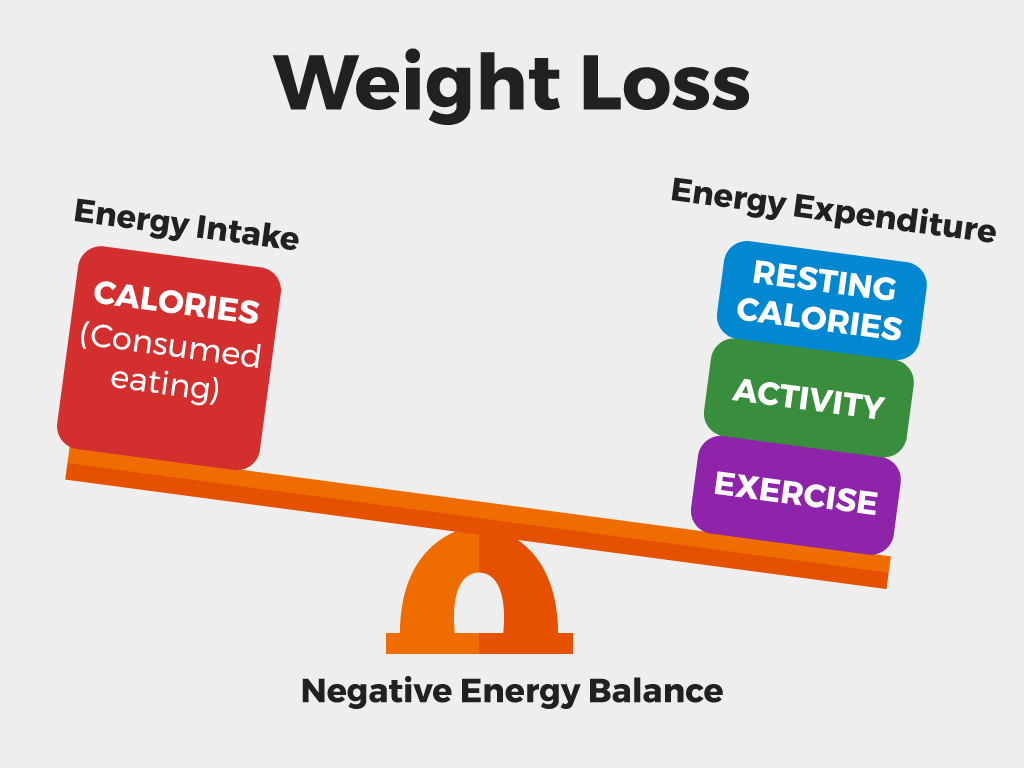
At first glance, it seems pretty clear - CICO (calories in, calories out) is actually our opening line "eat less, move more and you're guaranteed to lose weight". Basically, yes, if you stick to this principle, you'll probably see results soon. But why just stick to the classics when you can do even more! In fact, there are several factors that affect both calories in and calories out. Learn how to use them and make this traditional practice a mega effective weapon for your weight loss!
CALORIES INGESTED
This part of the CICO equation represents the foods and liquids you consume. However, the calories you consume also affect the number of calories you expend. In addition to sport, your body expends energy to digest, absorb, and distribute the nutrients from the foods you eat. This energy your body must expend to process and distribute nutrients is called the thermal effect of food (TEF). It will come as no surprise that not all foods have the same thermal effect. The different macronutrients are like this:
Protein - 20 - 35% of calories are burned as TEF
Carbohydrates - 5- 10% of calories are burned as TEF
Fats - 0 - 5% of calories are burned as TEF
So a thermal effect of for example 10% means that the body cannot use 10% of the energy from the food, it is "lost" as heat in the metabolic processes. So if you eat for example 100 Kcal in the form of protein, around 70 Kcal will ultimately enter your body. In contrast, the same amount of energy in the form of fat, 100 Kcal, will give you an energy intake of 100 - 95 Kcal.
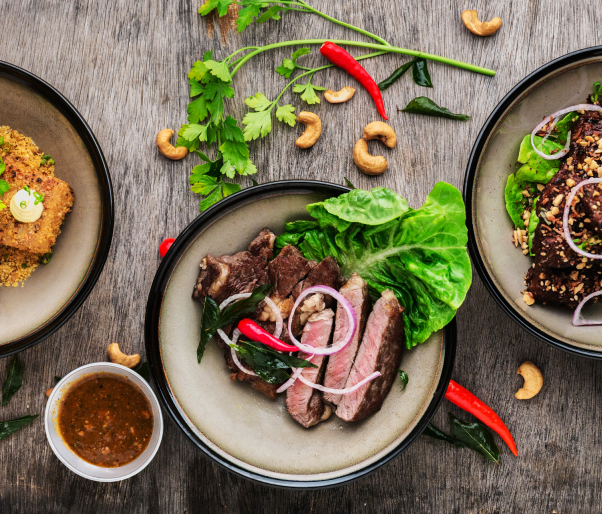
Protein has a significantly higher TEF than carbohydrates or fat. So, if you eat a meal high in protein, your body will expend significantly more calories processing it compared to consuming the same amount of calories in the form of other macronutrients. Imagine the effect on total caloric expenditure if two people are on a diet of 1800 calories per day, but one person is taking in 35% of their total calories from protein and the other is only taking in 15%. The effect will be quite significant.
Another way that CICO relates to the type of food you choose to eat is that the whole principle of CICO has to do with satiety, or how you feel after eating. Protein has a more satiating effect than carbohydrates or fat. That's because protein triggers the release of several satiety hormones that send messages to your brain to stop hunger signaling. Therefore, people who eat enough protein feel fuller and consume fewer calories than those who consume empty calories that don't satiate them.
These findings, i.e., the positive effect of eating enough protein on increased satiety and total calories consumed during weight loss, have even been scientifically verified many times. The results of the studies also suggest that a higher protein diet can lead to greater weight loss and fat loss in the short term than a diet based on lower protein intake.
CALORIES EXPENDED
We will also go over the calories we expend. But the total number of calories you burn each day, also referred to as your total daily energy expenditure (TDEE), is much more than just the number of calories burned during a workout. In fact, calories expended, as opposed to calories in, can be broken down into several parts:

Basal metabolism
Your basal metabolic rate (BMR) refers to the number of calories you burn at rest, for example, if you are lying in bed for 24 hours. These calories are expended to carry out functions essential for survival, namely breathing, circulation and the distribution of oxygen and nutrients. Interestingly, BMR can account for up to 70 percent of your TDEE!
Thermogenesis of Physical Activity
Exercise activity thermogenesis (EAT) refers to the number of calories you burn through performing physical activity. Of course, the duration and frequency of your workouts affect this number quite significantly, but the type of exercise you perform also plays a role. Not all activities provide the same output. Some forms of exercise, such as strength training and high-intensity interval training (HIIT), even after they're over (and up to 24 hours later) still have an effect on your metabolic rate. This means that you're not only expending energy while doing these types of activities, but for XX hours after you've finished them.

Resting Thermogenesis
No Exercise Activity Thermogenesis (NEAT) refers to the number of calories you expend in all other normal activities that are not outright exercise. Examples include standing up, walking, and performing other normal activities throughout the day. This calorie count is highly individualized. So logically, someone who works manually in 12 hour shifts in a warehouse or construction site somewhere will expend many more calories than someone who works in an office and sits at a desk for 8-10 hours.
Thermal Effect of Food (TEF)
As we noted above, a significant amount of calories are also expended by the body during the digestion, absorption and distribution of nutrients from the foods you ingest. The thermic effect from food can account for up to 10 percent of the total calories you expend each day, and that's not an entirely insignificant figure.
THE SAME AMOUNT OF CALORIES DOESN'T NECESSARILY MEAN THE SAME RESULTS!
If we look at two people who consume the same amount of calories, they may have completely different results. This is because in addition to how many calories they take in, it also depends on the sources of the calories they take in, what their training looks like, and their daily activity (work, sleep conditions, stress) also plays a role.
IS THE CALORIE BALANCE EQUATION AN OUTDATED VIEW?
No way! The caloric balance equation is the absolute foundation for weight loss and dare I say it is the essence of every diet, whether you eat paleo, keto, low-fat, gluten-free, or vegetarian. In any case, for successful fat reduction, you simply have to take in fewer calories than you expend. However, if you take into account the macronutrient choices that make up your intake, as well as the type of training that has a greater impact on burning, you can achieve much more significant results.
WHAT TO TAKE AWAY FROM THE ARTICLE?
The principle of negative caloric balance is not gibberish, nor is it a myth. On the contrary, it is the most effective method ever to reduce fat stores (and so is positive calorie balance in the case of muscle building.). In today's article, we've talked more about the different components that make up this equation and what to look for to be most effective. You don't need to look for any miracle diets, skip certain macronutrients, you just need to honor the principle that you need to take in less energy than you expend. And it really doesn't matter what diet you choose, because they are all based on this seemingly primitive principle.
Sources:
https://www.ncbi.nlm.nih.gov/pubmed/15466943
https://www.ncbi.nlm.nih.gov/pubmed/19400750
https://www.ncbi.nlm.nih.gov/pubmed/31021710
https://www.ncbi.nlm.nih.gov/pubmed/28765272
No posts have been made yet.








