





Stop stagnation! Improve your performance by avoiding training adaptation!
 Author:
 Regular exercise is very beneficial in every way, both for weight control, relaxation and overall health. However, all training programs require variation so that the body is constantly responding to them, so that muscles have a constant stimulus to grow, and so that fat cells respond and disappear. If you train according to the same rules for a long time, you may have made proper progress, your muscles have enough load, but still after a while they stop responding - they don't grow, they don't get stronger. Why? They have simply adapted (adapted) to this load. Same with weight loss, maybe you've been exercising for a few months, lost some pounds and suddenly nothing. Adaptation.
If you've started strength training, you're probably experiencing a "boom" where your muscles respond to virtually every exercise you do. Good for you! Training is the stress you put on your body. After about six months, however, your body will adapt to the volume and intensity of your workouts. For some people the time is shorter, for others longer. Sometimes the problem is too much stress (too much load), sometimes not enough load, and most often the same load all the time. And then we have stagnation. So the muscles will no longer take the training as a load, but as a "routine", something completely normal and ordinary. Maybe this also makes you lose motivation slightly, because who enjoys training if you can't get anywhere, right?

If you want to overcome this condition, you need to do more than just add weight, do a few extra reps or run a mile further. It doesn't mean changing your workout every week to give your body a chance to adapt. But changes in training should be at regular intervals. That way, you can re-ignite muscle growth or weight loss and give your emotional motivation a good kick! If you're working really hard in the gym but not getting anywhere, try some of these tips!
INCREASE THE INTENSITY OF YOUR WORKOUTS
Although people (especially newbies) often don't want to admit it, maybe their workouts aren't as intense as they think. One of the easiest ways to overcome adaptation is to up the intensity. To break out of your routine, throw in a workout with higher weights and fewer reps. If you've been doing three sets of an exercise for 10 to 12 reps, reduce the number of reps to 6 to 8 and take on heavier weights! Of course, only one with which you are able to maintain proper exercise technique. The increase in weight can be gradual. If you can perform the exercise technically correctly until the last few reps, which are already seriously challenging, then you're doing it right. It's good to have a sparring partner or coach on hand to help you with the last few reps. It doesn't matter if you are doing lunges, bench or abdominal exercises. Try adding weight and observe that the exercise is not just about getting the most reps, but also about the load. On the other hand - again, keep your feet on the ground and don't try to break world records.
PLAY AROUND WITH THE TEMPO OF THE EXERCISES
Sometimes all it takes is as little as working through a set at a faster or, conversely, slower pace. If you're training regardless of pace, it can be a simple change that helps you take the next step. For example, try taking a lighter weight and doing the series technically correct, but at a faster pace. This is great for training the nervous system and increasing its performance. This is especially helpful if your overall goal is absolute strength. You can try practicing this type of training for 3-4 weeks and then go back to your favorite concept.

Or vice versa! Never tasted the magic of negative reps? Then now is the time! Consciously lengthen the slow, eccentric portion of the repetition to 3-5 seconds on your way to the lower end of the range of motion - especially for bench press, squats and their variations. Not only will concentrating on the eccentric portion of the movement force you to perform the exercise technically correctly, but it will also give your body a new stimulus to grow muscle and increase strength. Try it for a few weeks, enjoy the pain you'll be performing the reps with, and then go back to the classics with gusto.
CHANGE YOUR TRAINING STYLE
You'd be surprised how quickly a muscle group adapts to a particular exercise. While changing the intensity of the exercise can help overcome adaptation, you still need to hack the routine. A 2014 study from the University of Tampa concluded that a 12-week workout designed from different types of exercises was much more effective at building muscle than sticking to the same exercise routine all the time.
Recommended
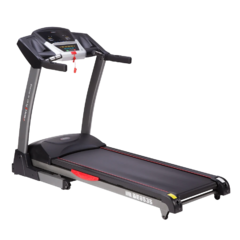
HMS Elektrický běžecký pás BE 8535

Nebbia Fitness overal 5” HAMMIES 603

Czech Virus M3/S PUMP

Prom-in Pentha Pro Balance
Well, change means momentary discomfort and a new process of adaptation. However, if you've been doing the same type of training for over two years and the "gains" train stops at the "I'm not moving anywhere" station, it's time to get off and try a different train. If your training has been more like powerlifting, try incorporating kettlebells or resistance bands, for example. If you've only used isolation machines to increase hypertrophy up until now, pick up dumbbells. The change will help refresh your workout and re-stimulate your muscles. You need to make progress to make progress. Try to make a change, persevere, realize what you've learned and re-evaluate creating a new plan!

TOSS THE ORDER OF THE EXERCISES
Another small subtle change, but one that can greatly help overcome stagnation, is something as primitive as changing the order of the exercises you normally do. For example, if you do the same biceps exercises in the same order every workout, your muscles will expect this load, so try simply swapping the order of the exercises and give the muscles a load from a slightly different angle. In some cases, it may be harder to complete a workout if you start with the easier exercises and end with the harder ones, but even that is a change!

UBER AND RELAX!
Sometimes you need to completely relax, even if you don't want to hear it, it's true. You may be training like a lion, but you're starting to lose motivation. Maybe you're tired, but you're still going to train. Maybe the improvement in your body composition and performance has stalled. If your body is overly stressed both physically and mentally, your body has too much to worry about around you instead of showing you the results of your hard work in the form of chiseled abs or bigger abs. Give it some time off, it will appreciate it and will surely return the favor well.
So if you're training really hard but not getting anywhere, try to rest. Adequate rest and recovery are essential for muscle growth and fitness building. Don't worry about losing muscle mass or strength; no such thing will happen. It's better to take it easy for a few days than risk overtraining, injury, or in the worst case, burnout syndrome. By over-exercising you reduce your performance, fatigue sets in more quickly and you risk insomnia, headaches and loss of appetite. Sometimes the best way to move forward is to take your foot off the gas. Cut back on activity and add some extra calories. We're not saying to cut out activity altogether, how about a deload week? Check out this article to learn more about the deload technique.
DON'T UNDERESTIMATE THE COMPOSITION OF YOUR DIET
We can't end our list of tips to overcome stagnation with anything other than just diet. Proper intake plays a big role in exercise, muscle building, weight loss and recovery. If you don't give your body enough nutrients, you can't expect it to perform well. That's like buying a Ferrari and putting water in it instead of gasoline and hoping it will run. Maybe for a few metres, but then it'll stop and then it might not even start.

Carbohydrates are the primary source of energy for the body and it's not entirely desirable to avoid them completely, especially if you want to build muscle. While a low-carb diet has its benefits, restricting carbs too much can reduce your exercise capacity and make it impossible to move on to the next base. Some may advise you to increase your protein intake, but even that may not be the best way to go. Higher protein intake does not automatically lead to higher muscle gains. Your diet should include a representation of all three macronutrients, and micro components such as vitamins and minerals should not be underestimated either. If you are unsure about your diet, don't be shy to consult a professional.
WHAT CAN I TAKE AWAY FROM THIS ARTICLE?
Training stagnation is something no one likes to experience. Fortunately, there are several ways to combat it. Try playing around with the composition of your workout - increase the intensity, change the number of reps or the speed at which you perform them, switch up the exercises or their order, or simply try something completely different for a few weeks. Last but not least, rest is a good strategy - if your body is under consistent stress for a long time, a short break can benefit it and get you back in the game! What should also not be forgotten is the appropriate dietary composition, because diet also plays a very important role in terms of athletic performance, muscle building and fatigue.
Sources:
https://www.cdc.gov/nccdphp/sgr/pdf/chap3.pdf
https://www.ncbi.nlm.nih.gov/pubmed/6376140
https://link.springer.com/article/10.1007/BF00243507
https://www.ncbi.nlm.nih.gov/pubmed/3057313
https://insights.ovid.com/crossref?an=00124278-201411000-00009
https://www.researchgate.net/publication/23711951_Transfer_of_Strength_and_Power_Training_to_Sports_Performance
No posts have been made yet.








