





Knee pads VS. knee bands - what is the difference between them?
 Author:
 If you walk into any gym that does CrossFit or weightlifting, you're bound to find a few people with bandages or knee pads on. These are some of the most used tools in training. However, most people are still unclear about when and how to use them.
- Do knee braces reduce knee pain?
- Do bandages increase performance?
- Does wrapping technique affect performance?
If you've ever asked yourself any of these questions, you've come to the right place. Today I'm going to tell you everything you need to know about these often misunderstood training aids.
What's the difference between them?
That's usually the number one question.
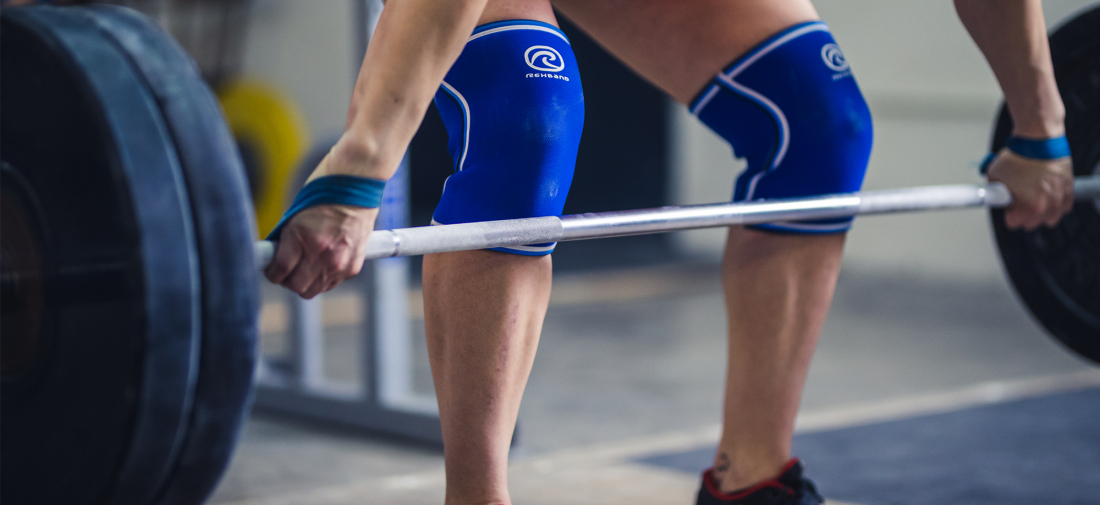
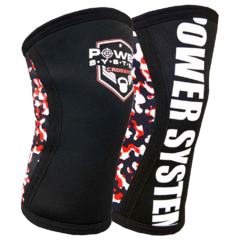
A sleeve is a compression aid (often made of soft neoprene) that surrounds the entire joint. They come in a variety of thicknesses and will keep your knees warm throughout your workout. Some people believe that the feeling of the sleeve on the knee helps athletes become more aware of the position of their knees during training, improving their technique.
Knee sleeves are now made by a number of manufacturers. The most popular (in the US) is the Rehband brand.
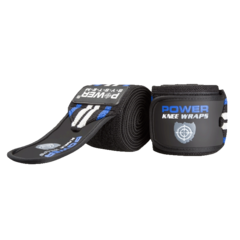
The bandages are made of thick polyester canvas and interwoven with rubber inserts. Classic bandages are about 2 m in length and 8 cm in width and are wrapped around the knee as tightly as possible, either in a spiral or figure-eight shape.
The biggest difference is that the bandages provide a mechanical advantage to the athlete because their elastic material stretches during the squat . This stretched material stores energy, which is returned to the athlete during weight lifting. Studies show that bandages can deliver up to 20% faster rebound at the bottom of the squat .
There are bandages that are so tight that they also give their wearer a small mechanical advantage, but bandages can't compare.
Bandages are very common in power triathlon. In weightlifting, not so much, as they can limit the ability to get under the barbell during the market and overhead. You may have seen bandages on weightlifters, but they are mostly soft bandages that are more for keeping the knees warm.
Does it matter how you wrap your knees?
There are two basic methods. The spiral and the figure eight (or cross). In 2015, a study was conducted to investigate whether there was any difference in mechanical assistance between the two methods, and researchers found that the methods were no different.
Below is a great video of knee wraps being demonstrated by Matt Vincent.
When should you wear them?
Since the leg warmers do not directly improve performance, you can wear them as you like. However, they should not be used to cover pain. I see that a lot with athletes. In this case, you should first find out why your knees hurt and address the problem.
However, bandages should rarely be used. Research shows that using them can change your squatting technique so that you are more upright. This will rob you of engaging your glutes, the very strong hip extensors. In theory, you could be underdeveloping this crucial part, and thus damaging the whole stability of the knee joint itself. Bandages are therefore recommended to be used only in the hardest training sessions and competitions.
Conclusion
The use of bandages or sleeves is purely a personal decision. There are a number of excellent strength athletes who use neither, and a number who use one or the other, depending on individual goals.
Bandages can greatly aid you in your strength training. If you choose to use them, I recommend including them only in your heaviest workouts. Bandages should not be used as a crutch in every leg workout.
Recommended
- Translated by Jaromír Uhlíř
- Sources:
- Harman E & Frykman P. The effects of knee wraps on weightlifting performance and injury. J Strength Cond Res. 1990; 12:30-35
- Lake JP, Carden PJC, Shorter KA. Wearing knee wraps affects mechanical output and performance characteristics of back squat exercise. J Strength Cond Res. 2012; 26(10):2844-2849
- Marchetti PH, Matos VJP, Soares EG, Silva JJ, et al. Can the technique of knee wrap placement affect the maximal isometric force during back squat exercise? Int J Sports Sci. 2015; 5:1-5
- By Aaron Horschig
No posts have been made yet.








