Is the market your enemy? Master the mobility of your thoracic spine and you've won the snatcha!
 Author:
 Today we are going to talk about thoracic spine mobility. In order to lift with proper technique and not risk shoulder injuries, you need a reasonable amount of extension in the mid-back.
As far as your upper body weaknesses go,limiting thoracic spine mobility should be your first concern before moving on to other issues (lat flexibility, rotator cuff strength/stability). Think of it this way. If you're going to try to fix a broken house, you start with the crumbling foundation and get to painting the dingy walls at the end.
A stiff thoracic spine incapable of extension limits efficient scapular motion, which affects the mechanics and stability of the arm itself. This foundation needs to be corrected before moving on to the rest of the upper body.

Today I will introduce you to 6 exercises that will help the mobility of the thoracic spine. I recommend to practice each of them and test your mobility. This will help you see which one works best for you.
- Mobilization with peanut
- Stretching with a cylinder in prayer position
- Stretching on a box
- Spinal rotation on all fours
- Seated rotation with side bend
- Deep squat with rotation
Mobilization
The peanut is one of the best tools for mobilizing the thoracic spine. It is expensive to buy, or you can wrap tape around two tennis shoes or lacrosse balls.

To mobilise the thoracic spine, lie on your back with your arms crossed in front of you. This will pull your shoulder blades out and to the side, creating space for the peanut to be placed. The balls should be on either side of your spine.

With your hands on your chest , perform a small push-up. The shoulders rise just a little. Hold the position for a few seconds and lay back down. Make sure there is no extension of the lower back. The movement starts from the thoracic spine.
The peanut serves as the center of rotation in this exercise. When a stiff joint is acted upon in this way, it can help with mobility.
Practice 2-3 sets of 15 repetitions with the peanut on any area of the middle back that feels stiff to you. It is common to have some areas of your thoracic spine stiff and others not.
The exercise should not hurt intensely. If this occurs, I recommend seeking professional help from a physical therapist or chiropractor.
Stretching with a cylinder in the prayer position
Stretching in prayer position is called child's pose in yoga. Start on your knees, sit on your feet and keep your hands in front of you (one on top of the other). Then lower your chest to the floor. Keep your hands reaching above your head and exhale slowly. Try pushing your chest towards the floor.
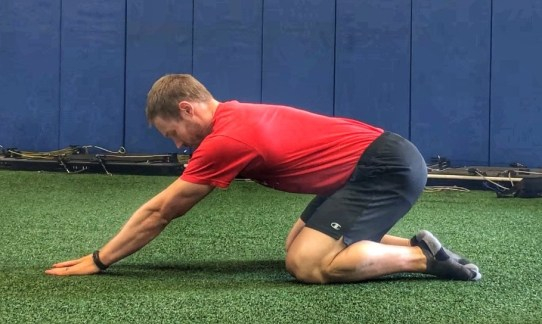
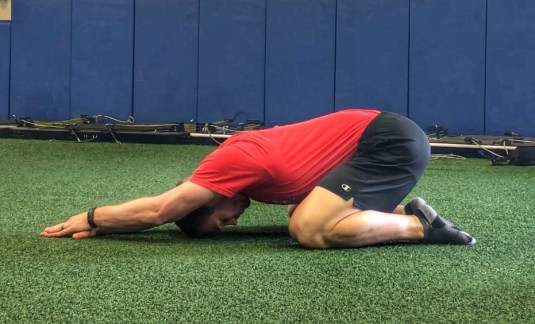
If you have a stiff middle back, this should stretch it out nicely. Those who also have stifflats will feel a stretch on the sides of the back where these muscles attach. I recommend holding the position for 30 seconds (+- 5 deep breaths in and out) and practicing 3-4 sets.
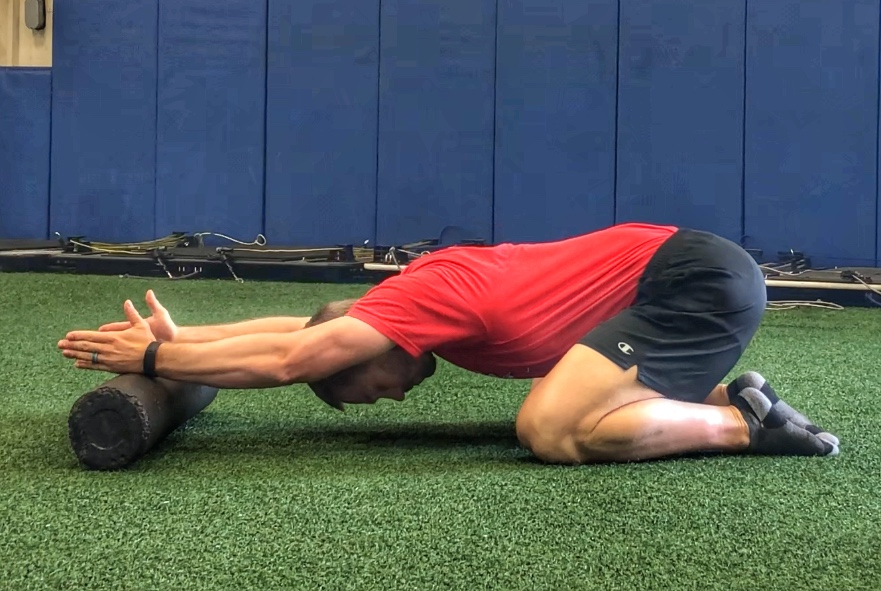
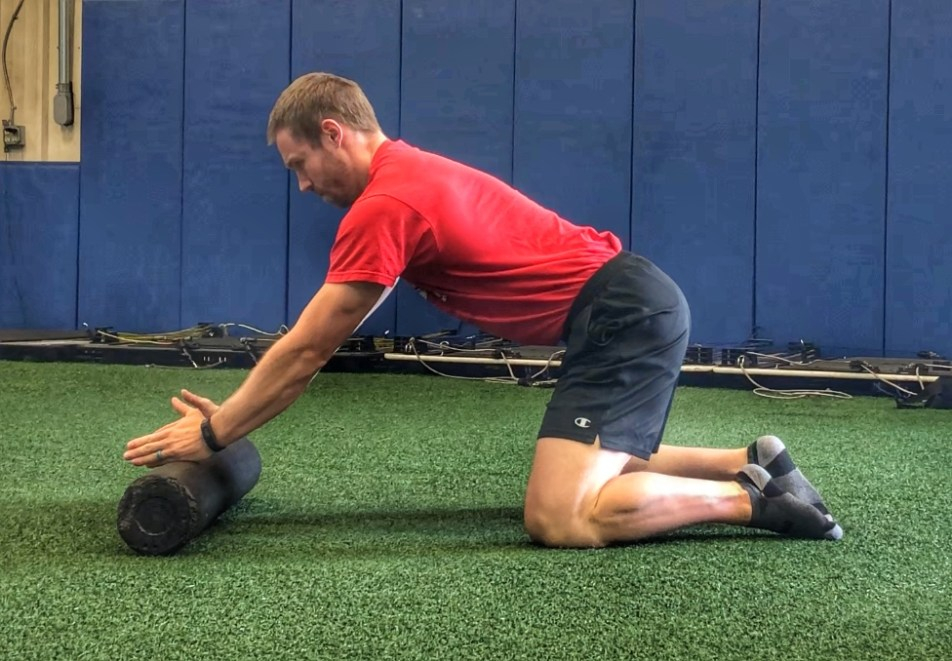
For higher intensity, place your hands on the foam roller. This will allow for a deeper stretch and greater extension of the thoracic spine.
Stretching on the box
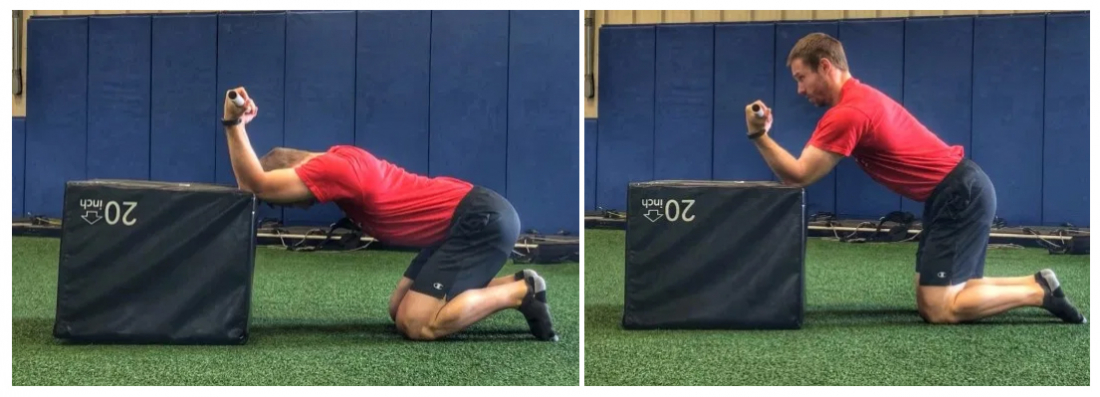
Kneel in front of a crate or bench. Grasp the PVC pipe and place your arms in a V position (palms wider than shoulders). Place your elbows on the crate.

The movement will be similar to the prayer position. You will lower your hips and chest to the ground. This should stretch the middle of your back (and probably your lats as well). In the extreme position, hold for 5 deep breaths in and out before returning to the starting position. Repeat the whole thing 3-5 times.
Rotation of the spine on all fours
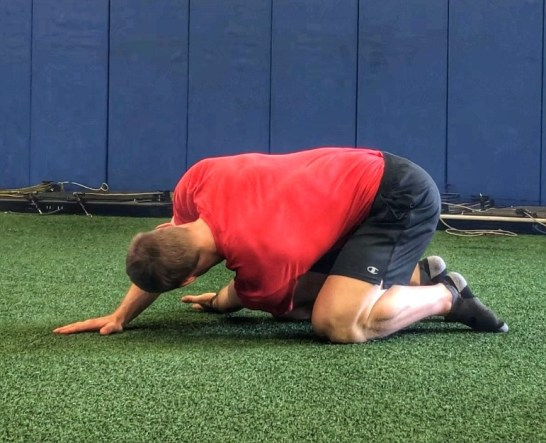
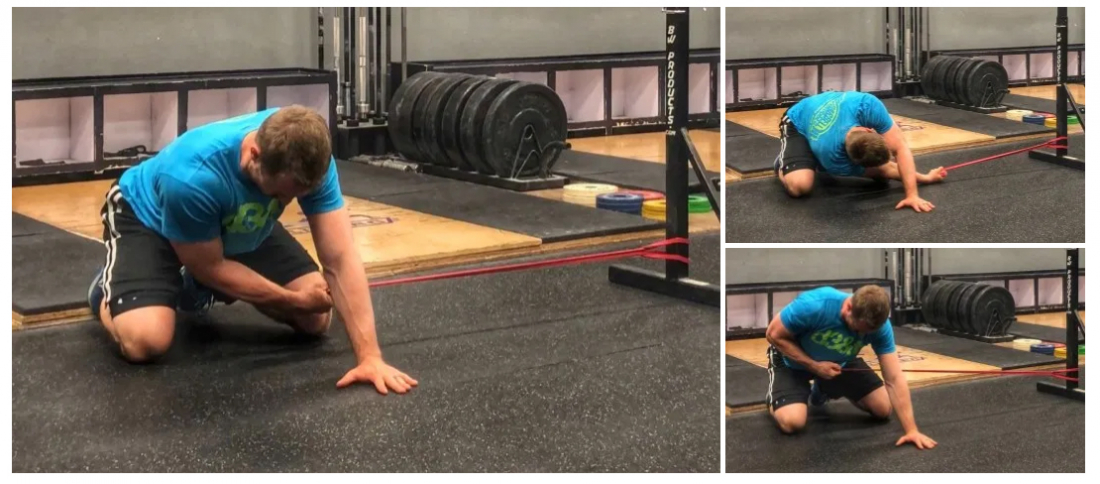
As the joints move one after the other during spinal rotation and extension, the mobility of the spine can also be improved by rotational exercises. Everyone can do this exercise. Start on all fours and slide the right arm under the left arm as far as possible. This should slightly stretch the middle of your back. Hold the position for 10 seconds and do 10 reps with each side.
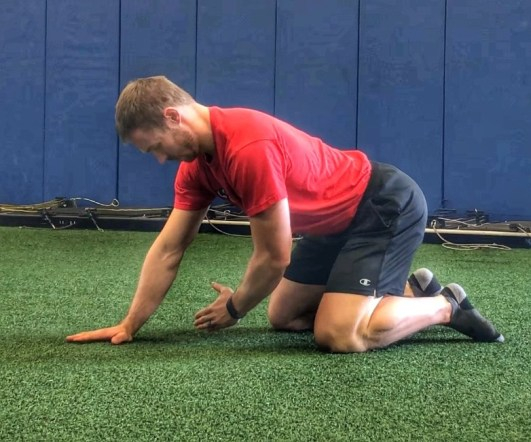
You can use the resistance of the rubber to increase the intensity. Attach the rubber to the rack and grip it with the hand that you tuck under your body. The resistance of the rubber should hinder when you are trying to reverse rotation.
Seated rotation with side bend
The next exercise for rotational mobility starts in a seated position with the PVC pipe across your upper back (as in a squat with the axle high). Hold a small foam roller between your knees to stabilize your lower body.

Start with maximum rotation to the right. At the end of the range of motion, bend slightly to the right side. It will be a small movement. Too deep a bend would lift you out of the seated position and move your lower back. This should give you a good stretch in the middle of your back and maybe the lats on the sides of your torso.
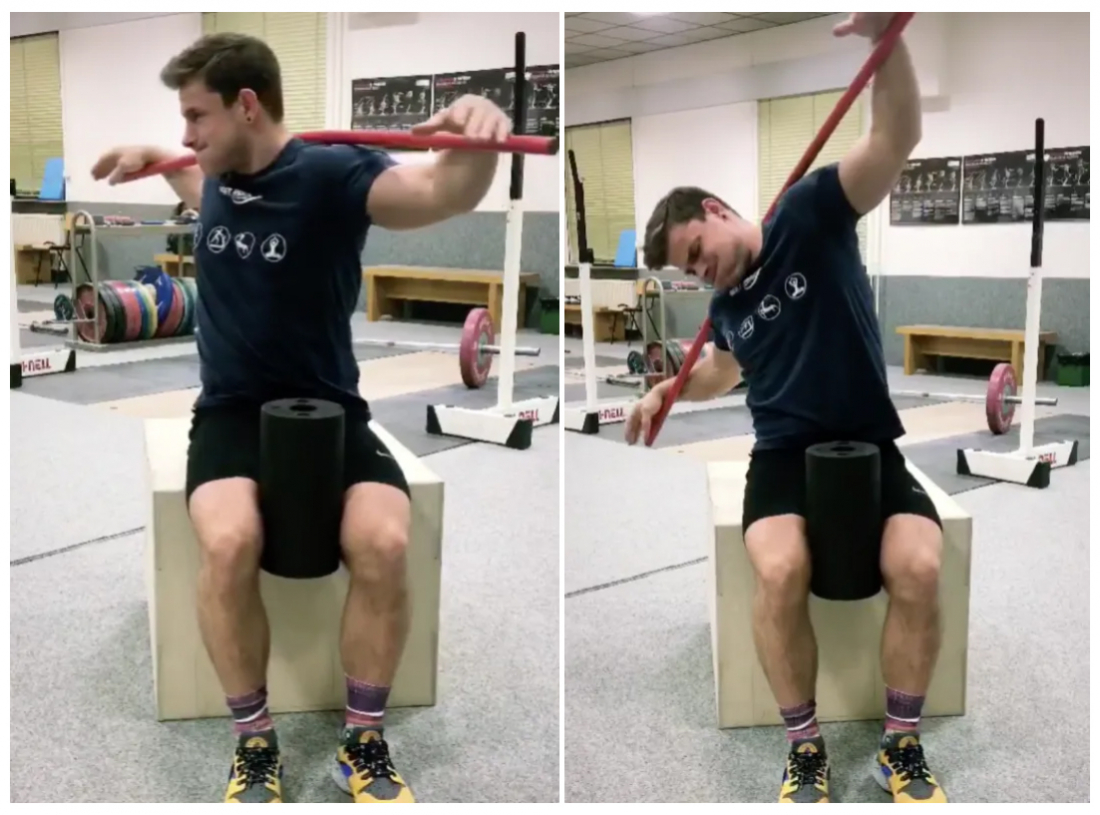
Then straighten up and repeat the whole thing on the other side. After 3-5 rotations you can probably bend farther than you did at the beginning.
Deep squat with rotation
This is an advanced exercise that requires full mobility in the execution of the squat. In the deep squat with your own weight, grab your left foot with your right hand. Then lower your right shoulder as low to the floor as possible and swing your left arm up towards the ceiling.
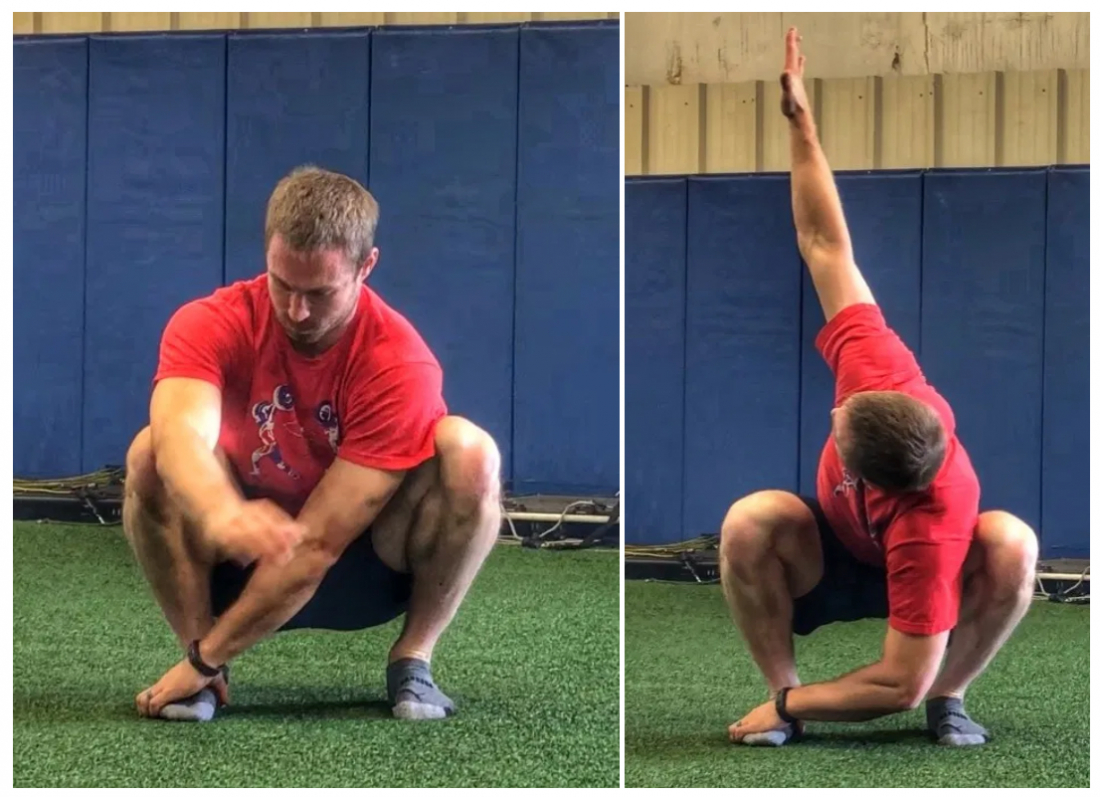
Hold the position for 5 seconds and switch sides. Practice 3-5 rotations with each side.
How to hold it?
I first saw this exercise in Gray Cook (author of the FMS screen - a functional mobility test and the book Movement). Start on all fours and sit on your heels. Your lower back may twist a little (when it closes like this, you can focus on your upper back). Bend your left elbow and place it between your knees. Place your right hand on the back of your head.
Then rotate your upper body to the right, but keep the left side of your chest glued to your left thigh (without this, you will also rotate your lumbar spine). This exercise will exercise many of the muscles of the middle back that give them stability. After holding for a few seconds, return to the starting position. Practice 10-20 repetitions on each side.
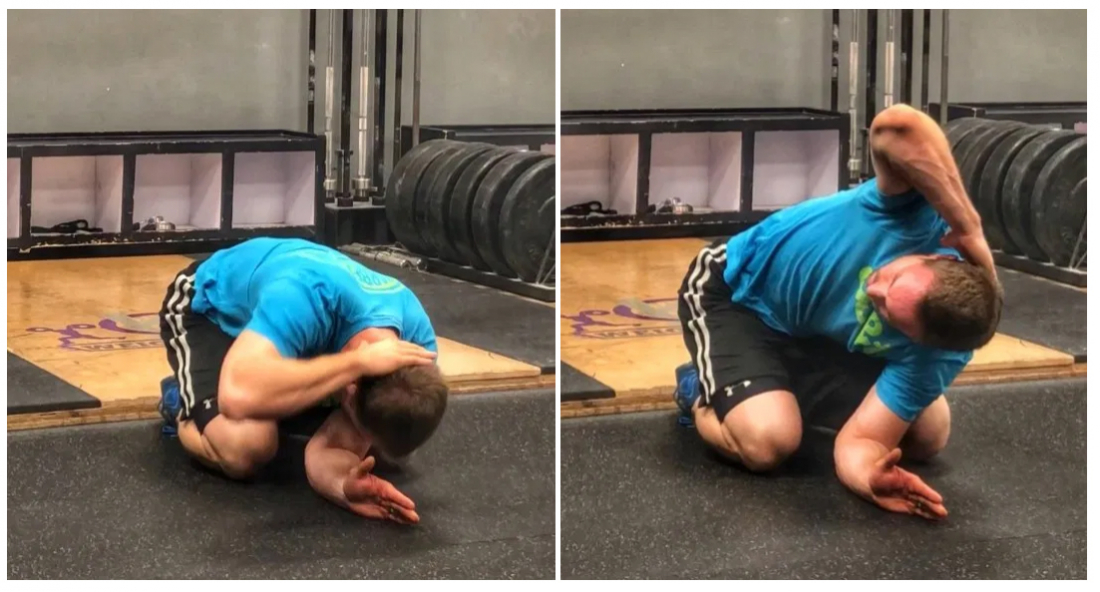
If your pectoral muscles and lats are too contracted, try just putting your right hand on your left shoulder and practice the exercise like this.
Conclusion
Now it's time for a new test to see if you're on the right track in improving your mid-back mobility.
Of course,the exercises presented in this article are not a miracle cure for improving mobility. They won't cure you in one workout. However, if you observe small improvements in the quality of your movement with each subsequent testing, you should add these stretching exercises to your daily program. With this body part in particular, consistency is key.
Recommended
Nebbia Slim fit legíny s kapsami SLEEK 482

Omega 3 240cps 1+1

Nebbia Mikina s kapucí OFF-DUTY 489
Nebbia Legíny s vysokým pasem SIGNATURE 463
Sources: Youtube, Instagram, https://squatuniversity.com/, Author: Aaron Horschig
Translated by: Jaromír Uhlíř
No posts have been made yet.