





How to learn Toes To Bar? Crossfitter Marek Vácha will explain!
 Author:
 Author Marek Vácha and RUFF training team
The basics of "kipping" movement first aka phase one
If your goal is to learn a new skill on the trapeze, be it Toes to Bar (T2B), Kipping Pull Up or Bar Muscle Up, you can't do without understanding the basic movement on the trapeze - Kip Swing, from which all the above exercises are based. This movement, in simple terms, consists of two positions, the Hollow and Arch positions, which we want to dynamically transition between in the trapeze hang.
Hollow position
You can think of the Hollow position as enduring a "banana-like" bend. Try lying on the ground (on your back) and try to push your upper and lower limbs off the ground at the same time and stay in this isometric stance for some time. It is important to keep a firm centre for this exercise and keep the lower back in contact with the mat. However, not by means of pelvic tucking, but by activating the muscles in the abdominal area. As a result, you should feel just a significant involvement of the abdominal muscles and in no case any pull in the lumbar region. If the exercise is still too difficult for you, lower your arms down to eye level and bend your lower legs slightly so that your feet are closer to the middle of your body than in the basic position. Strengthening in this position will help you learn the following movements.
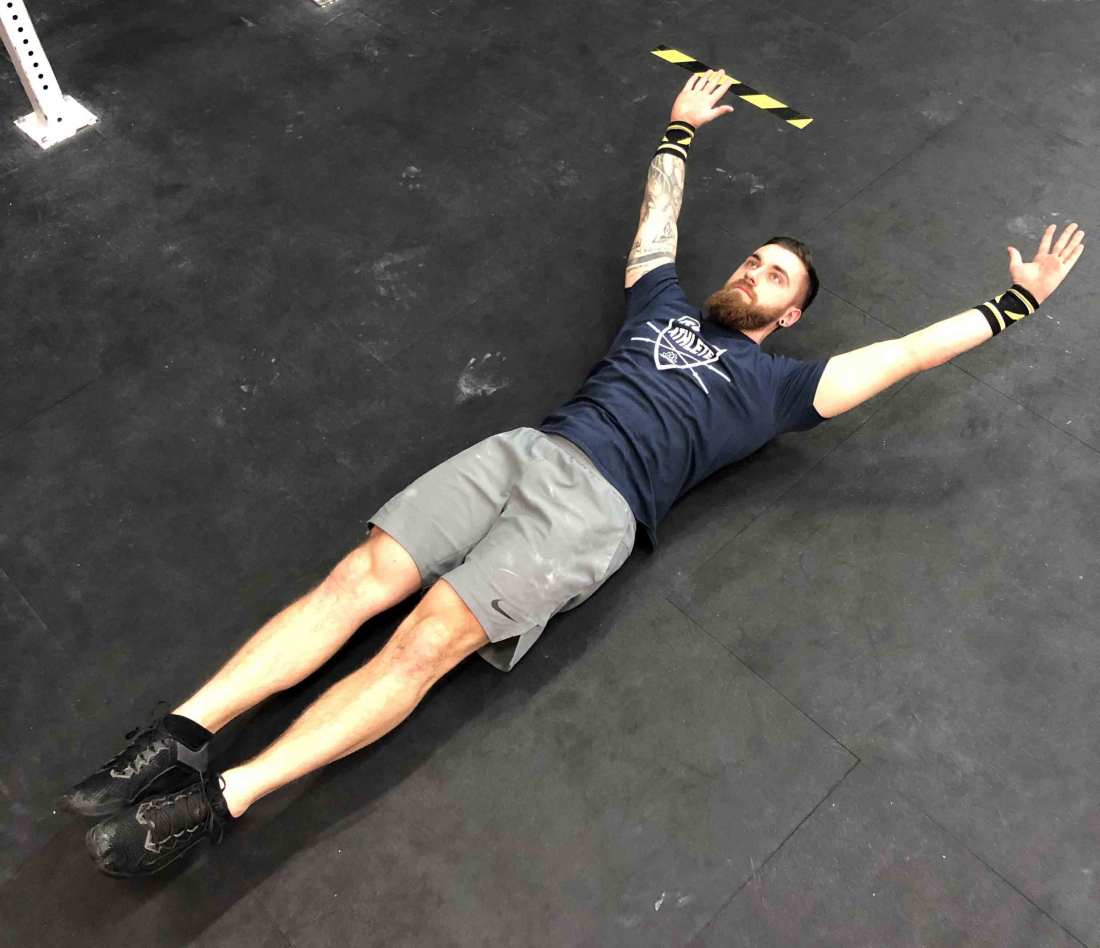
Hollow position - the hardest option
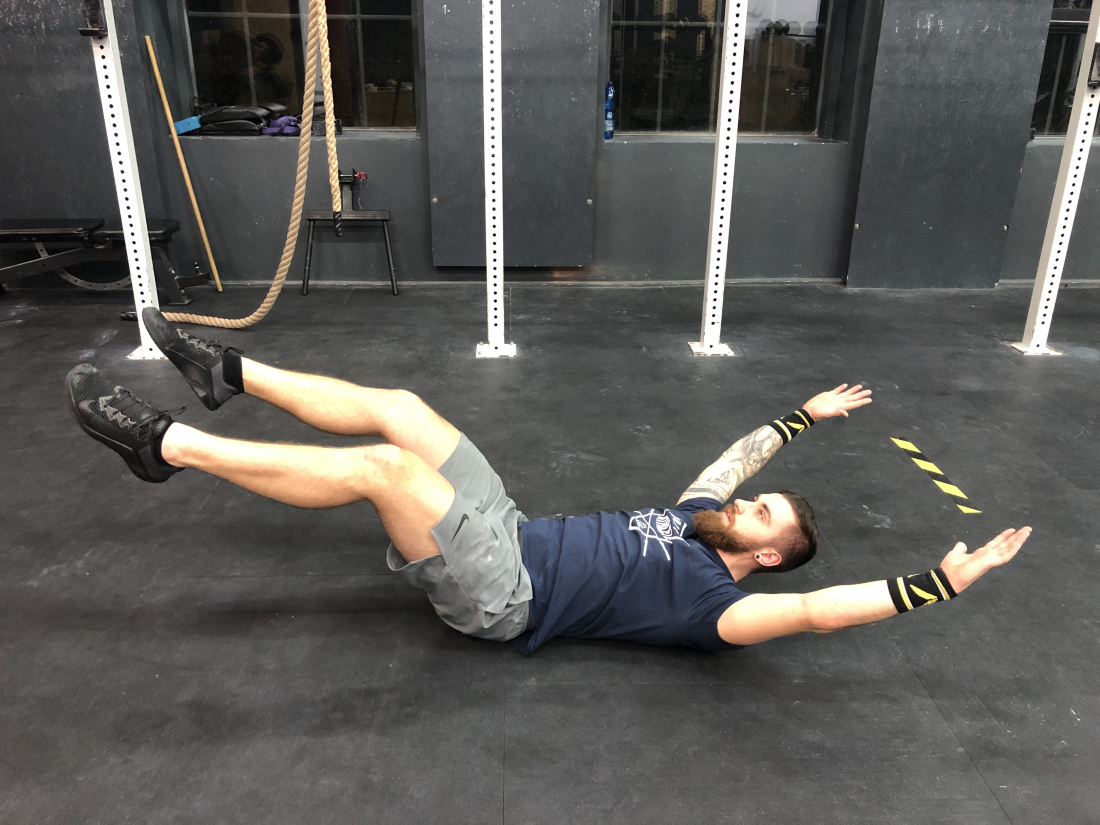
Hollow position - lighter variant
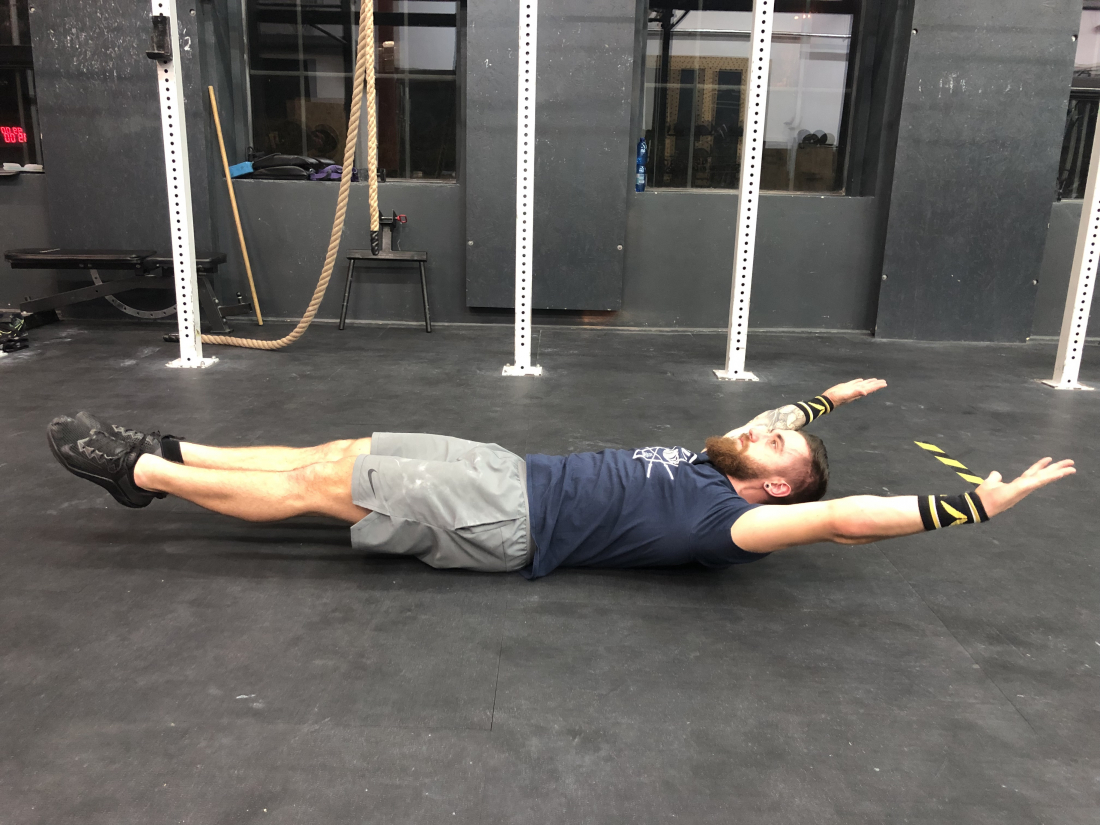
Hollow position - the hardest option
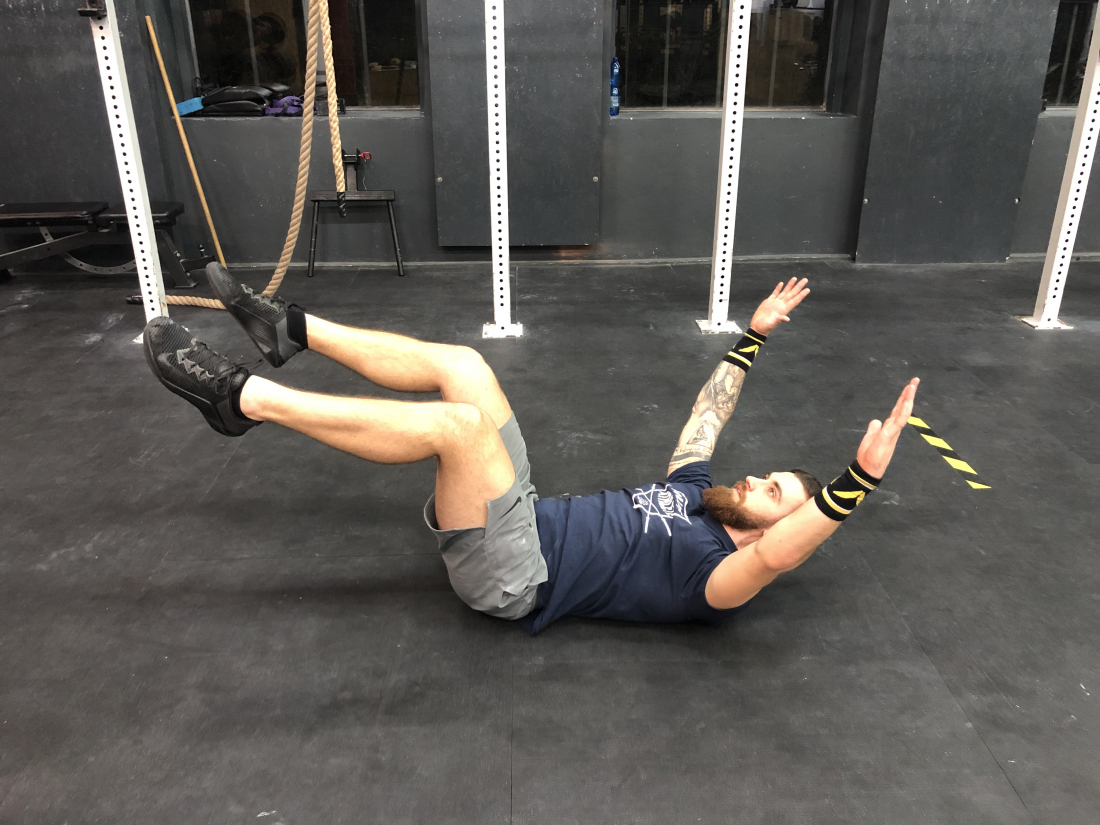
Hollow position - the lightest variant
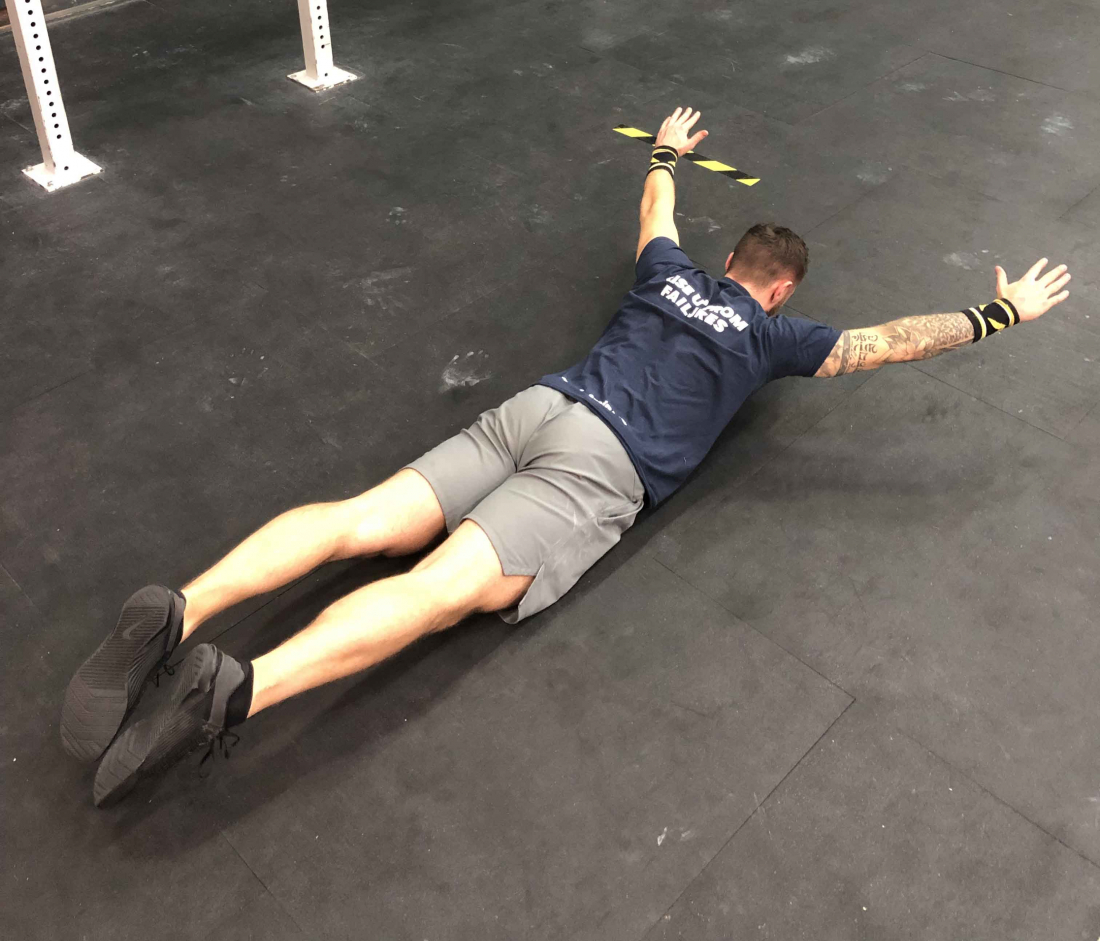
Arch position
The arch position is a stance in the opposite position on the stomach, when, as in the previous movement from the mat, we want to simultaneously unstick the upper and lower limbs only to the opposite flexion. Thus, in Arch position we are primarily targeting the involvement of the posterior chain muscles, especially the spinal extensors, scapular and gluteal muscles. However, even in this position it is very important to work with an active centre of the body, we do not want to just dumbly arch our back into an "arch", but to perform the movement while maintaining intra-abdominal pressure.
Kip Swing
The Kip Swing is then the resulting movement on the trapeze, which is created by a dynamic but controlled transition between the previous two positions. To understand the movement, you need to try and try ... so hop on the castle and get to it. Start with a passive hang on the trapeze, and from there try to transition into Hollow position, i.e., pull your shoulder blades into an active hang and tighten your mid-body to create the given banana shape. Once you have done this, try to move into the second position, Arch, in a controlled manner.
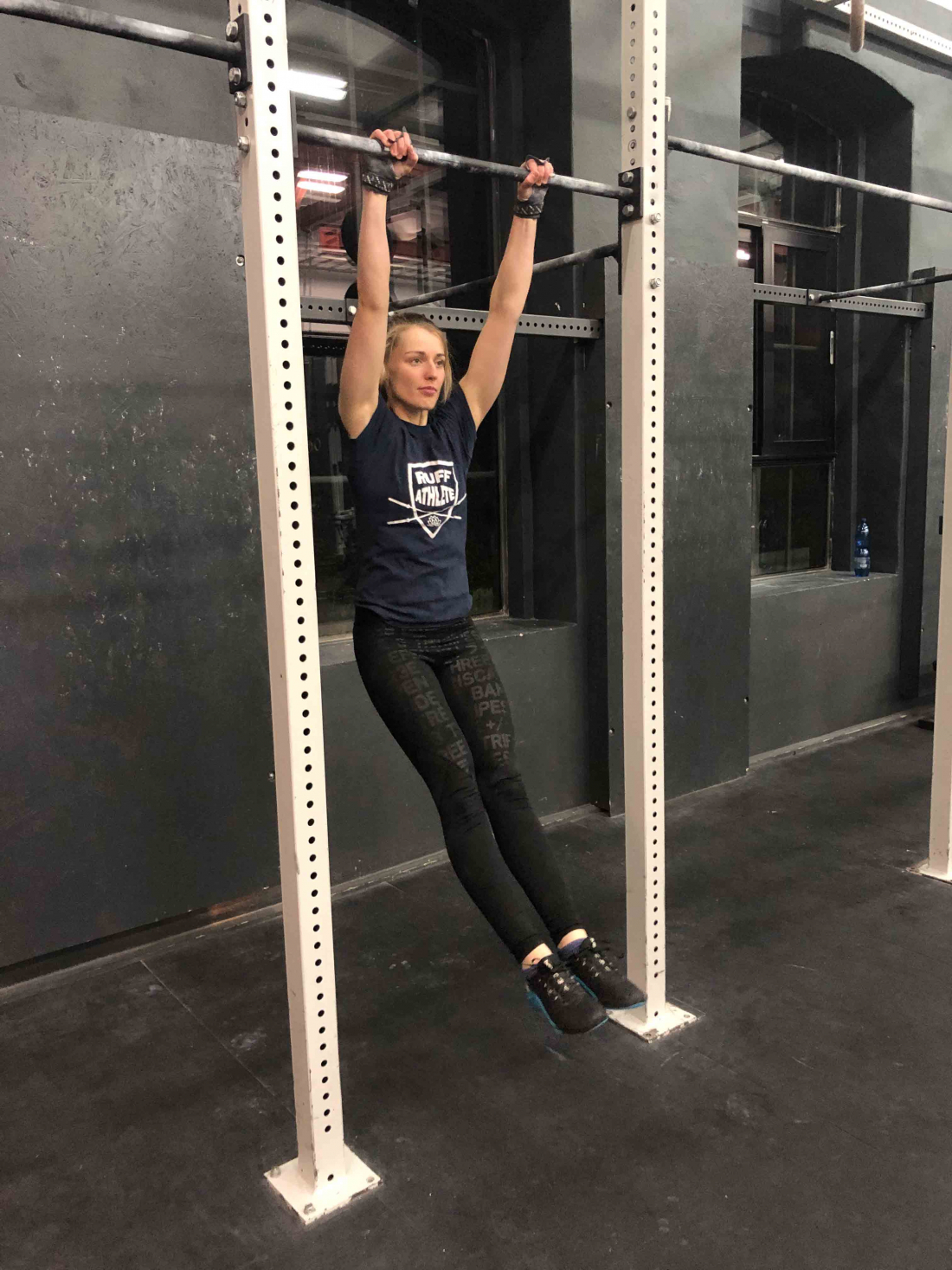
Kip Swing in the Hollow
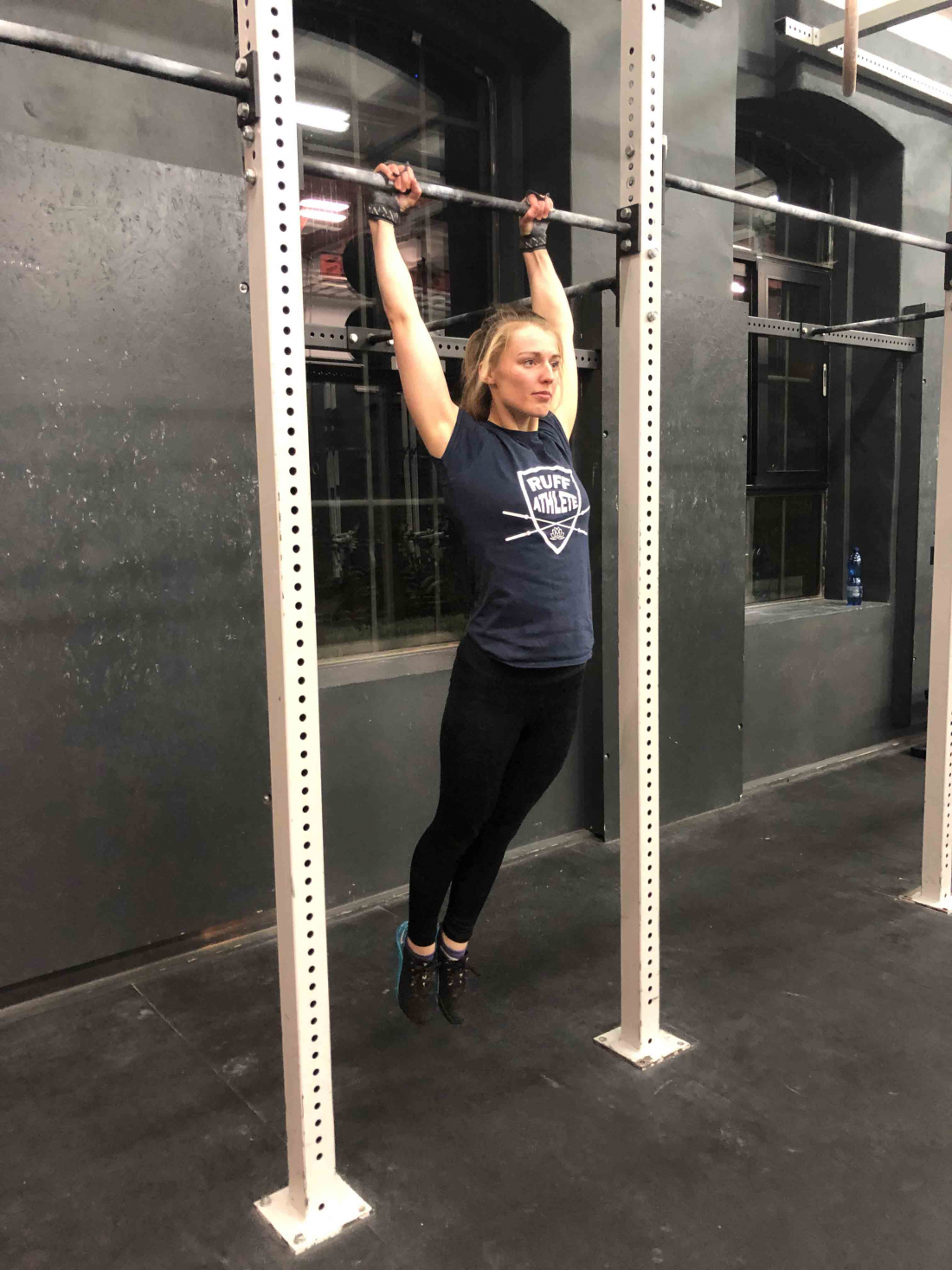
Kip Swing in Arch
Try doing a few sets of a few reps, start at a slow pace and gradually try to make the movement more and more fluid. A common mistake is to over-emphasize the movement of the lower limbs. Keep in mind that the transition between positions is primarily made by changing the position of the chest, not by swinging the legs. If you are unable to establish a smooth Kip Swing and are constantly swinging, try twisting from the side and look at where you are in the Hollow and Arch positions relative to the trapeze. In Hollow you want your shoulders and hips behind the trapeze, feet in front of it. Then for Arch it's the complete opposite.
Do you find the movement too simple and almost pointless to waste time with? Not so! As we have already written above, there are many more difficult exercises based on it. Without perfect technical mastery of it, not only will the harder exercises be harder to learn, but more importantly, they will never be smooth enough and you will have to "jerk" unnecessarily to get the energy you need to perform them. And your shoulders won't thank you for that. Learning the correct movement is the best injury prevention!
Stage Two
If you're already mastering the Kip Swing with bravado, we can take it a step further. The next step to your first T2B will be to understand the Kip Swing with an emphasis on pushing off the bar. Start with a few classic Kip Swings and gradually try to gently pull the trapeze down towards your body through your outstretched arms while behind the trapeze. You will primarily use the broad back muscle for this movement, feeling just like you would a Front Lever. At the same time, try changing your eye gaze direction slightly, in the classic Kip Swing look straight ahead, for this exercise try looking directly at the trapeze and then back in front of you as you transition into the Arch position.
Don't overdo it with the downward pull of the trapeze, the goal is not the Front Lever (keep your hips still behind or level with the trapeze), just push yourself slightly away from the trapeze to give you a better position to perform the following progressions.
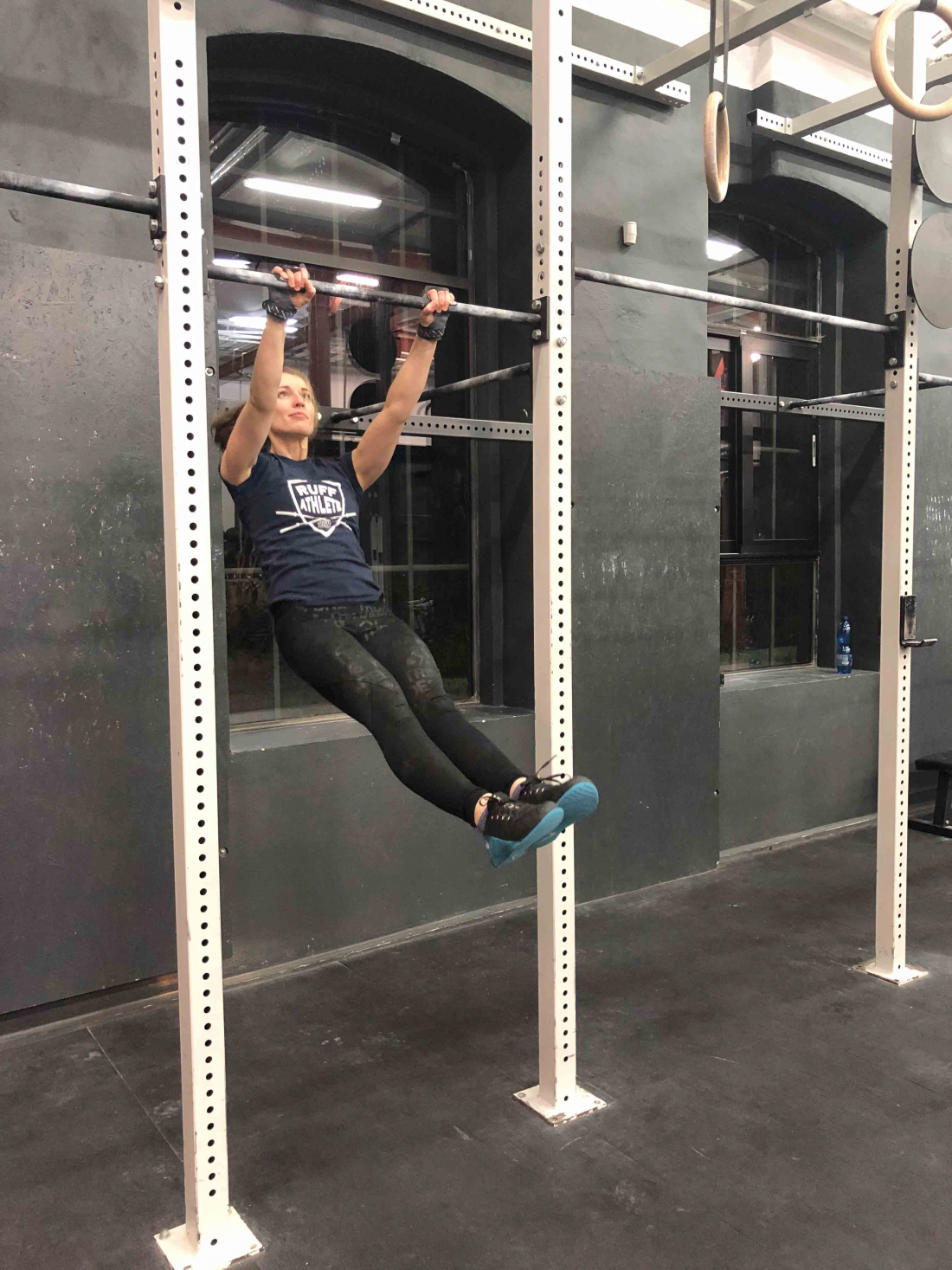
Kip Swing with emphasis on pushing off
Knees to Chest is your next progression, here you will use all the elements we have learned so far. As with the previous movement, start with a couple of Kip Swings (1-3 reps ), then smoothly progress into a couple of reps of Kip Swings with emphasis on pushing off the bar (1-3 reps ), and finally build up to Knees to Chest.
In the behind the trapeze position, bring both lower limbs in and bend to approximately 90 degrees. Make sure to continually pull the trapeze down towards your body over your outstretched arms throughout the movement, if you stop focusing on this part you will quickly lose the position behind the trapeze and will not be able to smoothly establish the next
repetitions. It's also important to stay active while moving your legs back, otherwise you'll lose momentum from the kip. It helps to think of it as if you're going to step on something down below.
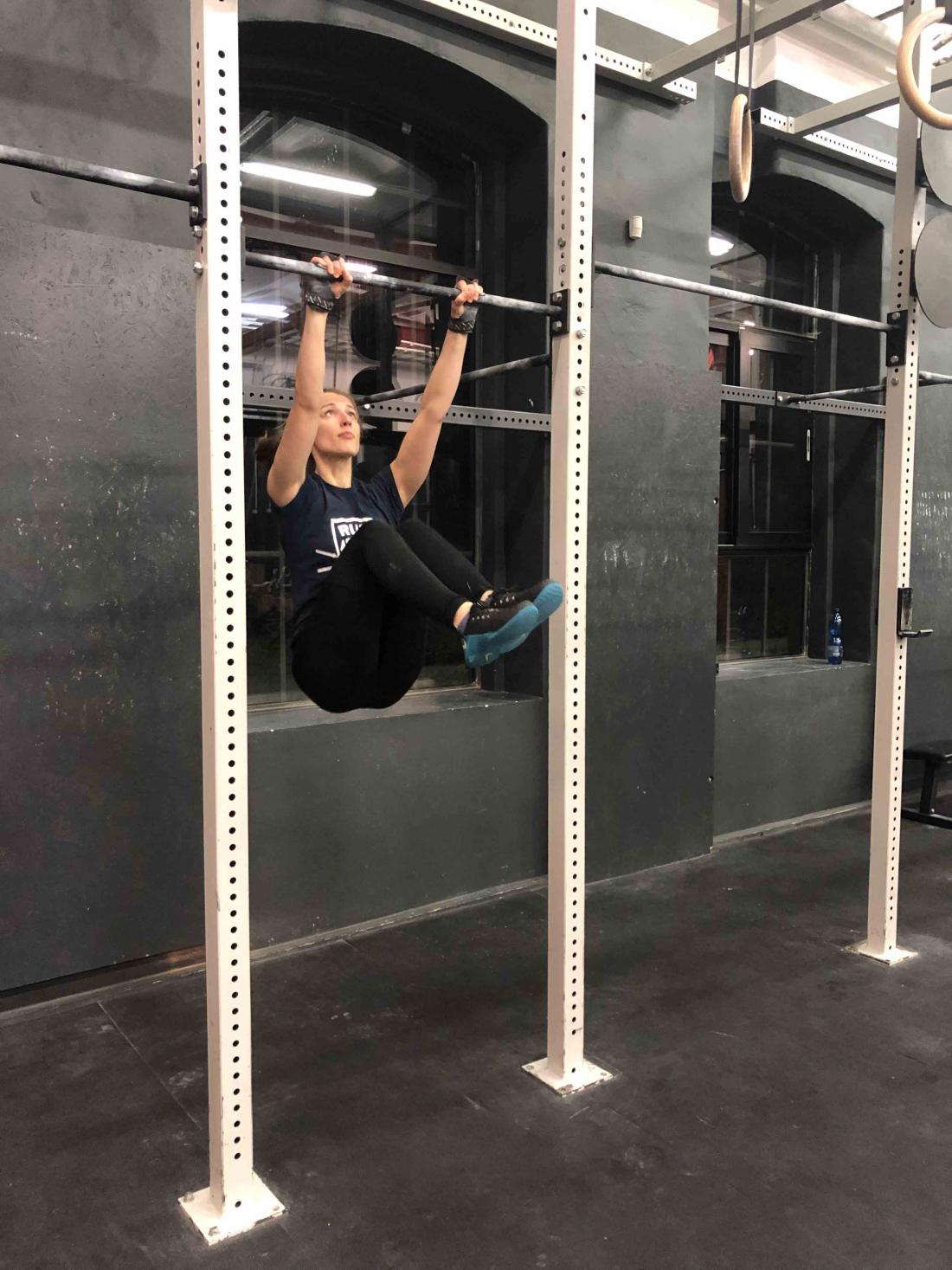
Knees to Chest
If you've mastered the previous skill and are able to perform several sets of at least five reps smoothly without unnecessary jerking, you can move on to the next step - 1/2 Toes to Bar. This exercise is very similar to the previous one, the only difference is the position of your feet, unlike Knees to Chest you want them to be ideally fully extended. This progression will force you to speed up the execution of the movement a bit, you will also have to put more emphasis on the already mentioned push off the bar. If you perform the movement too slowly, you will lose the basic positions in front of and behind the trapeze after a few reps, and you won't be able to smoothly pick up the next repetition. It will probably take you a while to get the hang of the exercise, but once you do, you're just a little short of a full T2B!
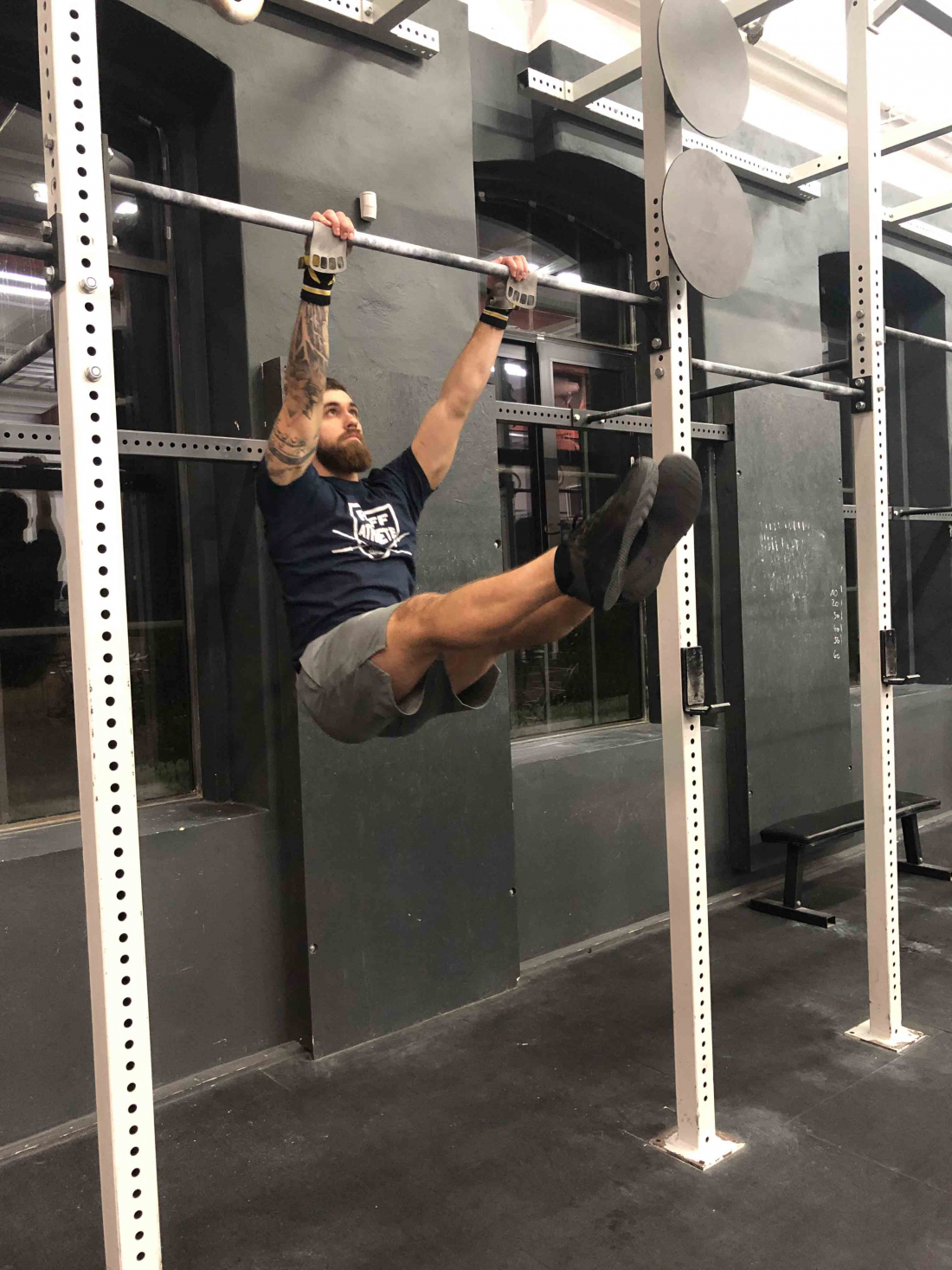
1/2 Toes to Bar
How to follow-up Toes to Bar
While it may not seem like it at first, performing a technical exercise in multiple, seamlessly linked reps can be a tricky thing. In case 1/2 Toes to Bar is already a piece of cake for you, try performing a given complex: Kip Swing + 1/2 Toes to Bar + 3/4 Toes to Bar + Toes to Bar.
So, classically "split", then try to gradually increase the height you reach with your legs with each repetition. As the range of motion increases, you'll need to focus all the more on the previous points and the fluidity of the entire movement. Once you slow down or loosen up more in any part, you probably won't be able to pick up the next repetition.
It takes time and patience, nothing comes right away. Same with this exercise, it will take a while to understand the rhythm. Don't try to do the whole Toes to Bar at all costs, if you can nicely build up to 3-5 reps of 3/4 Toes to Bar, you'll definitely learn more than one rep of the whole Toes to Bar. So take your time, find the ideal progression of the exercise and try to perfect its execution. Only when you have mastered several sets of at least three reps of technically linked 3/4 Toes to Bar should you embark on the full progression.
It is also advisable to alternate trapeze with rings when practicing the movement. This is because the so-called Toes to Rings allow you to perform the movement more easily in its full range.
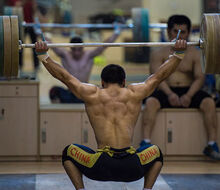
Toes to Bar Strength Development Supplements
There are, of course, plenty of exercises to develop strength to perform T2B more effectively. Here are just a select few. For each exercise you will find a link to a video of what the exercise should look like for our purposes. Feel free to use these exercises as an add-on at the end of the workout, if they are very challenging, incorporate them into the main section.
Band Lat Pull Downs
This exercise will help us to strengthen the setup on the trapeze, keeping tension in the back. We will use it to pull the trapeze bar downwards. Simply tie the band to the top of the trapeze, place your hands inside, ideally not holding the band, just bracing with the pinky edge. Back away from the trapeze a little bit so that you feel the pull in the band. You want to set yourself in the correct starting position before you start the actual exercise. Bend back at the hips, bend your knees slightly, keep your back straight and apply even pressure to your entire foot, basically as if you were doing an RDL (Romanian Deadlift). And we're ready to go. Smoothly pull the band over your outstretched arms towards your body so you can feel the side of your back (broad back muscle - m. latissimus dorsi) engage. As you go up, brake the movement in a controlled manner. Do 3 sets of 15-20 reps.
Seated Pike Ups
Lack the strength to pull your legs up? Try Seated Pike Ups.
Sit in space, stretch your legs. You want them to be extended at the knees, try to extend the toes as well. The closer you put your hands to your knees, the harder the exercise will be.
When your arms are set, start pulling your legs towards your chest. Just a little bit is all it takes, this is a really challenging exercise. Do 3 sets of 5-10 reps, either with or without touching the floor. If you choose the no touch option, it is a harder progression of the exercise.
If you can't lift both legs at once, you can go the variation of lifting only one leg, then the other. Remember, there are always progressions for your given level and these will help you get further.
Tuck Up Hold
Now we're gonna connect the dots. Activate the abdominals, flexors and latissimus.
Hang onto the trapeze. Begin with an active hang - that is, pull your shoulder blades down, the rest of your body hanging in a Hollow position. To do this, bring your knees to your chest and hold.
Easy peasy. Gradually increase the hold time, a few sets of 30-60s. will be ideal.
Toes to Kettlebell
Variation of the previous exercise. Lie on your back, stand up, grasp a heavy kettlebell (hereafter ktb), feel your arms pulling towards your body as if you want to bring the ktb in front of you to eye level. Pull your legs towards the ktb. Bend or stretch like a heavier version.
Strict Toes to Ring / Strict Toes to Bar
Strict force should precede the kipped variants. So be sure to include them in your training.
From a dead stop, no swing, get all the way up to the bar. If you haven't mastered it yet, bend your legs, go halfway through the variation (i.e. to your chest) and gradually increase the difficulty by stretching your legs on the way back and try to brake the movement.
That's all for today!
We hope you find this article useful and that your T2B will only get better. Training makes the master!
If you have any questions, feel free to contact us on our IG - riseupfromfailures_training.
Want to start CrossFit training yourself? Feel free to contact us at riseupfromfailures.training@gmail.com or on Instagramat R.U.F._training. We are here for you.
Recommended

Nutrend BCAA 2:1:1 Powder
Nebbia Crop top tílko ROUGH GIRL 617
Nebbia Washed-off volné baggy tepláky s kapsami GYM BRO 373
No posts have been made yet.








