





Ensure easy muscle growth with these unconventional exercises!
 Author: Šárka Randáčková
 Below we offer you six unconventional exercises for bodybuilders.
Build muscle with less popular exercises
Most exercisers engage in traditional exercises with dumbbells and weights. Mastering these exercises and using progressive overload is mandatory if you want to build muscle.
But what got you to where you are today is probably not what you should be doing to build more strength and powerful muscles. Stagnation with big exercises and years of overloading joints with excessive movement patterns lead to stalemates, pain, and even injury. Mentally you then stagnate and end up getting worse and worse results.
If you've been training for a long time, take an unconventional approach to get off the ground. This is not an exhaustive list, but it will help you get started. Check it out.
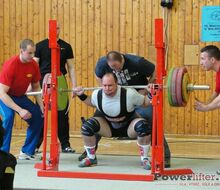
Read the descriptions of each exercise below to get all the details.
1 squat with safety axis
The squat on with safety axis is a joint-friendly way to build big legs. The hand position allows you to destroy your legs even if you have sore shoulders and mobility like a pitchfork. Your torso stays more upright, which is usually more comfortable for those with a history of back pain and poor hip mobility.
When using the safety axle, you won't be as strong at first because it will be a new way of loading. Over time, however, research has found that the strength, sprint speed, and vertical jump of people using the safety axis are almost identical to those who perform a traditional squat with a barbell. (1)
Incorporate it into your training for 8- to 12-week training blocks or use it the next time you're dealing with an upper-body injury.
2 Romanian deadlift with trap axis
Even practitioners with great technique can struggle with lower back pain and stiffness during the deadlift. So to take advantage of heavy deadlifts to build muscle and minimize the strain on your lower back, incorporate the Romanian deadlift with trap axis into your training.
This variation allows you to keep your weight in line with your body, reducing the shear forces acting on your spine. You may be able to achieve a much higher weight than with a traditional RDL with a conventional axis.
Additionally, your lats work double to stabilize the trap axis. The activation of the pectoral muscles in hip flexor exercises is key because they help stabilize the spine primarily through the thoracic and lumbar fascia.
3 z-press
The z-press is an overhead seated press. Incorporate it into your training as a core element and you'll optimize your overhead press mechanics, build better trunk control, and increase the size of your traps, rhomboids, and shoulders.
The ideal is to start with dumbbells or kettlebells, then move on to the big axle as your strength and stability improve.
- Sit with your torso upright and keep your chin in a neutral position.
- Extend your legs out in front of you. They may be slightly staggered to the sides, but not fully.
- Slowly push the weights over your head, trying to avoid swaying your torso.
- At the top of each repetition, stop with your knuckles underneath you. The weight should be directly over your wrist, elbow and torso, not in front of your body.
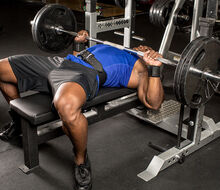
Introduction to strength training
4 pendlay haul
The Pendlay deadlift is surprisingly gentle on the lower back. Instead of performing each rep from the hang, you'll be laying the axle on the ground. This eliminates the stretch reflex at the bottom of the rep and results in a much "cleaner" rep execution overall than most big-axis deadlifts.
- Approach the axis in the same way as a regular deadlift, but extend your hips a little higher.
- Grab the axis firmly. Firm up the middle of your body.
- While holding the spine position, aggressively pull the axis toward the sternum.
- Lower the axis to the ground, curl up and repeat.
- Keep your torso parallel to the floor. With heavier weights, there may be some shoulder lift, but it should be minimal and you must always maintain a neutral spine position.
Pull-ups work best with heavy sets with low reps (4 sets of 3-5 reps) and moderate sets with medium reps (3 sets of 6-8 reps).
5 deadlift with trap axis
Standard forearm pull-ups tend to be quite back-breaking for exercisers. The trap axis is a much better option for most of you, especially if you're deadlifting to classic muscle-building rep schemes where lower back fatigue becomes a limiting factor.
With the trap axis, it's easy to get into the deadlift position even if you have the flexibility and mobility of a cinderblock. Plus, the resistance stays closer to the midline of your torso, making it easier to hold the position even when fatigued.
The neutral grip position allows for a greater range of motion than conventional pull-ups. When you contract a muscle over a greater range of motion, you strengthen it more effectively.
Wider handle placement on the trap axis creates more stretch in the posterior chain muscles. Your traps, rhomboids, lats, and back shoulders are under more tension and experience greater stretch throughout the repetition.
6 body saw
The body saw is a hybrid between a plank and an ab wheel. It works incredibly well because it's an isometric exercise for the midsection while resisting extension. It helps you reduce back pain while providing plenty of tension to build muscle in your abdominals.
- Put your feet in a hinge 15-30 cm off the ground. If you don't have a suspension, you can place your toes on a towel over a smooth surface, use furniture slides or exercise discs.
- Start in a plank position with your knuckles bent (elbows under your shoulders).
- Clench your fists and glutes to maximize tension from head to toe.
- While pushing your elbows into the ground, move your torso back and forth like a saw. As your torso moves back behind your elbows, you create a lot of tension in your abdominal muscles. As the torso moves forward, the abdominal muscles contract and create more stability.
Body saw is an isometric exercise for the middle of the body while resisting extension, which means it can help reduce back pain while providing plenty of tension to build abdominal muscles.
Try three sets of 30-45 seconds with 30 seconds rest and let me know how you get on.
Recommended
Nebbia Sportovní tepláky MUSCLE MOMMY 623
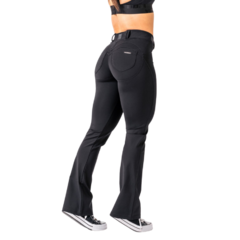
Nebbia Flared Bubble Butt Legíny 2.0 POWER LIFT 308
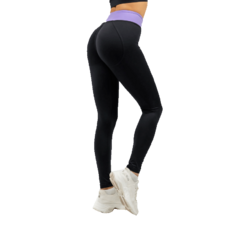
Nebbia Legíny s vysokým pasem SIGNATURE 463
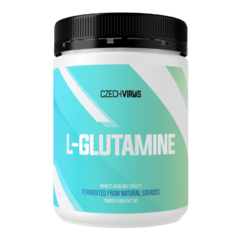
Czech Virus L-Glutamine
Source: www.t-nation.com - Easy Muscle With These Unconventional Exercises
Author: Eric Bach
translated by Jaromír Uhlíř
Author: Šárka Randáčková No posts have been made yet.








