





Develop powerful arms with complex exercises!
 Author: Šárka Randáčková
 You probably can't achieve bodybuilding arm size without direct arm training. So if you're going to compete in bodybuilding, you can't avoid some arm work!
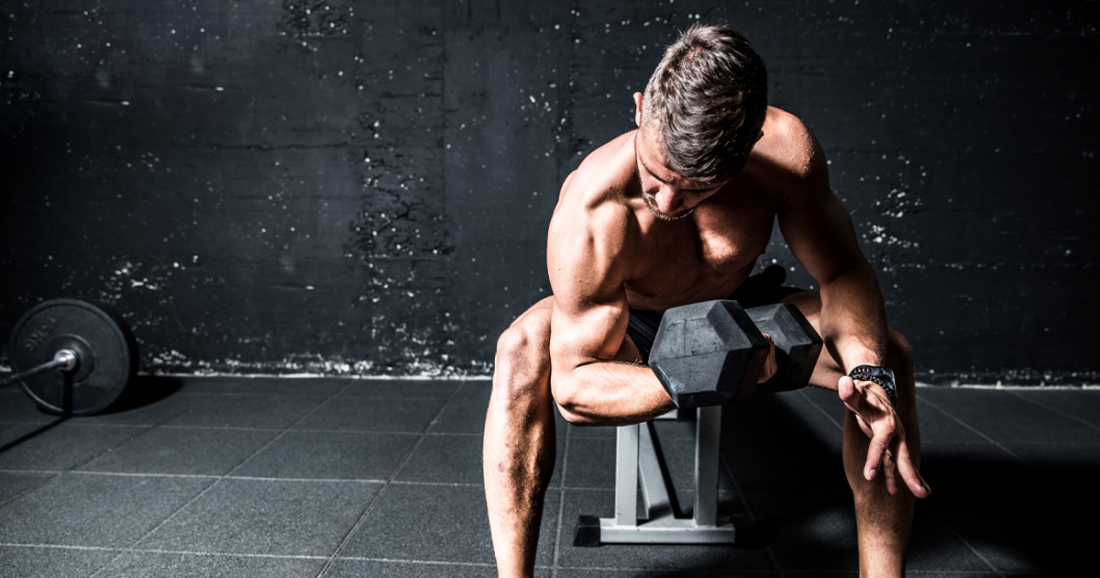
However, most people don't need direct arm work to get muscular arms. They can get by with hard training of basic exercises, especially heavy deadlifts and push-ups!
Some people will certainly be exceptions, but for the majority of the population this statement will hold true. Let's break it down.
Know your purpose
I'm not against direct hand training. But the body has a limited capacity to handle systemic stress and there is no need to train all muscle groups equally.
Think of training time as money. Invest it where you expect the highest return.
I've trained fitness athletes who basically only trained glutes, hamstrings, upper back and shoulders. That's all they needed to train. That's why it's important to know what you're training for!
You are training with a goal in mind, you want to achieve a certain look or performance. If you don't, it's hard to adjust your means if you don't know where you're going with them!
Direct Hand Work Study
One study found that when you have a workout built around complex exercises, adding isolated hand work won't improve their volume or strength!
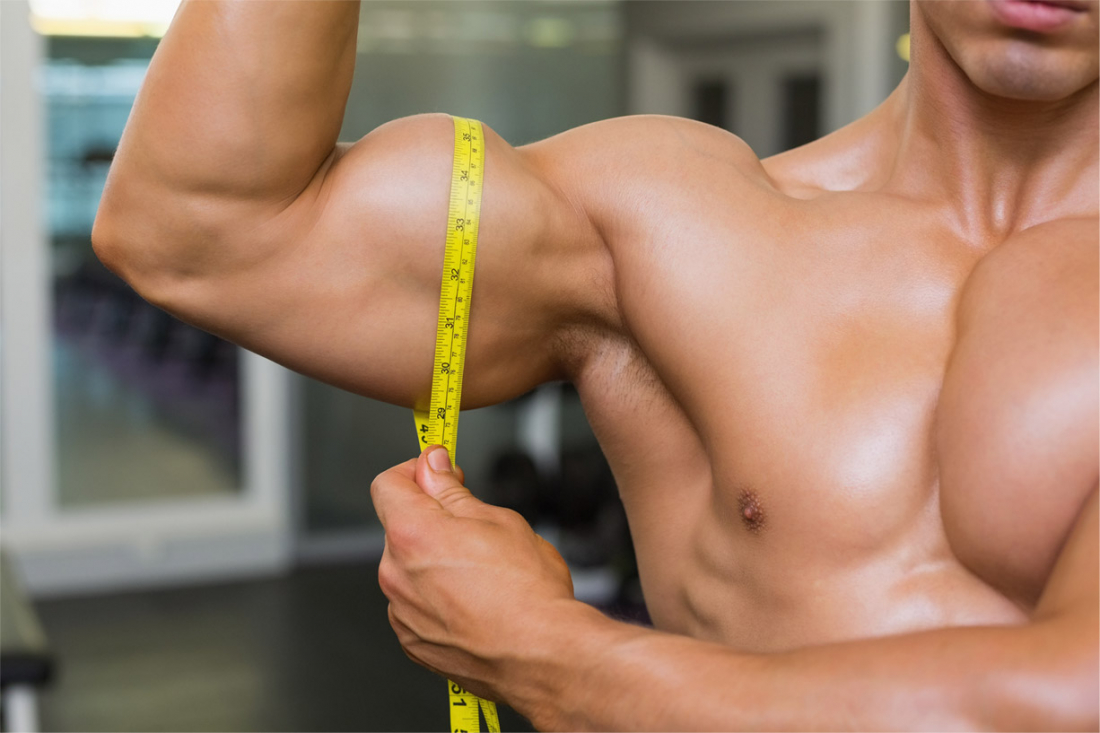
The research was conducted on experienced bodybuilders and lasted 8 weeks. All of the participants trained complex exercises, but half of them added some arm work. After eight weeks, there was no difference in arm growth or strength between the subjects. The conclusion was this:
Adding single-joint exercises to a program consisting of complex exercises did not produce any benefits in terms of volume or strength in the trained men, whether or not they were taking anabolic steroids.
These results may help with the design of training programs, as they suggest that trained individuals may be saving time and omitting single-joint exercises from their workouts altogether.
The only problem with the study in question is that I don't know how much a trained bodybuilder can shift in just 8 weeks.
It's crucial because as a beginner you pack on maybe 10 kilos of muscle in a year, but after say 2 years of real training the improvement will be much slower!
In 8 weeks it can be a maximum of 0,5 kilos of muscle on your whole body. And that won't lead to any visual changes on your arms. So the fact remains that there may be benefits for the group that exercised their arms directly, they just may not be significant.

On the other hand, strength grows faster than muscle mass. And since the direct hand training group was not stronger, for strength we can evaluate that direct work does not produce optimal strength results. This is confirmed by my results with experienced athletes.
And if you are a normal person, have a full time job, financial stress, etc, more work may even hurt you. Especially if you train naturally. Why add work to your hands if it won't improve your results!
Are deadlifts as effective as biceps raises?
Proper training of compound exercises can be just as effective as straight work for both biceps and triceps!
To stimulate growth you must engage a large portion of the muscle fibers and at some point in the exercise you must stretch those fibers under load. This is called the negative part of the exercise.
For example, a muscle may be heavily engaged in a particular exercise, but if it is working isometrically (think abs in a squat), it will not be optimal for growth. The muscle will still grow and get stronger (especially isometrically), but it will not be maximal gains.
Bret Contreras researched muscle activity levels during biceps and back exercises. He did this using EMG. A nice finding was that most of the pulling exercises had higher biceps involvement than the direct arm training!
For example, the weighted push-ups performed with an underhand grip and neutral grip had higher involvement than all the biceps raises tested!
Thus, the shrugs are better for your biceps than biceps lifts with a large axis, on the Scott bench, hammer raises, and one-arm lifts even on the positive bench.
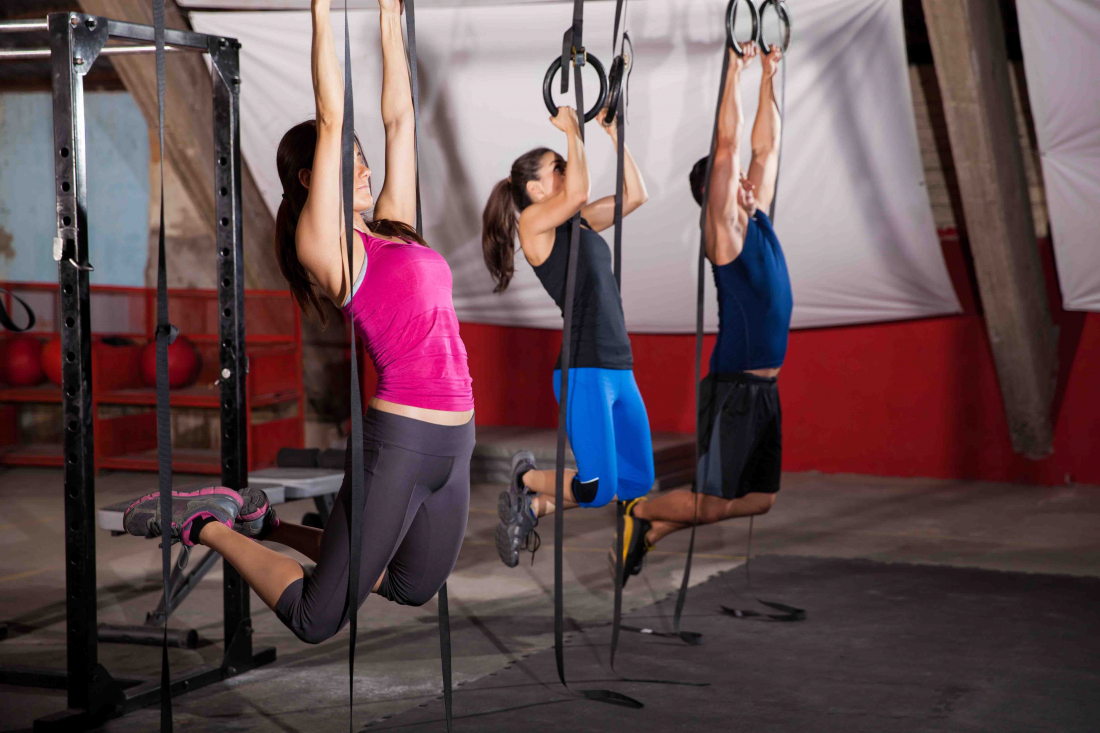
Horizontal rowing hasn't had as much success. The biceps involvement was half that of the other exercises. The takeaway is that if you're shimmying (and probably also doing the other vertical strokes), you're probably stimulating your biceps enough.
However, if you're only pulling horizontally (overhead pull-ups, on the bottom pulley, T-bar pull-ups, etc.), you probably need some isolated biceps exercises.
We can continue on the same theme with the triceps. Horizontal presses are great for it. Bench press on close and push-ups on the bars are two of the best exercises for the triceps! The triceps will probably need even less direct work than the biceps.
Recommended
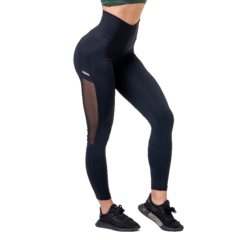
Nebbia Mesh legíny s vysokým pasem 573
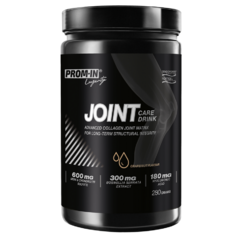
Prom-in Joint Care Drink
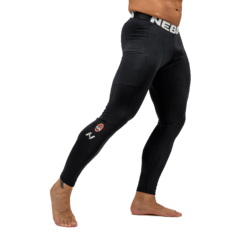
Nebbia Fitness legíny s kapsou DISCIPLINE 708
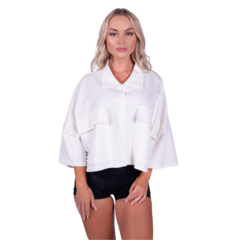
Nebbia Boxy crop košile s kapsami URBAN MUSE 598
So if your goal is to build an athletic physique, you probably don't need direct arm training.
If you skip it, you'll probably recover faster from the workouts or be able to give the complex exercises more volume without reducing your body's capacity to handle the systemic load.
How do you know if you need direct hand training?
Not sure? See which of the following categories best describes you:
1 - Athletes who do not need ANY direct hand training:
- Most athletes. This includes CrossFit.
- Those who want to look athletic. Imagine an MMA fighter, sprinter, or good CrossFit competitor: good shoulders, legs and back, round pectorals, and arms proportional to the rest of the body.
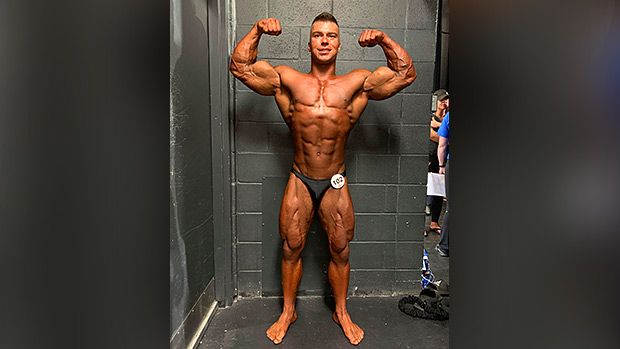
- People with great hand genetics or physically demanding jobs. Sometimes this includes bodybuilders. Here is an example of a bodybuilder trained by Jean-Philippe Ferland. He has excellent hands, but he doesn't train them directly. Thanks to good genetics and a demanding job (he carries heavy things and works with a stick), this is not necessary.
- Those who want to be big and strong. Most strongmen and triathletes don't train their arms directly. Weightlifters don't either.
2 - Athletes who need SOME direct hand training:
Such athletes don't need as much work as they think. One biceps and triceps exercise a week is plenty.
- Those who have a mechanical disadvantage, however, often practice push and pull exercises. People with long arms usually engage their chest and back more during push and pull exercises, respectively. For proper body proportions, they will probably need some targeted arm work.
- Those who don't practice a lot of vertical pulls (and practice more deadlifts and overhead presses) will probably also need a bit of targeted arm work.
3 - Athletes who need LOTS of direct hand training:
- Those who have poor neuromuscular coordination when it comes to their hands. They will find it difficult to engage their hands well in complex exercises, and so will not grow optimally from them.
One of the main benefits of isolation training is that you learn to clench and feel the muscles being trained. It's much easier to focus on biceps clenching if it's the only muscle being exercised, rather than just one of the muscles needed to perform a complex exercise. Thus, hand exercises can be beneficial in terms of cultivating neuromuscular coordination that can make even complex exercises more effective in the future.
4 - Athletes who need a SIGNIFICANT AMOUNT of direct hand training:
- Most competitive bodybuilders will probably need a fair amount of direct hand training. In bodybuilding, you need to have your arms disproportionate to your other parts because you'll probably impress the judges with them on stage.
Dorian Yates, for example, who was 51cm across his arms before he tore his biceps off, says something about that. Yet he was said to have small hands for the rest of his body. So as a competitive bodybuilder, you'll need a fair amount of arm training. And although it won't bring as much benefit in the end compared to complex exercises, every little bit counts on the stage.
Conclusion
Over the past 22 years I have coached a number of professional athletes (football, hockey, CrossFit), Olympians and amateurs in 28 different sports. We rarely ever use direct hand training because it is not a well invested training volume. Despite this fact, the size of their hands is mostly proportional to the rest of their body.
Occasionally I will include one biceps and triceps exercise per week if it is clear that these muscles are a definite hindrance to the development of complex exercises.
If you're after an athletic physique, you probably don't need much (if any) direct arm training. If you're into bodybuilding, you'll obviously need to train your arms.
Remember:
Your body has only a limited ability to handle training loads and growth. Therefore, you should invest your training volume most heavily in the exercises that will provide the most benefit to your training goals.
Source: www.t-nations.com -You (Probably) Don't Need to Train Arms
Author.
Author: Šárka Randáčková No posts have been made yet.








