





Create an excellent "six-pack" on your stomach with eight simple exercises!
 Author:
 Chances are you don't read our site for the perfect belly. We usually start working out for one of the mirror parts - chest, shoulders or arms. However, the abs are a crucial part of bodybuilding, and the sport in general.
Whilea good midsection is very important for good looks, its essential role is to stabilize the body not only during heavy exercises, but also inall sporting activities! With our abdominal training guide, you'll get everything you need to sculpt your abdominal muscles like stone.
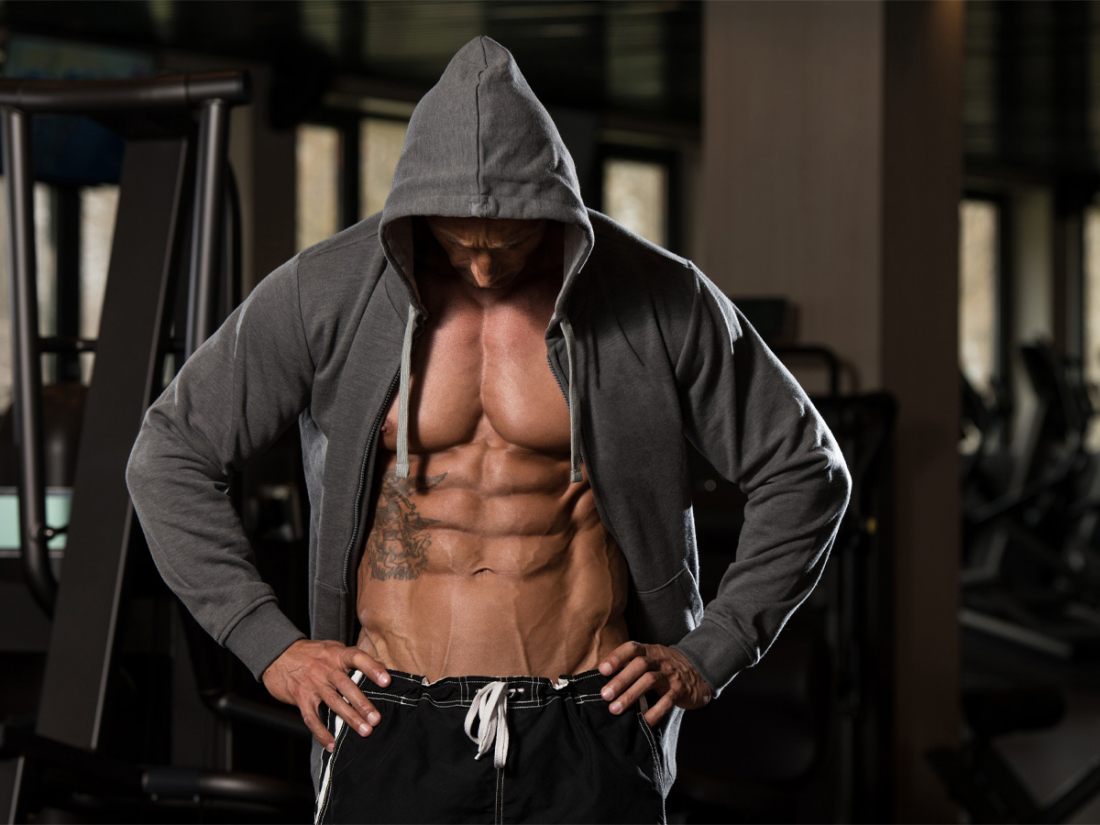
Abdominal muscle training
Breathe!
Inhale in the bottom "relaxed" position of each rep and exhale as your abdominals contract. At the top of the movement, hold your breath for a second and clench your abdomen tightly. If you are not doing this without thinking, focus on it until it feels completely natural to you. And not just in abdominal training, but for every body part.
Fast, slow.
What about speed of execution? You see people working out at lightning speed, but you also see people who take an hour for each rep. Who's right?
We recommend alternating. As long as you 're not helping yourself with the swing, you're doing it right. But you still need to feel what you're doing, both during the exercise itself and after you've completed it. A faster pace will engage more muscle fibers in the rectus abdominis and obliques.
We often recommend practicing faster reps one workout and slower reps the next, with more control. Orstart a set with faster reps and finish it with slow ones, with feeling.
In other words, listen to your instincts. Judge the pace yourself, but with common sense.
Frequency
According to the latest studies, the ideal time between training each muscle is 48 hours. So if you always train at the same time, you can train each part every two days.
Basic abdominal anatomy
The muscles you see
This is the six-pack that judges at competitions and ladies at the beach judge.
- RECTUS ABDOMINIS: The muscles that attach to the bottom of the sternum and, on the other side, to the pelvis.
Function: Pulling the knees to the torso and vice versa.
- SERRATUS: Muscles that resemble fingers and extend from the lats to the sides of the rib cage.
Function: Pulling the shoulder blades forward.
- EXTERNAL INTERCELLAR MUSCLES: Muscles that run diagonally around the rib cage - Below the pectoral muscles, but above the external oblique abdominals. Not to be confused with the serratus.
Function: Helping with deep breathing , as they, along with the external oblique muscles, expand and contract the rib cage.
- EXTERNAL oblique abdominal muscles: Muscles that run diagonally down the sides of the body, between the rectus abdominis and the lats.
Function: to turn the body sideways and bend the spine to the right and left.
The muscles that you can't see
These muscles are popularly called the deep abdominal muscles. Although they are not visible to the naked eye, they are indispensable for the support and strength they provide not only in the gym, but in any sport, and even in normal daily activities.
For bodybuilders, these muscles are also essential because they allow the abdominals to pull in and create a vacuum - something that has been highly valued in bodybuilding in the past, as it makes every pose look so much better.
- TRANSVERSE ABDOMINIS: Directly below the rectus abdominis.
Function: Helps stabilize the spine and pelvis.
- INTERNAL oblique abdominal muscles: Below the external ones, extending in the opposite direction to them.
Function: Rotate the body to the right and left.
- INSIDE INTERRIBIAL BANDS: Below and between the ribs.
Function: Assist breathing by lifting the ribs.
You'll find plenty of articles on our website that deal specifically with strengthening the deep stabilization system (core). And if you're wondering whatexercises to choose just to strengthen your core, we've got the 6 best core exercises for you!
Exercises for the abdominal muscles
You want to hit all the muscle groups listed above in your workout. But you don't want to create some monstrously long routine that you'll never want to get into. You'll need exercises that hit as many parts as possible at once.
On paper, this will seem long, especiallycompared to the two sets of shortening that bodybuilders usually put on at the end of their workouts. But it shouldn't take you more than 10 minutes. Yes, it will be an intense workout. But if you stick with it, the six-pack willcome.
Shortening
Primary target: upper rectus abdominis, oblique abdominal muscles
Secondary target: Deep abdominal muscles
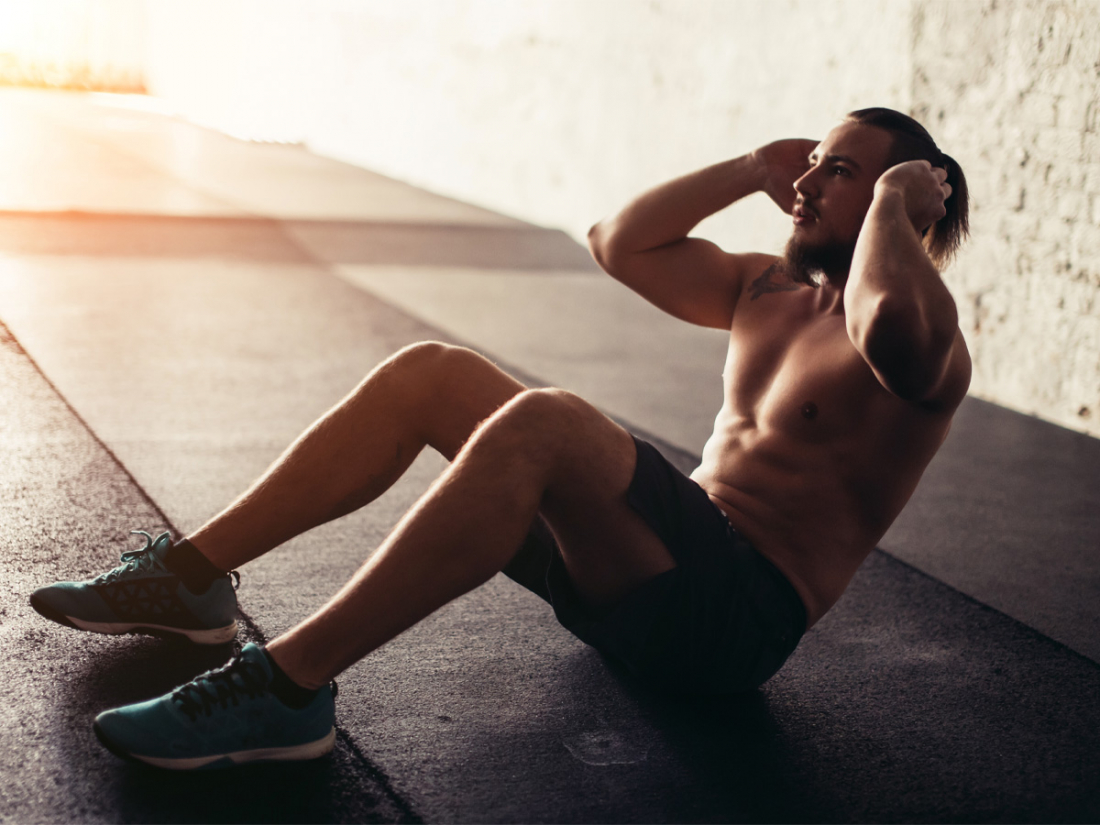
The crunch is the foundation of abdominal training - simple and effective. However, poor execution is often seen. You're not supposed to try to get your torso as high off the ground as possible, but the whole idea of the exercise is to try to curl your torso as much as possible and get your shoulders as close to your hips as possible. It's a pretty short movement, but if you perform it in a controlled manner, you'll see dramatic results.
Kettlebell shortening
Primary target: Serratus, upper rectus
Secondary target: Deep abdominal muscles
Lie down on the floor with a kettlebell barbell or single-arm dumbbell in one hand. 5 to 10 pounds will be enough to get you started. Extend your arm so the weight is perpendicular to the floor, keeping the other arm close to your body. Keep your feet flat on the floor. Push the weight as high as you can, using only the muscles of your upper body.
Kicking
Primary target: lower rectus abdominis
Secondary target: Deep abdominal muscles
Lie on the floor with your hands tucked under your hips. Alternate lifting your stretched legs from about three inches off the ground to about twenty. You're basically doing the same thing with your legs as you do when you swim. It's a quick but controlled movement. This targets the lower rectus abdominis.
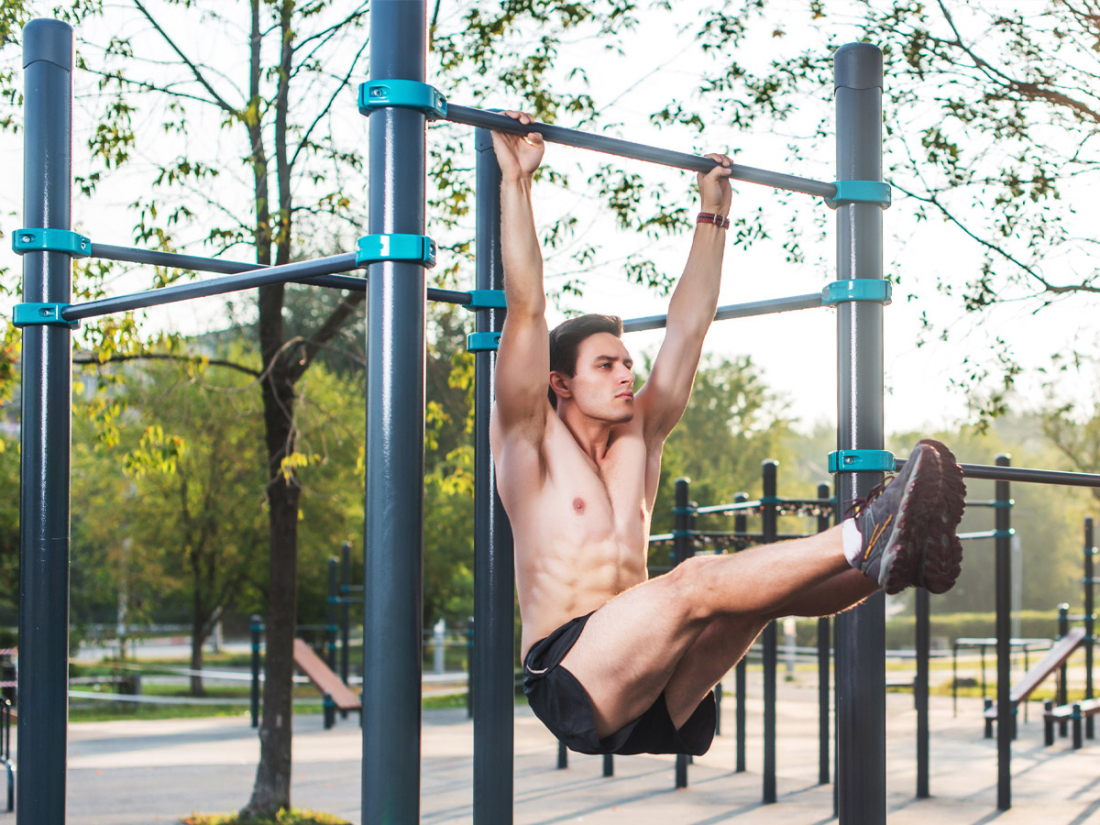
Lifting the knees in a vis
Primary target: lower rectus abdominis, oblique abdominals.
Secondary target: Deep abdominal muscles
You've probably tried this before, which is good because it works. You can use hangers for this, or simply grab the traps. Lift your knees up to your stomach without the aid of a swing. As you get stronger, you can straighten your legs, which makes the whole thing harder.
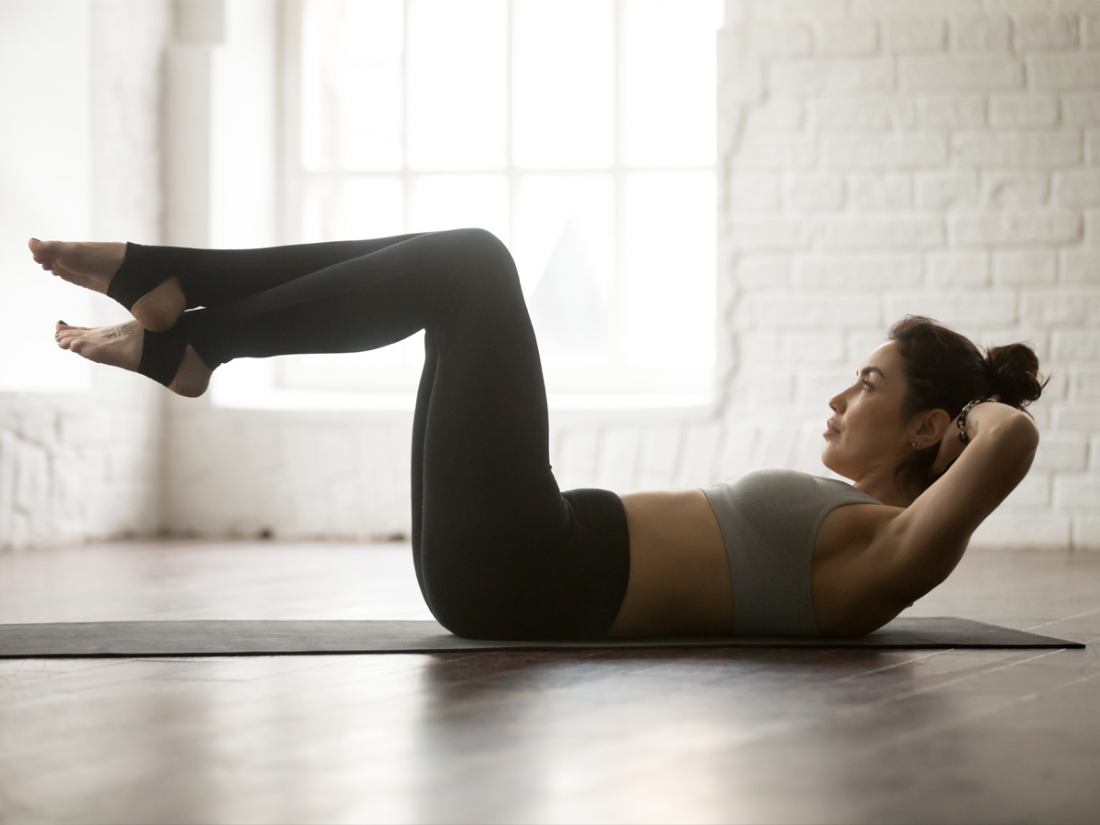
Bicycle
Primary target: upper and lower rectus abdominis, obliques
Secondary target: Intercostal muscles
Lie on the floor with your legs bent. Thighs are perpendicular to the floor, shins parallel to the floor. Bring your hands together behind your head or grasp it and alternate pulling your elbows to the opposite knee each time. Concentrate on rounding the torso and returning to the starting position on each repetition.
Lifting the knees while lying down
Primary target: lower rectus abdominis, obliques, deep abdominals
Secondary target: Upper rectus abdominis
Sit on a bench and take a 5-10 pound one-arm kettlebell between your feet (to start). Hold it between your feet. Lie down and hold the bench behind your head. Pull your legs with the one-handed bar towards your torso. Push through and back through the legs. This is an excellent exercise for the lower rectus abdominis and intercostal muscles.
Oblique lying sitting on a Roman bench
Primary target: upper rectus abdominis, oblique abdominals
Secondary target: lower rectus abdominis
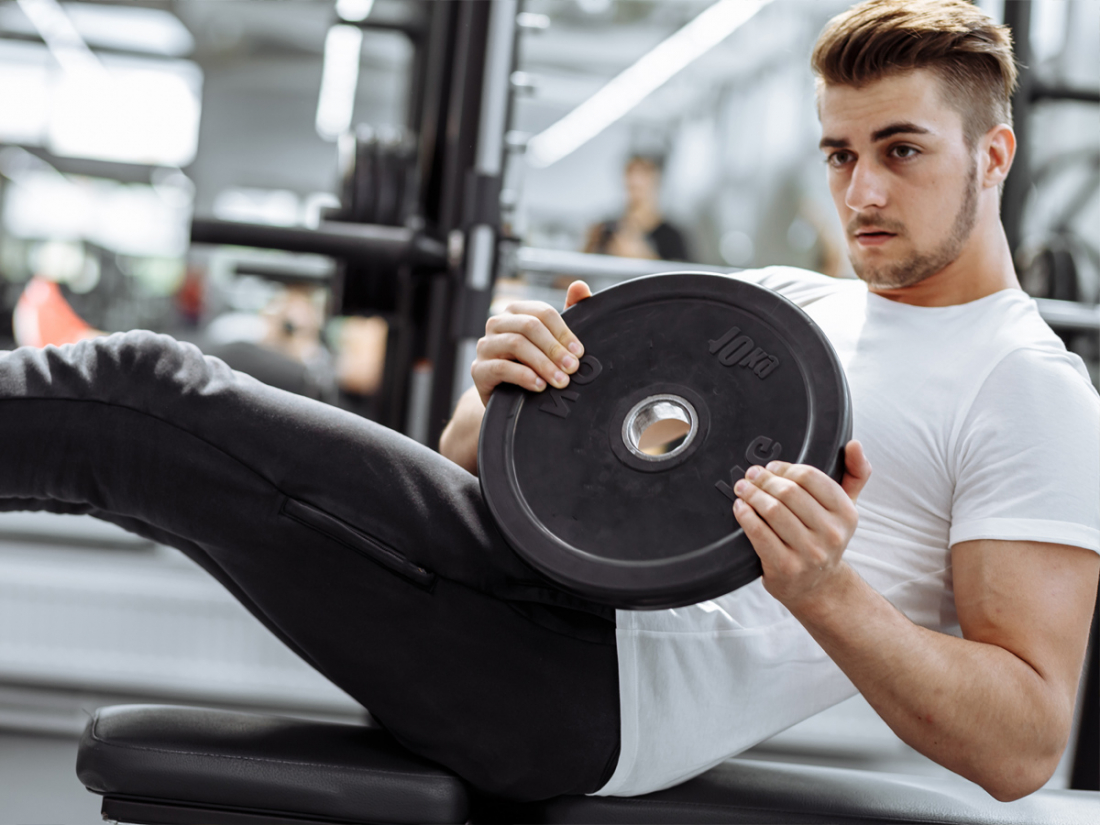
Hold the disc on your chest or behind your head while performing a lunge sit on a Roman bench. Always rotate your shoulder to the opposite knee on each repetition.
Vacuum
Primary target: Deep abdominal muscles
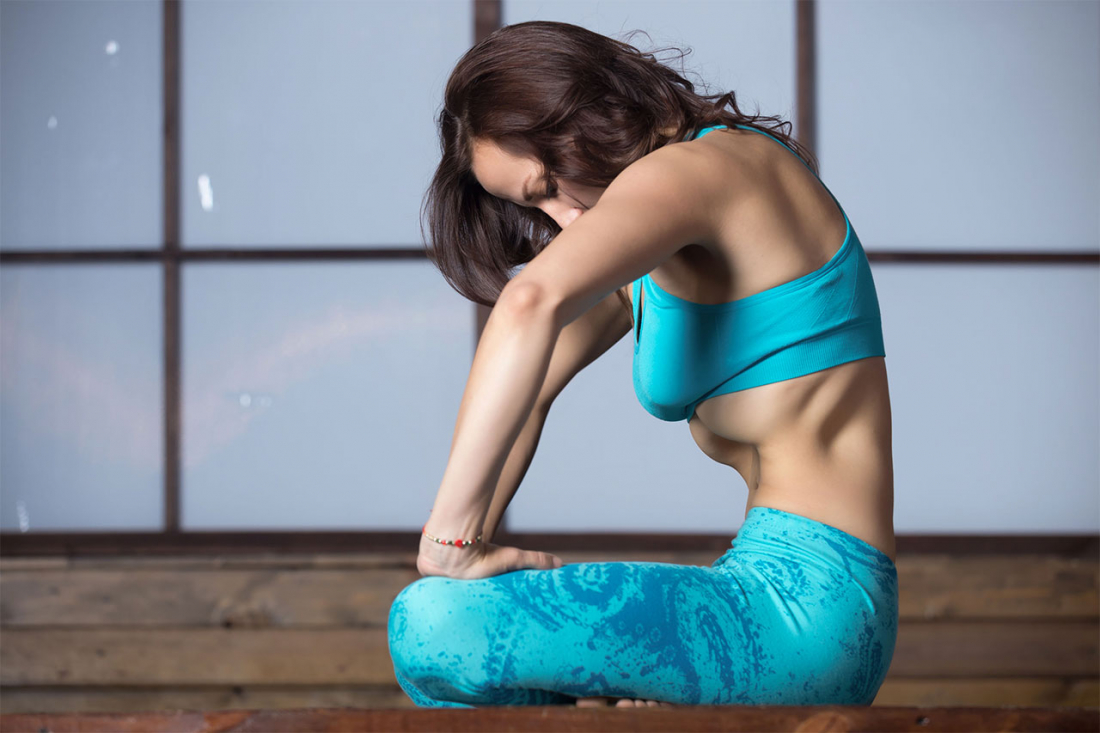
Sit on a bench with your back straight and hands on your knees. Pull in your abs as far as you can, keeping your chest closed. Hold this position for 10 seconds and try to hold your breath. Relax and catch your breath before repeating. The 10 seconds is one repetition.
Abdominal muscle training
Workout 1
| Exercise | Series | Repetitions | Target area |
| Shortcuts | 1 | 20 | Upper abdominal muscles, Oblique abdominal muscles Superseries with |
| Bicycle | 1 | 20* | Lower abdominals, Deep abdominals, Superseries with |
| Vacuum** | 5 | See notes | Deep abdominal muscles |
Workout 2
| Exercise | Series | Repetition | Target area |
| Kicking | 1 | 50 | Lower abdominal muscles, Deep abdominal muscles |
| Shortening with kettlebell | 1 | 10* | Serratus, Upper Abdominals, Deep Abdominals |
| Vacuum** | 5 | See notes | Deep abdominal muscles |
Workout 3
| Exercise | Series | Repetition | Target area |
| Lifting around in the supine position | 1 | 15 | Lower abdominals, Deep abdominals |
| Incline lying sit-ups on Roman bench | 1 | 12 | Upper Abdominals, Oblique |
| Vacuum | 5 | See notes | Deep abdominal muscles |
Notes:
Each superset is performed three times, with a one minute break
* Each leg or each side
** Hold each of the five sets for 10 seconds
Six-pack, eight-pack, four-pack?
The rectus abdominis has the popular nickname "six-pack," but many people have four rows of buns on their abdominals, giving them an eight-pack. Some, on the other hand, have only two, a four-pack.
The most famous person with a four-pack is probably Arnold Schwarzenegger. This is, of course, genetically determined by the number of fascia (connective tissue) crossing the abdominal area. Unfortunately, you can't influence this by training.
Recommended
Nebbia Washed legíny s vysokým pasem LEGACY 777
HMS Twist stepper s lanky S 3033
Nebbia Legíny se síťkou s vysokým pasem IMPACT 479
Nebbia Bubble Butt legíny LIFT UP 558
No posts have been made yet.








