





Butt wink in the squat: triviality or serious problem?
 Author:
 Perhaps no one doubts that the squat technique, due to the sedentary lifestyle of the vast majority of us, is extremely demanding and few can master it flawlessly. Although the basic principles of the squat are well mastered by most gym-goers, the so-called butt wink, a certain rounding of the back in the lower phase of the squat, still occurs quite often. But how dangerous is this really? Is it preventable and can it be eliminated once it occurs? That's what we'll look at in our article today.
Article content:
- What is a butt wink really?
- What causes it?
- What causes it?
- A triviality or a serious problem?
- What to take away from today's article?
What is butt wink really?
As much as the term butt wink has caught on, it is still only a term widely used by gym-goers and most doctors or athletes from other industries will most likely not understand it at all. This is because it is a so-called pelvic retroversion, a condition in which the pelvis "tilts" backwards during the bottom phase of the squat and the lower back rounds.
Ultimately, therefore, it may look to the layman's eye that you have loaded more on the barbell than you can lift and are struggling with it at the expense of technique, similar to the deadlift. In reality, however, the butt wink is a much more complex problem that even lowering the weight usually won't fix.
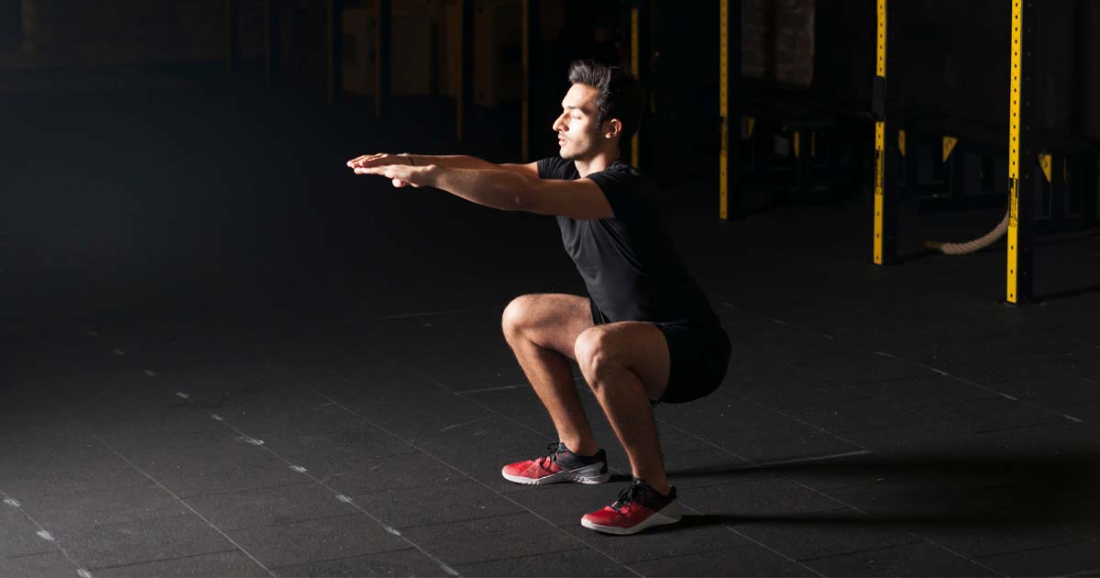
While it's unimaginable to many, even in the lowest phase of the squat you should have a completely straight back.
So what causes it?
Butt wink (sometimes translated as "butt wink") can arise from a huge variety of causes, and more or less every athlete's problem can be said to be a little bit different - from poor mid-body engagement, to problematic breathing, to lack of mobility in certain joints. But what are the most common causes of pelvic retroversion?
Lack of mobility of muscle groups
Very often, athletes have a problem with insufficient mobility of individual muscle groups. It is regularly pointed out that insufficient mobility of the hamstrings is the primary cause of pelvic retroversion, but this claim has been repeatedly refuted - and you can see for yourself. If hamstring mobility played any major role, there would likely be worsening or improving problems with any other type of squat (front, low bar, high bar, etc.). So where might the problem be?
For the vast majority of exercisers, it will either be in the internal and external rotators of the hips, which are directly related to the depth of execution of the squat, or in the lack of ankle flexibility. Of course, the problem could be in other parts of the body, but in that case you would notice complications in other exercises as well - especially with deadlifts, bench presses or other complex exercises, you would struggle with pain in that muscle group.
Poor seating of individual bones
At the beginning of this article, we explained that this is a pelvic retroversion, so it's clear that the pelvis gets under-set at some point in the squat. However, this can occur as a result of the femoral neck starting to push against the edge of the hip socket and in order to continue the movement lower, under-setting of the pelvis is necessary.
How to remove it?
As the problem may be somewhere else for each athlete, recommendations for improving the situation are also necessary, conceived quite broadly.
If you are troubled by poor seating of individual bones, there is of course nothing you can do about it, and the solution in this case is simple at first glance - you need to find a squat style that suits you. Try playing around not only with the seating of the barbell on your back, but also with the width of the stance, toe position and other aspects. In case you can't afford to invest money in either an experienced strength-oriented physiotherapist or a professional trainer, it may take you quite a bit of time to find the ideal technique, but sooner or later you're bound to find a technique that suits you.
If your problem is related to a lack of mobility, but you're not sure which muscle group is lagging behind in this regard, a comprehensive full-body stretch before each workout is in order. From my own experience, I would definitely recommend focusing primarily on the aforementioned foot and hip flexors. For this, a lacrosse ball and resistance bands are very effective tools to start your workout with. Then it is usually recommended by many trainers to move on to activation exercises and then perform activation exercises. Even with these, it's worth starting with exercises targeting individual areas before moving on to complex exercises.
To illustrate this, you can start with a kneeling kettlebell roll (or one form of a classic plank or other full-body exercise), then move on to, for example, a windmill plank (see video below). It is also a good idea to include, for example, a static kettlebell hold in the bottom phase of a goblet squat or different variations of squats without weights. While such a warm-up may be quite long, it should effectively combat pelvic retroversion.
A triviality or a serious problem?
Many of you must be waiting in horror to find out what negative consequences pelvic retroversion during squatting can have. In this case, however, we must disappoint you. Because as we discussed in one of our updates, the butt wink is not necessarily a serious problem. Or rather, it must be said that it depends on the specific situation.
A fairly reliable indicator can be if each of you answers the question whether your lower back or some other related (or maybe seemingly unrelated) areahurts after a leg workout with a slight pelvic retroversion . Indeed, there is as yet no relevant study that has confirmed a correlation between this undesirable phenomenon and increased risk of injury, suggesting that this is a highly individual problem.
The main problem, however, may be that a poor position of a certain part of the body can negatively affect another part, and so a seemingly harmless butt wink can affect the entire body's centre of gravity, trunk stabilisation and even the degree of compression of the intervertebral discs, which can lead to their dislocation.
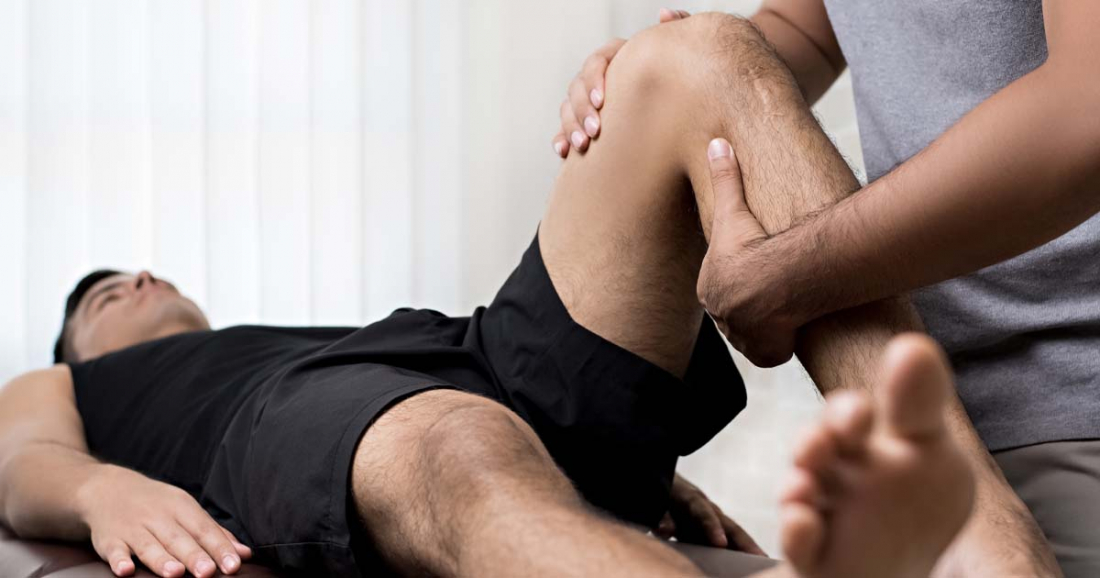
Are you so ripe for a visit to the physiotherapist after every leg workout? Then it's time to start doing something about your mobility and training concept.
What to take away from today's article?
There are several things you should take away from today's article. Perhaps the most important is that butt wink is a fairly common and not necessarily serious problem. It is most often caused either by a lack of mobility of individual muscle groups or poor seating of individual bones, but in any case it can be corrected with regular stretching and a strong emphasis on mobility.
Although no relevant research has confirmed that it alone is behind the development of problematic injuries, it can affect the overall functioning of the body during squatting, causing herniated discs and other unwanted injuries. If you've been exercising for decades and pelvic retroversion hasn't brought you any injuries, you probably have nothing to worry about. Young and not-so-experienced gym-goers, however, should try to correct their buttwinkle.
Source of the original image: https://builtwithscience.com/how-to-squat-properly/
Recommended

GymSupps XGen
Nebbia Bezešvé push-up legíny s vysokým pasem 303

Nebbia Top-style body CLUB D’OR 641

Nebbia Washed legíny s vysokým pasem GYM WARRIOR 776
No posts have been made yet.








