




8 vs. 20 Reps: Science Debunks the Biggest Myth About Muscle Growth!
 Author:
Imagine a typical evening at the gym. One person is loading heavy plates onto the bench press, while another next to him is working out with significantly lighter weights. The first manages eight reps, the second twenty. Both end up tired and convinced that their own training method is the right one.
But which of them is actually building more muscle? According to traditional fitness wisdom, the answer would be simple: heavier weights for strength, a moderate number of reps for muscle growth, and a high number of reps for endurance.
But science now shows that human muscles don’t work according to such simple rules. And perhaps it’s time to stop counting reps and start focusing more on how we actually train.
Article Contents
- Eight or Twenty? Scientists Have Come Up with a Surprising Result
- Why Do Muscles Care About More Than Just the Number of Reps?
- So which is better? Heavy or light weights?
- Want bigger muscles? The number of reps alone isn’t enough
- How to apply the number of reps in practice?
Eight or twenty? Scientists have come up with a surprising result
For decades, approximately 6 to 12 repetitions were considered the ideal range for muscle growth. Higher numbers were automatically associated primarily with muscular endurance. However, modern research has significantly changed this perception. In 2021, researchers published a meta-analysis of 28 studies involving 747 participants. They compared training with light, moderate, and heavy weights, with sets performed to voluntary muscle failure.
The result? They found no statistically significant differences in muscle growth between the different load levels.
A similar picture emerged from a large-scale meta-analysis published in 2023 in the *British Journal of Sports Medicine*. Various training approaches were shown to promote hypertrophy, while heavier weights had an advantage in developing maximum strength.
Does this mean that eight repetitions are just as good as twenty? Under certain conditions, the results may be similar. However, it is certainly not true that the weight or intensity of a set doesn’t matter at all.
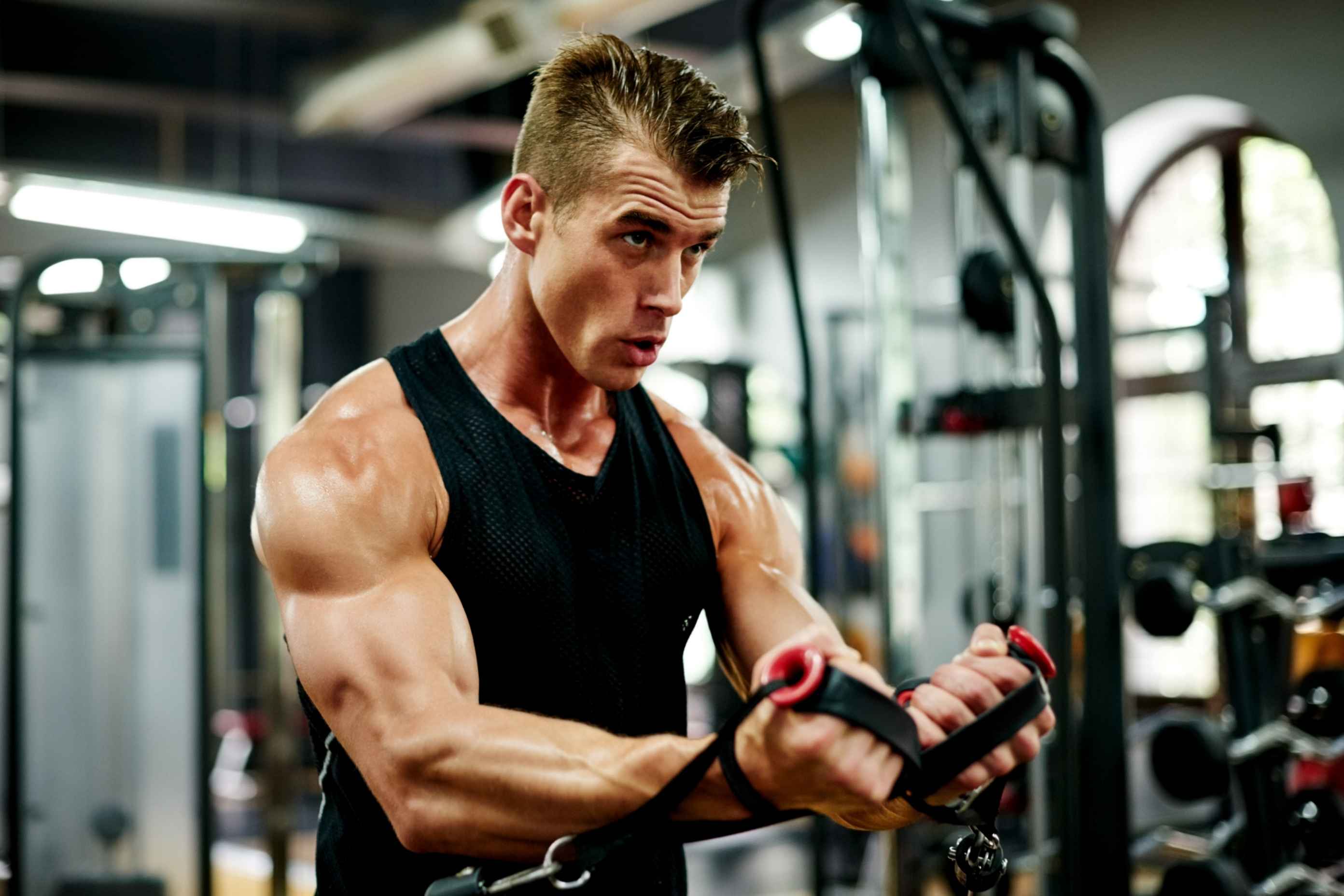
Why aren’t muscles interested only in the number of repetitions?
Imagine you’re doing bicep curls with a dumbbell that allows you to do a maximum of eight reps. The last two require considerable effort. Now take a lighter dumbbell and do twenty reps. The first ten may be relatively easy. But as fatigue sets in, the situation changes, and the last few reps start to get really tough.
In both cases, your muscles can receive sufficient stimulation for growth. One of the main mechanisms of hypertrophy is the mechanical tension that arises during muscle contraction. When using lighter weights, you usually need to perform more repetitions and get closer to muscle failure for the workout to be challenging enough.
And this is precisely where many people go wrong. They do twenty reps, feel a burning sensation in their muscles, and end the set, even though they could have managed another eight. Yet this burning sensation is not a reliable indicator of how strong a growth stimulus the set has generated.
A 2024 meta-regression analysis suggested that muscle hypertrophy may be greater when sets are ended closer to failure. However, we do not yet know the exact optimal distance from failure, and it is not necessary to push every set to complete exhaustion.
So which is better? Heavy or light weights?
The answer depends primarily on what you want to achieve.
| YOUR APPROACH | HOW IT WORKS IN PRACTICE | WHAT YOU’LL GET OUT OF IT |
|---|---|---|
| 8 heavy reps Higher load |
The last reps are challenging, but you’re still able to maintain proper form. | Muscle growth and strength: An effective stimulus for hypertrophy and the development of maximum strength. |
| 20 lighter reps Lower load |
The set lasts longer, and you gradually approach muscle failure. | Similar muscle growth: With sufficient effort, you can achieve comparable hypertrophy. |
| 20 easy reps Plenty of reserve |
You end the set even though you could have done a few more reps. | Weaker stimulus: If the set isn’t challenging enough, it may be less effective for muscle growth. |
| A combination of both ranges Variable training |
Use heavier sets for compound exercises and higher rep counts for isolation exercises. | Practical strategy: You combine options for building muscle mass and strength based on the nature of the exercise. |
* The examples given are for guidance only. Results are influenced by fitness level, training volume, exercise selection, and proximity to muscle failure. Training to complete failure isn’t necessary in every set.
So twenty repetitions are definitely not a waste of time. On the contrary, they can be a great addition to your workout, especially for exercises where you want to work with lighter weights. For heavy compound exercises, however, a high number of repetitions may be less practical. For example, when doing twenty squats, overall fatigue may limit your form or performance before the target muscles themselves do.
That’s why it doesn’t make sense to look for a single “perfect” number of repetitions for all exercises.
Want bigger muscles? The number of reps alone isn't enough
You can have a perfectly structured workout, choose the right weights, and complete every set with maximum focus. But if you don’t provide your body with enough energy and protein over the long term, you may be limiting your progress. Protein contributes to the growth and maintenance of muscle mass. If you can’t get enough from your regular diet, GymSupps XWhey Protein—which combines whey concentrate, isolate, and hydrolysate—can be a practical solution.
If you’re also trying to improve your performance during intense workouts, GymSupps Creatine Monohydrate may be worth considering. When taken daily at a dose of 3 grams, creatine enhances physical performance during consecutive short-term intervals of high-intensity exercise.
However, neither of these supplements can replace a properly structured workout, a high-quality diet, or adequate recovery. It is the long-term combination of these factors that creates the conditions for real progress.
Recommended
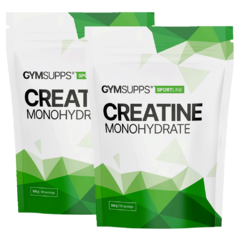
Creatine Monohydrate 500g 1+1
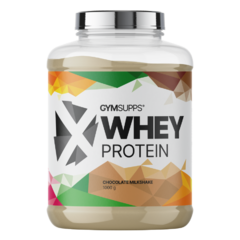
GymSupps XWhey Protein
How can you apply the number of repetitions in practice?
If you want to build muscle, you don’t have to completely overhaul your entire workout plan starting tomorrow. It might be much better to start sensibly combining different rep ranges.
For basic exercises, such as the bench press, squats, or pull-ups, you can aim for about 6 to 10 reps. For supplementary exercises, such as bicep curls, lateral raises, or leg extensions, feel free to try 12 to 20 reps.
More important than the number itself, however, are a few rules:
- Train hard enough. For most working sets, use approximately 1–3 reps in reserve as a practical guideline.
- Track your progress. Gradually aim to perform more high-quality reps or lift heavier weights.
- Don’t make failure a requirement. Especially with heavy, compound exercises, prioritize technique and safety.
- Choose your range of motion based on the exercise. What makes sense for overhead presses may not be ideal for heavy squats.
And if you find that a certain range suits you better, there’s no reason to avoid it just because, according to old fitness rules, it doesn’t fit into the “correct” category.
Maybe we’ve been asking the wrong question all these years
How many reps are best for muscle growth? Eight? Ten? Twelve? Or twenty? The answer isn’t as simple as we once thought.
Scientific evidence shows that muscles can grow across a relatively wide range of loads. Heavier weights have their place primarily in developing maximum strength, while lighter weights can provide a comparable stimulus for hypertrophy with sufficient effort. But that doesn’t mean every workout should end in complete exhaustion.
So perhaps the biggest mistake wasn’t that we did eight reps instead of twenty. Perhaps we simply believed for too long that the number alone determines how big our muscles can become.
Recommended

New 100% Whey Protein 800g 1+1
GymSupps Creatine Monohydrate
GymSupps Creatine HCL
Scientific sources:
- Schoenfeld et al. (2017): Strength and Hypertrophy Adaptations Between Low- vs. High-Load Resistance Training
- Lopez et al. (2021): Effects of Resistance Training Load on Muscle Hypertrophy and Strength Gain
- Currier et al. (2023): Resistance Training Prescription for Muscle Strength and Hypertrophy
- Robinson et al. (2024): Proximity to Failure, Strength Gain, and Muscle Hypertrophy
No posts have been made yet.