





Intense Exercise and Heart Health: Why You Don't Need to Worry About the Myth of Overtraining
 Author:
 You know that feeling all too well. You put on your sneakers, start running up a steep hill, or lift a new personal best on the barbell—and suddenly that warning article from the internet pops into your head. “Too Much Exercise Is Bad for Your Heart,” the headline screamed. Fear of atrial fibrillation (AFib) and doubts about whether all that hard work might actually be hurting you after all these years can gnaw away at even the most determined athletes. Don’t despair—and above all, don’t take your foot off the gas. The human heart is a fantastic muscle that’s made for exercise. The problem isn’t usually the training itself, but the way the media takes scientific studies out of context. Just look at the hard data, and you’ll see that the benefits of intense exercise far outweigh any conceivable risks.
Article Contents:
- Atrial Fibrillation: What the Headlines Say vs. the Actual Data
- The Secret of Adaptation: What an Athlete’s Heart Looks Like
- Prevention That Saves Lives
- 5 Simple Steps for Safe and Intense Training
Atrial Fibrillation: What the Headlines Say vs. the Actual Data
Studies examining elite and endurance athletes are often a source of concern. A recent large-scale study followed over a million men and found that those with the highest levels of physical fitness had a slightly higher risk of developing atrial fibrillation (AFib)—an irregular heart rhythm. Journalists immediately jumped on this information and began churning out articles about how intense exercise can kill you.
But what didn’t the newspapers report? The same study showed that these fit individuals experienced a massive reduction in the risk of heart attack, heart failure, and stroke (by more than half). The chance that you’ll develop AFib as a result of exercise is around 4%. In contrast, the chance that cardiovascular disease will kill you if you sit at home on the couch is incomparably higher. Fear of exercise is, in this regard, mathematical nonsense.

The Secret of Adaptation: What an Athlete’s Heart Looks Like
To understand why some athletes develop arrhythmias, we need to look at how the body changes. When you regularly put your heart under stress, it behaves like any other muscle—it grows, gets stronger, and becomes incredibly efficient. A trained heart can pump much more blood with a single beat, which leads to a significant decrease in resting heart rate.
During this adaptation, the heart’s atria may expand slightly. It is precisely this structural enlargement, combined with a slower resting heart rate, that can create an environment in a small fraction of endurance athletes where electrical signals occasionally “skip” and trigger atrial fibrillation. So it’s not necessarily that you’re destroying your heart through wear and tear. It’s a side effect of extreme adaptation to physical stress.
Prevention That Saves Lives
Many cardiologists today realize what escapes the average news reader: an athlete’s heart is a protected heart. Exercise keeps blood vessels flexible, lowers blood pressure, optimizes cholesterol levels, and combats systemic inflammation. If you limit your efforts at the gym or on the track simply because you’re afraid of an exaggerated myth, you’re depriving yourself of the most effective remedy for longevity that science knows.
How to Physiologically Protect Your Engine
Pushing your limits and driving your heart rate into the red sounds great, but if your body is running on empty, you won’t be able to protect your most important muscle just by eating salmon for lunch every now and then. Your heart is a pump that experiences enormous stress during intense training. Until you choose the right form of exercise and a recovery strategy, your cardiovascular system will remain vulnerable to chronic inflammation and oxidative stress.
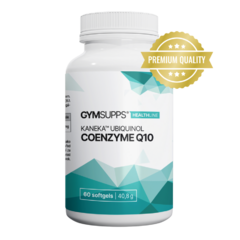
Don’t look for esoteric shortcuts—start with what’s on your plate. Include fatty seafood, walnuts, or flaxseeds in your diet. But if you’re being crushed by extreme training loads, you need to bring in some heavy-hitting external support. Avoid cheap junk from the drugstore—low-quality fish oil often goes rancid before you even swallow it, and cheap coenzyme Q10 is barely absorbed. Opt for highly absorbable forms that will actually keep your blood vessels clean and flexible. Choose Gymsupps Omega-3, which comes in a premium triglyceride form for maximum bioavailability and inflammation control, or go for Gymsupps Coenzyme Q10 to deliver pure cellular energy directly to your heart muscle.
Recommended

GymSupps Omega 3

| Common Situation | Common mistake | A Smarter and Better Way |
|---|---|---|
| Reading the news | “If I exercise too much, I’ll ruin my heart.” | Look at the full data: Exercise drastically reduces the risk of fatal heart attacks and strokes. In contrast, the slight increase in the risk of AFib is absolutely negligible. |
| Max Heart Rate | “A heart rate in the red zone is dangerous for the heart.” | Train in intervals: If you’re healthy, occasionally pushing your heart rate to its maximum (e.g., during HIIT) effectively trains your heart and strengthens its elasticity. |
| Irregular Heartbeat | “Every skip in your chest means you have to stop exercising.” | Get checked out and keep going: If you feel an arrhythmia, get an EKG. It’s usually nothing serious, and a cardiologist will give you the green light to continue your intense training. |
5 Simple Steps for Safe and Intense Training
Save yourself unnecessary stress and try this approach, which will allow you to push your limits with complete peace of mind:
- Ignore clickbait headlines: The next time you see a report claiming that running is harmful, remember that hard data and millions of lives saved are on the side of exercise.
- Build up your volume gradually: Your heart can handle a huge workload, but it can’t handle sudden shocks. If you’re preparing for a marathon or intense strength training, increase the intensity in small increments (max. 10% per week).
- Rest is part of growth: Just like your biceps, your heart recovers while you sleep. Nonstop training without rest days leads to chronic stress, which isn’t good for your heart.
- Respect your genetics: If there’s a history of heart defects or AFib at a young age in your family, be smart and get a stress ECG before starting any extreme training programs.
- Listen to your body’s signals: Getting out of breath and feeling tired is normal. But a tight, squeezing pain in your chest, unexplained fainting, or the feeling that your heart is beating out of rhythm long after your workout are reasons to see a doctor immediately.
Intense training is a safe and extremely effective tool that can significantly improve the quality of your active life. You just need to approach it with a sensible plan, avoid panicking over every tabloid article, and follow the basic rules of recovery. Try this sensible approach before your next workout, and you’ll see that with a clear head, you’ll break your personal records much more easily.
Recommended
XGen 90cps + Omega 3 90cps
Omega 3 240cps + 90cps
No posts have been made yet.








