





10 tips to work with mental preparation and train your thinking | Mental Resilience
 Author:
 The author of this article is Martin Feiferlík, who for a very long time was involved in track cycling, in which he was one of the best in the Czech Republic, but due to an injury he had to end his professional cycling career and switched to crossfit, in which he is currently the best in the Czech Republic. But Martin is not only a competitor, he is also a coach whose advice is highly valued. And since Martin is one of the "modern" coaches who realize the role that mindset plays in the process of a competitor or athlete, he decided to write the following article.
The difference between good athletes and the best athletes
Lots of coaches, parents or loved ones tell you the right way to work out, how and when to push yourself at a critical point in a race or competition. They tell you that you need to outdo yourself, etc. In reality, athletes don't even know the place properly. They don't mentally prepare for the moment when it will hurt, they don't prepare their thoughts for the race to overcome their critical spots. It all falls under the question mark of "being a good or the best individual". Have you tried visualizing your training in detail? Have you prepared your thoughts before you go to perform any exercise? Have you gotten to places in your imagination where you know it will hurt or be difficult?
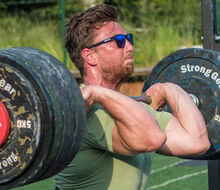
I've played sports and raced all my life. I've been exposed to all kinds of pressures. Before the top competitions, where the hundredths, sometimes the thousandths. I used to be very nervous, I used to doubt myself. I was thinking what if I don't make it, etc. The times in training were better than the times in the actual competitions. Which is unacceptable at world competitions or at the same time when it comes to nomination points for the Olympic Games or World Championships. Do you train the physical component - YES / Do you train the mental preparation for performance - NO!
Since then I have realized a lot of important aspects that are important in sport and in life. It's not just about physical preparedness, it's also about the mental!
Here are some tips to start working on the other side as well, both during, before or outside of the performance:
1. During the performance: focus on what really makes you feel good!
What we focus on becomes our reality. So if you focus on the pain you are experiencing, that pain will be your main problem! On the contrary, you can actually endure much more within the context of a difficult and painful exercise if you don't focus on the pain. Find other thoughts.
Example from cycling: if I focus purely on the rider in front of me, his back wheel will be like a winch, pulling me closer and closer. The cadence will accelerate and the power will increase! If it's a training or distance race, mentally divide the course into different segments and focus only on those!
2. Trust that it will work
What is your story? This belief is the key to mental resilience. Have you ever been on a team or in the workplace with someone who regularly speaks negatively about themselves or others? Have you noticed that negative things usually happen to them on a regular basis?

It is important to surround yourself with people engaged in more positive self-expression. If you fill your words and thoughts with positive affirmations of inner strength, you will find that they become part of your life. Then you will see a whole new level of self-confidence that will naturally carry over into your athletic and life endeavors.
3. Create inner strength - Example.
Create an inner strength that you can quickly repeat out loud or mentally to yourself while racing. When you race at your best effort, lactate builds up and your breathing and heart rate can get out of control. In this state, your brain can easily switch to negative thinking. The inner strength you have prepared, set up and believe in can help you refocus on the positive state and concentrate 100% on your performance!

A simple inner strength, such as "I am strong" or "I got this" is great. Find the words that resonate with you and your goals. I recommend saying it to yourself more often before difficult situations and maybe have it written on your arm or hand to remind yourself.
4. Simply
As athletes, we often think about our process, but the best athletes in the world are those who can turn their brains off and focus on the present. The "now and here" so to speak - not another time and another place! You've been training or preparing for a long time, now just celebrate it with a smile! Focus on your own performance. Don't look at your opponents, but be present within yourself! Everything from stimulation and nutrition strategies should be routine so that when your race day comes, you already know what to do. Racing is just a joy where you can exercise what you've been practicing and celebrate all the hard training you've done!
5. Avoid the comparison trap
With all of today's social sharing platforms, we often get compared to other athletes in our circle or community. Just remember that the best athletes spend most of their focus on training.
6. Prepare for it to hurt
You should learn to expect to suffer and when it comes, accept it. But you must also learn to channel the suffering. In long endurance races, it's not always the fastest that wins, but the one who can embrace the most suffering. It's simply not easy, but if you use the mental strength training tools mentioned here, you can learn to suffer longer with more intensity.
7. Find relaxation in movement or in what you do
We all know that swimmers who can swim fast relaxed often come out better than those who push it too hard. The same goes for other industries. You need to learn to run or cycle fast as part of a relaxed movement. Try to relax your mind and gradually speed up, try to develop this skill. Try to have a "relaxed speed" that is not forced.
8. Get out
Teenagers and college athletes often put a lot of pressure on themselves to be great, but end up struggling with performance pressure or anxiety. While ego tends to become more manageable as you get older, it's still common to feel like you fall into one of two boxes: 'good' or 'bad', and if you feel like you fall into the latter, it can be incredibly demotivating.
If you find that you care too much about your sport and put a lot of effort into it, try to "switch off" sometimes. Get outside, be with your loved ones, be out of the action, etc. This can help you eliminate that "all or nothing" attitude, allowing you to not put so much pressure on yourself.
9. Control your stress
Times are tough at the moment, lots of people are stressed about what's going to happen. Questions, assumptions, doubts are some of the biggest stressors.
Recommended

Czech Virus Magnesium Bisglycinate

Nebbia SPORTY HERO crop top s dlouhým rukávem 585
HMS AirBike MP6540

Vitamin C 100cps 1+1
The good news is that you can relieve stress by choosing the right diet, getting good sleep and improving your time management. For example, most athletes need to either train before or after work. That means scheduling is essential. You can reduce the stress of training for work, or vice versa, by preparing your food and clothing in advance. This requires great organization and planning, but directly impacts your ability to muster the mental and physical energy to successfully complete your workouts.
10. Learn to suffer
It may sound unrealistic, but recovery is the key to suffering. We train in heavy intensity units - the fact that the training itself hurts, that you can't breathe, is the preparation itself! Will you be able to manage this condition in a race if you don't train beyond your limits?

If you are not consistent in doing e.g. high intensity training, then there will come a race day in which you are likely to encounter immense suffering and pain without being able to cope.
The more suffering you can learn to tolerate, the greater the reward. Cultivate the belief that there is immense joy on the other side of your suffering. Once you cross that finish line, reach your goal, or set personal bests, all that suffering becomes the driving force!
No posts have been made yet.








