The Beginner's Guide to Estrogen | Everything You Need to Know About This Hormone
 Author:
 Estrogen is one of the few hormones that everyone knows something about, but few people really know it well. Yet it's responsible for a whole host of reactions in our bodies, and when you have too little or too much of it, it can wreak havoc. Luckily, in our article today, we have a comprehensive guide for you in which we'll try to tell you everything we think is important about this complex subject.
Article content:
- What is estrogen anyway?
- What does estrogen do in the body?
- Do I have too much estrogen or not enough?
- How to optimize estrogen levels
- What to take away from today's article?
What is estrogen?
Just as testosterone, which we wrote about for you in one of our previous articles, is a male hormone, estrogen is a female hormone. And a very important one, because it affects de facto all the functioning of the female reproductive system. Although we most often speak of estrogen in the singular, in fact this designation names a whole group of female sex hormones, the most important of which are the following three:
Estradiol
Estradiol is the estrogen primarily responsible for the development of secondary sex characteristics, but it also affects germ cell maturation and induces the proliferative phase of menstruation. It is primarily important for women of childbearing age - most commonly from the first menstrual period until after menopause, when estradiol production declines.
Estriol
Another completely naturally occurring estrogen is estriol, whose estrogenic effects are somewhat similar to those of estradiol, only several times weaker. It is extremely important in pregnancy, and low levels may portend certain fetal malformations.

Estron
Estrone is the third important estrogen, which is also slightly weaker than estradiol but stronger than estriol. However, it is the only estrogen whose production is dominant, especially in postmenopausal women.

After menopause, estrone becomes the dominant estrogen in the female body.
Where is estrogen formed?
Since estrogen does not refer to a single substance, but to a whole group of substances, the primary site of production of these absolutely essential hormones differs. Most estrogens are formed either in the ovaries, in the placenta, or in the so-called corpus luteum located in the ovarian cortex. It is from these three sources that women of childbearing age primarily derive their estrogen, with other organs such as the liver, the adrenal glands or the breasts replacing them with the onset of menopause.
What does estrogen do in the body?
Estrogen has a variety of different effects in the body and is thus absolutely indispensable. Like testosterone in men, estrogen in women is responsible for the formation of secondary sex characteristics. But in addition, these hormones are also extremely important for the health of the blood vessels and skin, stimulating the proper growth of the uterus and even affecting the production of growth hormone and the amount of cholesterol. Scientific studies also talk about the fact that enough estrogen can reduce the risk of bone loss after menopause and even other unpleasant symptoms associated with the transition.

Irregular and painful menstruation may indicate suboptimal estrogen levels.
Do I have too much estrogen or not enough?
As you probably understood from the previous paragraphs, estrogen is really extremely important for our body. But unfortunately, insufficient levels of it bring with them a whole host of negatives. And the same is the case if you have too much estrogen.
How does estrogen deficiency manifest itself?
If a woman is deficient in estrogen, she may experience a number of unpleasant symptoms that are identical to those characteristic of menopause - headaches, moodiness, difficulty concentrating and the associated fatigue, irregular and painful periods, and deterioration in skin and hair quality.

How does excess estrogen manifest itself?
Even an excess of estrogen is not without unpleasant symptoms, which are unfortunately very similar to those associated with a deficiency. Women very often experience increased nipple sensitivity, moodiness, irregular cycles, frequent migraines as well as various pigment spots. Excess estrogen is also associated with an increased risk of developing certain types of breast cancer.

Common manifestations of excess testosterone can include migraines.
How do I know how much estrogen I have?
Unfortunately, both testosterone excess and testosterone deficiency manifest similarly and so without undergoing the appropriate tests it may be impossible to determine whether you are suffering from any of these complications. However, probably the easiest thing to do is to ask your doctor to carry out a check-up blood test, from which it should be possible to read your estrogen levels without any problems. The test is quick, painless and gives accurate results, so if in doubt we definitely recommend you see your doctor. In most cases, women around the menopause should undergo this test; young women are more at risk of estrogen deficiency if they suffer from certain diseases such as thyroid, kidney or pituitary disorders.
How can I optimize my estrogen levels?
If you suffer from a severe estrogen deficiency, of course, your doctor will proceed to treatment with so-called hormone replacement therapy, where the missing estrogen is supplied artificially with medication. Likewise, the doctor will also suggest appropriate solutions in case of estrogen excess. However, at home and without visiting a doctor, we definitely recommend doing at least one thing - improving your lifestyle. Stress, frequent alcohol consumption, little sleep and lack of exercise all play a role in estrogen levels.
Can supplements help me?
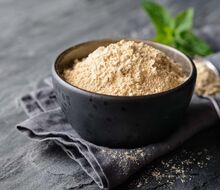
In the aforementioned article about testosterone, we explained that it is very difficult to increase the level of this hormone with the help of legal dietary supplements. You can only slightly optimize it. And the same is the case with estrogen. Maca peruviana is often recommended, but it's not a bad idea to try other herbs such as angelica.
What to take away from today's article?
The main thing you should take away from today's article is that estrogen does not refer to just one single hormone, but a whole group of substances. The most prominent representatives are estradiol, estriol and estrone, which in women are formed in the corpus luteum, ovaries and placenta, which are taken over by the liver, adrenal glands and breasts after menopause. Deficiency and excess of these extremely important hormones are manifested by fatigue, mood changes, impaired quality of sex life, as well as migraines and pain. If you suspect an imbalance, the surest thing is to see a doctor and have the appropriate blood tests done. Supplements are no miracle in this case, yet they can help with a slight imbalance. For example, you can try the aforementioned Maca Peruviana.
Recommended
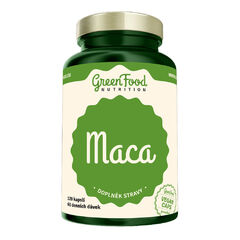
GreenFood Maca

Zdravý den Maca BIO
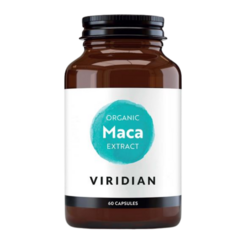
Viridian Organic Maca Extract
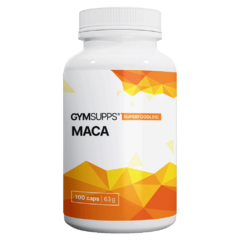
GymSupps Maca
No posts have been made yet.