





Why should almonds be a staple in the diet? Guide to nuts
 Author:
 Almonds are among the most consumed nuts worldwide and while their consumption in the United States, India or Germany is reaching dizzying heights, they are still not so popular here. However, once you include them in your diet, you will see that they add a whole range of nutrients to your diet. And last but not least, almonds are also incredibly tasty and have a huge use in many savoury and sweet recipes. In our article today, we'll introduce them to you in more detail.
Article content:
- What are almonds?
- Why should you eat almonds regularly?
- How to use almonds?
- And aren't they harmful in large quantities?
What are almonds?
Almonds are the seeds of the almond tree, a tree that grows across the subtropics. Interestingly, contrary to popular belief, almonds are not really nuts - since the almond tree is in the same genus as, say, the peach or plum, its fruit is also a drupe. Although almonds can grow here, their yield is significantly lower than in the tropics. The almond itself is an extremely nutritious food. For example, 100 grams of LifeLike almonds contain:
| Energy | 645 kcal |
| Fat | 55.8 grams |
| Carbohydrates | 6.5 grams |
| Fibre | 7.4 grams |
| Protein | 25.5 grams |
But in addition to these macronutrients, almonds are also rich in a wide range of vitamins, minerals and other health benefits - by eating them regularly, you'll provide your body with plenty of magnesium, calcium, potassium, B vitamins and vitamin E.
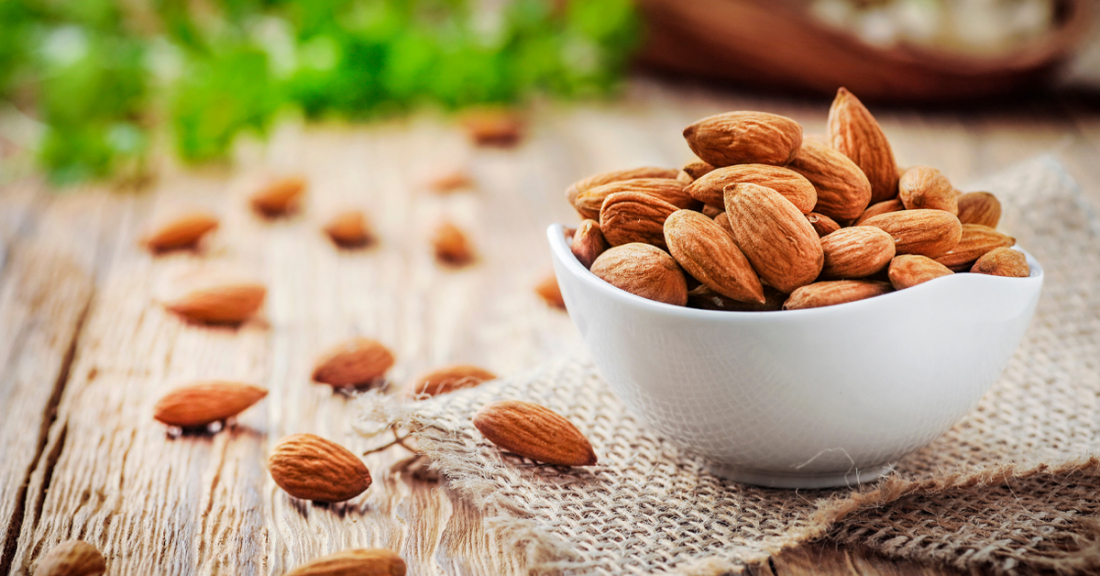
Almonds are an extremely nutritious food.
Why should you eat almonds regularly?
Almonds are relatively calorie dense, but you should still eat them regularly. Why? Mainly because of the healthy fats, protein and the vitamins and minerals mentioned above. There are a number of benefits associated with their content. In particular, almonds are very often mentioned:
They are packed with antioxidants
We are exposed to oxidative stress almost constantly nowadays, because it is linked to poor diet and alcohol, as well as smoking and air pollution. To prevent oxidative stress from causing our bodies to develop more serious diseases, it is a good idea to ensure a sufficient intake of antioxidants, which we have written about in a separate article on our website. An important source of antioxidants are almonds - according to available analyses, they are contained primarily in almond skins.
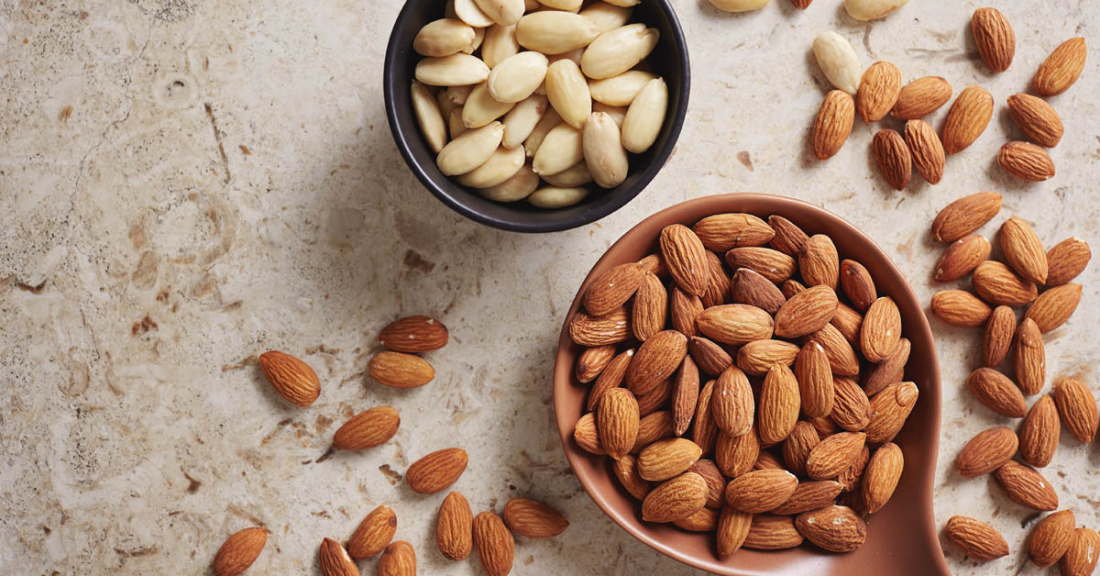
By eating peeled almonds, you are depriving yourself of the intake of some antioxidants.
They can lower LDL cholesterol
Like all nuts (and many stone fruits, but which we commonly think of as nuts), almonds are loaded with healthy fats. And these can have a number of positive properties on our bodies. Among other things, they can also lower cholesterol levels, as demonstrated in a scientific study in which 20% of calories consumed were almonds. It could be said that since eating almonds is linked to lower cholesterol levels, cutting out certain unhealthy foods from the diet and replacing them with almonds is beneficial for our cardiovascular health, for example.
They can reduce hunger and thus help with weight loss
As you may have noticed in the almond nutritional table at the beginning of our article today, almonds are quite a calorie-dense food and it is definitely not a good idea to eat a whole packet in one sitting. But unlike many other calorie-dense foods (typically like potato chips), they contain protein and fiber, both of which have been shown to help reduce hunger. So, paradoxically, they can help you lose weight.
How to use almonds?
Almonds have a very mild flavour and are therefore very popular in the kitchen. You can eat them on their own, of course, but you can also use them to make homemade almond milk or homemade almond butter. Similarly, almonds are also suitable for a whole range of recipes - we've prepared recipes for chocolate-covered date-almond balls, (not only) Valentine's Day almond-coconut cake or almond mini pancakes with berries. They can also be used in other baked goods or vegetable salads.

You will certainly find a variety of uses for almonds in the kitchen.
And aren't they harmful in large quantities?
You may still be wondering if almonds are harmful in larger quantities. In fact, the cyanide content is often mentioned, which of course could have fatal consequences for our bodies.However, thisapplies primarily to bitter almonds, which are quite difficult to find in this country. It is common to see almonds from Valencia or Malaga in the supermarket, and these are primarily sweet almonds, which contain up to 1 000 times less of the cyanogenic glycoside called amygdalin. So you don't have to worry about including sweet almonds in your diet .
What to take away from today's article?
The main takeaway from today's article is that although almonds are not really nuts, they are incredibly nutritious. They contain lots of healthy fats, protein, but also minerals, vitamins and antioxidants. Related to this is the fact that scientific studies have shown, for example, a correlation between eating almonds and feeling less hungry or having lower LDL cholesterol. They're great in salads, but also in a wide range of sweet recipes, and when it comes to those commonly available sweet almonds, they contain very little amygdalin. You can also find sweet almonds in our shop, along with other nuts and seeds, for which we have a whole separate category.
Recommended
LifeLike Mandle natural
GymSupps Almond Butter
No posts have been made yet.








