What is vitamin D, its types, functions and importance
 Author:
 Vitamin D, affectionately known as the "sunshine vitamin", is undoubtedly one of the most discussed and popular nutrients of our time. Supplements containing it fill the shelves of pharmacies and health food stores, and its importance for immunity has become the topic of much conversation. But what exactly is vitamin D? Why is there so much fuss about it and how is it different from other vitamins? Is it really just a "vitamin" or is there something more behind that simple name?
In this article, we delve deeper beneath the surface. Based on findings from leading scientific databases, we present a comprehensive portrait of this fascinating substance. We'll reveal that it is not a vitamin in the true sense of the word, explore its various forms, describe its remarkable journey through our bodies and explain why its functions are so vital not only for our bones, but for the overall health of the body.
Article content:
- More than just a vitamin: Meet the prohormone
- The two faces of vitamin D: Learn about D2 and D3
- A remarkable journey through the body: How D3 becomes an active hormone
- The many faces of a hero: The key functions and importance of vitamin D
More than just a vitamin: Meet the prohormone
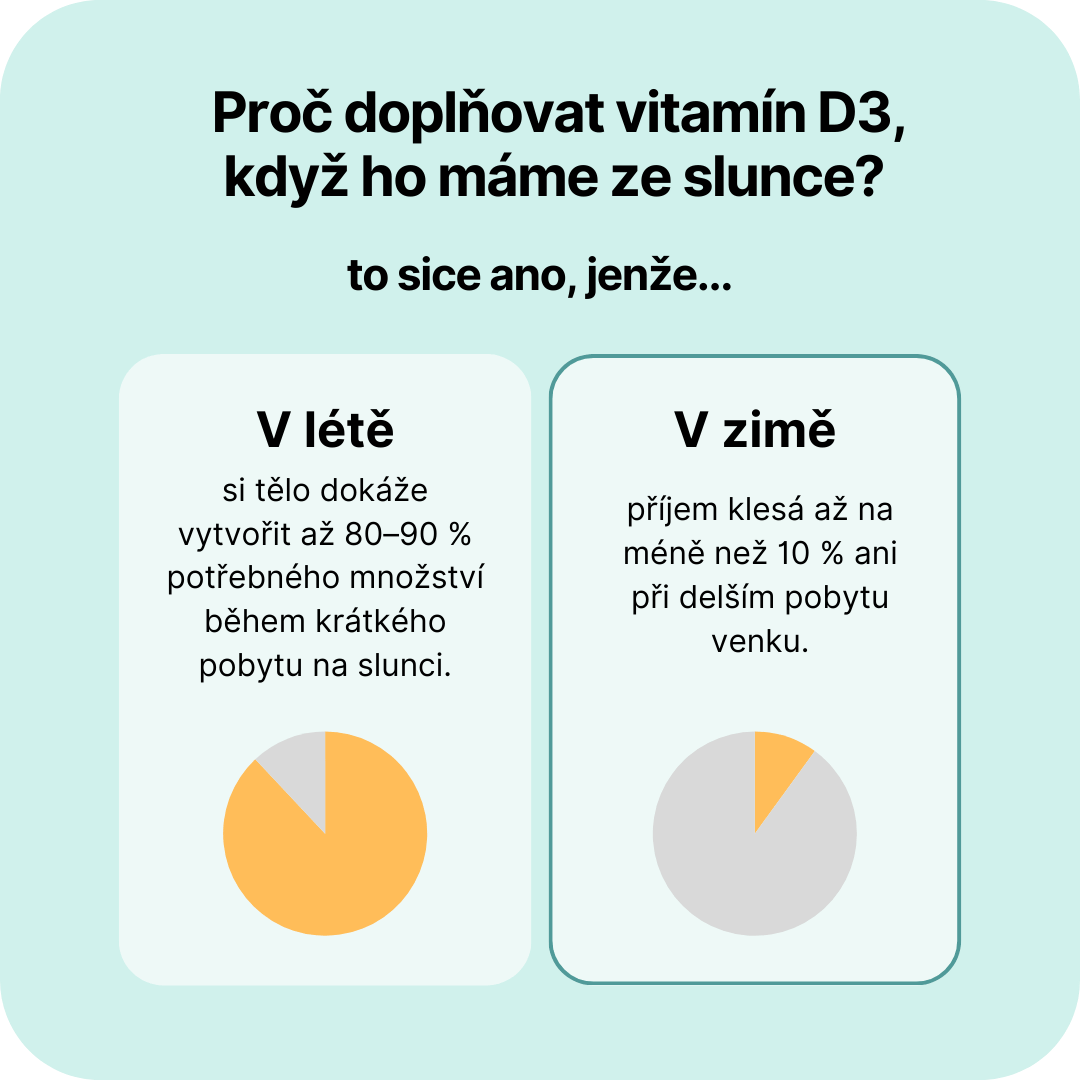
The first and most important thing to understand is that the label "vitamin" is somewhat simplistic for vitamin D. In scientific terms, it is more of a prohormone.¹ What does it mean? Classical vitamins (such as vitamin C) are essential substances that our bodies cannot make on their own and must be obtained exclusively from the diet. Vitamin D, however, is different. Our body has the amazing ability to make it itself, especially in the skin through the action of the sun's UVB radiation (a specific wavelength of ultraviolet light).
Because the body synthesizes it and its final active form acts as a hormone that regulates various bodily processes, scientists classify it as a prohormone - a precursor hormone. It is a fat-soluble secosteroid whose main, but far from only, role is to maintain the balance of calcium and phosphorus in the body.³
The Two Faces of Vitamin D: Learn about D2 and D3
When we talk about vitamin D, we usually think of the two basic forms we may encounter in diet and supplements:
Vitamin D3 (cholecalciferol):
This form is considered more natural and effective. It is the form that our skin produces when it comes into contact with the sun. It is also found in foods of animal origin such as fatty fish (salmon, mackerel, sardines), egg yolks or liver. Most scientific studies suggest that vitamin D3 is more effective in increasing and maintaining blood levels of vitamin D compared to vitamin D2.²,³
Vitamin D2 (ergocalciferol):
This form comes from plant sources. It is produced in plants, fungi and yeast when exposed to UV light. So if you buy mushrooms grown under UV lamps, for example, they contain vitamin D2. This form is also often used to fortify foods such as plant milks or cereals.
Both forms must undergo a conversion process in the body to become biologically active.
A remarkable journey through the body: How D3 becomes an active hormone
The journey of vitamin D from its formation to its final action is a fascinating multi-step biochemical process:
- Step 1: Entry into the body. Vitamin D3 is formed in the skin (or ingested in the diet or supplement along with vitamin D2). Here, however, it is still in an inactive form.
- Step 2: Stop in the liver. It travels through the bloodstream to the liver. Here, the first key conversion (hydroxylation) takes place, resulting in calcifediol, also known as 25-hydroxyvitamin D (25(OH)D). This is the main storage form of vitamin D in the body. And it is the level of this substance that is measured in blood tests when your doctor determines whether you have enough vitamin D.³
- Step 3: Final activation in the kidneys. Calcifediol from the liver goes on to the kidneys (and to a lesser extent, other tissues). Here, the second and final conversion to the fully active, hormonal form called calcitriol, or 1,25-dihydroxyvitamin D, takes place. And calcitriol is the superhero that performs all the important functions in our bodies.

The many faces of a hero: The key functions and importance of vitamin D
The role of vitamin D is much broader than most people think. Its importance extends far beyond the bones.
1. It goes far beyond vitamin D.
This is its most well-known and longest-studied role. Active calcitriol acts as a conductor of calcium and phosphorus metabolism. It ensures that calcium is efficiently absorbed from the intestine into the blood. It maintains their optimal levels, which are essential for proper bone mineralization. Without enough vitamin D, the body cannot use calcium effectively, even if we have enough in our diet. Long-term deficiency leads to rickets in children and osteomalacia (bone softening) in adults and increases the risk of osteoporosis.¹
2. Guardian and regulator of the immune system
In recent years, research has focused intensively on the role of vitamin D in immunity. It has been found that immune cells (such as macrophages and lymphocytes) have receptors for vitamin D on their surface. This means that vitamin D can communicate directly with them. It helps strengthen innate immunity - our first line of defense against pathogens. It is also involved in regulating adaptive immunity, which may help prevent the exaggerated immune reactions that are typical of autoimmune diseases.¹,²
3. Other important roles in the body
Research suggests that the importance of vitamin D extends even further:
- Muscle function: it is important for muscle strength and coordination.
- Cell growth: It is involved in the regulation of the cell life cycle, cell growth and differentiation.
- Cardiovascular health: There is evidence of its association with blood pressure regulation and cardiovascular health.
.png)
Conclusion: why it really matters
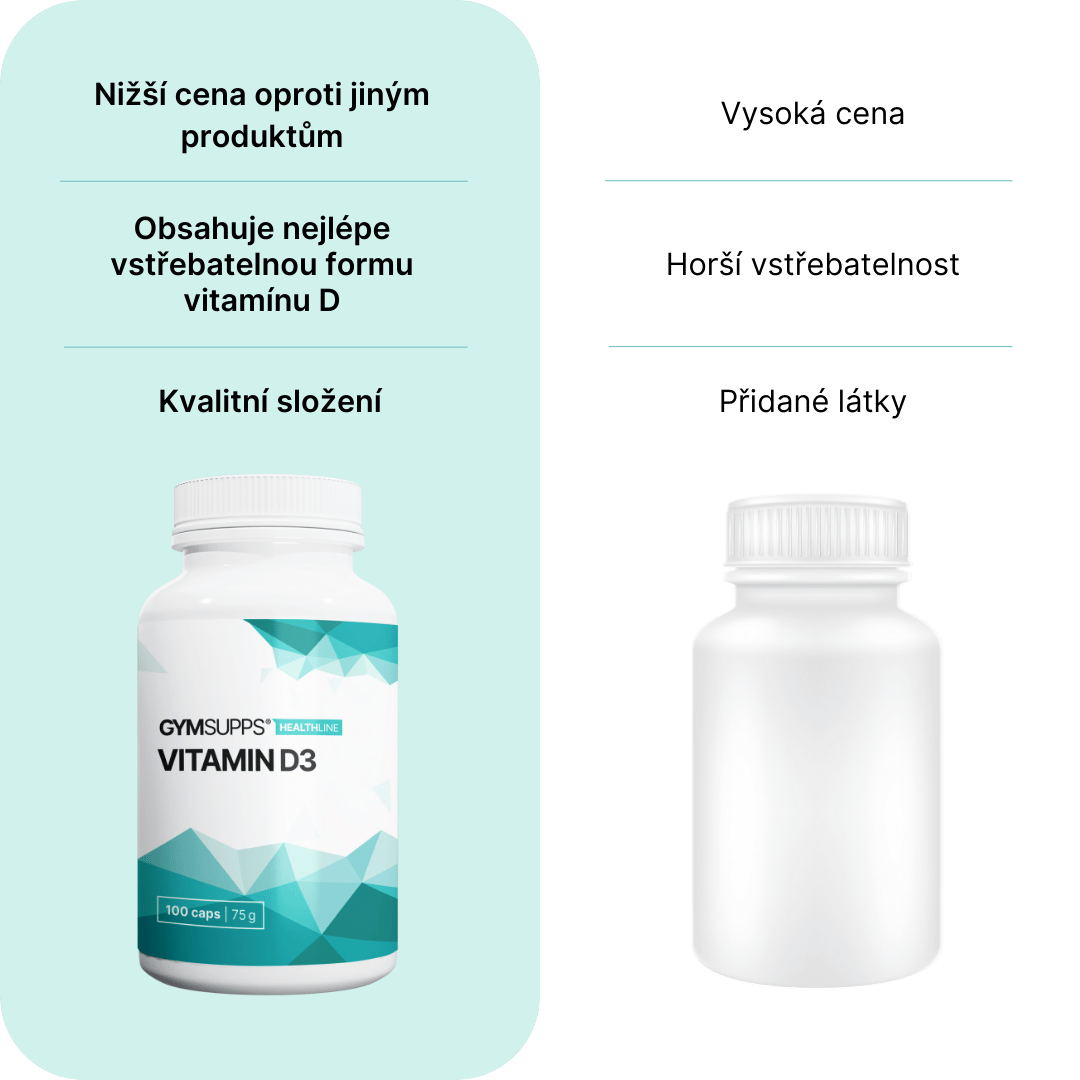
Vitamin D is not just an ordinary nutrient, but a key prohormone that controls hundreds of processes in our bodies. Its pathway from sunlight to the active hormone calcitriol is complex but essential to our health. Although its role in bone health is unquestionable, its influence on the immune system and other bodily functions makes it one of the most important substances for overall vitality. Ensuring adequate levels - whether through sensible exposure to the sun, diet or, in our latitudes, often essential supplementation - is one of the cornerstones of looking after your own health.
Recommended



Sources:
- ¹ Naeem Z. Vitamin D: The "sunshine" vitamin. Journal of Pharmacology and Pharmacotherapeutics, 2010.
- ² Sizar O, Khare S, et al. Vitamin D Deficiency. in: StatPearls, 2024.
- ³ Bouillon, R. Physiology of Vitamin D. In: Endotext, 2023.
No posts have been made yet.