





Vitamin D3 vs. D2: A great overview of the differences
 Author:
 Did you know that even if you spend hours in the gym, on the court or in the field, you may have a "silent sleeper" in your body that hinders your peak performance, recovery and overall health? We're talking about vitamin D. And now we come to the crucial question that plagues many an athlete and mere mortal: Two or three? Vitamin D2 or D3? Let's take a look at what the scientific studies tell us, and how to choose the right form for your sporting ambitions.
Article content:
- Why is diacetate so crucial for athletes?
- D2 vs. D3.
- What do studies say about the effects of D2 and D3 on the body?
- Practical advice for athletes.
Why is D3 so crucial for athletes?
Before we get into the differences between D2 and D3, let's quickly recap why vitamin D is an absolute must for anyone serious about sports. Vitamin D isn't just any vitamin - rather, it's a hormone that affects countless processes in the body, and for athletes, the following are especially crucial:
- Bone health: D is crucial for the absorption of calcium and phosphorus, minerals essential for strong and healthy bones. For athletes whose bones are subjected to repeated loads and impacts, this is an absolute priority for preventing fatigue fractures.
- Muscle function: studies suggest that vitamin D plays a role in muscle strength and function. Deficiency can lead to muscle weakness and decreased performance.
- Immunity: Intense training can weaken your immune system and make you more susceptible to infections. Vitamin D supports a strong immune response, which is key to maintaining training consistency.
- Recovery: Although the mechanisms are not fully understood, it is thought that vitamin D may play a role in the recovery processes after exercise.
D2 vs. D3: Which one?
And now for the biggie - the duel between D2 and D3. To the layman, this may sound like an irrelevant detail, but the scientific evidence clearly shows that the differences between these two forms are not negligible, especially when it comes to their effectiveness in the body.
Vitamin D3: King of the animal kingdom and the sun
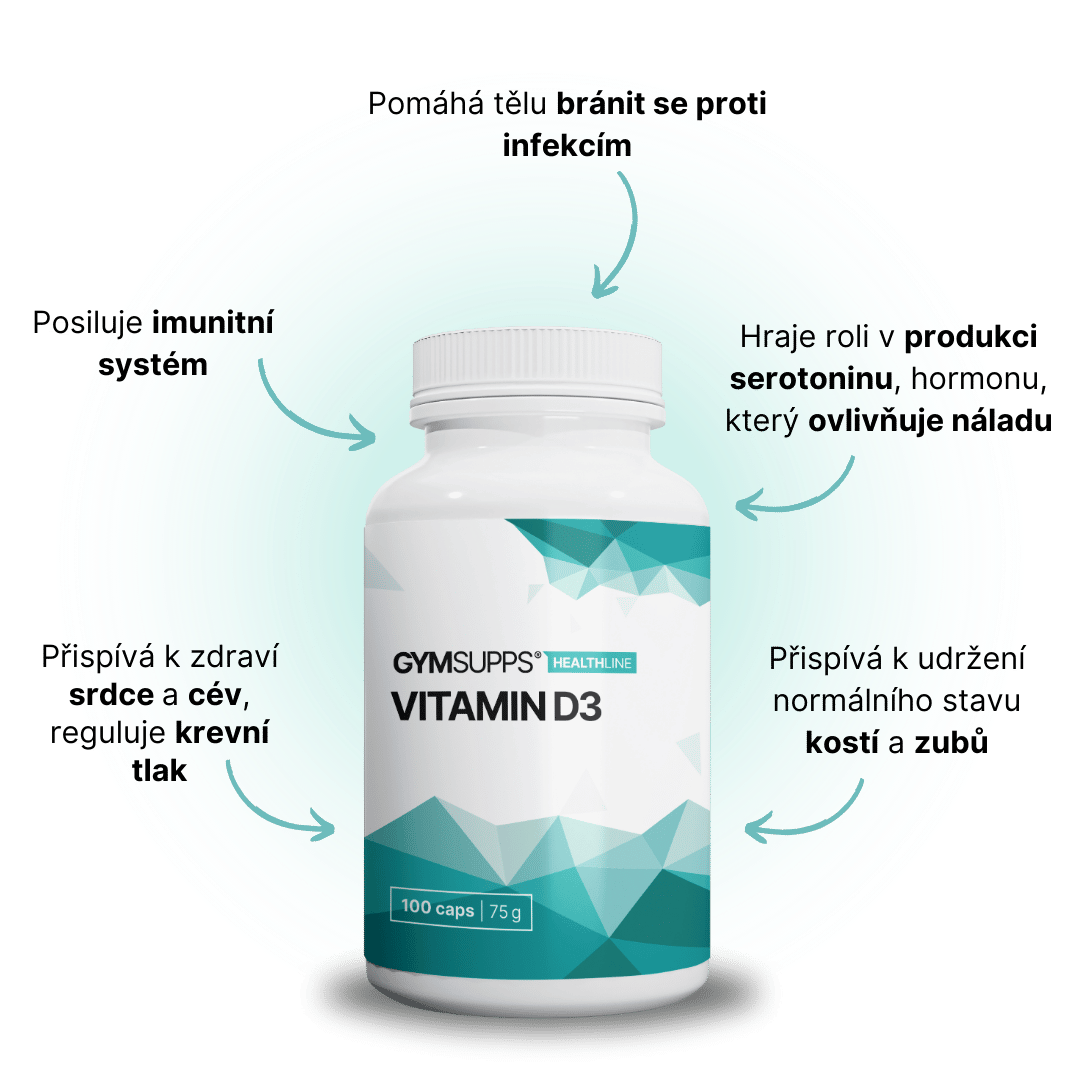
Vitamin D3, or cholecalciferol, is the form that our bodies naturally produce when the skin is exposed to sunlight. We also find it in animal sources such as fatty fish (salmon, mackerel), egg yolks or fish oil.
- Greater efficacy: Many studies consistently show that vitamin D3 is significantly more effective than vitamin D2 at increasing blood levels of vitamin D (specifically 25-hydroxyvitamin D, an indicator of vitamin D status in the body). A 2012 systematic review and meta-analysis comparing D2 and D3 supplementation concluded that vitamin D3 is more effective at increasing serum 25-hydroxyvitamin D status and maintaining these levels for longer periods of time.1 Similarly, a 2011 study clearly stated, "Vitamin D(3) is more effective than vitamin D(2) in humans. "2
Vitamin D2: Plant origin with a question mark over efficacy
Vitamin D2, or ergocalciferol, comes primarily from plant sources such as certain mushrooms or fortified foods. It is often used in dietary supplements for vegans and vegetarians.
- The problem with vitamin D2 is that it does not convert to the active form of vitamin D (calcitriol) as efficiently as D3 in the body. This means you need higher doses of D2 to get the same effect as with D3.

What do the studies say about the effects of D2 and D3 on the body?
In addition to differences in the effectiveness of increasing vitamin D levels, the two forms may differ slightly in other effects on the body. For example, a recent 2022 study found that vitamins D2 and D3 have overlapping but distinct effects on the human immune system, as revealed by blood transcriptome analysis.3 This suggests that while both forms affect immunity, they may do so through slightly different pathways.
A practical recommendation for athletes: bet on D3!
Based on the available scientific evidence, vitamin D3 is the clear winner for most athletes and active individuals. Its greater effectiveness in increasing and maintaining optimal blood levels of vitamin D makes it the preferred choice for supporting bone health, muscle function, immunity and overall vitality.
How to get enough D3?
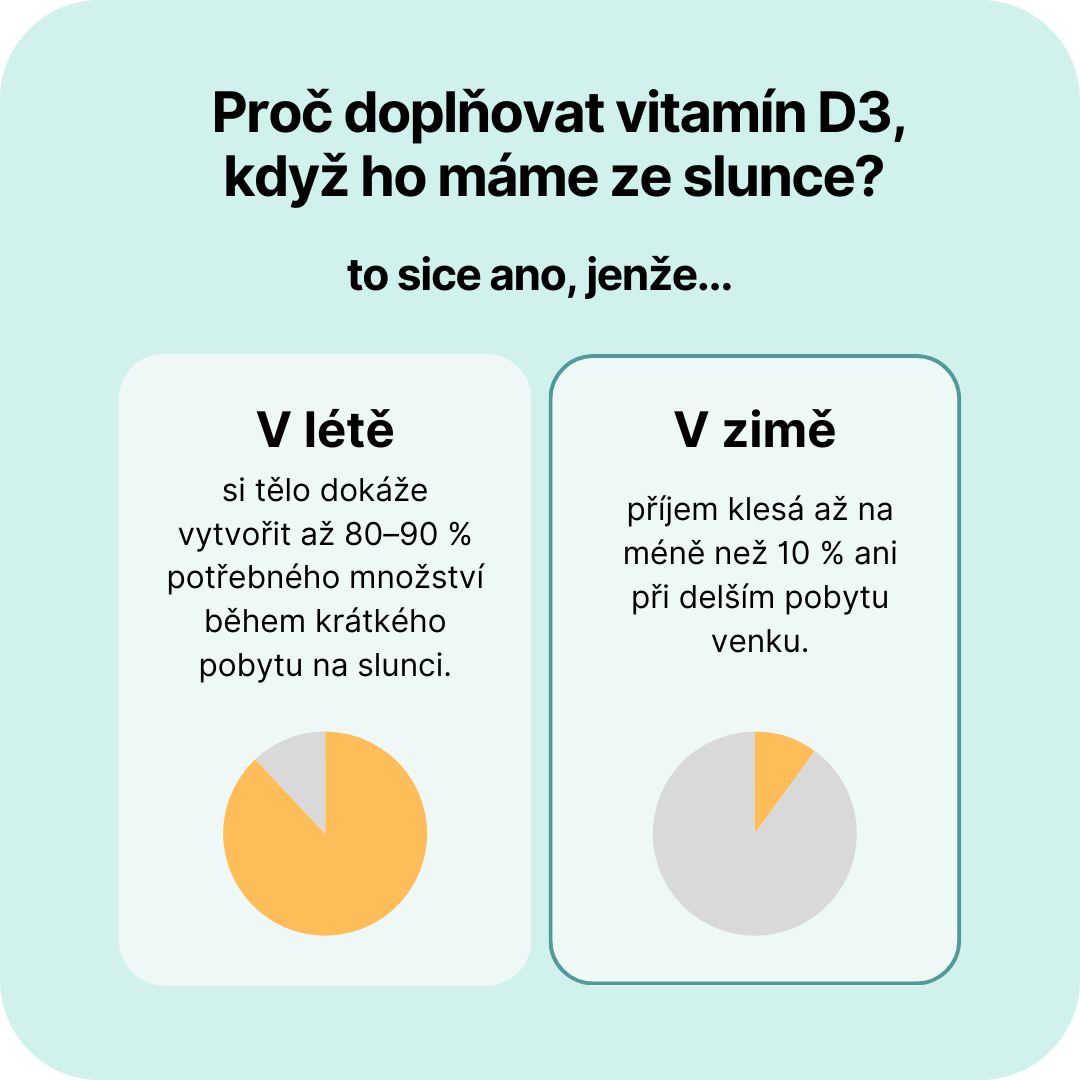
- Sunlight: This is the primary and most natural source. 10-30 minutes of daily sun exposure (without sunscreen) may be sufficient, but depends on many factors (latitude, season, skin type, time of day). In the winter months and in northern regions, vitamin D production from the sun is minimal or non-existent.
- Food: Include oily fish (salmon, mackerel, sardines), fish oil, egg yolks and fortified foods in your diet.
- Supplements: Vitamin D3 supplementation is essential for most athletes, especially during the winter months. There is a wide range of vitamin D3 supplements, often combined with vitamin K2, which synergistically promotes proper calcium deposition. The ideal dosage should be discussed with a doctor or nutritionist, but common adult dosages range from 1000-4000 IU (international units) per day.
.png)
Conclusion.
Vitamin D deficiency is a widespread problem, even among athletes. Ignoring its status can have a negative impact on your training, recovery, and long-term health. Betting on vitamin D3 is a safe bet when it comes to efficacy and bioavailability. Incorporate it into your routine, whether through sun exposure, food, or quality supplements. Your bones, muscles and immunity will thank you - and you'll be able to focus on pushing your athletic boundaries!
Recommended
Czech Virus Vitamin D3
Life Extension Vitamins D & K

GymSupps Vitamin D3
Vitamin D3 100cps 1+1
Sources:
- [1] Tripkovic, L., Wilson, L. R., Hart, K., Johnsen, S., de Lusignan, S., Smith, C. P., ... & Lanham-New, S. A. (2012). Comparison of vitamin D2 and vitamin D3 supplementation in raising serum 25-hydroxyvitamin D status: a systematic review and meta-analysis. The American Journal of Clinical Nutrition, 95(6), 1357-1364.
- [2] Tripkovic, L., Lambert, H., Hart, K., Smith, C. P., Buxton, G., Fallows, S., ... & Lanham-New, S. A. (2011). Vitamin D(3) is more effective than vitamin D(2) in raising serum 25-hydroxyvitamin D concentrations in humans. The Journal of Clinical Endocrinology & Metabolism, 96(7), 1933-1940.
- [3] Zosky, L. M., Sgier, C. R., Lim, J., & Cook, M. (2022). Vitamins D2 and D3 have overlapping but distinct effects on the human immune system revealed by blood transcriptome analysis. FASEB Journal, 36(3), e22194.
No posts have been made yet.








