Vitamin D3 vs. D: What's the difference?
 Author:
 Why everyone at the gym has been going "dee" for the last few years
Vitamin D is one of the most debated micronutrients today. Interest has grown from orthopedic ambitions (prevention of rickets and osteoporosis) to the realm of immunity, cardiometabolic health and athletic performance. And no wonder: even current European data show that in temperate latitudes the body can deplete its supply of the sunshine vitamin during the winter, and in the Czech Republic 60-80% of the population, mostly young adults and teenagers, are deficient at the end of winter. Supplements have thus become a "sunshine in a capsule". But on the shelves you will find bottles labelled Vitamin D3 next to capsules labelled simply Vitamin D (usually D2). What is the practical difference between the two?
Contents:
- What is vitamin D?
- What is vitamin D3?
- How to get enough vitamin D?
- A practical guide to supplementation
- Summary for practice
What is vitamin D? A broad term for an essential hormone
Let's start by clarifying what vitamin D is. Although it is referred to as a vitamin, it actually functions more like a prohormone. This means that when activated, our body converts it into a hormone that plays a key role in a number of physiological processes. Its primary function is to regulate blood levels of calcium and phosphate, which is essential for maintaining strong and healthy bones. It is also involved in supporting the immune system, reducing inflammation and even mood and preventing some chronic diseases.
Two major players: Vitamin D2 (ergocalciferol) and Vitamin D3 (cholecalciferol)
When we talk about "vitamin D," we usually think of two main forms:
- Vitamin D2 (ergocalciferol): this form of vitamin D comes mostly from plant sources, such as UV-irradiated mushrooms or fortified foods. It is an older form of vitamin D that used to be widely used in dietary supplements.
- Vitamin D3 (cholecalciferol): This form is more biologically active and effective for the human body. It is formed in the skin when exposed to sunlight (UVB rays) and is also found in animal foods such as oily fish (salmon, mackerel), egg yolk or liver.

Key Difference: bioavailability and efficacy
The main difference between vitamin D2 and D3 lies in their bioavailability and potency in the human body. Studies have repeatedly shown that vitamin D3 is significantly more effective at increasing and maintaining blood levels of vitamin D than vitamin D2. This is due to the fact that vitamin D3 is metabolized more efficiently in the liver to its active form (calcitriol), which then carries out its functions in the body. Vitamin D2 has a shorter half-life and a less stable structure, leading to its faster excretion from the body and less benefit to overall vitamin D levels.
Why is it important to know the difference?
Understanding this difference is key, especially if you are considering vitamin D supplementation. Most experts and doctors today recommend dietary supplements containing vitamin D3, as it is more readily available to the body and leads to a more effective increase in serum vitamin D levels. When choosing supplements, always pay attention to the form of vitamin D listed on the label.
How to get enough vitamin D?
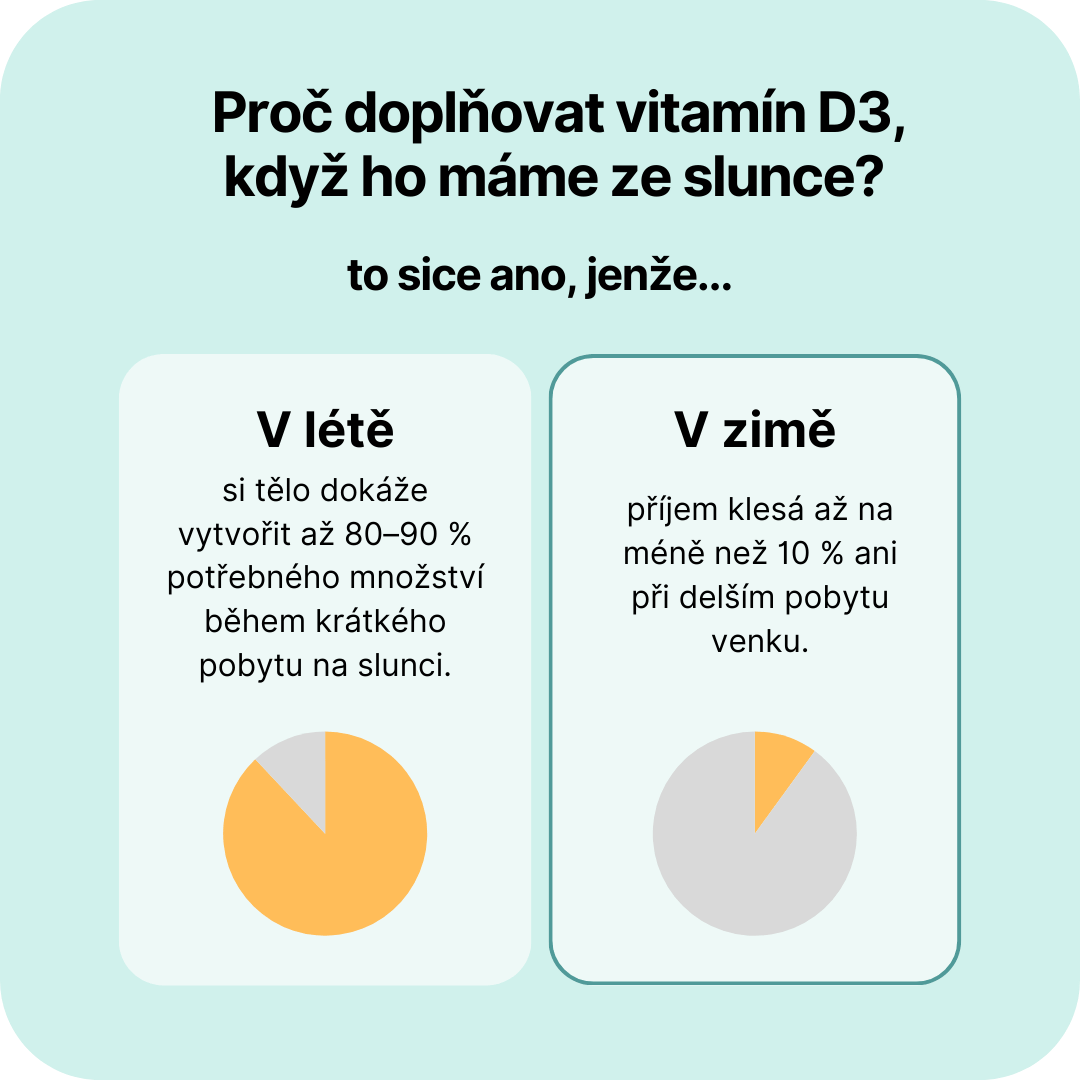
- Sun exposure: The best natural source of vitamin D3. Short, regular exposure to the sun (without sunscreen, depending on skin type and geographic location) can contribute significantly to adequate production. However, in the Czech Republic, especially during the winter months, vitamin D synthesis from the sun is limited.
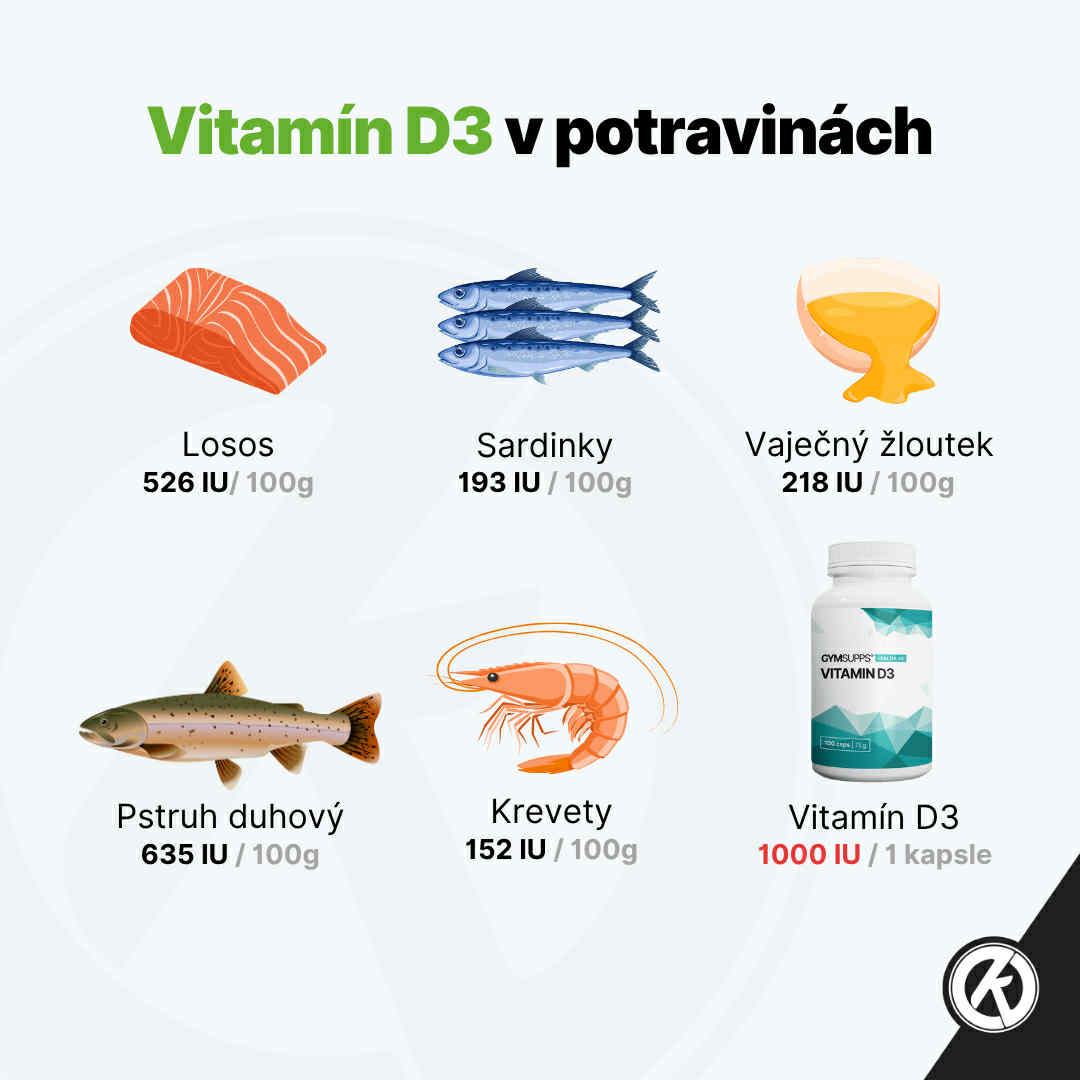
- Diet: oily fish, egg yolks, liver and some fortified foods are good sources of vitamin D3. UV-irradiated mushrooms can provide D2.
- Supplements: If you have limited access to sunlight or your diet does not provide enough vitamin D, vitamin D3 supplements are an effective way to achieve optimal levels.
Recommended
Viridian Organic Vitamin D
Czech Virus Vitamin D3
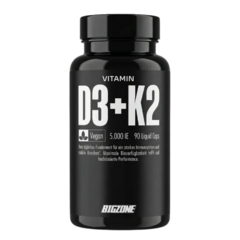

GymSupps Vitamin D3
How much is just right? Units and upper limits
-
Recommended daily intake - according to the Endocrine Society (2024) and the IOM:
- 20 µg (800 IU) pro 70 +
- Upper safe limit (UL) according to EFSA (2023): 100 µg = 4 000 IU per day for healthy adults and adolescents.
- Conversion: 1 µg = 40 IU.
Remember that the UL is the total from diet, sun and supplements.
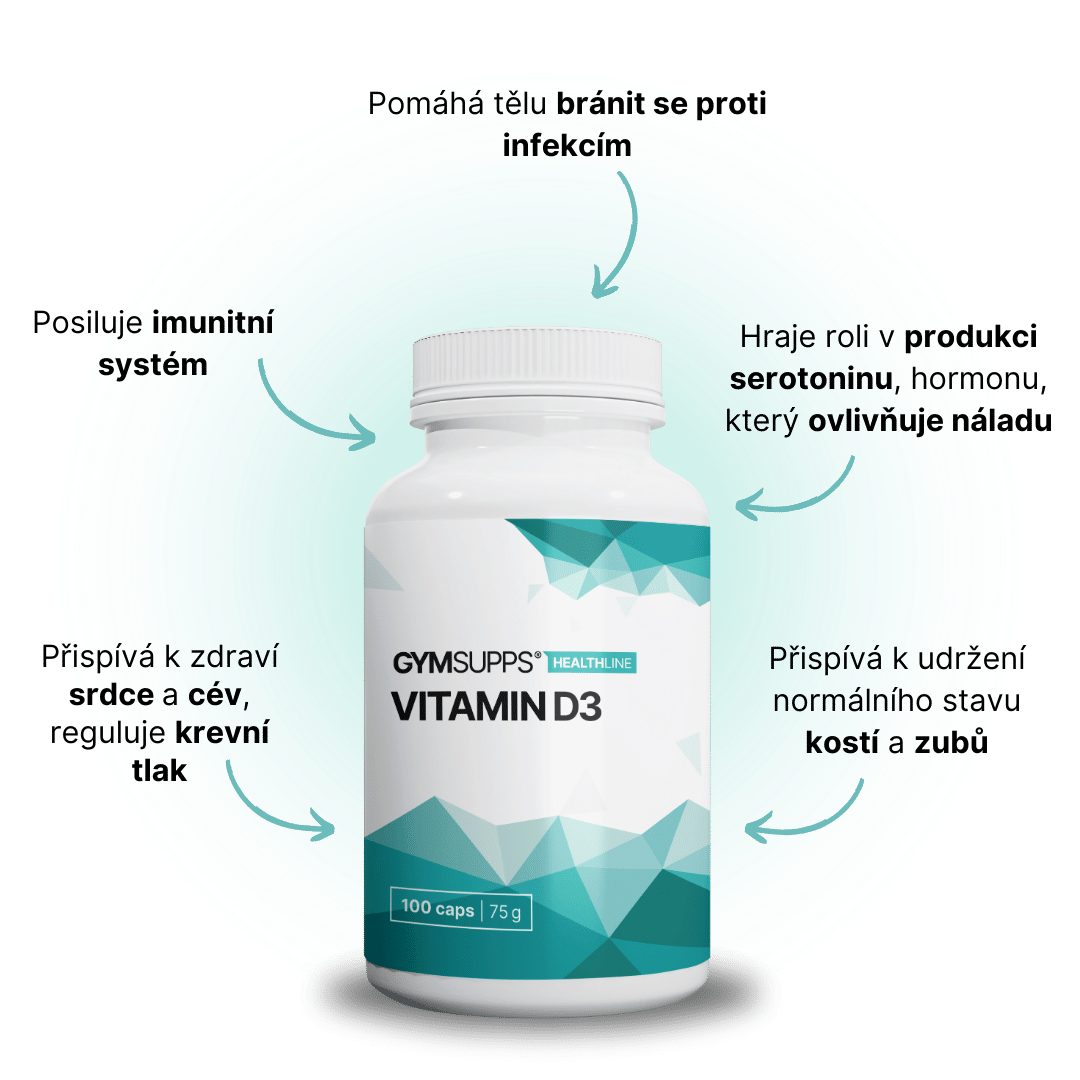.png)
Synergistic nutrients: calcium, magnesium, K₂
- Calcium: vitamin D increases its intestinal absorption. If you supplement high doses of D3 but eat little dairy or plant-fortified products, the effect will not be fully felt.
- Magnesium: cofactor in hydroxylation to calcitriol; Mg deficiency impairs D utilization.
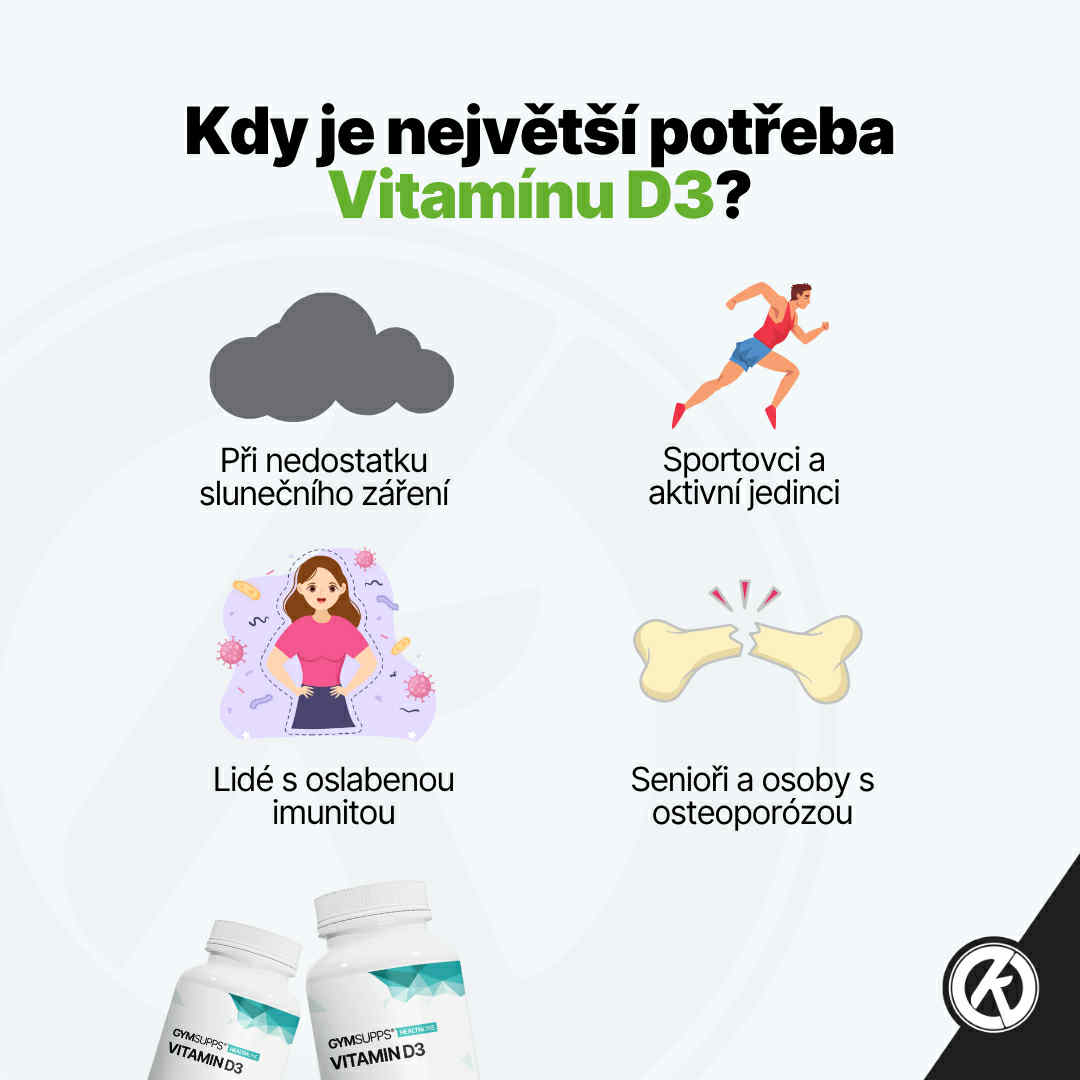
A practical guide to supplementation
- When to take: with a fat-containing meal (≥ 5 g), ideally breakfast or lunch; an evening dose may improve sleep in some people.
- Daily vs. bolus: daily intake of 1,000-2,000 IU maintains levels more stably than weekly or monthly megadoses.
- Lab: measuring 25(OH)D once a year (late winter) makes sense for athletes, seniors, pregnant women, and people with chronic illness.
- Deficiency protocol: under medical supervision, 4,000-10,000 IU/day can be given short-term for 4-8 weeks, then switch to maintenance dose.
- Contraindications: caution with hypercalcemia, granulomatous diseases and use of thiazide diuretics.
Summary for practice
- D3 > D2 in terms of biological efficacy and duration of action.
- In the Czech Republic, a year-round intake of 1 000-2 000 IU D3 per day is worthwhile, especially from October to April.
- Vegans today are not reliant on D2 alone; vegan D3 from lichens is a wholesome alternative.
- Stick to a range of 15-100 µg (600-4,000 IU) unless you have a special medical recommendation.
- Measure 25(OH)D in a lab, especially if you are in a risk group (dark skin, obese, senior, indoor sports).
Remember that vitamin D is a hormone modulator, not a miracle pill. Its power lies in the health "insurance" that allows you to train to your fullest without unnecessary downtime. Approach it strategically - as you would any other element of periodized nutrition.
No posts have been made yet.