Vitamin K2 - a known and unknown vitamin through the eyes of Pavel Samek
 Author:
 About vitamin K2
Vitamin K2 is a fat-soluble vitamin that we associate primarily with its effect on calcium deposition in the body. However, its potential is much higher.
Until recently, vitamin K2 has not received much attention. The main reason for this is that for quite a long time scientists have only talked about vitamin K as such. It was only in the early 20th century that reports began to emerge that there were multiple forms - K1 (phylloquinone) and K2 (menaquinone). Most of the information available at that time concerned only vitamin K1. However, over time it became clear that the effects of the two variants differed significantly from each other. Even so, the authorities do not yet distinguish between K1 and K2, so that, for example, reference intake values are proposed for vitamin K in general.
Exceptionally, you may also encounter vitamin K3. However, it is used very little due to the fact that it can be toxic even in therapeutic doses.
Forms of vitamin K2 or why exclusively MK-7!!
However, the division into vitamins K1, K2 and K3 is not the end of the issue - vitamin K2 has several other subspecies, which are denoted by MK and a number. The most common type found in the human body is MK-4, but you can also find MK-7, MK-8, MK-9 and MK-10.
Distinguishing the different forms of vitamin K2 is important for you, especially because the bioavailability of the MK-4 form is lower than that of the MK-7 and higher forms. It is therefore a good idea to distinguish which type of vitamin K2 you are serving your body. According to the available research, MK-7 is the ideal choice of vitamin K2, among other things because it has the longest half-life of all the subtypes. It stays in circulation for up to 72 hours (while MK-4 only stays in circulation for an hour or two), so it is much more usable by the body.
This is why PROM-IN uses only this form in all of its supplements!!
Beneficial effects of vitamin K2 on the human body or not only prevention of osteoporosis
One of the most important functions of vitamin K2, as we mentioned at the beginning, is to ensure the proper distribution of calcium in the body. It acts directly on osteocalcin, a protein abundantly found in bones and teeth, which is responsible for binding calcium and thus plays an important role in skeletal mineralisation. Another role of osteocalcin is also to prevent calcification of soft tissues and cartilage.
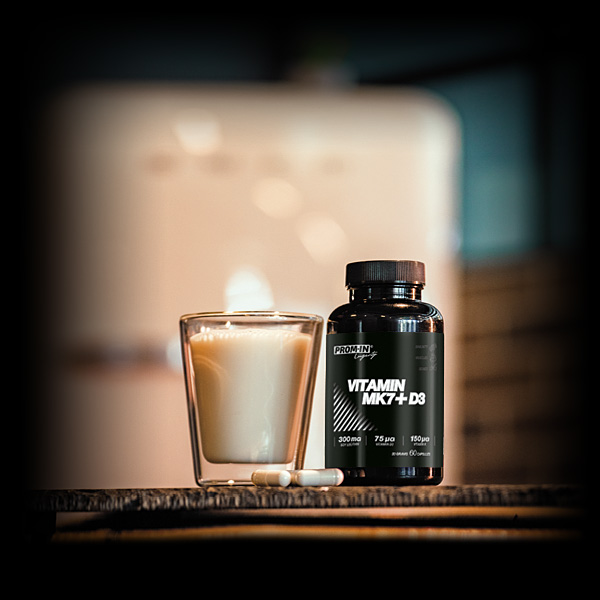
The combination of essential vitamins D3 and K2 play an important role in the health of bones, teeth and blood vessels.
To simplify the process, you can imagine that vitamin K2 activates osteocalcin. This then transports and stores calcium in the body exactly where it should be - in the bones and teeth, increasing their strength. At the same time, this also prevents calcium from accumulating in the blood vessels, i.e. the so-called corrosion of the arteries. In fact, it performs two functions at once. It helps prevent thinning of the bones (osteoporosis) and keeps the cardiovascular system in shape - helping to prevent cardiovascular disease. Studies even suggest that vitamin K2 could reduce the risk of fractures even in patients who already suffer from thinning bones.
"Of all the forms of vitamin K2, MK-4 and MK-7 are the most important for bone health, but the latter activates a greater proportion of osteocalcin!"
It is for the reasons mentioned above that vitamin K2 intake is very important when taking vitamin D. For this reason, our Vitamin MK7 + D3 product combines these two vitamins in an optimal ratio. Because it is vitamin K2 that can direct the deposition of vitamin D, but also calcium in the body, and thus defend the body against the risk of arterial calcification and cardiovascular problems.
Vitamin K2 anti-inflammatory action or what you may not know
In addition to its positive effects on bone, dental and cardiovascular health, vitamin K2 offers other tremendous benefits to our health. One of the biggest benefits is the proven effect on reducing inflammation. Thanks to studies, we know that vitamin K2 really does help reduce inflammation significantly - especially when combined with the aforementioned vitamin D and in sufficient doses. This dose should be between 100-200 mcg per day.
Vitamin K2 and cancer prevention
The effects of vitamin K2 are also often mentioned in connection with cancer. In fact, the anti-carcinogenic effect of vitamin K has been observed in various cancer cell lines, including, for example, prostate cancer cells. This is why vitamin K2 should be a staple of supplementation for men over 40 years of age.
Vitamin K2 dosage or legislation lags behind research
The optimal dose of vitamin K2 has not yet been precisely determined, as there is no official distinction between the K1 and K2 forms. In the US, the recommended daily intake is approximately 120 µg/day, while the European EFSA is slightly more conservative, recommending between 36 µg/day and 54 µg/day. In the EU, however, only the standard for vitamin K as a whole is still officially valid, namely 75 µg/day. However, there are also studies where up to 360 µg MK-7/day has been administered without any side effects being found. Conversely, for example, anti-carcinogenic effects have been demonstrated at doses of around 150 µg.
Safety of vitamin K2 supplements
The use of vitamin K2 is generally considered safe and there are no reports of possible overdose so far. In one study where participants took 180 µg of MK-7 per day for a long period of time, no side effects were reported.

Nevertheless, it should be noted that patients taking blood clotting drugs (anticoagulants) such as Warfarin must expect some interaction, even at a relatively low dose of 20 µg. However, this is one of the few groups where there could be some risk. However, there are differing views on this issue. K2 could potentially mitigate the negative effects of these drugs (e.g. calcification of the arteries). The controversy arises mainly because neither the manufacturers nor haematologists distinguish between subgroups of vitamin K and, unfortunately, there are not yet enough studies to show that taking vitamin K2 is safe for these patients.
Vitamin K2 supplementation, especially in the form of MK-7, offers undeniable health benefits. That's why Vitamin MK7 + D3 is the basis of our Longevity range, which is designed for anyone who wants to live a long and active life.
Author.
Recommended
Prom-in Vita Solution 2.0
Prom-in Vitamin MK7+D3
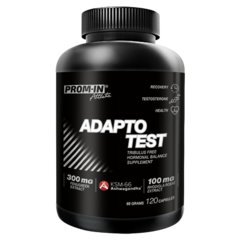
Prom-in Adaptotest
Reference:
- Iinuma N. [Vitamin K2 (menatetrenone) and bone quality]. Clin Calcium. 2005 Jun;15(6):1034-9. Japanese. PMID: 15930719.
- Maresh K. Proper Calcium Use: Vitamin K2 as a Promoter of Bone and Cardiovascular Health. Integr Med (Encinitas). 2015;14(1):34-39.
- Shea, M. Kyla, et al. "Vitamin K and vitamin D status: associations with inflammatory markers in the Framingham Offspring Study." American Journal of Epidemiology vol. 167.3 (2008): 313-20. doi:10.1093/aje/kwm306
- Nimptsch K, Rohrmann S, Linseisen J. Dietary intake of vitamin K and risk of prostate cancer in the Heidelberg cohort of the European Prospective Investigation into Cancer and Nutrition (EPIC-Heidelberg). Am J Clin Nutr. 2008 Apr;87(4):985-92. doi: 10.1093/ajcn/87.4.985. PMID: 18400723.
- Akbulut, Cengiz & Pavlic, Angelina & Petsophonsakul, Ploi & Halder, Maurice & Maresz, Katarzyna & Kramann, Rafael & Schurgers, Leon. (2020). Vitamin K2 needs an RDI separate from vitamin K1. Nutrients. 12. 1852. 10.3390/nu12061852.
- [Obeid A.E.F.E., Alawad, Aisha Mudawi, Ibrahim, Hanan Moawia, 2015. Isolation and characterization of bacillus subtillus with potential production of nattokinase. Int. J. Adv. Res., 3(3), 94-101.
No posts have been made yet.