





The search for 100% truth is nonsense, says Pavel Samek
 Author:
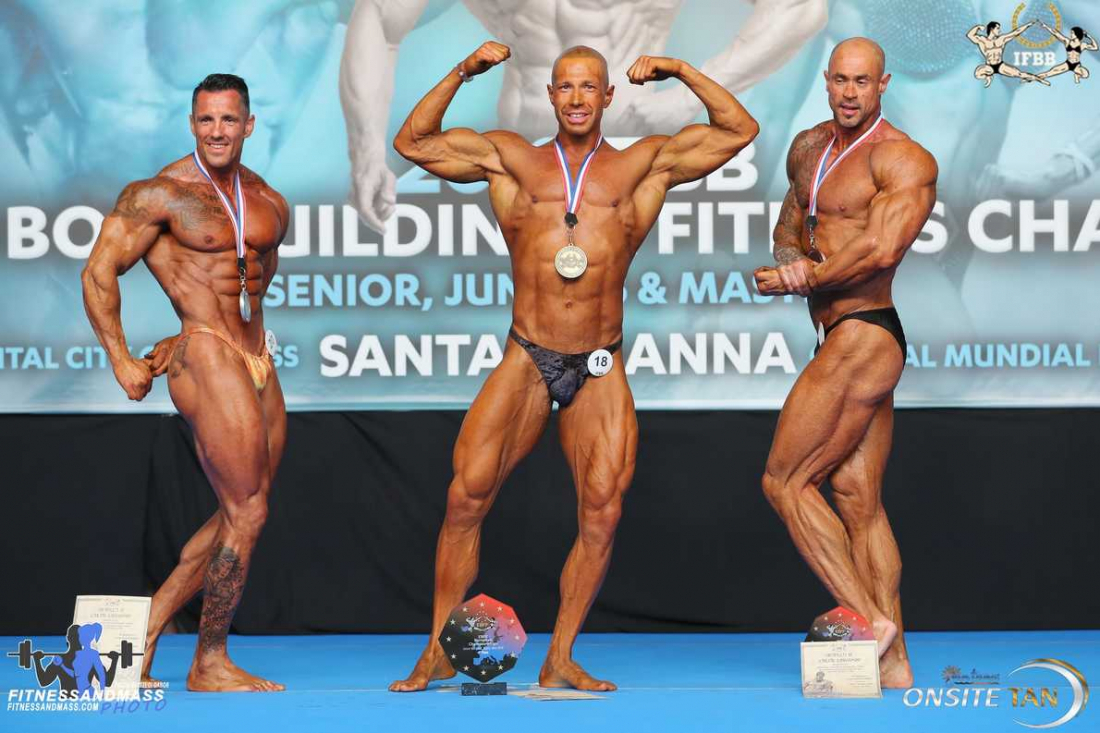
 In today's interview we interview Pavel Samek, who represents Prom-in, one of the best Czech manufacturers of supplements. Pavel is even the 2019 IFBB European Champion in the classic bodybuilding masters from 40 to 44 years old! And it is through this interview that we will discuss with this experienced bodybuilder and nutrition guru why he went silent, what troubles accompanied him, but also what he thinks about the excessive influence of social media on users or, for example, what kind of fabrications we can encounter on the Internet. Sit back and enjoy the conversation.
Hi Paul. There are more and more posts on your Instagram about you being back in training again. How long have you been out of training and what happened?
Fortunately, I'm back training again. What happened? Basically nothing special - I just had a blast on the bike. I flew over the handlebars and broke my radio head, which unfortunately meant the longest training break since 2002. I've kept a training diary ever since, so I know this for a fact. It may also have been the longest break in the 28 years I've been training.
Why did you take a break for such a long time? Was it because of your injuries?
Partly. But I also came to some general disgust with social media and the fitness community in general. To put it bluntly, I became annoyed with the artificial positivity everywhere. Short of shouts like "I'm following my dream!" or the discipline bullshit, I'm getting allergic. Ironically, at one point I read an interview with Karlos Vemola, and there I saw sincerity for the first time in a long time. He talked about his injury, about how it's really killing him, that he's just pissed off, and it's a struggle for him.
All of a sudden I was like "finally someone who doesn't play these games, at how great everything is." And why did I come back anyway? I simply told myself that my IG used to look like a good luck commercial too, which of course is bullshit. I myself also have skeletons in my closet, fears, complexes and everything that every normal person who isn't a superhero has. And somehow I figured that instead of constantly talking shit about food and training, maybe people should hear that it's normal to feel like shit sometimes. I'm even thinking to myself now that my wife has a halo for not divorcing me after that fracture. I was a real mess.
Are you already in hard mode, or are you just getting ready for it?
And that's actually another thing. What hard mode? I've never been in any kind of hard mode, or I don't feel like it. That's related to what I said a moment ago. A lot of people are talking shit about working hard and suffering terribly. And then I meet them at practice, and they're barely pumping. And then people come up to me and say, you're working out, you're in training. And I have to laugh because what I'm doing is a piano, compared to what I was doing when I was 18. Nowadays I go to the gym to relax, and I'm definitely not killing myself. It's just that people today have completely out of scale. You know, I always say I'm extremely lazy, and that's why I do bodybuilding. It's the most relaxing sport, for a lemming.
So, yeah, I'm back in my relaxed mode of working out and being relaxed. Hard mode was when I had my arm in a cast and I couldn't do much of anything. Then it was damn hard when the physio straightened my arm despite the pain. And then it was damn hard and frustrating when I was lifting a broom handle for a biceps lift and tears of pain were flowing. I think the classic training regimen, is absolute ease and Relax, but there are some people who think it's a chore. It really isn't.
Will we see you on the race boards again, or have you retired from racing?
I'd like to know. I've always said that once I lose my form at my age, I probably won't find it again. Well, I've lost it now, but I'm trying to find it again. Basically, I have no experience of such a lapse and I have no idea what will happen. It's true that when I went to the European Championships I thought that I couldn't possibly be better than I was when I was young. And I was a hell of a lot better, which I still don't understand. Studies on aging would say it's impossible. I'm kind of kidding about the studies. Anyway, my body has surprised me a few times. Maybe it'll surprise me again this time and I'll find my form again. I'll admit, I'd like to look for the World again. We'll see.
Do you think it's good that people trust social networks and influencers so much?
The problem is not with influencers, the problem is that everyone sees what they want on IG. Although I mentioned before that I'm a bit disgusted with the fitness world on networks, I don't want to say that everything is bad. The problem is that people follow someone and only see clips and not the whole context. Example: today a kid texted me that Honza Turek eats rice grits, and if it's good. Of course it is. And it's definitely a cool tip from Honza and good that he's showing people his preparation. But guys, the grits aren't the key. If you don't like it, don't eat it and have rice or whatever. So the question of whether to trust influencers is already a bad question to begin with. What do you really trust them for? They don't preach anything, they just share. Actually, speaking of which, I can think of the main reason I ditched IG in the first place. I, while definitely not an infuencer, also messed up, I was toying with the idea of sculpting a bit before my injury, so I stupidly started sharing how I do it. And you know what, I just always have to add on food when I want to lose weight.
I just don't have over a year of ironclad discipline like say Lubos Chladek, and I'm actually eating rather less on calories. And when I get going, I just start eating more and more regularly, and I start gaining, and somehow the fat goes down with it. So I kind of unhappily threw it into stories. And boom, I was past the spreader and the denier of the laws of physics. And all I said at the time was that I do it and it works for me personally. It wasn't a guide, I never even tell people what to do - even with the ones I work with, I just give my opinion and we look for the key together. I certainly don't know a boatload of things, and I certainly don't think I know any truth or golden grail. I just have an opinion and I'm happy to discuss it. So the main problem is that people on the networks are looking for the truth. But there is no universal truth.
Can we trust the opinions or tips of social media stars?
Hey, opinions, on the other hand, are great. As I mentioned above. It's just enrichment. I also like seeing Robert Humphall's beautiful badge, and I even wrote to him about how fluffy it was. This looks great to me. The tips are great. And I'm happy to learn, but I'm not going to copy everything. Robert's a good example. I admire him for managing cardio every morning and maybe that's the best thing for him. I tried it and it really wasn't for me. I do need the morning quiet and calm, as I mentioned - I'm a lazy person, so better for me to have pancakes and a quiet coffee in the morning. And that's the thing, everything has its positives, but what is great for one may be the worst for another.
Same with my arm. My family and I were visiting Stefan in Slovakia, and he's a real maniac, he just leaves training and then rides 100 km on his bike in the afternoon. And the day I broke my arm, I did a great workout in the morning, but I didn't want to do cardio. I figured I'd go for a bike ride in the afternoon. Well in the afternoon I felt more like squatting in the garden, but I'm like "I'm not going to be a lemra, I want to be like Stefan". Well, we know how that turned out. It's an exaggeration, of course. But I'm just not gonna be like Stephen, or Robert, or anyone else. And what's great for them may not be great for me. And that's how we should treat those we're watching. Inspiration is great, but let's not look for the key. Let's look within ourselves.
What do you think about the fact that people often get fooled by different influencers' opinions, even if those opinions are, for example, contrary to what the studies (science) say? Now I'm referring to the various fabrications on the internet and social media.
And I'm back to where we were. Studies are both a great thing and a bane. BCAAs are creeping up on me again. But I'll keep my mouth shut. Let me put it this way: if I just slightly overstate it, I'll find you studies on one topic that are seemingly absolutely contradictory. And they're all going to be very reputable. Yes, there are studies that are a complete disaster on their face. But then there are also very good studies that say something, and have very solid explanatory value, but again, the end result can be interpreted either way. And in fitness this is absolutely true. We look for truth in studies, but we don't understand at all that almost no one studies these types of athletes long term.
I certainly don't know what's right myself. And I've read a lot of those studies. But today, I'm basing it more on my 28 years of observing my body's reactions and research on myself and people I really know. I myself have logged most of my workouts since 2002 and can actually tell you what I ate on July 10, 2010. Yes, I have a pretty accurate idea of what I did when. I know when I was sick and how long it took to recover, and then how long it took to get back to my original performance. If I didn't have those records, I wouldn't know that I was eating more calories every time I went racing. I didn't find that out until I did a retrospective analysis of my records. I actually write down my meals when I'm in the off-season and don't plan how much I eat at all. And that's actually how I found out that I'm lower calorie-wise than I was before the competition.
And studies will tell you that it's pointless to lose fat and eat more. But there are so many variables, and it's hard for a study to account for them. It's possible, and probably true, that you just switch in your head and train harder, and you need more calories, so you lift, but you're still in a deficit. So you eat more, you don't change your training, but it's still more intense because of the mental focus. And you can't really measure that. But with the other guy, who is much less of a slacker than I am, and therefore crushes it to 150% all year, you're going to need to take a different approach. And he'll need to go into a targeted deficit just to sculpt. So studies and opinions need to be taken with a grain of salt. It's just that even your experience has relevant value, and studies can help you objectify your experience. It's all intertwined, because experience in turn helps you to understand the outcome of the study correctly.
Recommended
Nebbia Classic Hero legíny s vysokým pasem 570
Nebbia Tričko s kapucí PLAY BIG 376
Czech Virus Supreme Magnesium Complex
Nebbia Top Halter CLUB D’OR 640
What do you think are the most common fabrications on the internet?
It's different. The Internet is a wonderful thing. And in turn, it's full of great information. We just learn things the wrong way from childhood. We're taught to fictionalize in school, so we know that 1492 was the year America was discovered, which is great. Unfortunately, no one teaches us how to work with information. We don't know how to interpret it. And that's related to other things. Someone will tell us A and B, but we don't even think to think about whether there could possibly be a C, or even a D. And even people who have higher education often just need A and B. But for optimal bodybuilding results, often A, B, C, and sometimes even D are not enough. And this again has to do with the studies.
A study may examine B and C because A and B are already clear. It's just that we can easily misinterpret that it says A and B. That's why to understand the studies you have to have some basic knowledge. I'm not sure I always get things right either. Rather the opposite, which is why I like discussion and am happy when someone gives me new insight. But the more fundamental problem is that we are set up from childhood to want 100% and maybe more. Which is total bullshit. You just can't have 100% it doesn't exist in the real world. So looking for the best workout, nutrition plan, supplement, etc is just a road to hell. Sorry, but life isn't 100%. Because then you spend time looking, but it's more like you need to do something.
And what do you consider the most dangerous?
The biggest danger is the arrogance of some otherwise very erudite people. It just happens to quite a few people that they get knowledge, and they do the results, and suddenly they feel that they have found the truth. Just as soon as someone claims to know how best to fulfill someone's potential, I'm suspicious. I'm going to put it another way. Recently, a lady posted on FB telling me how great she eats and lives the most super healthy life. Like I would like to have that kind of confidence. I've been doing this myself for almost 3 decades, and I still wouldn't dare claim to know what the ideal healthy lifestyle is. And somebody's tribute has it right the first time. It seems to me that saying I don't know has become almost a dirty word. So I see the danger in people who sovereignly claim that something should somehow be done, and that's the right thing to do. And that goes for fitness and anything else.
Going into practice - how do we verify that the information we get is actually true and not modified by subjective opinions/feelings?
That's what we're actually talking about. We seek truth, why don't we seek knowledge? Any experienced racer will tell you that they approached each preparation slightly differently. So in the context of the sport, cognition is well above instruction, whoever is going to tell you what to do and what macros to have probably isn't looking for cognition. But conversely, someone who will listen to you and take your opinion as a basis for future progression might be better. I guess it has to do with the fact that I can't be authoritative. I have a problem even ordering my daughter around. How can I be sure she doesn't know better than I do? That's why I tend to consult people. I try to analyze what he's doing, and then I don't give him answers, I give him questions. Like, "Why aren't you eating tonight?"
And if she gives me a relevant reason why she does that, we stick with the fact that she's hungry in the evening. If, however, he tells me he's only doing it because someone told him to, then we start discussing whether that's the ideal solution for him. And maybe try a different approach. Or people wonder if maybe I'll cut their carbs and add fat. And they're like, but you eat a lot of carbs. But I'm not that person, and he's not me. I'm just always trying to find the best solution for him, not for me. And he has to find that solution. We need to realize that we are our own best coaches. And your consultant, who you now call a coach or even a mentor, is really just a mental sparring partner who, if he's good, will help you up a few percent.
Paul, thank you so much for the advice you've given us all and we wish you the best of luck in your next endeavor.
I thank you, and I would tell people to try to seek more knowledge.
No posts have been made yet.








