




The Truth About Miracle Supplements—Why Does a 17% Increase in Performance Raise More Questions Than Answers?
 Author:
Imagine two commonly available supplements that can boost athletic performance by nearly a fifth in just one hour. That’s exactly the kind of results researchers presented in a study involving professional soccer players. However, the editorial team at Arnold’s Pump Club pointed out several major issues. So we took a closer look at the original research. And some of the numbers do indeed raise questions.
The results displayed on the screen would catch the eye of just about any athlete: a 17 percent increase in performance. Faster sprints. Better reactions. And all thanks to a combination of two amino acids taken about an hour before physical activity. For someone who trains regularly, that sounds almost unbelievable.
After all, even a small percentage improvement can mean the difference between winning and losing in professional sports. So what if there were a simple combination of supplements that could boost performance by such a significant amount in just a single day? A study published in August 2026 in the journal *Frontiers in Nutrition* suggested just that.
However, its findings also caught the attention of the editorial team at Arnold’s Pump Club, which decided to take a closer look at the research.
And they pointed out an important fact: while some of the results look exceptionally good, their explanations and reporting methods aren’t quite as convincing.
Article Contents:
- A Study Involving 24 Professional Soccer Players: What Did the Researchers Test?
- L-carnosine and L-tyrosine: Why should they work at all?
- An extra 17 percent? This is where the doubts begin
- What Do Other Studies Say? The Results Aren’t So Clear-Cut
- What really makes a difference during intense training?
- Why isn’t one successful experiment enough?
- A new discovery, or a reminder not to trust science without asking questions?
A study with 24 professional soccer players: What did the researchers test?
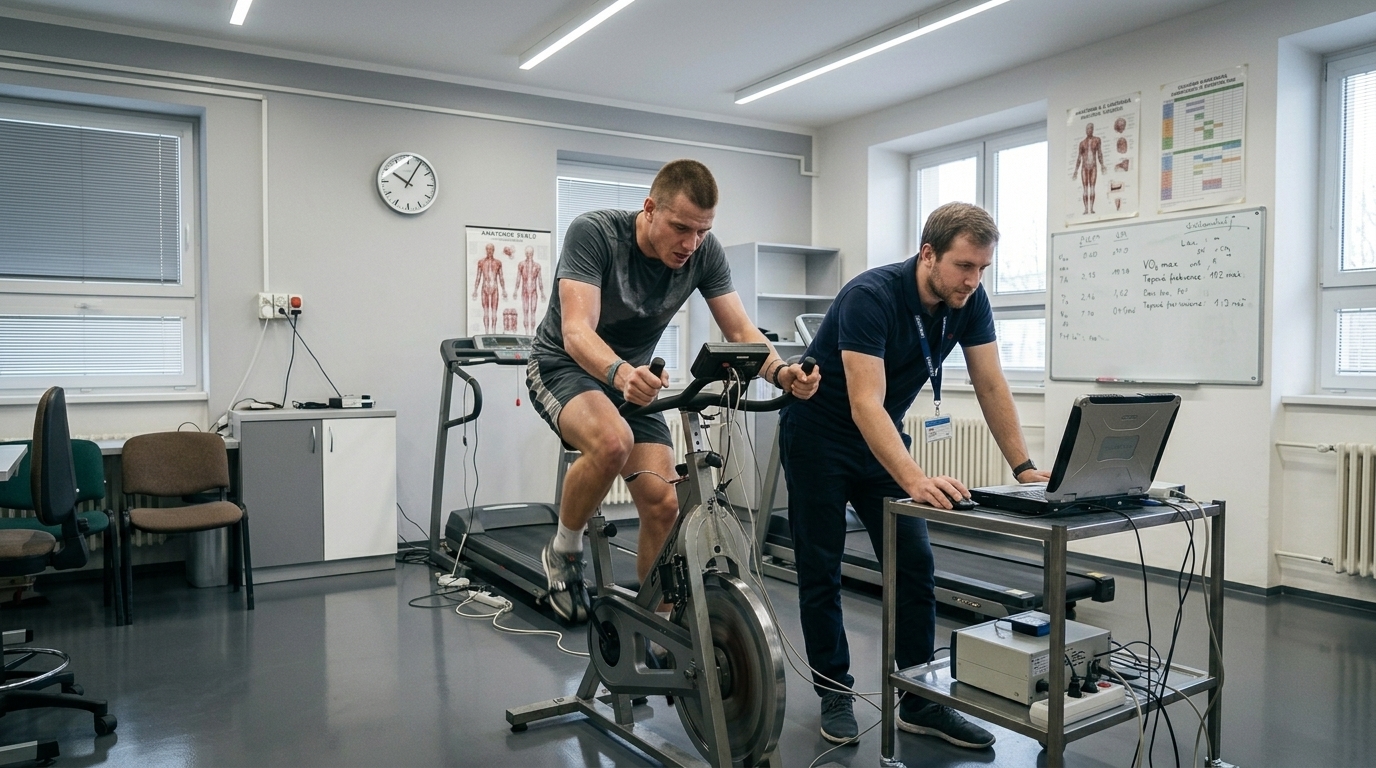
A research team led by Süleyman Bilgin enrolled 24 professional soccer players aged 18 to 30 in the experiment. The study used a randomized, double-blind, placebo-controlled crossover design. This means that each participant sequentially underwent four experimental conditions: L-carnosine alone, L-tyrosine alone, a combination of the two, and a placebo.
There was always a 96-hour break between test days. The athletes took the supplements 60 minutes before exercise. They then performed a 30-second Wingate maximal cycling test, followed by sprints, a change-of-direction test, soccer passing drills, and an assessment of cognitive function.
At first glance, the results were remarkable. When both substances were combined, the researchers observed approximately a 17% higher peak performance and nearly a 17% higher average performance compared to the placebo. Improvements were also observed in sprints, agility, and certain attention tests.
At the same time, however, it is important to emphasize that this was a one-time laboratory test, not a long-term study of training adaptations. The research therefore did not prove that the supplements led to long-term increases in strength or muscle mass among soccer players.
L-Carnosine and L-Tyrosine: Why Should They Work at All?
Both substances studied have distinct functions in the human body. L-carnosine is a dipeptide composed of beta-alanine and histidine, which is naturally found in muscle tissue, among other places. It plays a role in regulating the acid-base balance within muscle cells, and higher concentrations of it are often associated with better tolerance of certain forms of intense exercise.
However, there is a fundamental difference between carnosine itself and beta-alanine. Long-term research shows that regular supplementation with beta-alanine can gradually increase the amount of carnosine in the muscles. This process, however, usually takes several weeks. In contrast, carnosine taken orally is rapidly broken down in the human body by the enzyme carnosinase.
This is precisely why it is not a given that a small single dose of carnosine can significantly increase muscle performance within a single hour. L-tyrosine is an amino acid that serves as a precursor to neurotransmitters such as dopamine and norepinephrine. Researchers are therefore investigating its potential effects on attention and cognitive performance, particularly during mental or physical stress.
However, this does not mean that taking it automatically improves athletic performance. Research to date has yielded mixed results, and some meta-analyses have failed to demonstrate a significant benefit of tyrosine for endurance performance.
An extra 17 percent? This is where the doubts begin
The editorial team at Arnold’s Pump Club pointed out several problematic aspects of the study. The first is the magnitude of the effect itself. The researchers administered 6 mg of L-carnosine per kilogram of body weight to the participants. With an average participant weight of just under 74 kilograms, this amounted to approximately 444 mg of carnosine.
This amount is relatively small, especially when considering its rapid breakdown in the body. Nevertheless, the authors observed an exceptionally significant improvement in performance after just a single dose. The second issue is the dosage of tyrosine. Participants received 150 mg per kilogram of body weight. For the average athlete in the study, this corresponded to approximately 11 grams of tyrosine.
This is not, therefore, an amount that one would typically obtain from a single capsule of a standard supplement. And the third issue concerns the results tables themselves. The authors report a 17.37% increase in peak power, which corresponds to a change from approximately 780 to 916 watts.
However, when power is converted to watts per kilogram of body weight, the reported averages indicate an increase of approximately 25%. An even more pronounced discrepancy appears in the more demanding version of the Stroop test, which assesses attention and the ability to suppress automatic responses. The study text reports an approximately 15% reduction in reaction time. However, the values in the table correspond to a decrease from 965 to 720 milliseconds—that is, approximately 25%.
These discrepancies do not, in and of themselves, prove that the entire experiment is flawed. They do, however, indicate that the published results require a more detailed explanation and verification.
Without access to the individual measurement data, it is not possible to independently clarify all discrepancies.

What do other studies say? The results are not so clear-cut
This is precisely why the new experiment needs to be placed in a broader scientific context. In 2024, a systematic review and meta-analysis focusing on the effects of tyrosine during endurance activities was published. The authors included ten experimental comparisons from eight studies. The results did not show any statistically significant improvement in performance in tests to exhaustion or in time trials.
An experiment published in January 2025 in the journal PLOS One yielded similar results. Eight trained soccer players underwent strenuous intermittent exercise in a warm environment. Although they received the same dose of tyrosine—150 mg/kg—the researchers did not observe any significant benefit for peak performance or decision-making abilities. This does not mean that tyrosine cannot be useful under any circumstances.
It does mean, however, that current research does not support the idea that it is a reliable way to significantly enhance athletic performance. The situation with carnosine is similarly complicated. There is more convincing evidence for the long-term use of beta-alanine, which helps gradually increase muscle stores of carnosine.
And it is precisely this distinction that is crucial for athletes.
What really makes a difference during intense training?
If you want to boost your performance during intense exercise, there’s no need to immediately experiment with every new combination of amino acids. It’s more important to understand how individual substances work and what quality of evidence supports their use.
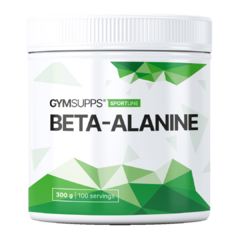
One of the better-researched options is GymSupps Beta Alanine, which, according to its product composition, contains beta-alanine alone without any other active ingredients. Unlike the single dose of carnosine used in the study described, beta-alanine is primarily studied when taken regularly over a period of weeks. An ISSN expert opinion states that long-term supplementation may improve performance during certain high-intensity activities, particularly those lasting approximately one to four minutes. However, the effect varies from person to person, and specific results cannot be guaranteed.
The choice of supplement should therefore always be based on the nature of your training. After all, no supplement can replace quality preparation, a proper diet, or adequate recovery.
Recommended

Why Isn't One Successful Experiment Enough?
A new study on carnosine and tyrosine presents an interesting hypothesis. Its experimental design has some strengths, such as the use of a placebo, double-blinding, and repeated testing of the same participants. At the same time, however, it has significant limitations.
Only 24 male professional soccer players participated. Therefore, the results cannot be automatically generalized to recreational exercisers, women, or strength athletes. The experiment examined only a one-time effect, not the long-term safety and efficacy of supplementation.
Furthermore, the researchers did not record baseline performance before each test visit and did not conduct a separate statistical analysis of the potential influence of test order. Some of the soccer tests used also lacked fully validated psychometric properties.
Above all, questions remain regarding the magnitude of the observed effect and the consistency of the published data.
For a new supplementation strategy to be recommended, it is not enough for a single study to show a statistically significant result. We also need a biologically plausible explanation, reliable data, and independent replication of the experiment.
| INDICATOR | PLACEBO → COMBINATION | CONVERTED CHANGE |
|---|---|---|
| Peak Power (W) | 780.30 → 915.75 | +17.4% |
| Peak power (W/kg) | 9.10 → 11.40 | +25.3% |
| Difficult Stroop Test (ms) | 965.20 → 720.30 | −25.4% |
Source: Bilgin et al., Frontiers in Nutrition (2026), Tables 2 and 4. Percentages are calculated from published group averages. Regarding the Stroop test, the study text reports an approximately 15% reduction in reaction time, even though the values in the tables correspond to approximately 25%. The differing percentages for absolute and relative performance do not in themselves indicate an error without individual data.
A new discovery, or a reminder of why we shouldn’t blindly trust science?
Research on sports nutrition is constantly evolving. Substances that look promising today may gain stronger scientific support in a few years. Others may prove to be less effective than originally assumed after more thorough testing. The combination of L-carnosine and L-tyrosine may be an interesting avenue for further research.
At this point, however, we do not have sufficient evidence to promise athletes a 17 percent increase in performance. And perhaps that is the most important message of the entire study. If someone comes up with an extraordinary result, we don’t have to reject it immediately. But we should be interested in how they arrived at it.
Because in sports nutrition, the most important question isn’t always by how many percent a supplement supposedly boosts performance. What’s far more important is whether we can actually trust those percentages.
Recommended
Scientific sources:
- Bilgin et al. (2026) – original study on L-carnitine and L-tyrosine
- Systematic review and meta-analysis of the effects of tyrosine on endurance performance (2024)
- Donnan et al. (2025) – tyrosine and soccer players’ performance in hot conditions
- ISSN (2015) – expert opinion on beta-alanine
- ISSN (2021) – Expert opinion on caffeine and athletic performance

No posts have been made yet.