




The Truth About the Dark Side of Caffeine—Why Might Your Favorite Pre-Workout Supplement Be Ruining Your Sleep and Recovery?
 Author:
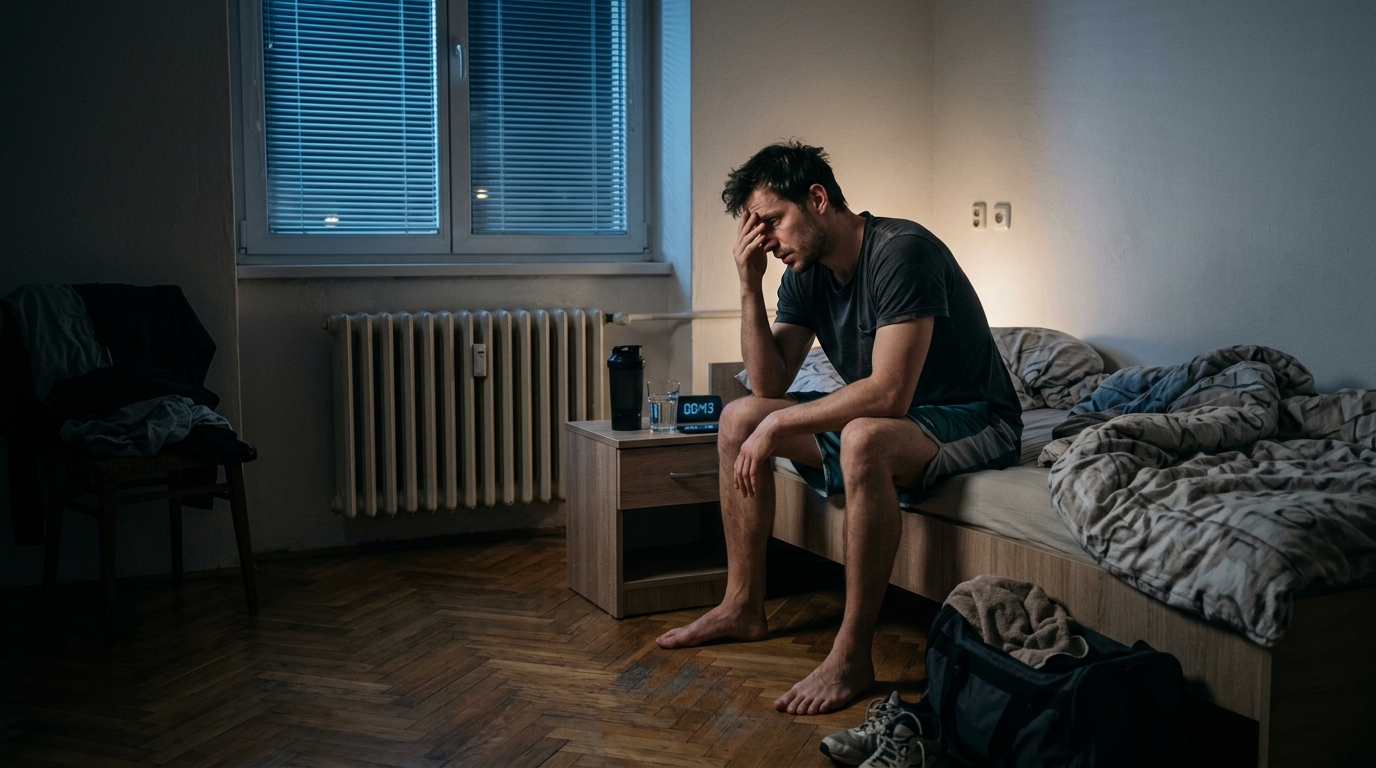
It's 6:00 p.m. After a tough day at work, you finally make it to the gym, but your energy is at zero. You grab your favorite pre-workout, wait half an hour, and suddenly everything changes. Fatigue fades, your focus sharpens, and the weights feel a little lighter. The workout went well. But a few hours later, you’re lying in bed, tossing and turning, wondering why you can’t fall asleep. Maybe it’s not stress or a bad day. Maybe there’s still a substance in your body that helped you perform better a few hours ago.
Caffeine can temporarily suppress the feeling of fatigue. But that doesn’t mean your body has stopped needing rest.
Article Contents:
- Caffeine Doesn’t Give You Energy. It Just Masks Fatigue
- Scientists Have Discovered a Surprising Price to Pay for Better Performance
- Why can an evening energy boost be a problem for recovery?
- Boost your workout, but don’t let caffeine dictate your sleep
- How much caffeine is too much? It depends on the dose and the timing
- The biggest paradox of caffeine? Performance isn’t just about a single workout
Caffeine doesn’t give you energy. It just masks fatigue
Caffeine is one of the most popular stimulants in the world. It’s found in coffee, energy drinks, and pre-workout supplements. Its main effect is related to a substance called adenosine. Adenosine gradually builds up throughout the day and contributes to feelings of sleepiness. Caffeine blocks adenosine receptors, so the brain temporarily perceives fatigue as less intense. The result is increased alertness and often a better ability to focus on performance.
And it really does work in sports.
An expert opinion from the International Society of Sports Nutrition states that caffeine can improve certain aspects of both strength and endurance performance. Studies often use doses of 3–6 mg per kilogram of body weight, though some benefit may be observed even at lower amounts.
But this is where the problem begins. Caffeine does not eliminate the need for sleep. It can only temporarily alter how strongly you perceive fatigue.
Scientists Have Uncovered a Surprising Price to Pay for Better Performance
In 2025, a meta-analysis of 22 controlled studies involving a total of 956 participants was published in the journal *Sleep Medicine *. The researchers examined how caffeine affects the actual duration and quality of nighttime sleep.
The results showed that after consuming caffeine, participants, on average:
- slept approximately 35 minutes less,
- took about 8 minutes longer to fall asleep,
- had lower sleep efficiency,
- had a slightly lower proportion of deep sleep.
Of course, this does not mean that every cup of coffee automatically robs a person of half an hour of sleep. The results depend on the dose, timing, and individual sensitivity. Another randomized study published in the journal *Sleep* showed that a single dose of 400 mg of caffeine can significantly disrupt sleep even when consumed 12 hours before bedtime. And what’s perhaps most interesting? Some participants didn’t subjectively notice the decline in their sleep quality.
In other words, you may feel like you’re sleeping perfectly normally, even though objective measurements show otherwise.
Why can an evening energy boost be a problem for recovery?
You might be thinking, “If caffeine helps me have a better workout, then it must be worth it.”
In the short term, that may be true. But muscle growth isn’t just the result of exercise alone. After a workout, your body needs time to recover, replenish energy stores, and undergo other adaptive processes. Quality sleep is a crucial part of this process. If you repeatedly cut into your sleep because of evening stimulants, you may be creating an unnecessary obstacle to recovery and long-term performance.
This doesn’t mean that caffeine directly stops muscle growth. Such a claim would be an exaggeration. The main issue is that a substance that helps you get through one demanding workout can, under certain circumstances, worsen the conditions for recovery before the next one.
Boost your workout, but don’t let caffeine dictate your sleep
Caffeine isn’t the enemy. If you train in the morning or during the first half of the day, sensibly timed supplementation can be a practical part of your training routine. However, it’s important to know how much caffeine you’re actually consuming and not to overlook other sources of it.
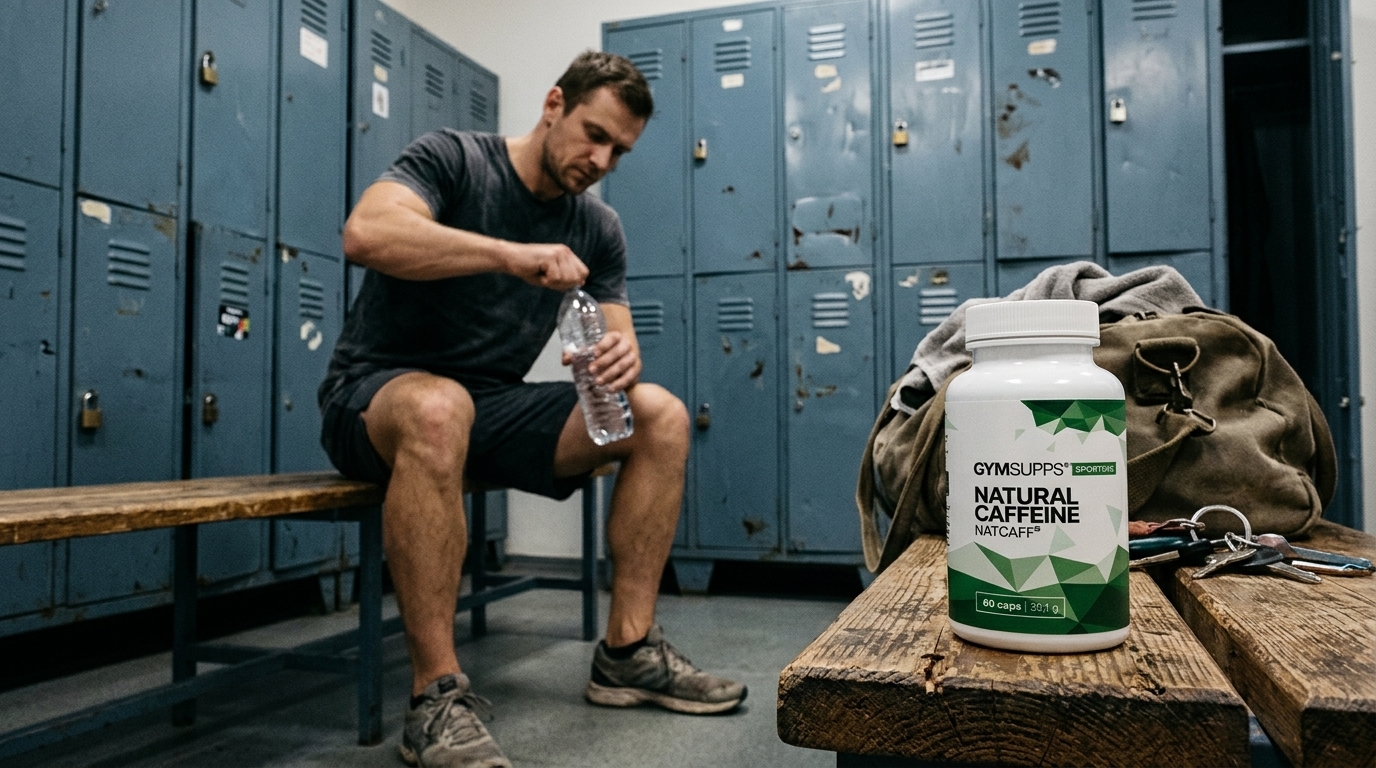
One option is GymSupps Natural Caffeine NATCAFF®, which contains exactly 200 mg of natural caffeine from coffee beans in a single capsule. Thanks to the defined amount, you have a clear idea of the dose; however, you should keep in mind that 200 mg may not be suitable for everyone, especially if you’re highly sensitive or working out later in the day.
If, on the other hand, you regularly work out in the evening and want to avoid stimulants, you can include GymSupps Creatine Monohydrate in your long-term supplementation regimen. Creatine doesn’t work as an immediate energy booster, but when taken daily at a dose of 3 grams, it has been proven to support performance during repeated short-term intervals of high-intensity exercise. Unlike caffeine, it does not have a stimulating effect on alertness.
Recommended
GymSupps Creatine Monohydrate
Creatine Monohydrate 500g 1+1
How Much Caffeine Is Too Much? It Depends on the Amount and the Time of Day
There is no single universal threshold beyond which caffeine ceases to be beneficial and begins to interfere with sleep. It depends on how much you consume, when you consume it, and how quickly your body metabolizes it.
The European Food Safety Authority considers single doses of up to 200 mg and a total daily intake of up to 400 mg to be amounts that generally do not raise safety concerns for most healthy adults. However, this is no guarantee of undisturbed sleep. Even a lower dose can affect sleep in some people, especially if taken late in the day.
Therefore, during an evening workout, it may be better to start without caffeine than to try to compensate for daytime fatigue with another dose of the stimulant.
The biggest paradox of caffeine? Performance isn’t just about a single workout
Caffeine has its rightful place in sports nutrition. It’s effective, accessible, and its impact on certain types of athletic performance is well-documented. But even the best stimulant can’t replace quality sleep. Perhaps that’s why it’s worth changing the way we think about pre-workout supplementation. We shouldn’t just focus on how much of a boost it gives us, but also on how it affects the rest of the day.
Because real progress isn’t just about getting through that last tough rep. It also depends on whether you give your body enough time to prepare for the next workout.
Recommended
GymSupps Caffeine
References:
- Chang et al. (2025): Age- and dose-specific effects of caffeine on sleep
- Gardiner et al.: Dose and timing effects of caffeine on subsequent sleep
- Grgic et al. (2021): International Society of Sports Nutrition position statement: caffeine and exercise performance
- EFSA: Caffeine – Safety of Consumption
No posts have been made yet.