





The 10 most common myths around food frequency
 Author:
 There are many myths about the regularity of meals. It used to be that the only correct way to eat was smaller portions every two to three hours, but nowadays this view is slowly being abandoned, and various forms of Intermittent fasting and other methods are coming to the fore, which say that you don't have to eat every so often, that you just need to eat your intake in 1-4 larger meals and you don't have to control the regularity in any special way. But does it really matter if we eat 5 or 3 times a day? Does a more frequent meal frequency really have any benefits? Do we have to eat breakfast every day to lose weight? Let's take a look together at 10 of the most common myths around eating frequency and fasting.
1. You have to eat breakfast or you'll get fat.
One of the most common myths around eating frequency is that you have to eat breakfast if you want to lose weight or simply have a healthy weight. Indeed, people often believe that if they skip breakfast they will struggle with hunger, fatigue and weight gain, so they often force breakfast on themselves, literally. A lot of research has been done on this topic and it turns out that whether or not you eat breakfast doesn't affect weight gain much, yet it is true that people who are in a weight loss program tend to skip breakfast. However, gaining weight is a matter of caloric excess, not whether or not you eat breakfast.

It also turns out that people who eat breakfast are then more productive during the day. In the case of research on children and adolescents, those who eat breakfast regularly have much more energy and find it easier to concentrate at school. However, it is very important to put on your subjective feeling. Some really cannot exist without a hearty breakfast, others are unable to devour anything in the morning. In fact, it doesn't matter too much whether you eat breakfast or not, It won't have any significant effect on your metabolism.
2. A higher frequency of meals means a faster metabolism.
Another very common statement is that if you eat more often in a day, you are forcing your metabolism to keep working, ensuring that it runs faster and you burn more calories per day as a result. The body actually releases a certain amount of calories during digestion, which is referred to as the thermic effect of food (TEF). On average, about 10% of your total calorie intake is burned as TEF, as you may already know from our previous article(link here).
It's probably clear to you that it matters much more about the total amount of calories you take in, not the number of meals in which you take in those calories. Thus, eating six meals of five hundred calories will have the same thermic effect as if you eat three meals of one thousand calories. Counting the average TEF, you will burn 300 calories in both cases. Numerous studies suggest that meal frequency has virtually no effect on the total number of calories burned.
3. A higher number of meals helps reduce feelings of hunger.
And we'll stick with meal frequency. Many people also believe that if they eat more frequently, they will have less hunger and cravings. Well, research is very divided on this point. There are some studies that speak in favor of this claim, but there are also studies whose results show the exact opposite, that by eating small portions more often, you may tend to overeat and keep thinking about food, so ultimately you may be much hungrier and you may also see a disruption in concentration or stress from not being able to eat in a two to three hour window of time.

Actually, you can't say for sure whether it's better to eat 6 or three meals a day with regard to hunger. Again, it depends on subjective feelings - some people like more meals, others less. In the case where your intake is lower, it's actually preferable to consume your intake in fewer meals, because if you're trying to divide 1500Kcal into 5-6 meals, calorically they won't be very hearty and you may tend to overeat. On the other hand, some people don't like to eat to fullness and are better suited to a higher number of meals per day. Breaking it up into more meals may make sense for those who have a higher intake and their meals would be too large in fewer courses.
4 Splitting your intake into multiple meals per day will help you lose weight.
We've already established above that a higher frequency of meals has virtually no effect on metabolic rate, hence no effect on weight loss. Studies have seen virtually no difference in whether reducers consumed their intake in six or three meals per day. What matters is the total amount of calories, not the number of meals into which you divide that intake. Nevertheless, many people agree that if they eat at regular intervals, it is easier for them to follow a healthy eating regime. Again, this is very subjective, some people may find a higher frequency convenient and helpful to follow the regime, others may find a higher frequency bothersome and may find it out of the question due to their employment. No need to worry, it is not necessary to eat every 2-3 hours, even for reduction, if you can eat your entire intake in a day.
5. More frequent eating is better for your health.
Some sources state that frequent meal frequency is better for health and that fasting does not have a very good effect on health. Short-term fasting, however, promotes a cellular repair process called autophagy, in which your cells use old and dysfunctional proteins for energy production. Autophagy also functions to protect against stress and mobilize internal resources, has a role in immunity, development, and also helps delay the aging process and alleviate the symptoms of Alzheimer's disease. Occasional fasting also has several benefits for metabolic health. Certain groups of people actually enjoy fewer, larger-volume meals, and spacing them apart is also a form of fasting.
6. Fasting, even if only for a short time, puts the body into a "saving mode" due to starvation.
One of the common arguments against intermittent fasting is that it puts your body into "lean mode" due to starvation, thereby supposedly slowing down your metabolism and fat burning. While it's true that prolonged weight loss can reduce the number of calories your body burns over time, i.e. your metabolic rate on a lower intake will actually decrease over time, but this happens no matter what method you choose for fat reduction.
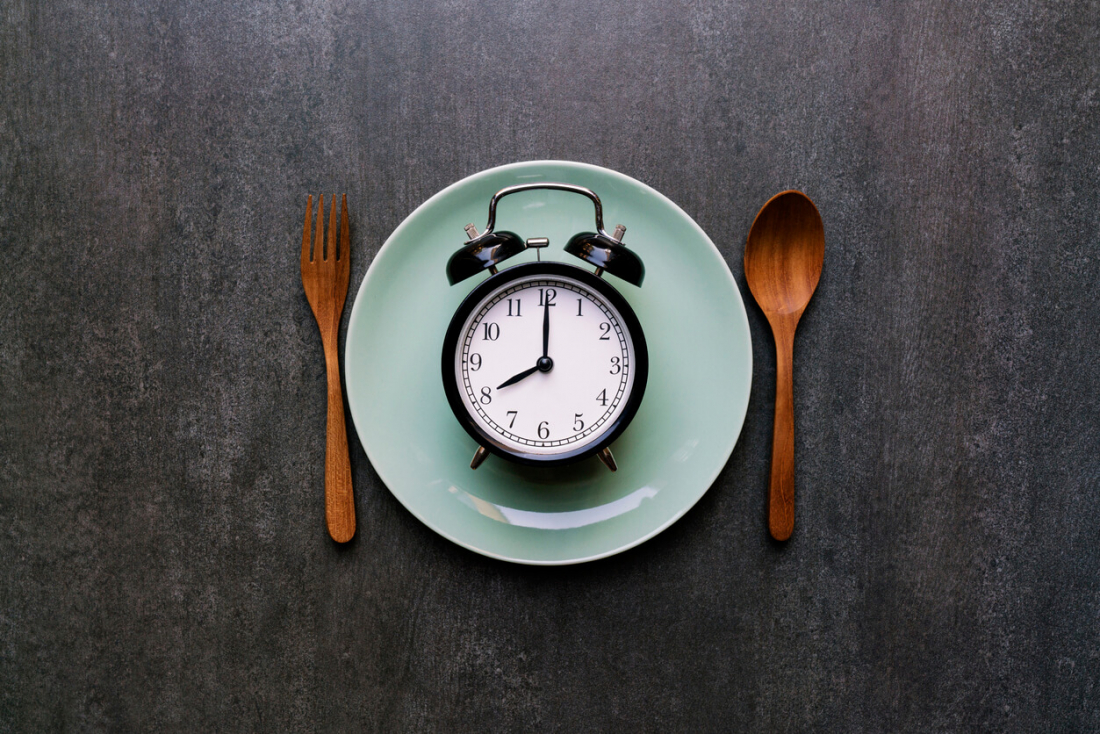
There is not a single piece of evidence that says intermittent fasting, or any form of intermittent fasting, leads to a more significant slowing of metabolism and reduction in the number of calories burned than other methods of fat reduction. In fact, intermittent fasting may have the opposite effect. This is due to a drastic increase in norepinephrine levels in the blood, which stimulates your metabolism and gives your fat cells a signal to break down body fat. Studies lean towards the statement that short-term fasting can increase your metabolic rate by 3.6 - 14%. But if you practice it for too long, the effect will be the opposite or at least slower.
7. It is necessary to eat in smaller portions because the body is only able to process a certain amount of protein.
Many "experts" claim that the body is unable to process more than a single 30g serving of protein. If you've read our previous articles on protein(here and here) you 'll know that there's no truth to this claim. If you take a larger dose of protein in one go, it doesn't go anywhere, the body will process it, it just takes a little longer. Furthermore, studies also show that eating protein in more frequent doses doesn't affect muscle mass in any way. The most important factor for most people is the total amount of protein ingested, not the number of meals in which that amount is spread out.

8. Prolonged fasting and fasting leads to loss of muscle mass
You must have also heard the opinion that fasting causes muscle burning because the body does not have enough energy. This statement is not entirely true either. It is typical of most weight loss regimes that you burn a small amount of muscle mass in addition to fat, especially if there is already a small percentage of fat in the body and this amount does not grow significantly when fasting. Just because you are fasting for a period of time does not mean that the body has no energy. If you take in enough calories in just three meals, for example, the body has plenty of energy regardless of the fact that you don't eat every two hours.
Interestingly, for many bodybuilders, intermittent fasting (read as a larger gap between meals) is beneficial because it helps maintain muscle along with a low body fat percentage. There are also studies that have observed a slight increase in muscle mass in people who consumed most of their calories during one large meal in the evening. The strategy of concentrating calories around training appears to be a very effective method not only for muscle building, muscle recovery, but also for fat reduction.
9. Fasting has a negative effect on health.
Really? In what way? If you have read our article on fasts(link here) you will know that even in the case of fasts we can find many positives. For example, it alters your gene expression related to longevity and immunity , and in animal research it has been shown to prolong life. We'll have to wait a few more years to find out how it is in this regard with humans.
Leeks also have significant metabolic health benefits, such as improved insulin sensitivity and reduced oxidative stress, inflammation, as well as a lower risk of developing heart disease. It may also improve brain health and function by increasing levels of brain-derived neurotrophic factor (BDNF), a hormone that may protect against depression and various other adverse mental conditions.
10. Fasting and larger gaps between meals make you more likely to overeat
There are also opinions that claim that because you eat with less regularity, you tend to overeat. However, the results of the studies do not suggest that there is any major link between fasting and overeating. In this study(link here), they concluded that when subjects were subjected to a 24-hour fast, they only consumed 500 Kcal more the next day, which still comes out positive in the weekly total.
Intermittent fasting can be one very effective strategy to reduce fat. Because you slightly reduce your overall food intake, you also reduce the fluctuations in insulin levels while slightly increasing your metabolic rate, norepinephrine levels, and human growth hormone (HGH) levels, intermittent fasting will cause you to lose fat, but you are less likely to gain it back. But of course, caloric deficit matters significantly.
What to take away from the article?
There are a lot of myths about meal frequency, the optimal number and size of meals per day, and the fasting that goes with it. For example , eating smaller, more frequent meals does not increase metabolic rate or hold the key to weight loss. What's more, intermittent fasting is far from unhealthy - it may even offer a number of benefits.
However, it's important to pay attention to your own feelings and heed your body's signals. Some people are comfortable eating smaller portions multiple times a day, while others prefer to eat three full meals. Neither strategy is any better. It's best to eat in a way that suits you personally. There is virtually no effect on body composition, fat reduction, or metabolic rate from the frequency of eating. The important thing is to consume the optimal amount of calories that will match your goals, physical disposition, daily activity, and so on.
Sources:
https://www.ncbi.nlm.nih.gov/pubmed/24898236
https://www.ncbi.nlm.nih.gov/pubmed/16002825
https://www.ncbi.nlm.nih.gov/pmc/articles/PMC524030/
https://www.ncbi.nlm.nih.gov/pubmed/9155494
https://www.ncbi.nlm.nih.gov/pubmed/18053311
https://www.ncbi.nlm.nih.gov/pubmed/20339363
https://www.ncbi.nlm.nih.gov/pubmed/26024494
https://www.ncbi.nlm.nih.gov/pubmed/19943985
https://www.ncbi.nlm.nih.gov/pubmed/19640952
https://www.ncbi.nlm.nih.gov/pubmed/23773064
https://www.ncbi.nlm.nih.gov/pmc/articles/PMC3106288/
https://www.ncbi.nlm.nih.gov/pmc/articles/PMC3673773/
https://www.ncbi.nlm.nih.gov/pubmed/10837292
https://www.ncbi.nlm.nih.gov
No posts have been made yet.








