





Most people take magnesium all wrong! This is the one "hack" that will rejuvenate your brain by 7 years!
 Author:
 You probably have it in your drawer, too. Magnesium. That miracle mineral everyone says you need for stress, muscles and sleep. But hand on heart - does it actually make you feel smarter? Do you feel like you're burning like you did when you were a student? If your answer is "not even", you've probably fallen victim to marketing and are just buying overpriced urine.
In fact, most forms of magnesium that you buy in a regular pharmacy or supermarket have one major problem: Your brain won't let them in.
Article content:
- A strict bouncer in the gateway to your skull
- What happens when the brain finally gets its "gasoline"?
- How to do this "upgrade" correctly?
The strict bouncer in the gateway to your skull
Your brain is the most guarded club in town. Between the bloodstream and the grey cortex of the brain there is what is called the blood-brain barrier. It's a biological bouncer that won't let anything in that doesn't have a special invitation.
Common forms like magnesium oxide (absorption rate about 4%, so almost useless) or magnesium citrate are great for "stretching" you out on the toilet or loosening up your calf after a run. But for your brain? They're invisible. They stay in your blood, then your kidneys filter them out and you flush them down the toilet.
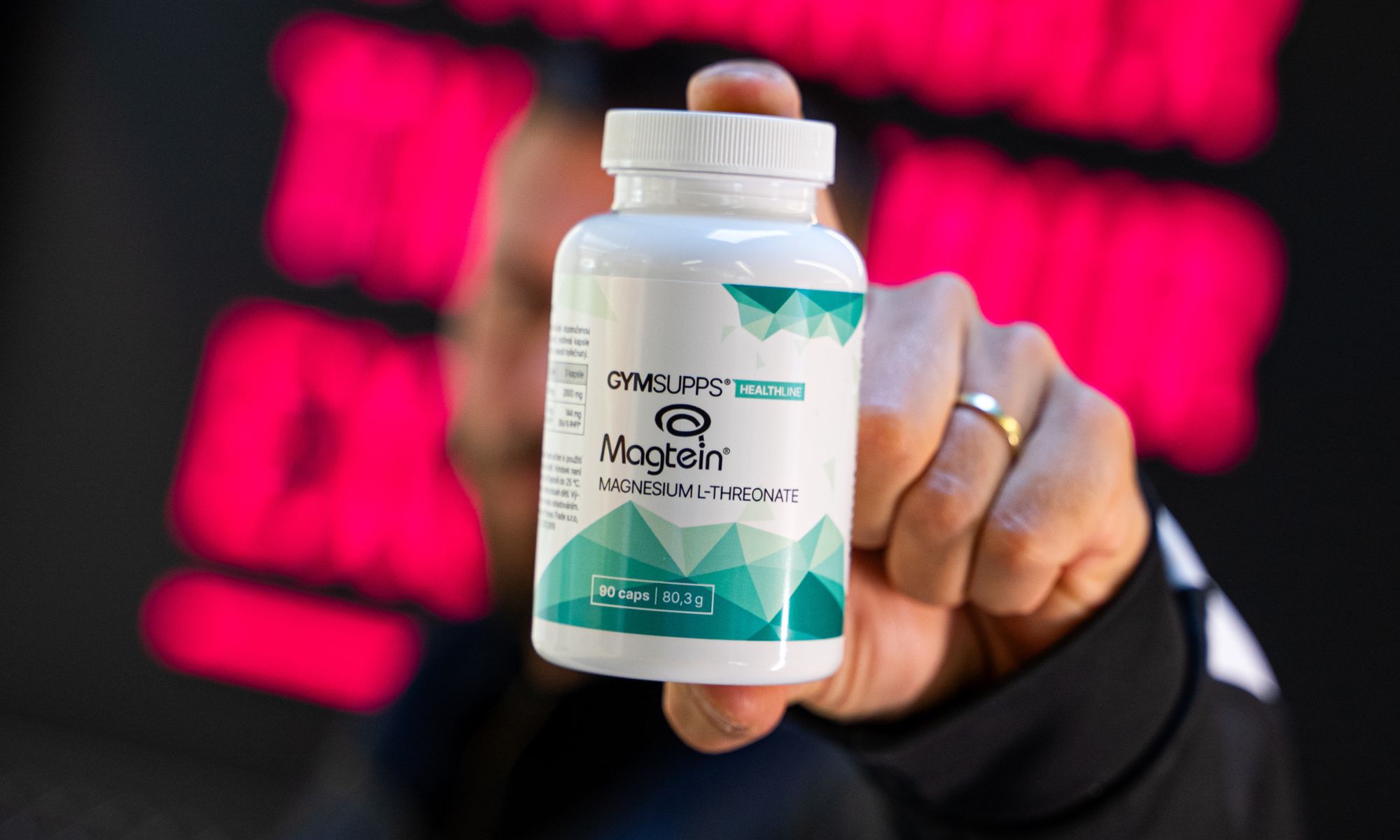
That's where Magnesium L-threonate (known as Magtein®) comes in. Scientists at MIT (Massachusetts Institute of Technology) have spent years trying to find a way to "sneak" magnesium through that unforgiving gate. They found that if you bind magnesium to threonate (a metabolite of vitamin C), it becomes a Trojan horse that passes through the ejector without blinking an eye.

What happens when the brain finally gets its "gasoline"?
When magnesium finally reaches the neurons, things start to happen. It increases what's called synaptic plasticity. That's the ability of your brain cells to make new connections. Simply put: your hardware gets an upgrade.
A recent cutting-edge study on healthy people (no patients, but people like you aged 18-45) showed results that blew even the researchers themselves away. After 6 weeks of use, the test subjects:
- Working memory (your mental RAM): the ability to hold several things in your head at once and work with them immediately shot up.
- Episodic memory: This is when you finally remember where you left your keys or what exactly was discussed in that meeting the week before.
- Brain Age: Cognitive tests showed that their brains acted like they were 7.5 years younger!
How to do this "upgrade" correctly?
It's not enough to just go out and buy your first box. If you want to really see a difference in the way you think, stick to these three rules:
- Look for the original: the label must specifically say Magnesium L-threonate (often trademarked as Magtein®). If it says "Magnesium Complex" and threonate is only at the end of the list, it's just a publicity stunt.
- Dosage should not be underestimated: Most studies that achieved that rejuvenation used 2 grams of Magtein per day. Mind you, that's not 2,000 mg of pure magnesium (you'd spend a day on the toilet for that), but 2,000 mg of a compound that contains roughly 144 mg of elemental magnesium.
- Strategic timing: the brain also needs magnesium for relaxation. Ideally, take part of your dose in the morning for alertness and the other part in the evening. L-Threonate, unlike other forms, does not cause diarrhea but can calm the nervous system beautifully before bedtime.
Is it worth it?
If you're feeling mentally tired, forgetting names, or feel like your head is going into "austerity mode," stop feeding the drain with cheap magnesium. An investment in threonate is an investment in your most valuable asset. Imagine what you could do with a brain that's seven and a half years more efficient. The difference is not how many kilos you lift in the gym, but how much your head can "hold" when the going gets tough.
Recommended
No posts have been made yet.








