





The best form of magnesium? 5 Reasons to Prefer Magnesium Citrate
 Author:
 Magnesium is a cofactor in more than 300 enzymatic reactions in the human body, from protein synthesis to muscle contraction. For athletes and active individuals, its role is absolutely crucial. Yet we encounter a paradox: many people supplement magnesium, but few experience real results. The problem is often not the dose, but the chemical bond - the form in which you take the mineral.
There are a plethora of compounds on the market, from inorganic oxides to sophisticated chelates. However, the scientific literature repeatedly highlights Magnesium Citrate as one of the most effective choices for specific physiological needs. Here are five science-based reasons why citrate should be a cornerstone of your supplementation.
Article Content:
- Superior bioavailability
- High water solubility and rapid absorption
- Modulation of intestinal motility
- Potential in reducing muscle spasms
- Nephrological protection
1. Superior Bioavailability
The basic measure of the quality of any dietary supplement is its bioavailability - that is, the percentage of the substance that actually enters the bloodstream and is utilized by the tissues. Cheap forms such as magnesium oxide often have an absorption rate below 4%, which in practice makes them an expensive tablet filler.
A key study published in the journal Magnesium Research (Walker et al.) looked at a comparison of three forms of magnesium: oxide, citrate and amino acid chelate. The results of the randomized, double-blind study were unequivocal. Supplementation with citrate resulted in significantly higher plasma and urinary magnesium concentrations compared to oxide.¹
For athletes, this means one thing: when taking citrate, you are not paying for a placebo effect, but for a real increase in intracellular magnesium levels, which are essential for ATP resynthesis and recovery after exercise. Magnesium citrate represents the organic binding of magnesium to citric acid, which the human body naturally recognizes and can efficiently transport across the intestinal barrier.
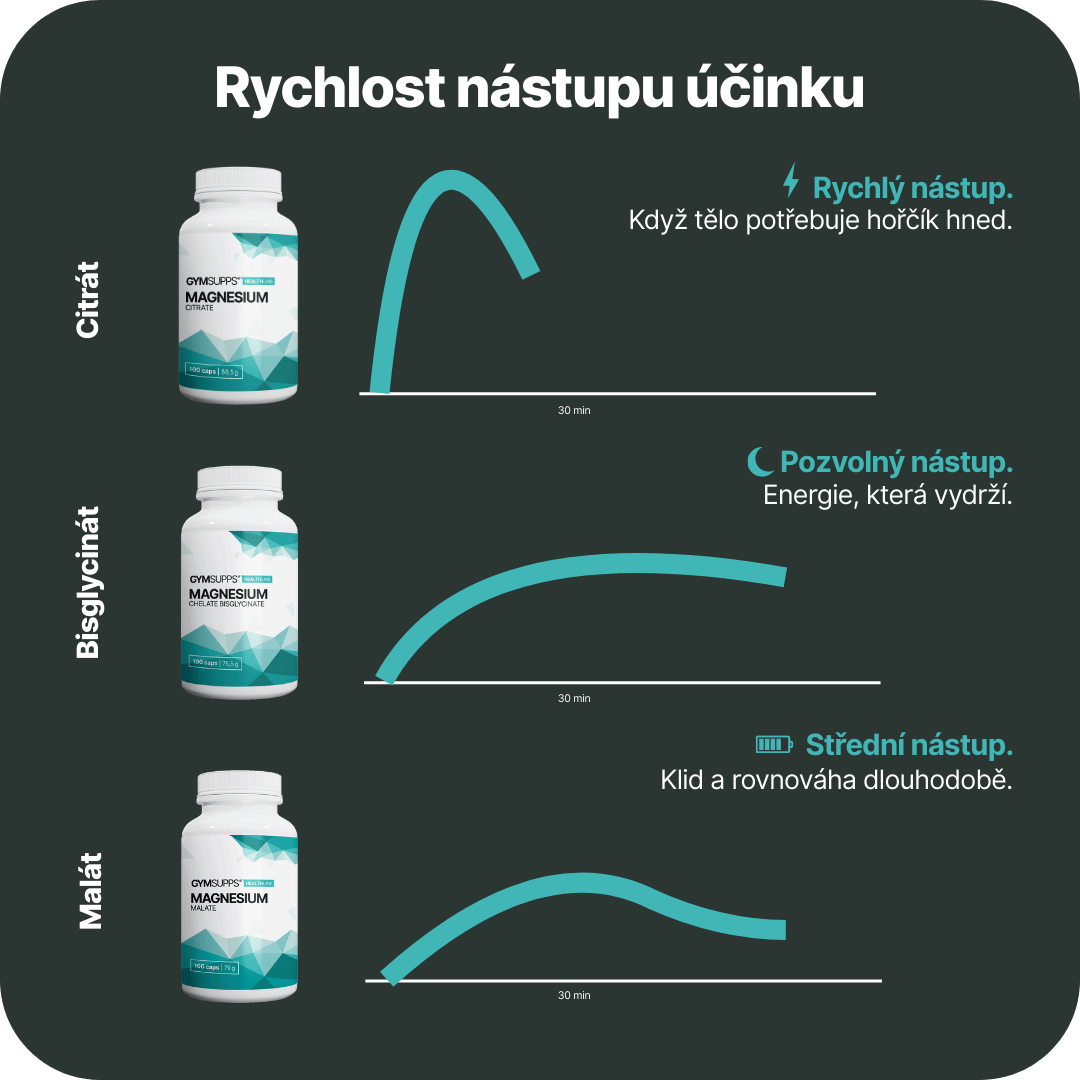
2. High water solubility and rapid absorption
The pharmacokinetics of magnesium is strongly influenced by its solubility. In order for the magnesium ion to be absorbed in the small intestine, it must first be released from its bond (dissociated). A study by Lindberg et al. showed that magnesium citrate is significantly more soluble in aqueous media than the oxide.²
While magnesium oxide requires large amounts of stomach acid (HCL) to dissolve - which can be a problem in individuals with hypochlorhydria (reduced stomach acidity) or in the elderly - citrate dissolves easily and independently of the pH of the environment. This property ensures a faster onset of action and less burden on the upper digestive tract (stomach). If you're looking for a form that doesn't "sit in the stomach" and travels quickly to where it's supposed to, the data speaks clearly for citrate.
3. Bowel motility modulation (Solving functional constipation)
For many fitness enthusiasts who consume high amounts of protein and occasionally neglect fiber, digestion can be a sticking point. Here magnesium citrate offers a benefit that other forms (such as bisglycinate) do not. In fact, it acts as an osmotic laxative.
The mechanism of action is simple but effective: the unabsorbed magnesium in the gut creates an osmotic gradient that "sucks" water from the surrounding tissues into the lumen of the gut. This softens the stool and increases its volume, which naturally stimulates peristalsis (bowel movement). Review studies confirm the effectiveness of magnesium citrate in the management of constipation and in bowel cleansing.³
However, it is important to note that this effect is dose dependent. At lower doses (200-400 mg), citrate acts only as a regularity aid, while high doses have a strong laxative effect. For dieting athletes who suffer from a slowed metabolism, this property of citrate can be a welcome "side effect".
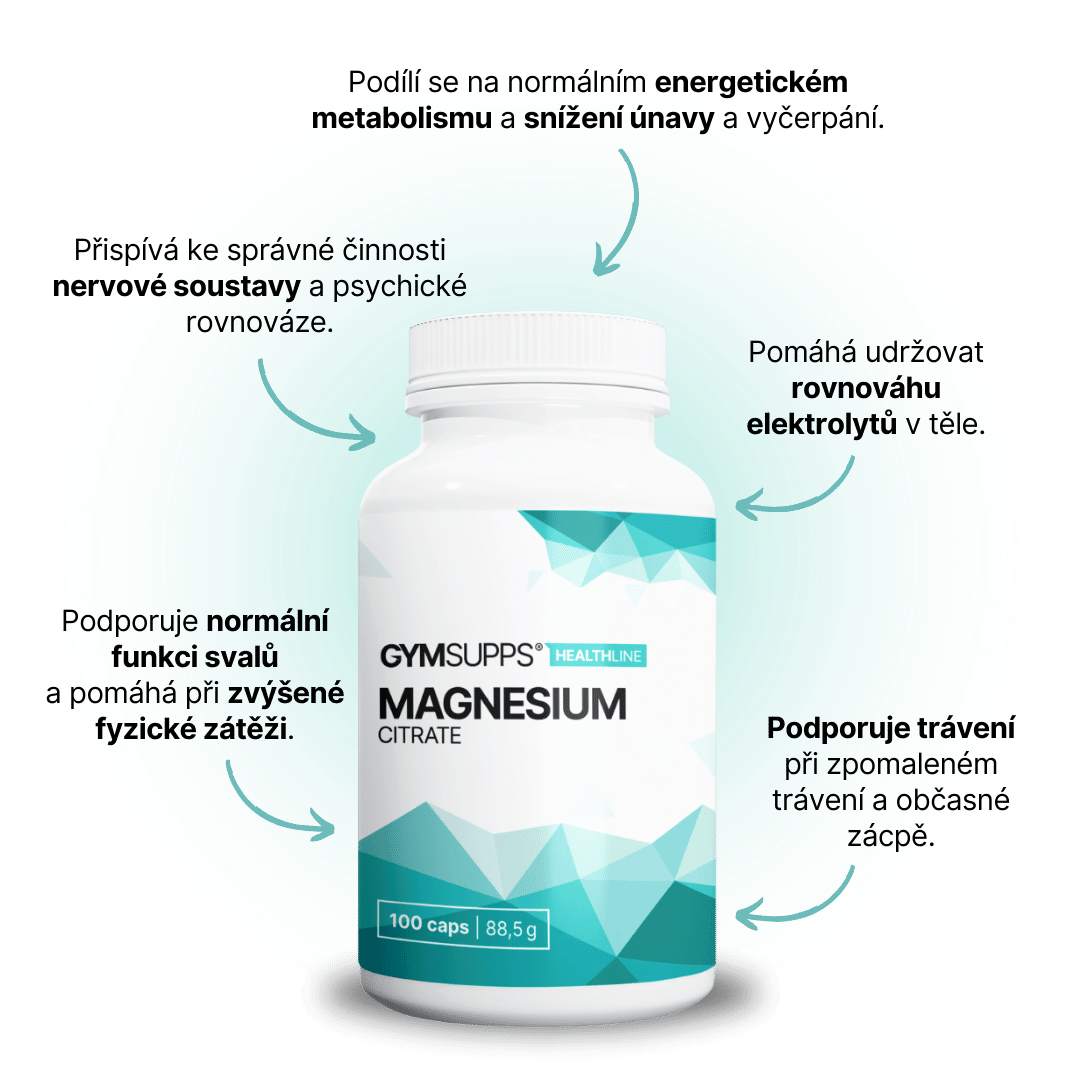
4. Potential in controlling muscle spasms
Muscle cramps (especially nocturnal calf cramps) are a common enemy of recovery. Although the etiology of cramps is multifactorial (dehydration, electrolyte imbalance, CNS fatigue), magnesium deficiency often plays a major role. Magnesium physiologically acts as a calcium antagonist - while calcium contracts the muscle, magnesium allows it to relax.
A study conducted by Supakatisant and Phupong investigated the effect of oral magnesium (including citrate forms) on lower limb cramps. The research, although primarily focused on pregnant women (a group with a high prevalence of cramps), showed a 50% reduction in the frequency and intensity of cramps compared to placebo.⁴
Although data in the general athletic population is still a matter of debate, empirical experience and the mechanism of action on the neuromuscular disc suggest that citrate may be an effective tool for acute resolution of muscle strain, especially when combined with adequate hydration.
5. Nephrological protection (Prevention of kidney stones)
This is a benefit that is rarely discussed in the fitness community, even though high-protein diets may increase the risk of kidney stone formation (especially calcium oxalate). This is where the other part of the molecule - citrate- plays a role.
Citrate in urine acts as an inhibitor of crystallization. It binds to calcium, reducing its saturation in the urine and preventing it from combining with oxalates (oxalates). A study published in the Journal of Urology showed that supplementation with magnesium salts and citrate effectively reduces the recurrence of stone formation.⁵ So by taking magnesium citrate, you are not only supplementing an essential mineral, but you are also actively protecting your kidneys from the metabolic consequences of a demanding training regime and diet.
Conclusion and recommendations for practice
Magnesium Citrate is not just "another magnesium". It is a scientifically validated, highly absorbable form with a specific profile of effects. It is an ideal choice for individuals who want to maximize mineral absorption while appreciating digestive support.
How to incorporate citrate into your routine?
- Dosage: Start at a dose of approximately 200-300 mg of elemental magnesium per day.
- Timing: The ideal time is in the afternoon or evening when it can promote muscle relaxation. Due to the osmotic effect, avoid taking immediately before heavy training (e.g. squats).
- Adaptation.
If your goal is effective supplementation backed by data, not marketing, magnesium citrate should not be missing from your arsenal.
Recommended
HiTec Magnesium Citrate
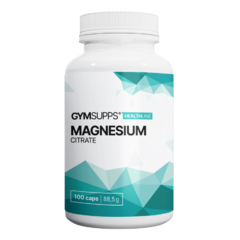
GymSupps Magnesium Citrate
References and studies used:
- Walker AF, et al. Mg citrate found more bioavailable than other Mg preparations in a randomised, double-blind study. Magnesium Research. 2003 Sep;16(3):183-91.
- Lindberg JS, et al. Magnesium bioavailability from magnesium citrate and magnesium oxide. Journal of the American College of Nutrition. 1990 Feb;9(1):48-55.
- Portalatin M, Winstead N. Medical management of constipation. Clinics in Colon and Rectal Surgery. 2012 Mar;25(1):12-9.
- Supakatisant C, Phupong V. Oral magnesium for relief in pregnancy-induced leg cramps: a randomized, double-blind, placebo-controlled trial. Maternal & Child Nutrition. 2015 Apr;11(2):139-45.
- Ettinger B, et al. Potassium-magnesium citrate is an effective prophylaxis against recurrent calcium oxalate nephrolithiasis. Journal of Urology. 1997 Dec;158(6):2069-73.
No posts have been made yet.








