




Liposomal vitamin D - why should it be better than other forms?
 Author:
Vitamin D is one of the substances that is absolutely essential for overall health. For example, it is essential for the absorption of calcium, helping to ensure bone strength and health. It also affects the psyche, has a positive effect on sports performance, improves sleep quality and is equally important for our immune system. But what does it mean when a vitamin is in liposomal form? What benefits does this form offer and is it really worth investing in? Let's break this issue down in a little more detail today.
Article content:
- Theoretical window - what is vitamin D?
- Theoretical window II - what does the term "liposomal" mean?
- Who should consider taking liposomal vitamin D?
- What to take away from the article?
Theoretical Window - what is this vitamin D?
Vitamin D is a fat-soluble vitamin and the best source of vitamin D is sunlight. In addition, it also occurs naturally in fish oil, egg yolk and dairy products. Vitamin D can take several different forms. The forms with the greatest biological activity are D2 (ergocalciferol) and D3 (cholecalciferol). Vitamin D3 is found in foods of animal origin and the body can also synthesize this form from sunlight. Vitamin D2 is then found mainly in plant sources. Clinical studies suggest that the D3 form is considerably more effective than the D2 form, which is why this form is usually used for supplementation.
Vitamin D is an essential nutrient for the human body. For example, it helps to absorb calcium and regulate the amount of phosphate in the blood. It is essential for maintaining strong bones and teeth and supports cardiovascular health. It also plays a role in regulating blood sugar levels. It also reduces inflammation in the orgasm, thus helping to prevent the development of various serious diseases and protecting our body from infections such as flu. To make matters worse, it can also have a positive effect on athletic performance, promoting the formation of muscle fibers, affecting the quality of sleep and our psyche.

As already mentioned, its best source is sunlight. Vitamin D3 can therefore be synthesized by the body itself in the skin under the influence of UVB radiation. Sun exposure of 15-30 minutes per day is sufficient to produce the required daily dose of vitamin D in the skin. From this, it may seem that it is very easy to supplement this vitamin. However, the fact is that vitamin D is one of the world's most commonly deficient substances. Part of this is of course due to our lifestyle and the sad fact that we spend very little time in the sun. In our geographical conditions, the seasons also play a role, because logically the sun does not have enough power during the winter.
Vitamin D deficiency can lead to very serious problems such as weakened immunity, increased inflammation in the body, pale and dry skin, thinning bones, poor sleep quality and increased likelihood of developing autoimmune diseases such as diabetes. Vitamin D deficiency can also lead to the development of depression or other psychological disorders. In children, deficiency has fatal effects on growth.

Theoretical window II - what does the term "liposomal" mean?
We have already covered the topic of liposomal vitamins on our website, so just to recap. Liposomal forms of vitamins stand out for their high bioavailability and excellent absorption, which according to some studies is up to 90%. This is due to the fact that in the case of this form, the active substances are "enclosed" in a special pocket (liposome) that protects them from undesirable conditions of the digestive system that could cause their degradation. Liposomes are organic substances made up of phospholipids, which are the building blocks of human cells. The liposome can be thought of as a kind of fatty sheath in which the active substance is enclosed. This fatty coating acts as a cover that protects the vitamin from the negative effects of bacteria, digestive acids and changes in PH.
The liposomal shell, together with the intact vitamin molecule hidden inside, are naturally absorbed through the intestinal wall into the bloodstream. As a result, the vitamin enters the cells easily and in the highest possible concentration. Liposomes have several properties that make them an ideal form for supplementing many nutrients. Liposomal supplements are most often in liquid form, but can also be found in capsule form.

Benefits of liposomal vitamin D
Let's recap the biggest benefits that the liposomal form of (not only) vitamin D offers:
- high bioavailability
- rapid absorption - it is reported that the body can process liposomal forms of vitamins up to 8 times faster than the "standard" forms of vitamins commonly found in tablets or capsules
- protection of the active substance from degradation (e.g. by digestive juices or bacteria)
- maximum absorption efficiency means that liposomal supplements can be taken in smaller doses
- supplements usually do not contain any added additives
Liposomal technology is used for many nutrients, but it is important to note that in addition to delivering these nutrients to the body, liposomal forms offer other health benefits. In fact, liposomes play a role in the body by replacing damaged phospholipids, which are essential for maintaining the protective membrane of cells. Thus, in addition to the nutrient-transporting benefits, liposomes themselves may help maintain cell health.

Who should consider taking liposomal vitamin D?
Liposomal forms of vitamins are currently a big trend. As mentioned above, liposomal forms have high bioavailability, are quickly absorbed, and due to their properties, can be taken in smaller doses than vitamins in conventional forms. So who should reach for liposomal vitamin D? Actually, absolutely anyone who likes this form. Over the winter, vitamin D supplementation is, dare I say, essential in our conditions. However, if you're a proponent of taking the "classic" forms of vitamin D, it certainly doesn't hurt anything.
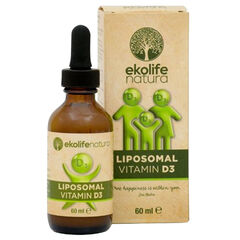
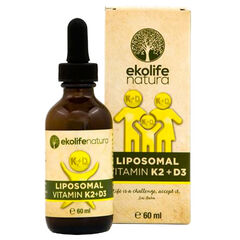
You can get liposomal vitamin D in both liquid and capsule form. The preferred form is purely up to your preference. The liquid form can be a very pleasant way of giving this vitamin to young children. Vitamin D supplements, whether liposomal or not, often also contain vitamin K2. These two vitamins have a synergistic effect, especially when it comes to the absorption of calcium into the bones.
Recommended
How to dose liposomal vitamins?
As already mentioned several times, the liposomal form allows to achieve the desired effect in the form of filling the daily dose while taking a smaller amount of the active substance than in the case of taking conventional supplements. The optimal dosage can be found on the packaging of the specific product. It is possible to overdose on vitamin D, so we recommend that the recommended dosage is strictly followed. If you experience any problems, consult your doctor about the dosage. Studies show that the rate of absorption of liposomal vitamin D into the bloodstream can be further enhanced by taking it with fat-rich foods, so taking the supplement with food is recommended.
What to take away from the article?
Vitamin D is one of the substances that are absolutely essential for human health. It influences our immunity, bone strength, skin condition, psyche, sleep quality, and sports performance. Its best source is sunlight, yet it is one of the most commonly deficient substances across the world's population. Its deficiency can have very significant effects - from thinning bones, to greater susceptibility to infections, to the development of autoimmune diseases. Today, we've explained the benefits of taking vitamin D in liposomal form and for whom this form is best suited.

Sources:
- Gopi, S., & Balakrishnan, P. (2021). Evaluation and clinical comparison studies on liposomal and non-liposomal ascorbic acid (vitamin C) and their enhanced bioavailability. Journal of liposome research, 31(4), 356-364. https://doi.org/10.1080/08982104.2020.1820521
- Bi, Y., Xia, H., Li, L., Lee, R. J., Xie, J., Liu, Z., Qiu, Z., & Teng, L. (2019). Liposomal Vitamin D3 as an Anti-aging Agent for the Skin. Pharmaceutics, 11(7), 311. https://doi.org/10.3390/pharmaceutics11070311
- Berridge, M. J. (2017). Vitamin D deficiency and diabetes. The Biochemical journal, 474(8), 1321-1332. https://doi.org/10.1042/BCJ20170042
- Norval, M., & Wulf, H.. C. (2009). Does chronic sunscreen use reduce vitamin D production to insufficient levels. The British journal of dermatology, 161(4), 732-736. https://doi.org/10.1111/j.1365-2133.2009.09332.x
- Anglin, R. E., Samaan, Z., Walter, S. D., & McDonald, S. D. (2013). Vitamin D deficiency and depression in adults: a systematic review and meta-analysis. The British journal of psychiatry : the journal of mental science, 202, 100-107. https://doi.org/10.1192/bjp.bp.111.106666
- Looker, A. C., Johnson, C. L., Lacher, D. A., Pfeiffer, C. M., Schleicher, R. L., & Sempos, C. T. (2011). Vitamin D status : United States, 2001-2006. NCHS data brief, (59), 1-8.
- Garland, C. F., Garland, F. C., Gorham, E. D., Lipkin, M., Newmark, H., Mohr, S. B., & Holick, M. F. (2006). The role of vitamin D in cancer prevention. American journal of public health, 96(2), 252-261. https://doi.org/10.2105/AJPH.2004.045260
No posts have been made yet.