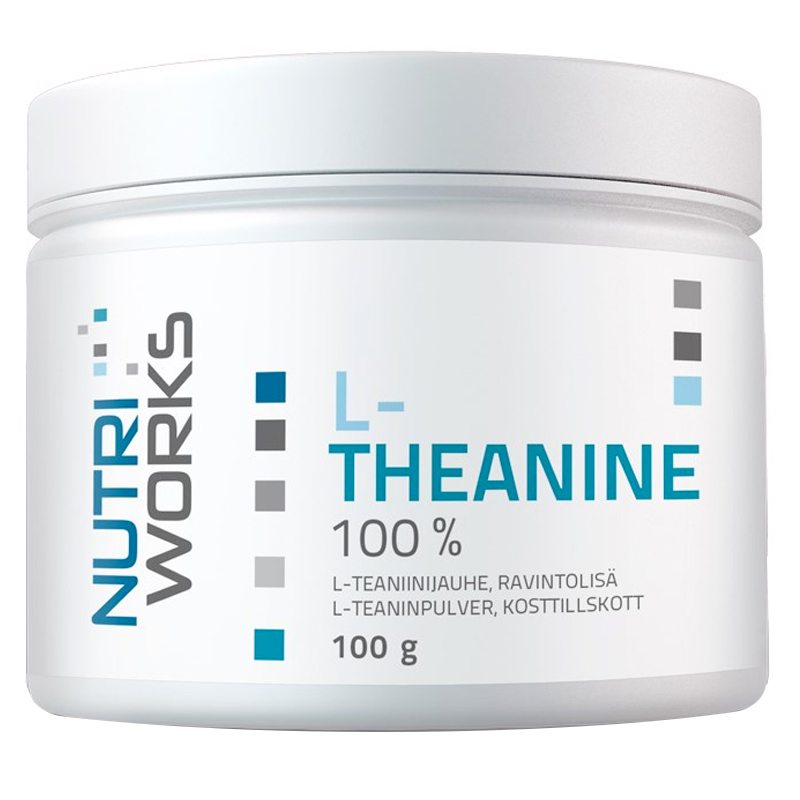
L-Theanine - an amino acid worth knowing, what benefits will it offer you?
 Author:
 When it comes to amino acids in sports nutrition, most of us automatically think of the basic three, known as BCAAs, and we rarely put the other amino acids together, let alone know what benefits they may have for us. And that, especially in some cases, is a huge shame. Take L-theanine, for example - an amino acid that can play a vital role in long-term stress because it affects nerve impulses in the brain and the release of neurotransmitters. L-theanine is known as a natural anxiolytic. It has a calming and relaxing effect on the body and mind without causing drowsiness - which is why it is often used to treat anxiety, hyperactivity and sleep-related problems. Today, let's take a closer look at this amino acid with its unique effects.
Article content:
- Theoretical window - what is theanine?
- Benefits of taking L-theanine
- Recommended daily dosage and potential negative side effects
- What to take away from the article?
Theoretical window - what is the theanine?
This is a really good question. L-theanine is actually a very specific non-essential amino acid. Why specific? Because our body doesn't use it to make proteins like other amino acids, and it doesn't even stimulate the production of enzymes. The structure of L-theanine is very similar to glutamine. Both amino acids can promote mental health and positively affect energy levels, but L-theanine is a more effective natural means of combating the negative effects of stress, and it is for these abilities that it is most appreciated.
The biggest sources of L-theanine in our diet are green, black and white teas. Many people assume that it acts similarly to caffeine, but this is not true. L-theanine tends to promote relaxation, while caffeine stimulates alertness. Hence, these substances have completely opposite effects, but at the same time we can safely say that they complement each other very effectively and, perhaps a little paradoxically, they work synergistically. Studies suggest that both L-theanine and caffeine can have beneficial effects on cognitive function and mood when taken in the right doses.
L-theanine is often used as a natural support for the treatment of a variety of conditions, including insomnia, anxiety, depression, attention deficit disorder, hyperactivity, high blood pressure and other cardiovascular problems, cognitive impairment, dementia and Alzheimer's disease, and may also be beneficial in drug withdrawal. Let's go over its most important benefits together in a little more detail.
Benefits of taking L-thenin
L-theanine is most valued for its relaxing effects and promoting healthy sleep, however, the truth is that there are many more health benefits derived from its use. Which ones are they?
It can help relieve anxiety and reduce the effects of stress
One of the best-researched benefits of L-theanine is its ability to promote relaxation and combat the effects of stress. Theanine is a supplement that brings relaxation but at the same time does not cause sedation, which translated means it can make it easier to deal with stress without feeling lethargic or tired, such as when taking antidepressants or other medications. If you suffer from frequent nervousness, anxiety, depression, or other problems stemming from excess stress, it's very likely that L-theanine supplementation will be right for you. Theanine can also increase alpha brain waves (α-waves), which are associated with a state of "wakeful relaxation," selective attention mechanisms, and overall higher mental productivity.
It is an important fighter for quality sleep
L-theanine is a highly regarded fighter against insomnia and other sleep problems that arise due to stress. The effects of theanine are rather mild in this regard and it is really a natural substance, so L-theanine will not work for absolutely everyone. While it can have a positive effect on sleep quality, it probably won't be enough on its own to help someone with moderate or severe insomnia, but it can definitely be an important support to other supplements.
For sleep problems, L-theanine and melatonin (a sleep hormone, also a natural supplement) can be taken together. A common dose is around three grams of melatonin together with 100-200 milligrams of L-theanine. However, beware of large doses - both substances have the opposite effect to what is desired if the recommended doses are not followed. Another interesting and undeniably positive property of L-theanine when it comes to sleep is that it can reduce the effects of stimulants. This means that if you drink a lot of coffee or take other stimulants, the calming effects of L-theanine can help regulate the negative side effects of their intake, such as nervousness, feeling tense or over-stimulated and the resulting insomnia.

Support for better concentration
Although L-theanine is beneficial for relaxation and relaxation, it can - perhaps somewhat paradoxically - also support concentration very effectively. Particularly when L-theanine is taken together with caffeine, it can actually provide a significant boost to mental performance, increasing attention and alertness. As already mentioned, both substances have a synergistic effect, but at the same time, when taken together (in reasonable doses, of course), there is no feeling of over-stimulation. However, the doses at which the two substances are most effective together vary from study to study. Most sources state that caffeine and L-theanine work best when taken in a 2:1 ratio, sometimes even as high as 1:1.
Protects the brain and may improve memory
L-theanine is one of the natural nootropics, which are generally substances that have a positive effect on mental performance. Research has also confirmed that L-theanine positively affects memory, performance, and the health of our brains. One way L-theanine may protect the brain is that it may help prevent excessive glutamate stimulation of brain cells (excitotoxicity), which some scientists believe is linked to neurodegenerative disorders, stroke, and schizophrenia. By blocking some of the effects of glutamate, L-theanine may offer neuroprotection to the aging brain. This is a promising finding for the treatment of various diseases associated specifically with age-related brain degeneration.

Regulates blood pressure and promotes cardiovascular health
To make matters worse, L-Theanine can help prevent fluctuations in blood pressure levels in response to stressful events and helps regulate nitric oxide production. Nitric oxide is a molecule that our body makes to help cells communicate, regulate blood pressure by dilating arteries, reduce inflammation, boost the immune system, improve sleep quality, and more. The endothelial layer of our arteries produces nitric oxide, which helps to relax constricted blood vessels and increase oxygen and blood flow. Adequate nitric oxide production can therefore act as an effective prevention against artery-blocking clots, heart attacks, strokes and other cardiovascular problems.
Where to look for L-theanine
Since L-theanine is almost exclusively found in tea leaves, it can be difficult to get enough of it through this route alone, and to experience any of its positive effects, you need to reach for theanine in supplement form. These usually contain a form of L-theanine, which is the best bioavailable supplemental form of this amino acid. Theanine supplements are sold in various forms - from capsules, to tablets, to bulk mixtures. And who can actually benefit from theanine? Theanine is good for anyone who is exposed to excessive daily stress or has trouble sleeping.
Recommended daily dosage and potential negative side effects
The recommended daily dose of L-theanine is between 100-200 mg per day, or up to 400 mg per day for short-term use. It can be taken with caffeine, but this is by no means a rule. The calming effects of L-theanine usually kick in within about 30-60 minutes after ingestion, so if you're taking L-theanine to promote sleep, try to take it in this time frame before you go to bed. As mentioned earlier, to increase the effect in terms of promoting quality sleep, it can be supplemented with melatonin. With supplements, it is not advisable to exceed the recommended daily dosage - the effect is not multiplied, but rather regulated.
L-theanine is generally considered a safe substance, but there are situations where it is better to avoid it. People who are taking medication to regulate blood pressure should beware, and it is these people who should not start supplementing with L-theanine without first consulting a doctor. Because not much research has been done on the safety of L-theanine supplementation during pregnancy, no one can guarantee its harmlessness for pregnant women, and even they are not recommended to take it - although drinking one or two cups of green tea during pregnancy is considered safe for most women.
What to take away from the article?
Theanine is one of the non-essential amino acids, and is naturally found in green tea. Its main benefits include calming the body, inducing a state of relaxation without the unwanted feeling of drowsiness, and counteracting the negative effects of overexposure to stress. For its effects, it is valued as a natural aid for quality sleep. In addition, it further protects our heart, regulates blood pressure, promotes brain function, concentration and better memory. The best sources are teas, but of course we can take it in supplement form, where a dose between 100-200 mg per day seems to be the most effective.
Recommended
NutriWorks L-Theanine
Sources:
Giesbrecht, T., Rycroft, J. A., Rowson, M. J., & De Bruin, E. A. (2010). The combination of L-theanine and caffeine improves cognitive performance and increases subjective alertness. Nutritional neuroscience, 13(6), 283-290. https://doi.org/10.1179/147683010X12611460764840
Owen, G. N., Parnell, H., De Bruin, E. A., & Rycroft, J. A. (2008). The combined effects of L-theanine and caffeine on cognitive performance and mood. Nutritional neuroscience, 11(4), 193-198 .https://doi.org/10.1179/147683008X301513Kahathuduwa, C. N., Dassanayake, T. L., Amarakoon, A. M. T., & Weerasinghe, V. S. (2017). Acute effects of theanine, caffeine and theanine-caffeine combination on attention. Nutritional neuroscience, 20(6), 369-377. https://doi.org/10.1080/1028415X.2016.1144845Zarse, K., Jabin, S., & Ristow, M. (2012). L-Theanine extends lifespan of adult Caenorhabditis elegans. European journal of nutrition, 51(6), 765-768 .https://doi.org/10.1007/s00394-012-0341-5Dodd, F. L., Kennedy, D. O., Riby, L. M., & Haskell-Ramsay, C. F. (2015). A double-blind, placebo-controlled study evaluating the effects of caffeine and L-theanine both alone and in combination on cerebral blood flow, cognition and mood. Psychopharmacology, 232(14), 2563-2576. https://doi.org/10.1007/s00213-015-3895-0White, D. J., de Klerk, S., Woods, W., Gondalia, S., Noonan, C., & Scholey, A. B. (2016). Anti-Stress, Behavioural and Magnetoencephalography Effects of an L-Theanine-Based Nutrient Drink: A Randomized, Double-Blind, Placebo-Controlled, Crossover Trial. Nutrients, 8(1), 53 .https://doi.org/10.3390/nu8010053Nobre, A. C., Rao, A., & Owen, G. N. (2008). l-theanine, a natural constituent in tea, and its effect on mental state. Asia Pacific journal of clinical nutrition, 17 Suppl 1, 167-168.Hidese, S., Ota, M., Wakabayashi, C., Noda, T., Ozawa, H., Okubo, T., & Kunugi, H. (2017). Effects of chronic l-theanine administration in patients with major depressive disorder: an open-label study. Acta neuropsychiatrica, 29(2), 72-79 .https://doi.org/10.1017/neu.2016.33Barrett, J. R., Tracy, D. K., & Giaroli, G. (2013). To sleep or not to sleep: a systematic review of the literature of pharmacological treatments of insomnia in children and adolescents with attention-deficit/hyperactivity disorder. Journal of child and adolescent psychopharmacology, 23(10), 640-647. https://doi.org/10.1089/cap.2013.0059Isomura, T., Suzuki, S., Origasa, H., Hosono, A., Suzuki, M., Sawada, T., Terao, S., Muto, Y., & Koga, T. (2016). Liver-related safety assessment of green tea extracts in humans: a systematic review of randomized controlled trials. European journal of clinical nutrition, 70(11), 1221-1229. https://doi.org/10.1038/ejcn.2016.78Zukhurova, M., Prosvirnina, M., Daineko, A., Simanenkova, A., Petrishchev, N., Sonin, D., Galagudza, M., Shamtsyan, M., Juneja, L. R., & Vlasov, T. (2013). L-theanine administration results in neuroprotection and prevents glutamate receptor agonist-mediated injury in the rat model of cerebral ischemia-reperfusion. Phytotherapy research : PTR, 27(9), 1282-1287. https://doi.org/10.1002/ptr.4868
No posts have been made yet.