





Is a low-carb diet ruining your workout? Find out why you're getting out of breath for no reason at the gym!
 Author:
 The keto diet and low-carb eating have been a huge hit in recent years. But what effect do they actually have on your performance at the gym? Legendary bodybuilder and seven-time Mr. Olympia, Arnold Schwarzenegger, addressed the question of whether drastically cutting carbs sabotages your training results in his recent Arnold’s Pump Club newsletter. Here’s what he found based on the latest scientific studies.
Cutting Carbs: Performance Doesn’t Disappear Completely, but There Are Catches
“Cutting carbs won’t reduce your performance across the board. But it can create real limitations when you’re pushing your body to its absolute limit,” explains Schwarzenegger.
Arnold, whose goal at age 78 is no longer to build massive muscle mass but rather to support mobility and longevity through a predominantly plant-based diet, pointed to a new meta-analysis. The meta-analysis summarized 13 studies examining the effect of carbohydrate restriction on short, intense performances in athletes aged 18 to 45. What were the results?
Single-rep maximum performances (e.g., one heavy lift, one jump, or a short sprint) remained stable without major changes. However, a problem arose with repeated heavy efforts, where some studies showed a noticeable decline in performance.

Muscles as Engines: Why Repeated Sets Suffer
To better understand what’s happening in the body, Arnold compares our muscles to a series of engines:
- The fast-twitch motor powers maximum efforts lasting up to 10 seconds. This motor is much less dependent on carbohydrates, which explains why one-time maximum efforts (so-called “max lifts”) survive the keto diet.
- The fast engine handles heavy efforts lasting 10 to 60 seconds, especially repetitive ones. This engine runs primarily on carbohydrates stored in your muscles.
“If you starve this fast-twitch engine, it can no longer function at full capacity. That’s why repeated sprints or high-rep workouts are your weakness,” warns Arnold. A byproduct of this fast-twitch motor is lactate. When carbohydrates are scarce, the body naturally produces less lactate—a fact that has been presented for years as evidence of a “cleaner” metabolism, but in reality, it simply means that your carbohydrate-fueled motor is running at a lower capacity.
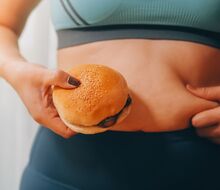
How does the keto diet affect your specific workout routine?
Arnold has a clear message for athletes, broken down by type of activity:
- Heavy weights and few reps (strength training): Your one-rep max will likely remain fully intact.
- Intense training with a higher number of reps (bodybuilding for muscle growth): Here, the keto diet may hold you back. If you’re aiming for muscle hypertrophy, a lack of carbohydrates can limit your growth.
- Interval training, HIIT, and stop-and-go sports (basketball, soccer, combat sports): Chronic carbohydrate restriction can dull your ability to sustain intense effort. “It’ll be fine in the first round, but by the fifth, you’ll be completely out of energy,” adds the legend.
- Steady-state cardio: If you mainly exercise at a moderate pace and feel good on a low-carb diet, you’re outside the “risk zone” and don’t need to worry about sticking with it.
Arnold’s Final Recommendation: Don’t Be Afraid of Carbs
Keto and low-carb diets have their undeniable benefits and work great for many people. However, Arnold warns:
“Carbs don’t make you fat—only excess body fat and calories do.”
If you still want to limit your carb intake, scientists suggest a simple and effective strategy— carb cycling. Adjust your intake based on what kind of day you have ahead of you. Eat more carbs around your intense workouts and, conversely, cut back on them on days when you have a day off or only a very light workout.
“Give your body the fuel it needs for hard work, and don’t be afraid of carbs,” concludes the Austrian oak.
Recommended

Näno Supps Epic Juice

Nebbia Dámský top s dlouhým rukávem INTENSE Sheer 847

Nebbia Washed-off Tepláky s kapsami NO SHORTCUTS 372
Carnigel 60g 5+1
No posts have been made yet.








