





How to diet (not only) in children playing sports
 Author:
 There is no need to debate at length that food plays an absolutely crucial role in the health and proper development of children. Adequate nutrient-rich nutrition can support their growth, bone strength, immunity and if we instil healthy eating habits from a young age, it is a good prerequisite for children to eat healthy throughout their lives and avoid many health complications and weight struggles. Conversely, diets high in processed foods low in nutrients, added sugars and trans fats can increase the risk of nutritional deficiencies, stunted growth, behavioural problems, a host of other health issues and ultimately contribute to the development of obesity.

Childhood obesity is a problem that plagues the whole world and the numbers of children suffering from it are truly alarming. In fact, children nowadays spend most of their time behind a computer or in front of the television instead of going out to exercise. In addition, they often eat very inappropriately, because their parents either do not know what to give them or simply feed them what they want most - sweets and fast food. Worse still, obese children are then much more prone to eating disorders. For that reason alone, in order to prevent your children from going from extreme to extreme and avoiding a whole host of health problems stemming from one or the other, you need to pay proper attention to their diet.
I would like to say at the outset that I do not intend to instruct or command anyone on how to feed their child, as that is the choice of every parent. I just want to give those parents who are groping in nutrition something to bounce back from, because it is important that they are the ones who take responsibility at the child's age to prevent the child from developing bad habits or leaving it to the school or sports coaches to build them up. Healthy eating is not just for adults who want to lose weight. Healthy eating is a TOOL for building solid health and good fitness, and the sooner we build healthy eating habits, the better off we are. It's the same as with exercise - the earlier you get your child into it, the easier it is to learn and the more likely they are to love it and it becomes a natural habit that they will appreciate later. And the same is true for diet.
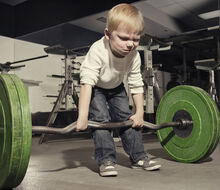
The nutrition of children is sometimes complicated, I'm sure you all know that a child does not want to eat meat, vegetables, or anything else. You don't have to force them into anything, but show them different options and teach them to eat varied. Children largely pick up their parents' habits, so if you set the right example for your child, chances are healthy eating will work for them. Talk to your kids about food, explain that diet is important for performance and health, and most importantly, show them the practical side of what it should look like. Teaching kids to play sports and eat healthy are, in my opinion, the most important habits we can pass on to them at all. So let's approach it responsibly, if not for our own sake, then just for the sake of the kids.
The better the foundation you give your children, the better the chances that they will avoid weight problems and it is also an effective prevention of many diseases. Teach your children to eat as varied as possible and base their diet on real food in as natural a form as possible. Teach them to eat without extremes, without unnecessary restrictions, without neuroses. Lead them to eat in peace - no TV, no computer, no phone in hand. Cook food together and explain how to prepare what, why it is important, etc. Teach them what you had to laboriously learn when you changed your lifestyle later in life and make that journey easier for them.
Recommended

Czech Virus Joint MAX InflamaCare


Nebbia NATURE-INSPIRED Squat-Proof dámské legíny 543
Nebbia Washed legíny s vysokým pasem LEGACY 777
In childhood, diet is even more important than it is for us adults. A good diet is the foundation for development - both physical and mental. The energy and nutrients that children take in through food form the basis of the whole organism. And the better the quality of the food children receive, the better the body naturally works with it. Of course, children love sweets and there is nothing wrong with giving them a treat from time to time (as we adults can do), but we should make sure that their diet is not based only on sweets and fast food, i.e. less valuable foods. Don't tell them to do anything, don't forbid anything. Teach, explain, talk, show and, above all, set an example.
What should such a diet (not only) include for a child who plays sports?
Enough theory - let's take a look at what a child's diet should look like.
Enough ingredients of the highest quality.
I might surprise you if I put this first, but it really is the most important thing ever. Quality over quantity. Not just for adults, but especially for children. The better quality and fresher the food is, the more nutrients, vitamins and minerals it has, which is especially important in childhood. And I don't mean that you should buy God knows how expensive ingredients. That's not the point at all. By real food, I mean the most basic and simple. Fresh meat, fish, local fruits and vegetables, nuts, healthy fats, eggs, white dairy, legumes, and quality sources of complex carbohydrates (rice, cereal, potatoes, baked goods, and more). Quality fuel is the foundation for good athletic performance and health.
All macronutrients without exception.
A child's body needs all nutrients for proper development, and this is especially true if they play sports regularly. Every macronutrient has a function in the body and it is not a good idea to restrict them in any major way during childhood. Provide children with enough high-quality protein, which is important for proper growth, recovery and muscle building, but also for the immune system. The right fats should not be missed either - oily fish rich in omega-3 fatty acids, which are essential for brain development, the nervous system, but also for immunity, heart health and much more, nuts, good quality chocolate, vegetable oils and avocados. And last but not least, carbohydrates - complex ones should predominate, just like for adults, but feel free to give children more fruit, it's definitely a more pleasant option than sweets full of refined sugar.
- Tip: If you'd like to start cooking healthily, you can get inspired by our fitness recipes!
Plenty of water.
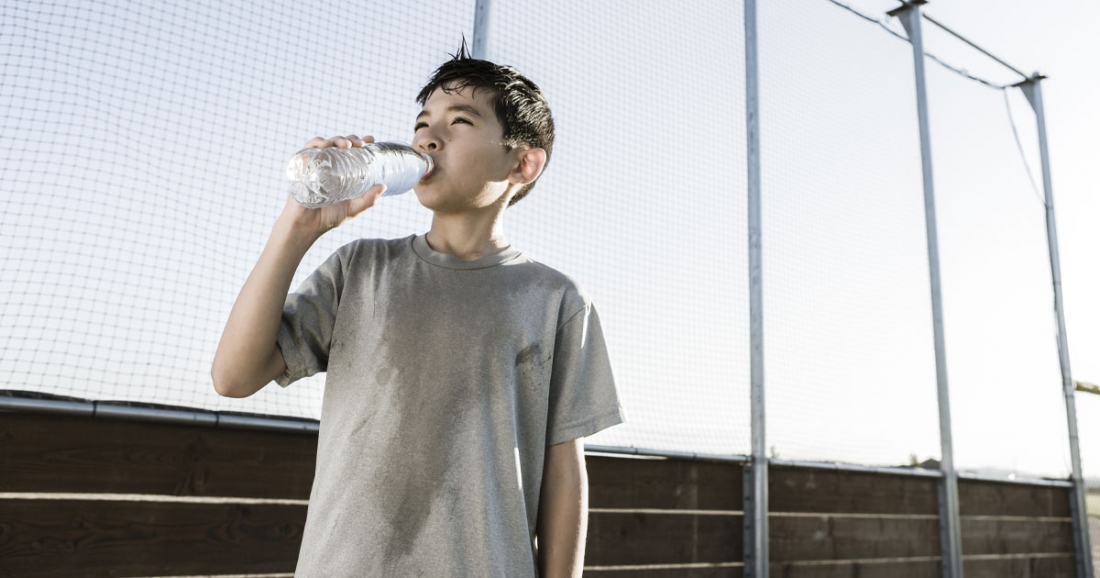
Drinking is not only important for sports and if you teach your kids to drink clean water from a young age, it's only good. If your child plays sports, you can prepare a slightly sweetened tea or a weak juice. But it's definitely not a good idea to give your child a sugary soda like cola or fanta for practice. Such drinks should be given to children rather rarely.
Variety.
Try to prepare food for children as varied as possible. Again, dietary variety is important not only in adulthood but also in childhood. A sufficiently varied diet consisting of a wide variety of foods is a great prerequisite for children to get all the nutrients they need. Rotate protein sources, change side dishes, be creative, discover new tastes and experiment. You'll find that not only will you enjoy it, but especially your children.
Vitamins and minerals.
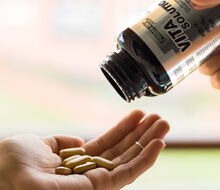
I would like to say that there is no need for children to take vitamins and minerals, but I can't in good conscience do that. Unfortunately, vegetables and fruits today are not of the quality that we need to find the necessary amount of important micronutrients in them. If children play sports, their need for extra vitamins and minerals increases, just as it does for adults. Children also often don't eat enough, so you can't go wrong with a good quality multivitamin. Believe that it is better to invest in prevention than in treatment. Let me add a little more about the fact that we should choose a good quality supplement, because not every multivitamin you buy in the pharmacy is really useful. Check out the article below the paragraph where we described what such a quality vitamin should look like, what it should, and conversely, should not contain to be maximally effective. It is important to make sure that the supplement does not contain mutually inhibiting ingredients. Therefore, perhaps rather than a pharmacy, head to a sports supplement store.
What, on the contrary, to limit or omit from the child's diet?
A child's diet should not include fried and heavy foods, semi-finished products and trans-saturated fats. Fast food should not be included regularly either. Sweets and refined sugars should also be kept at bay, as excessive consumption leads to an increased risk of developing diabetes or obesity and increases the likelihood of tooth decay. Finally, it's a good idea to focus on children's drinking habits - they shouldn't just be drinking sugary sodas, fruit juices and other large sources of sugar.
What about children's diet during sports?
The same applies to children as it does to adults. Pre-workout meals should be light but sufficiently nutritious. The time when to eat last will also be individual, but for children you have to estimate it. It is generally stated that eating two to three hours before activity should not cause any difficulty. The pre-activity meal should not contain large amounts of fibre and fat. While these two ingredients are very desirable components of the diet, they can be problematic before exercise. This is because fibre slows down the digestive process, which may not be ideal before training, and food could weigh children down in the stomach during sport. The same goes for fats, they take the longest time of all macronutrients to digest and this may also not be desirable before training. Therefore, these two nutrients should be represented in a rather smaller proportion in the pre-training meal.
The pre-workout meal should be rich in complex carbohydrates and easily digestible protein sources. So perhaps risotto or couscous with some vegetables and chicken or turkey. If the pre-workout meal is a snack, you might choose yogurt with homemade granola, bread with cheese or ham, or some homemade snacks(egg muffins, homemade granola bars, cookies, etc.). Avoid heavy foods, fried foods and fast food. These are really not appropriate food sources before activity.
Children usually don't need anything special during activity - a water bottle, lightly sweetened tea or juice will suffice. There is no need to buy joints or energy drinks for children, indeed it may be rather detrimental due to the stimulant content. Children should also not drink sweetened sodas during training. The sugar content in these can make children tired more easily and the bubbles from the drinks can also cause them difficulty when moving. In short, cola or other sodas do not belong in a training bottle. If your children are playing a game of football or hockey, you can give them a few pieces of fruit to replenish their energy during the break.
The post-activity meal should actually be exactly the same. After the activity can come a more carbohydrate-rich meal, so perhaps baked sweet potatoes with salmon, whole wheat pasta with tofu or meat, etc. For a quick snack to replenish energy, you could make a smoothie for your child with kefir milk, some fruit and protein. Yes, you don't have to worry about using a good quality protein powder for kids either. Just reduce the amount, or use it when your child is not eating meat. Proteins are safe supplements and even children, especially young athletes, can benefit from their benefits. So really feel free to use protein when baking snacks for the kids, or simply any time you need to increase your protein intake. However, choose quality products from proven manufacturers without added additives and unnecessary ingredients.
If your child is an athlete at some higher level, you need to give some thought to the timing and composition of meals so that your child can perform optimally. Rather, in the rest, try to teach the right habits that are sure not to be lost on them. You can also make use of sports supplements - protein and multivitamin can be taken by young athletes without worry. You won't go wrong with omega-3 fatty acids either, and vitamin D over the winter for sure.
What to take away from the article?
Children's nutrition is sometimes complicated, but still extremely important. If you're taking your child to sports, definitely don't forget to teach them healthy eating habits as well. Invest your time and energy in cooking them healthy, tasty and nutritionally balanced meals that will provide them with enough energy for sports, but also all the important nutrients for their development. Explain the impact food has on them, teach them how to prepare food, when to eat what, and pay attention to the quality of the food you give your children. Children are the most important thing parents have. So give them the best you can and believe that the basics of healthy eating and regular exercise habits are really some of the most valuable habits you can give them.
Sources:
Purcell, L. K., & Canadian Paediatric Society, Paediatric Sports and Exercise Medicine Section (2013). Sport nutrition for young athletes. Paediatrics & child health, 18(4), 200-205. https://doi.org/10.1093/pch/18.4.200
Smith, J. W., Holmes, M. E., & McAllister, M. J. (2015). Nutritional Considerations for Performance in Young Athletes. Journal of sports medicine (Hindawi Publishing Corporation), 2015, 734649. https://doi.org/10.1155/2015/734649
No posts have been made yet.








