





Everything you need to know about iodine or why use table salt
 Author:
 In one of our previous articles, when we looked at the different types of salts that you can commonly find in your diet, we came across a rather significant problem. Although the different types of salt may contain more minerals than just sodium and chlorine, most of them are not iodized and thus contain much less iodine. But why is this a problem? And what purpose does iodine serve in our diet? That's what we'll look at in our article today, where you'll learn all the essentials about iodine in nutrition.
What is iodine anyway and what makes it so unique?
Iodine is one of the essential trace elements that humans take in their diet and it is also the only mineral that, by its composition, can become part of the thyroid hormones, the most important of which is thyroxine. Although the de facto sole purpose of iodine is to influence thyroid function, the thyroid gland itself is responsible for an unimaginable number of functions. These include, among others, brain growth and development, proper nerve and muscle function, optimal metabolic functioning, and regular heart rate. Thus, it is no exaggeration to say that without the proper functioning of the thyroid gland, our body would not be able to function.
Related to this is the fact that increased iodine intake is in order during pregnancy, when it significantly influences the proper development of the fetus, and its deficiency could cause hyperactivity, unmanageability and, in extreme cases, a decrease in IQ (cretinism) in children.
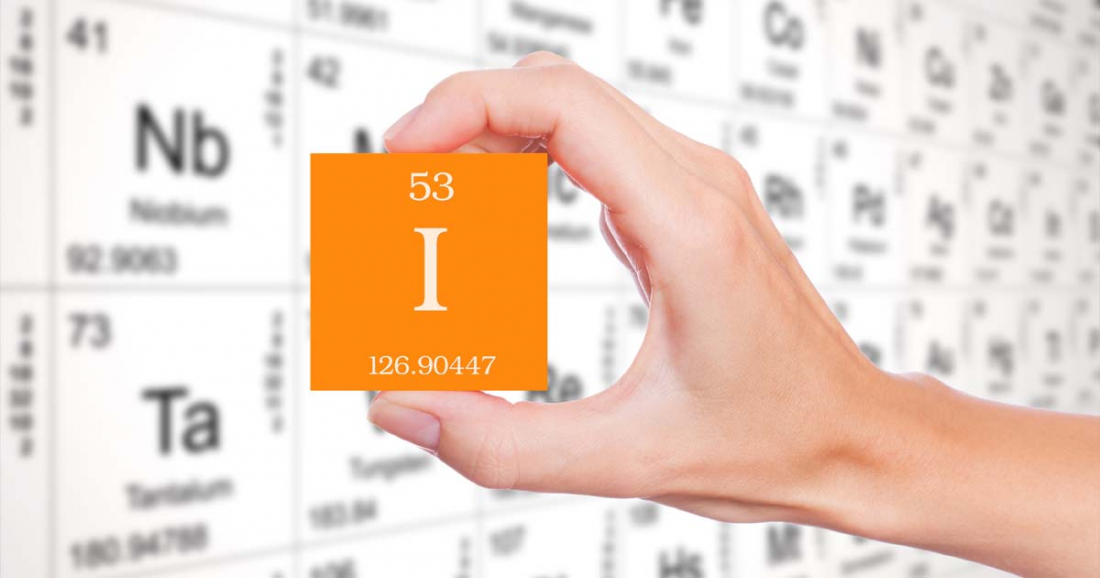
Iodine is one of the most important trace elements in human nutrition, along with iron, copper, manganese and zinc.
What is the recommended daily dose of iodine? And where to get it from?
Although iodine is indispensable for humans, it is still a trace element and therefore the recommended daily dose is not very high. According to expert sources, the recommended amount for an adult is 150μg of this element. Only for pregnant and breastfeeding women the required dose is higher - they should take between 220 and 290μg per day.
The list of foods that contain iodine is also quite varied. Since a significant part of this element is found in seawater, the traditional sources are all marine fish. But so are some vegan sources - available analyses suggest that wakame algae or kelp are also excellent sources. Other commonly available foods include milk and dairy products, eggs, plums and cherries. In short, a normal bodybuilding diet supplemented with fruits and vegetables should cover the intake of iodine as well as the vast majority of other minerals and vitamins.
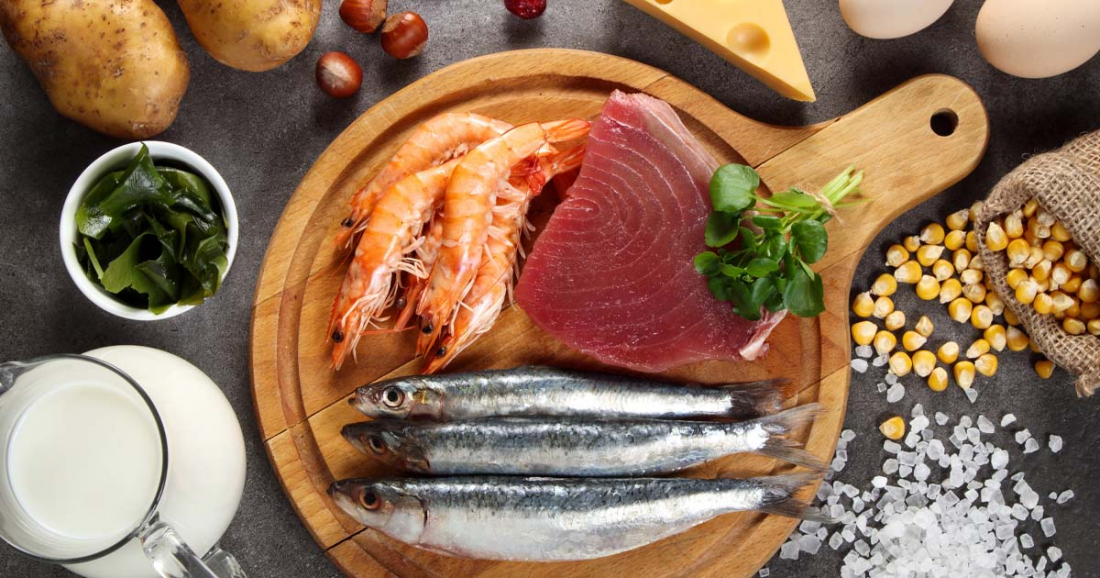
The list of foods rich in iodine is fortunately quite numerous. Still, its intake can be complicated for certain groups of people.
What about salt in the diet?
Salt is considered by many orthorexic people to be the origin of all evil and many diseases of civilization. It is very important to remember, however, that in our conditions salt has been iodized since the 1920s and is thus a fairly effective source of iodine as such. Expressed in figures, a kilo of table salt must contain 20-34 grams of iodine, according to the Food and Veterinary Office. In terms of the recommended daily allowance represented by five grams of table salt, the iodine content must therefore be above 100 μg. In practice, however, athletes can (and should) take in slightly more salt due to excessive salt sweating and thus easily cover the recommended amount of iodine.
But the problem comes when you don't use conventional table salt for some reason. The different alternatives are not iodised, and both Himalayan and Hawaiian black or ordinary sea salt contain much less iodine. In this case, it is advisable to either supplement with iodine or at least watch your diet very carefully.
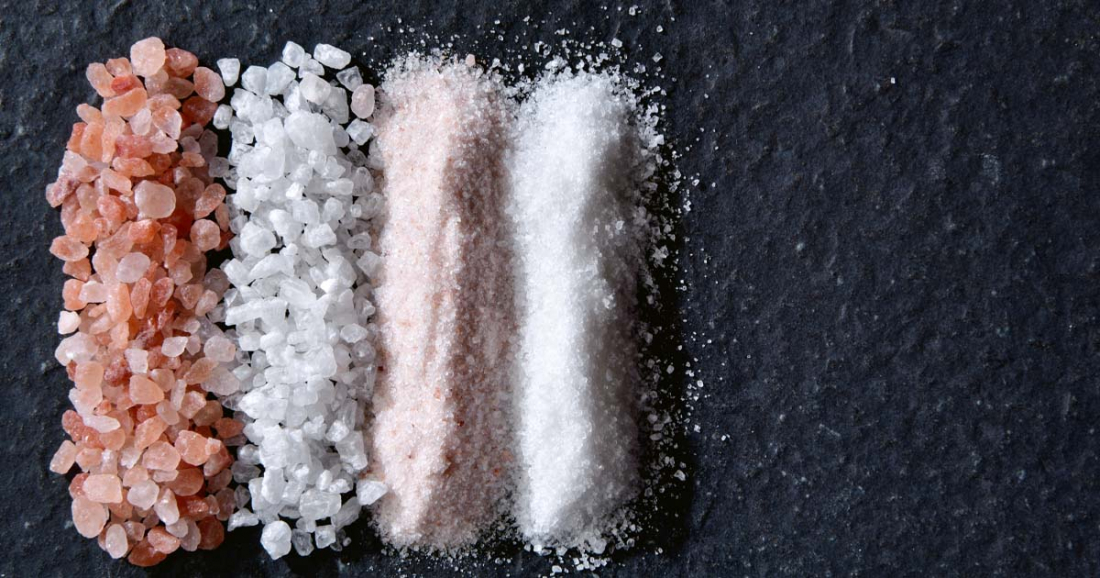
Although table salt is iodised, other (and much preferred) types have much less iodine.
How do I know if my iodine intake is sufficient?
Since some of the best sources of iodine besides table salt include eggs or sea fish or dairy products, it is more than clear that varied athletes who regularly use table salt and the above foods have no reason to consider iodine deficiency at all. However, the problem of a deficiency of this mineral can occur in people who for some reason avoid table salt, vegans or fans of the paleo diet. In this case, it is not a bad idea to pay for a test - iodine concentration is usually determined from morning urine, and this test takes only a few minutes and gives accurate results on what to watch out for in the diet and what foods to consume more often.
Recommended
Zdravý den Himalájská sůl
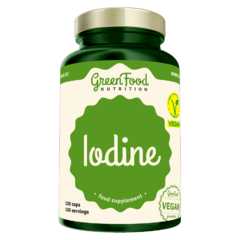
GreenFood Jód
What to take away from today's article?
What you should take away from today's article is that with a varied and balanced diet with sufficient (but not excessive) amounts of table salt, there is no need to worry about iodine deficiency. Although this mineral is essential for the functioning of the thyroid gland and therefore for fat burning, maintaining an optimal heart rate or the proper functioning of nerves and muscles, it should be sufficient in a normal and intuitive diet. However, vegetarians, vegans and fans of various paleodiets who do not supplement iodine externally or use ordinary table salt should beware. In this case, it is worth considering a visit to the doctor and possibly a test, which is carried out by means of a morning urine sample.
No posts have been made yet.








