Does excess protein turn into fat? Arnold busts a fitness myth
 Author:
 In his latest newsletter, Arnold Schwarzenegger addressed a question that has plagued athletes and fitness enthusiasts for decades:
Can excess protein that the body doesn't use to build muscle be converted into body fat?
Arnold's answer is clear and uncompromising. He calls this idea "one of the biggest zombie myths in fitness" that keeps coming back, even though it was debunked long ago.

The body as a survival machine
According to Arnold, the key is to understand how our bodies work. It is first and foremost a machine programmed for survival and efficiency. And converting protein into fat is an extremely inefficient and energy-intensive process for the body.
"Your body is a survival machine... Converting protein to fat is a last resort for your body," explains Schwarzenegger.
The body has more important tasks for protein:
- Repair and growth: the primary job is to repair muscle fibers damaged by training and build new muscle mass.
- Functional Use: The body uses amino acids to produce hormones, enzymes and other key substances.
- Energy: When necessary, the body burns protein as an energy source.
Only when all these needs are fully met and you are still taking in massive excess protein (far beyond normal recommendations), could it theoretically be converted to fat. However, this process, known as "de novo lipogenesis," is very rare and inefficient, according to scientific studies.
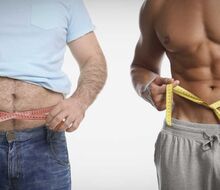
The real culprit? Caloric excess!
Arnold points out that the problem is not a specific macronutrient, but overall energy intake.
"When you eat in caloric excess, your body stores the excess energy as fat. It doesn't matter whether the excess comes from protein, carbohydrates or fat," says Arnold.
Simply put: if you burn 2,500 calories in a day but take in 3,000, your body will store 500 calories. It's much more likely that the fat and carbohydrates you often consume with protein (in a fatty steak or a gainer, for example) will be stored because it's much easier for the body to do so.
The "tax" for digesting protein
In addition, Arnold reminds us of the so-called thermic effect of food (TEF). The body also uses energy to digest the food itself. And it is protein that has the highest thermal effect of all macronutrients. The body burns roughly 20-30% of the calories taken in from protein just to process it. For carbohydrates it is 5-10% and for fats only 0-3%.
This means that protein is the least likely nutrient to contribute to fat storage.
You don't have to worry about an extra serving of protein slowing you down on your journey to a better physique. On the contrary, as long as you maintain a reasonable total caloric intake, excess protein will help you with recovery, muscle maintenance and, thanks to its high thermic effect, maintaining a lean line. An old myth has been definitively buried by legend.
Recommended

Nebbia Washed sportovní podprsenka LEGACY 779
Tuňák ve vlastní šťávě 5+1
Nebbia Legíny s vysokým pasem LEG DAY GOALS 248

Nebbia Crop top tričko POWERHOUSE 279
Source:FitnessVolt
No posts have been made yet.