





Do you know what types of nuts there are and what their benefits are?
 Author:
 Everyone can name a few basic types of nuts. But think about how often nuts are in your diet. For the vast majority of people, they are more or less unusual foods that they come across sporadically rather than regularly in desserts or when they are craving something salty in the evening while watching TV. But in our article today, we'll introduce you to 7 types of nuts and explain why you should include them in your diet regularly.
Article content:
What types of nuts are there?
There are many types of nuts - and we often think of nuts as what are botanically more like seeds. Although nuts have many things in common, they actually have quite different compositions and, as well as the fact that some can be fatter and some rather sweeter, they also have different micronutrient contents. It is therefore ideal to rotate them in your diet. Commonly available nuts include:
Walnuts
We begin our article with walnuts, which are also typical of our climate. These are the fruit of a tree called the royal walnut and although they are commonly used in things like Christmas candy, you should eat them regularly. In terms of composition, shelled walnuts contain about 64% fat, just under 16% protein and nearly 6% fibre. Micronutrients worth mentioning include various catechins, phytic acid, melatonin, which helps with falling asleep, and many vitamins and minerals. It is therefore not surprising that many studies talk about them in relation to gut health and a range of other benefits. We discuss more about how to use walnuts and what they can be beneficial for in our article focusing on walnuts.
Steam walnuts
From the Czech Republic, we move to slightly warmer regions - the typical producer of Brazil and Bolivia is the tropical region of Brazil, where the tree called the juvia dioica produces them. Although they are separated by hundreds of kilometres geographically, they are very similar in composition to walnuts - 67% of the content of high-quality Brazil nuts is fat, over 14% protein and less than 6% fibre. However, this type of nut is also extremely rich in vitamins and minerals, of which selenium is the most important. It is this element that a single nut contains demonstrably more than the recommended daily allowance. Selenium is essential for the immune system, sperm quality and optimal hair quality. We have discussed steam nuts in more detail in a separate article.

Cashew nuts
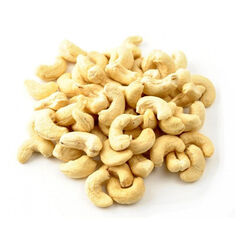
Cashews are definitely one of the most popular nuts, although they are not so much nuts as seeds. In fact, the fruit of the western kidney nut tree is the so-called cashew apple, from which the nuts themselves are yet to be extracted. At the same time, cashews also have a slightly different composition, as only about 44% of the fat is accounted for by fat, while the carbohydrate content is up to 30%. Protein accounts for about 18% and fibre for just under 4%. Although they contain less fibre and fat than other nuts, the micronutrients make up for this reliably. They contain vitamins B, K and E, as well as many minerals, from phosphorus to zinc. There are also a number of benefits associated with this, where cashews can be beneficial for our cardiovascular system, among other things. Again, we write more about this in the full article on cashews.
Almonds
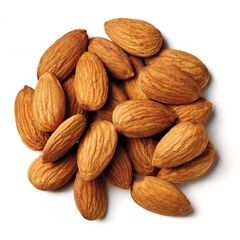
The interesting thing about almonds is that botanically they belong to the same genus as, for example, peach or plum. As with cashews, the fruit is not a nut in the true sense of the word, but a drupe with edible seeds, which we call almonds. In terms of nutrient content, quality almonds are similar to other nuts - about 56% of the fat content, but it is worth noting in particular the 25% protein content and nearly 8% fibre content. Add to that the fact that they are packed with antioxidants, vitamins and minerals, and you have a good reason to eat them regularly. We will write about their other benefits and whether they can be harmful in larger quantities in a separate article.
Hazelnuts
The primary habitat of hazelnuts is Europe and therefore they are commonly found here. And when you do come across them, there's definitely something to look out for. Good hazelnuts contain over 60% fat, more than 15% protein and a full 10% fibre, which is a really high number. But in addition, they also contain phenols, which have proven anti-inflammatory properties. Since they contain a combination of high amounts of fibre and protein, they are perfect for weight loss, even though they are very calorific. You can find out the mechanism by which this works in our full article on hazelnuts.
Pecans
Many of you may be familiar withpecans, for example from various American movies where they are used to make a popular pie. But they're not so popular here, which is perhaps a bit of a shame. Especially since quality pecans contain over 70% fat, almost 10% protein and roughly the same amount of fibre. Of the vitamins, A, B, C and E are present, and of the minerals, calcium, magnesium and potassium are very important for maintaining our cardiovascular health. And although you can often find them, for example, in not-so-healthy desserts, they are incredibly healthy in themselves and have many uses in sweet and savoury cuisine. We wrote more about this in our article on pecans.
Macadamia nuts
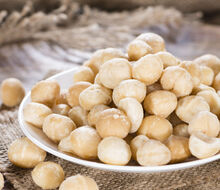
We've saved the fattest nuts ever for last. In the case of good macadamia nuts, it is not uncommon to have a fat content of more than 75% and even more than 18% fiber. Carbohydrates account for just under 14% and protein makes up less than 8% of macadamia nuts. Still, it's worth including them in your diet - like hazelnuts, macadamia nuts can help with weight loss. But because of their high fibre content, they can also be beneficial for our gut microbiome. Micronutrients worth mentioning include vitamins A, B and E as well as minerals such as iron, phosphorus and calcium. Again, we have written more about how to use macadamia nuts and which ones to choose in a separate article.
How often should I indulge in nuts?
Nuts are often mentioned in the context of not overdoing it. And, of course, it must be admitted that too much of anything is bad for you. On the other hand, if you include a few unsalted nuts in your diet once or twice a week, you won't go wrong. Expert sources even talk about up to four servings of nuts a week. So you don't have to worry at all about encountering any negative qualities when eating nuts occasionally. In reasonable quantities, nuts are of course extremely healthy. The main thing you should take away from today's article is that it is ideal to rotate the different types regularly, which will reliably replenish a wide range of different nutrients. You can choose from a wide range of nuts in our nuts/seeds section.
Recommended

No posts have been made yet.








