





Do you know the difference between Atlantic and Pacific salmon? There is a big difference and that's what today's article is about.
 Author: Šárka Randáčková
 We recently brought you an article on the benefits of omega-3 fatty acids, which stated that salmon is also an excellent food source of omega-3 fatty acids.
But did you know that there is a big difference between Atlantic and Pacific salmon? That is the subject of the following lines.
Are you sure your salmon is really salmon?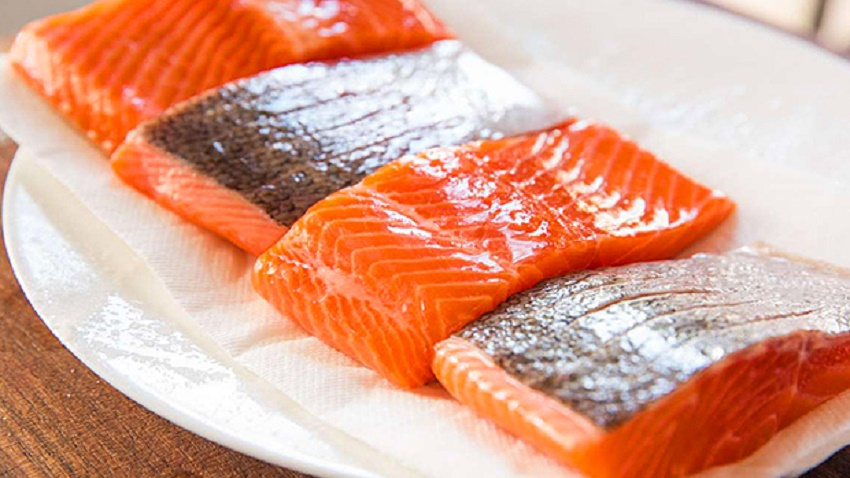
If you love your health, you certainly eat salmon. Lots of salmon.
Considering all its omega-3 fatty acids, you'd have to be crazy not to.
The problem is, you're probably not eating the salmon you should be!
In fact, you're probably eating something similar to trout that has been dyed to disguise its unappealing grey colour. Moreover, trout feed mainly on grain, which negatively affects the omega-3 fatty acid content of their meat!
Pacific and Atlantic salmon
Here's the thing, there is a huge demand for salmon, but most species cannot be kept in captivity.
The season when salmon can be caught in the Pacific Ocean is more or less only June and July. Most Pacific salmon are caught in those two months. What is not sold immediately is canned or frozen.
Because Pacific salmon live wild, they feed on a natural diet, and their meat has that nice pink color, and they are full of the omega-3 fatty acids that we crave so much.
Atlantic salmon, often referred to as Scottish salmon (to make you think they live free), can be farmed in captivity.
As a result, 99% of Atlantic salmon are actually from fish farms where they are fed a mixture of fish food and grain.
Such fish are naturally lower in omega-3 fatty acids and most of these are present in the form of ALA or alpha linoleic acid.
Yes, the body can convert ALA to DHA and EPA (the essential fatty acids we value), but the efficiency of this conversion is between 2 and 15 percent.
Another consequence of this diet is the color of the meat, which is so gray that it resembles old jockey shorts. Farmers add astaxanthin and cantaxanthin, which are artificial colours, to such fish.
Astaxanthin is extracted from shrimp flour and is mostly synthetic. It's a good antioxidant, which boosts the fertility and growth of the fish. Unfortunately, cantaxanthin accumulates in the human retina and can have negative consequences.
Another problem
Farmed Atlantic salmon are plagued by sea fleas, small parasites that feed on skin, slime and blood. Here farmers have to resort to chemicals, which, although harmful to fleas, are also harmful to humans.
In 2004, European scientists issued several warnings that people should only eat Atlantic salmon about once every 4 months.
A study published in JAMA partially refutes this, saying that the benefits of eating such meat (protein and some omega-3 fatty acids) outweigh the possible risks. However, the contamination of these fish is still in question.
So what should I eat?
"Scottish salmon" is probably still better than a hamburger, but it is nowhere near the equal of Pacific salmon. Of course, you're probably not going to be able to get or afford this fish easily.
If you're like me and don't want to live under the illusion of what you're eating, stock up on canned Pacific salmon.
One more thing: Fish farms are illegal in Alaska, which means anything with Alaska on the label is wild caught, year round!
If you're not going to bother with this, get yourself a supplement that contains omega-3 fatty acids in the right amounts and ratios.
Source: www.t-nation-com -Tip: Good Salmon, Bad Salmon
Author.
Author: Šárka Randáčková No posts have been made yet.








