




Can a smaller dose of creatine HCl really produce the same results?
 Author:
Creatine is one of the most thoroughly researched sports nutrition supplements. Decades of research confirm that regular use can help with short-term, high-intensity performance. Nevertheless, manufacturers are constantly striving to develop new forms that promise even better results.
One of these is creatine hydrochloride, known by the abbreviation HCl. Compared to the classic monohydrate, it offers significantly better solubility in water. However, some manufacturers draw much bolder conclusions from this. They claim, for example, that thanks to its better absorption, it is sufficient to take a significantly smaller amount without reducing the resulting effect.
The editorial team at Arnold’s Pump Club focused on these very claims in its November newsletter. In doing so, they highlighted two scientific studies that directly compared the effects of creatine HCl and monohydrate on athletes.
And the results suggest that there may be a significant difference between what looks convincing in advertising and what we can actually prove.
Article Contents:
- Creatine HCl: Why Might It Be Better?
- First Study: 40 Athletes and Eight Weeks of Training
- Second Experiment: Did Creatine HCl Hold Up Among Professional Athletes?
- Is a Lower Dose Really Enough? This Is Where Research Hits a Snag
- What Really Matters When Choosing Creatine?
Creatine HCl: Why Might It Be Better?
The main argument in favor of creatine HCl is relatively simple. Creatine hydrochloride is formed by binding creatine to a hydrochloride component, which alters its physicochemical properties. The result is a substance that dissolves better in water than standard creatine monohydrate.
This is a genuine property of this form, not just a marketing gimmick. The problem arises, however, when better solubility is automatically equated with greater effectiveness in the human body.
The fact that a certain substance dissolves better in water does not necessarily mean that it reaches the muscles in greater quantities or that it will help an athlete achieve better results.
Creatine monohydrate already has very good bioavailability even at standard dosages. Furthermore, its effectiveness is confirmed by an exceptionally large number of clinical studies. And this is precisely where the question of which form is more beneficial becomes much more interesting.
First Study: 40 Athletes and Eight Weeks of Training
In 2024, researchers Ehsan Eghbali, Hamid Arazi, and Katsuhiko Suzuki published a study in the journal *Physiological Research*. They enrolled 40 young participants aged 18 to 25 who had previous experience with strength training.
The researchers divided them into four groups. The first group took creatine HCl, the second took creatine monohydrate with an initial loading phase, the third took monohydrate without a loading phase, and the last group received a placebo. All participants then completed eight weeks of strength training. The researchers monitored changes in muscle strength, body composition, muscle cross-sectional area, and selected hormonal markers.
The results showed that the groups taking creatine experienced improvements in several of the monitored parameters. That in itself was not a big surprise.
However, something else was significant.
Creatine HCl did not demonstrate any significant advantage over monohydrate.
Both forms were associated with improvements in muscle strength and other monitored indicators, but the more modern hydrochloride did not yield convincingly better results. The researchers therefore concluded that HCl did not provide any additional benefit compared to monohydrate.
There is, however, one important caveat. Each group consisted of only ten participants. Such a small sample size cannot reliably rule out all possible differences between the various forms of creatine. The study therefore does not prove their absolute equivalence. Above all, it shows that the expected superiority of HCl was not confirmed in this experiment.
Second Experiment: Did Creatine HCl Hold Up Among Professional Athletes?
A study published in 2025 in the *Journal of the International Society of Sports Nutrition* yielded further interesting results. This time, the researchers enrolled 31 athletes aged 18 to 28, specifically handball and softball players. The participants were divided into three groups. Eleven athletes took 5 grams of creatine monohydrate daily, ten received 5 grams of creatine HCl, and the remaining ten received a placebo.
The experiment lasted eight weeks and used a randomized, triple-blind design. The researchers primarily monitored muscle strength, explosive power, and changes in body composition. The results showed some improvement in both groups taking creatine. Performance and lean body mass increased in some measures.
However, when comparing the individual groups, the researchers did not find statistically significant differences in any of the monitored parameters. Only the group taking monohydrate showed a statistically significant increase in the lean body mass index when evaluating changes within the group. However, even this result alone does not prove the superiority of monohydrate over HCl.
Nevertheless, the authors concluded that claims regarding the greater efficacy of creatine HCl are not supported by their results. And it is precisely this conclusion that is important for athletes.
Is a smaller dose really enough? This is where the research runs into a problem
One of the most common arguments in favor of creatine HCl is the possibility of taking significantly smaller doses. Products are appearing on the market that suggest that less than one gram of hydrochloride can produce results similar to those of several grams of classic monohydrate.
However, the experiments cited did not sufficiently verify this claim. In a 2025 study, both groups took the same amount of the supplement—specifically, 5 grams per day. The results therefore do not answer the question of whether a substantially lower dose of HCl could produce the same effects.
In the 2024 study, the dosages of both forms during the maintenance phase were also set according to the same ratio to body weight.
Thus, it cannot be simply concluded from the available results that one gram of creatine HCl is equivalent to five grams of monohydrate.
This does not mean that smaller doses of HCl cannot have any effect. It means that their comparable efficacy at significantly lower dosages does not yet have sufficiently convincing support in high-quality clinical evidence. We should take a similarly cautious approach to claims of reduced water retention or significantly better tolerability. Individual user experiences may be positive, but they do not, on their own, replace controlled studies.
What really matters when choosing a creatine supplement?
For people who exercise regularly and want to boost their performance, creatine monohydrate remains the best-studied option. Its effectiveness is confirmed by long-term research, and most expert recommendations suggest a regular intake of approximately 3 to 5 grams per day for adults.
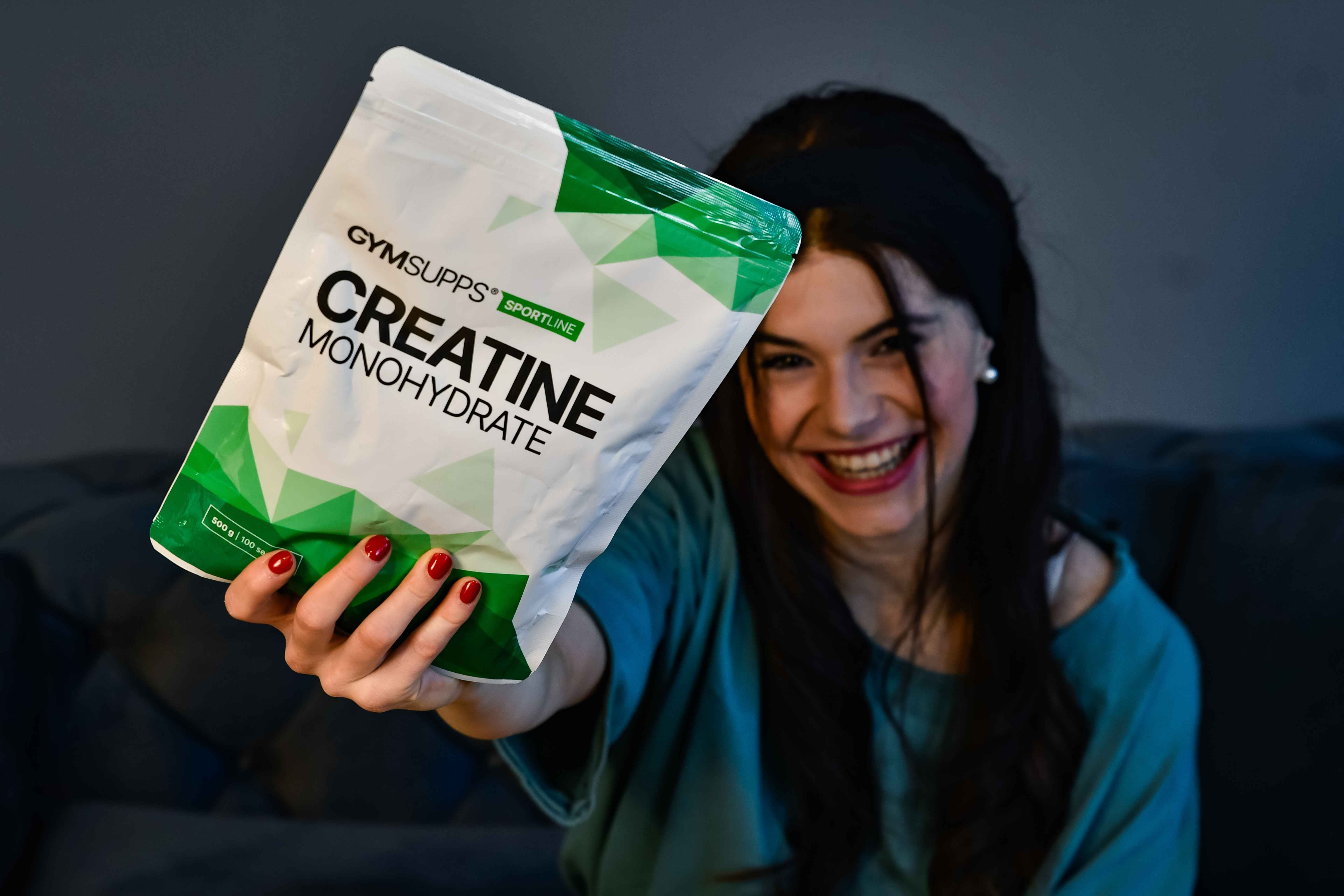
For athletes who prefer a simple formula and convenient dosing, GymSupps Creatine Monohydrate, for example, may be a suitable choice. It contains only creatine monohydrate with no other added ingredients, and one scoop provides 5 grams.
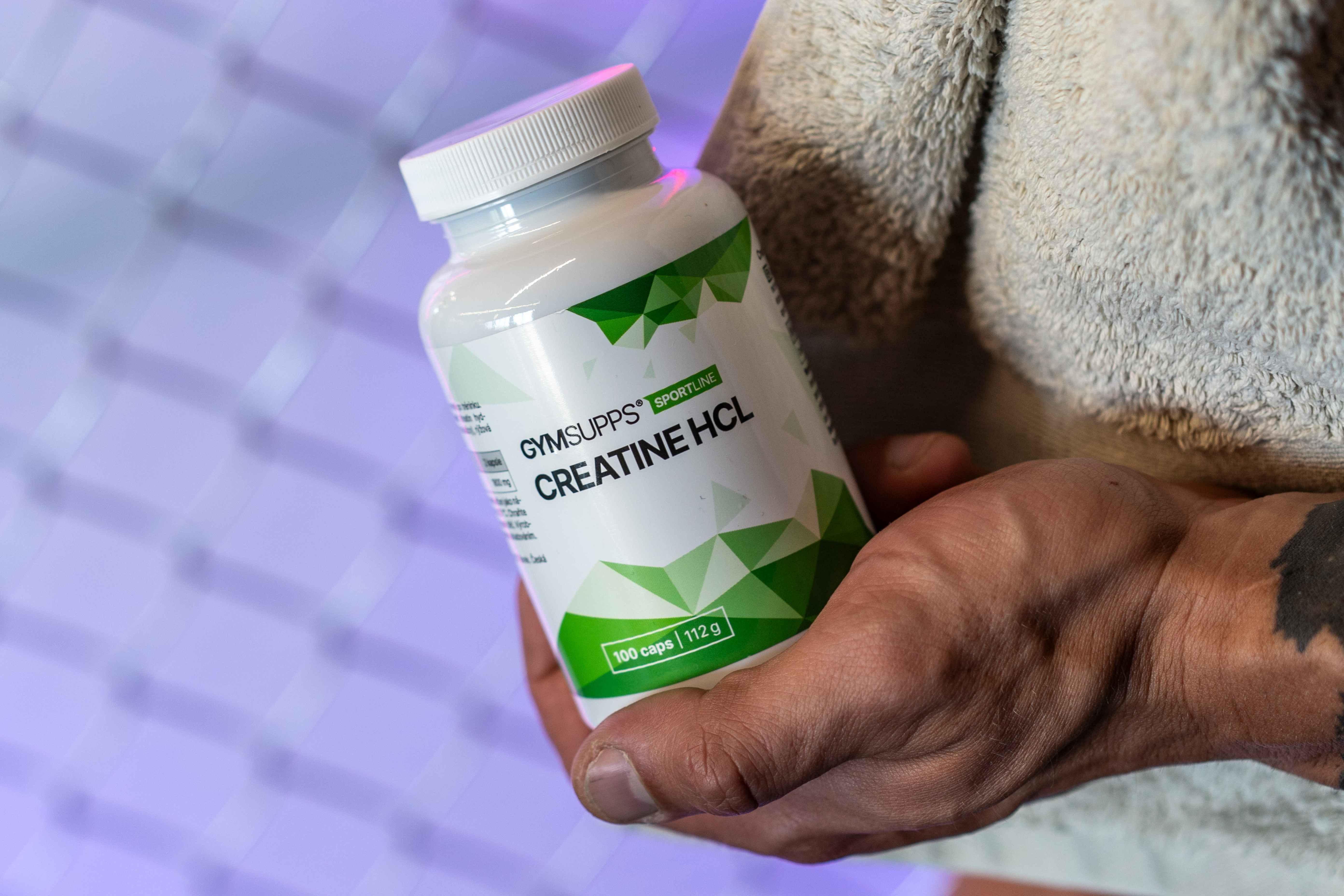
An alternative for those who prefer capsules is GymSupps Creatine HCL. Two capsules contain 1,800 mg of creatine hydrochloride. However, it’s important to note that available studies have not yet shown that this lower dose provides the same results as the commonly studied dosage of monohydrate.
Whichever option you choose, no dietary supplement can replace a quality workout, a proper diet, or adequate recovery.
Recommended
Creatine Monohydrate 500g 1+1
GymSupps Creatine HCL

Does that mean creatine HCl doesn't work?
Absolutely not.
That would be just as inaccurate a conclusion as claiming that hydrochloride must automatically be more effective. Research suggests that creatine HCl can be effective when taken at the appropriate dosage. However, we do not yet have sufficiently convincing evidence that it provides better results than classic monohydrate or that it can produce the same effect at significantly lower doses.
Furthermore, we must take into account that both of the studies mentioned involved a relatively small number of participants and lasted only eight weeks. To confirm the true equivalence or any potential differences between the two forms, more extensive experiments would be needed that compare different doses and directly monitor the amount of creatine stored in muscle tissue.
| Example | Daily Dose | What the Studies Showed | Conclusion |
|---|---|---|---|
| Creatine monohydrate | 3–5 g | This is the most thoroughly researched form of creatine, and it is the one used in most expert recommendations and clinical studies. | It remains the standard reference form of creatine. |
| Creatine HCl in a 2025 study | 5 g | Compared to 5 g of creatine monohydrate, it did not demonstrate better results in terms of strength or body composition. | No clear performance advantage of HCl was confirmed. |
| Lower doses of creatine HCl | approx. 1–2 g | Such dosages appear in marketing claims, but high-quality comparative studies have not yet confirmed the same effect as with the standard dose of monohydrate. | A lower dose of HCl does not yet have the same strong evidence base. |
Note: In a 2025 study, participants received both creatine monohydrate and creatine HCl at a dose of 5 grams per day. The study therefore does not demonstrate that a lower dose of creatine HCl provides the same effect as the commonly recommended dose of monohydrate.
A Better Product, or Just More Persuasive Marketing?
The entire debate surrounding creatine HCl highlights a problem we encounter quite often in the world of dietary supplements. A new form of a well-known substance may offer interesting properties—such as better solubility, more convenient use, or a different processing method.
However, none of these properties automatically translates to better athletic performance. And that is precisely why it is important to distinguish between what the manufacturer promises, what is theoretically possible, and what has actually been proven. Creatine monohydrate has decades of research behind it. Creatine HCl offers some practical differences, but its claimed performance advantage has not yet been convincingly demonstrated.
So perhaps we don’t need another “revolutionary” form of creatine. Perhaps we just need to pay closer attention to what we already know about this substance.
Recommended
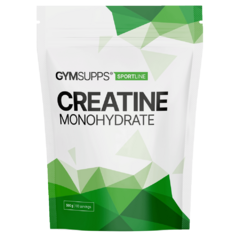
GymSupps Creatine Monohydrate
Creatine Monohydrate 500g 1+1
GymSupps Creatine HCL
References:
- Eghbali, E., Arazi, H., Suzuki, K. (2024).
- Londoño-Velásquez, D. et al. (2025). Journal of the International Society of Sports Nutrition.
- Jäger, R. et al. (2022). Nutrients.
No posts have been made yet.