




Was Lee Haney right? Science has put his most famous training rule to the test!
 Author:
Muscle soreness, exhaustion, and that final rep beyond one’s limits. For some gym-goers, these are proof of a truly high-quality workout. But eight-time Mr. Olympia champion Lee Haney took a slightly different approach to building muscle mass.
During his extraordinarily successful career—when he won eight consecutive Mr. Olympia titles from 1984 to 1991—he followed a philosophy that can be simply summarized as:
“Train to stimulate your muscles, not to destroy them.”
Training to failure is not necessary for muscle growth
One of the most interesting findings in current training science is the fact that muscle growth does not necessarily require completing every set to the point of complete failure. Meta-analyses and controlled experiments show that training stopped just before failure can yield similar results to sets in which the athlete is unable to perform another repetition.
What matters most is sufficient training intensity and a long-term training stimulus. Furthermore, complete failure may be associated with greater acute fatigue, which can hinder recovery or the quality of subsequent work sets. This does not mean, however, that training to failure has no place in a program. For some isolation exercises, it can be a useful tool. However, it is certainly not necessary to push yourself to failure every time you follow your training plan.
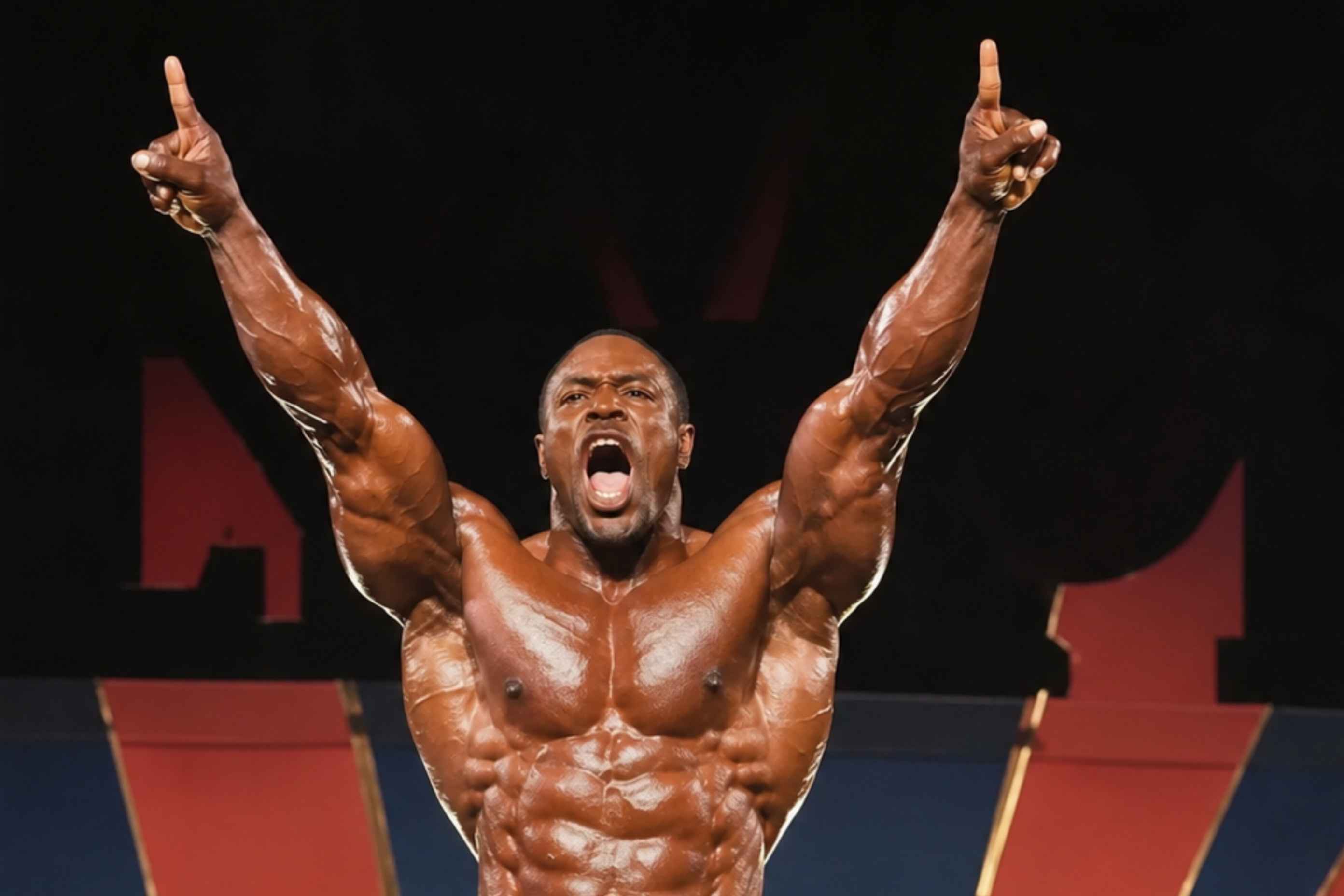
And what about muscle soreness? That’s no guarantee of growth either!
Haney’s philosophy also aligns well with research on muscle damage. Scientists have long pointed out that post-workout muscle soreness is not a reliable indicator of a workout’s effectiveness. Significant muscle soreness can occur primarily during unusual exertion or after introducing new exercises.
Once the body adapts to a certain type of workout, the pain may subside significantly, even though the muscles continue to grow.
A good workout, therefore, doesn’t necessarily mean one that leaves you unable to function normally for several days afterward.
Recommended
Creatine Monohydrate 500g 1+1

GymSupps XWhey Protein

However, there is one aspect of Haney’s advice that should be taken with a grain of salt
The legendary bodybuilder has emphasized in the past that it’s better to train a little less than too much. However, modern research shows that a certain increase in training volume can lead to further muscle gains. Of course, this is true only to a certain extent, and the benefits diminish gradually.
In other words: too low a volume can limit results, while an unnecessarily high volume can impair recovery. The ideal solution, therefore, is neither constantly training to the point of complete exhaustion nor intentionally training too lightly. What’s important is a balance between sufficient stimulation and the body’s ability to recover.
A quality workout doesn’t end with the last rep
Haney’s recommendation reminds us that muscle growth isn’t just a matter of exercise alone. Proper nutrition and recovery between workouts also play an important role.
If you strength train regularly, GymSupps XWhey Protein can help you meet your daily protein intake. Protein contributes to the growth and maintenance of muscle mass. For repeated short-term, high-intensity workouts, you can also use GymSupps Creatine Monohydrate.
However, supplements cannot replace a properly structured training regimen or sufficient sleep.
Lee Haney may have been ahead of his time. Even today, his most famous rule reminds us of an important truth: the goal of training isn’t to tire the muscles as much as possible, but to create the conditions for their long-term development.
Recommended
No posts have been made yet.