





Best supplements for fitness beginners - What supplements to include in your diet?
 Author:
 If you have started to change your lifestyle after the New Year, started to play sports and eat healthier, either to lose weight or to gain muscle mass, you may be a bit confused about what supplements to buy. Are you wondering whether you really need to have all those fat burners, detox teas and miracle pills that pop up on social media ads, or is it worth investing elsewhere in the beginning? Then you've come to the right place, because today we're going to cover the topic of supplementation in the beginning.
Article content:
- Theoretical window - what are these supplements?
- Multivitamin
- Omega-3 fatty acids
- Vitamin D
- Protein
- Magnesium + Zinc
- Joint nutrition
- Creatine
Theoretical window - what are these supplements?
Dietary supplements, or otherwise also supplements, have become very popular in recent years. On the one hand, this is very good, because the idea that they are only for bodybuilders is disappearing and a wider and wider part of the population is benefiting from their effects on health, sports performance and optimal body composition. However, we should not forget that the label 'dietary supplements' does not just carry the label. They serve to FILL deficiencies that we cannot fill with our regular diet, they are not a substitute for it and we should not rely on them to work miracles.
Nowadays, there is a huge variety of supplements available on the market that can benefit us in meeting our transformation goals, but also, for example, to help us sleep better and better or simply to support our health. Unfortunately, there are also a large number of supplements that lack any major use and their manufacturers and sellers only benefit from good marketing and uninformed shoppers. So, don't rely on the labels on the packaging, advertising spots and statements from the mouths of fitness influencers and make it clear which supplements are really worth having at home. We'll also note that today's list is made especially for beginners, and if you, as a seasoned fitness buff, miss any of the functional supplements on it, don't blame us.
Multivitamin
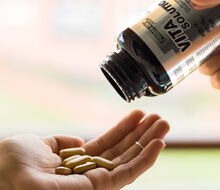
We'll probably surprise many of you, but the very first supplement you take home should be a quality multivitamin. A multivitamin contains the vitamins and minerals our bodies need to be healthy, strong and perform at peak athletic levels. You may be telling yourself that you don't need a multivitamin because your diet is varied enough and has plenty of fruits and vegetables in it. That's all very well, of course, but the truth is that with diet alone it is now virtually impossible to achieve optimal levels of all the micronutrients our bodies need to function and stay healthy.
Moreover, if you play sports, the need for micronutrients increases significantly, for several reasons. This is due to the fact that the body uses more of them in energy production, loses some micronutrients through the process of sweating during activity, but also gives out more of them for the proper course of regeneration processes and protein synthesis after training. Their need is further increased if you are also in a caloric deficit. Investing in a quality multivitamin should be at the very beginning of your supplementation plans and investments.
However, there's no such thing as a multivitamin and you need to put some thought into choosing one. Fortunately, there are many really good products available on the market today, but on the other hand, it should be noted that many commonly available supplements may boast really long and packed formulas, but often contain ingredients that inhibit each other's effect or perhaps less absorbable, cheaper forms of vitamins and minerals that our bodies cannot use as effectively. To break down all the ingredients that could be problematic would be worth a separate article - but fortunately we already have that on the web and can refer you to it.
Omega-3 fatty acids
Another supplement that should not be missing from any supplement shelf in our latitudes is omega-3 fatty acids. Omega-3s are three acids - EPA (eicosapentaenoic acid), DHA (decosahexaenoic acid) and ALA (alpha-linolenic acid). We call them essential, which means that our body cannot make them on its own and we must take them from food or just through a supplement. Omega-3 fatty acids are a type of fat that provides a really wide list of benefits to our bodies. From supporting athletic performance and improving regeneration processes, to boosting immunity, health and proper brain function, to protecting cells from developing inflammation.
The richest source of these beneficial fats is marine fish, of which we unfortunately consume woefully little. That is why supplementation is a good way to provide these fats to the body. If you are a vegan or do not eat fish for any reason, you can look for a product that contains omega-3 fatty acids from seaweed. Omega-3s should be taken with a meal, ideally rich in carbohydrates and amino acids. The optimal dose will be individual - it depends on how much omega-3 fatty acids you take in your diet and also on the specific supplement you are taking.
Recommended

GymSupps Omega 3

Omega 3 240cps 1+1
Vitamin D
We must not forget vitamin D in our recommendations - if only because surveys estimate that up to 50% of the world's population is deficient. Vitamin D is not only important for bone health, as it promotes calcium absorption, but it is also involved in many other processes in the body. For example, it is important for heart health, boosts immunity, affects mood, reduces the risk of developing diabetes and has a positive effect on sports performance.
The best source of this very important vitamin is sunlight, and during the summer we only need to spend 20 to 30 minutes in the sun to meet our daily requirements. It is also found in many food sources, but its absorption from them is not very high, so it is definitely worth supplementing with this vitamin, at least during the winter. The supplement should contain the form of D3 that is most absorbable to our bodies.
Recommended

GymSupps Vitamin D3
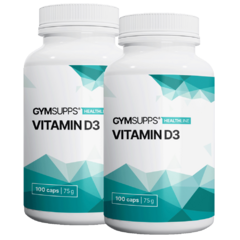
Vitamin D3 100cps 1+1
Protein
Whey protein has gone from being a dietary supplement used by bodybuilders to build big muscles to being an absolutely common part of the healthy diet of all active individuals today. To not. Protein powder is a simple way to provide the body with enough protein, the intake of which is crucial not only for athletes. Protein is a handy helper that finds application in many daily situations.
Its basic use is after training, when it helps us to supply nutrients to tired muscles, jumpstart muscle synthesis and support recovery processes. But to make matters worse, protein is also a handy helper for burning fat, stronger immunity and helping to stabilize blood sugar levels.
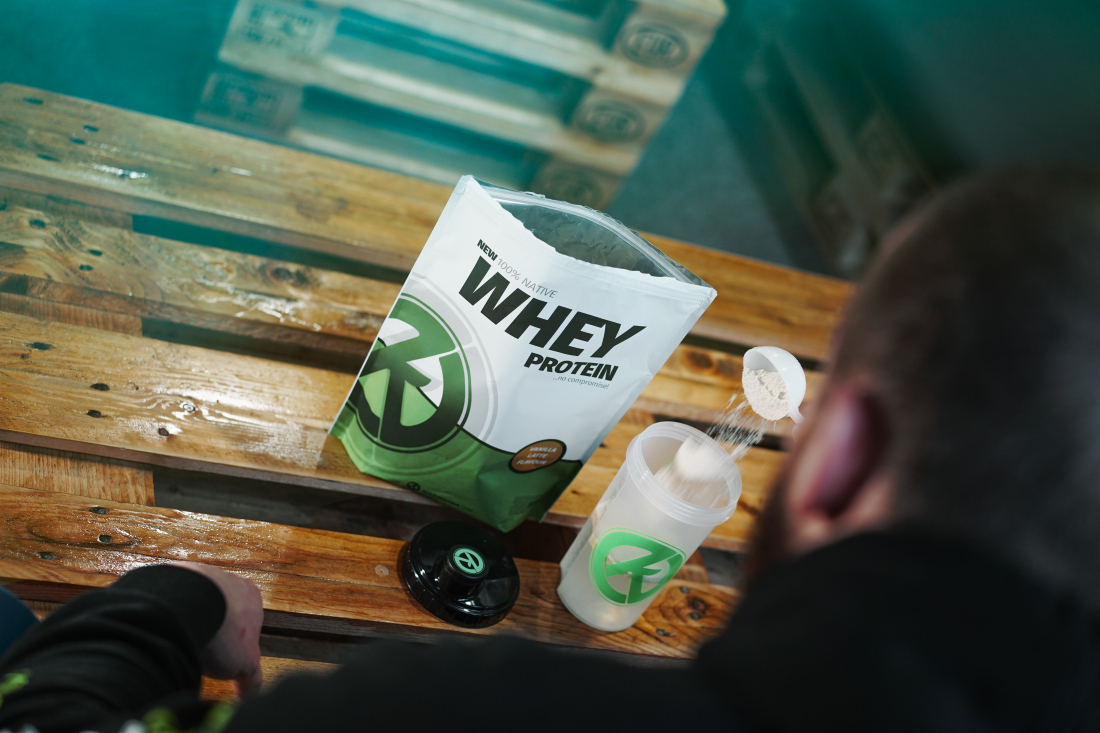
But you can use protein virtually anytime - you can add it to your porridge in the morning to balance your breakfast and ensure you're sufficiently full and have enough energy for the morning. You can also use it as a snack - for example, blend it with kefir, fruit and a spoonful of peanut butter to make a great snack smoothie, stir it into white yoghurt to sweeten it and save some calories compared to using sweetened yoghurt, or incorporate it into a recipe for a fit baked good. There are no limits to your imagination!
So which protein to choose? A very good question, because there are a lot of different types on the market. For most of us, the "classic" whey protein will be absolutely sufficient, as it is such a rewarding all-rounder and really suits all situations.
Recommended

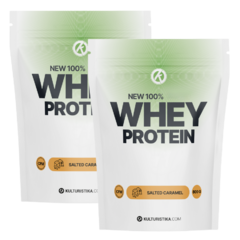
New 100% Whey Protein 800g 1+1
Magnesium + zinc
Magnesium and zinc should not be missing from the list of important supplements - two minerals that are preferable to take outside of a multivitamin supplement, especially because they are often deficient in athletes and because these two substances are perhaps the most problematic in terms of interaction with other micronutrients. And what are they actually? Magnesium is one of the most essential electrolytes in the body, and when it comes to maintaining optimal health, it can without exaggeration be described as one of the most important minerals ever.
In fact, it is involved in more than 300 reactions in the body, including DNA synthesis. For example, it ensures muscle contraction, regulates blood pressure, is essential for protein synthesis, influences insulin metabolism, nerve transmission and is crucial for vitamin D metabolism. Of course, magnesium is also important for athletes and active individuals, as it has quite a significant effect on recovery, sleep quality, the immune system, and even helps to increase muscle strength.
Recommended

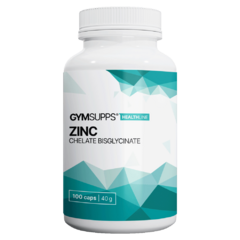

Magnesium should be supplemented with zinc, as these two substances have a synergistic effect and complement each other perfectly. Zinc is important for the support of the immune system, proper thyroid function, bone, muscle, teeth, nails, skin health, as well as for optimal sports performance. It is advisable not to take these minerals with food and especially not with dairy products. Magnesium and zinc are less easily absorbed with food, and the calcium in food significantly blocks the absorption of zinc. The ideal solution is to take them together before bedtime. At such a time, it is advisable to reach for bisglycinates - i.e. forms bound to the amino acid glycine, which will further promote relaxation and recovery.
Joint nutrition
Another supplement we are happy to advocate is good quality joint nutrition. We probably wouldn't call it a "must-have", but if you're serious about playing sports and really want to do the best for your health, there's no harm in adding it to your supplementation. If you're an active person, even if it's just recreational, you should be looking after the health of your joints and bones as a preventative measure, not just when the first problems appear.
In addition to making it a priority to learn the correct exercise technique, choosing the optimal load, proper recovery and, last but not least, a balanced diet, taking joint nutrition is a useful protection and prevention of joint pain that is worth investing in. Taking joint nutrition can also have an impact on slowing down the degenerative processes of cartilage.
Creatine
If your primary goal is to perform at your peak in the gym, creatine shouldn't be missing from your home. Creatine is one of the most researched supplements ever, so we'd put our hands up for its effectiveness. And what is it good for? Creatine is very important in the formation of ATP - a substance that is a fast source for energy production. Supplementing with creatine increases the availability of creatine and phosphocreatine (PCr) in the muscles and helps to maintain energy during high intensity, high load exercise. In addition, increasing the availability of PCr can help speed up and improve recovery processes. Creatine also increases the water content of muscle cells, which increases the volume of muscle fibers.
Creatine is a very safe supplement and thanks to numerous studies we know that even long-term supplementation in reasonable doses does not cause negative side effects. It is therefore a truly functional supplement for building muscle mass, increasing strength and promoting performance and has a positive effect on the cardiovascular system. Athletes of various disciplines can benefit from its supplementation and it is definitely suitable for women as well - of course, depending on specific sporting goals and also on the composition, intensity and volume of training.
Recommended
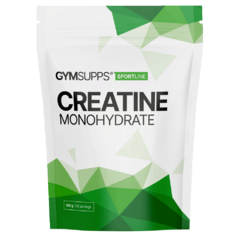
GymSupps Creatine Monohydrate

Creatine Monohydrate 500g 1+1
Wait, where's the burner?
Surprised the burner's not on the list? The explanation is simple. You don't need it in the beginning. A fat burner is not some magic pill that you take and the fat disappears on its own. Unfortunately, it doesn't really work that way. The basis should be a balanced diet with a reasonable caloric deficit, properly adjusted physical activity and last but not least, emphasis on quality and sufficient sleep.
If these things don't work properly, even the best fat burner in the world won't save you. A fat burner is more of a crutch that can really help you take off the last few pounds at the right moment, but it won't really do the "hardest work" for you, unfortunately. So, for us, a burner is not one of the supplements you should invest in at the beginning. We're not saying they don't work at all, but in the beginning it's good to make the most of the potential of what you can do without their help.

What to take away from the article?
In today's article, we focused on which dietary supplements are worth investing in at the very beginning. No one's supplement shelf should be lacking a quality multivitamin, omega-3 fatty acids and vitamin D. We consider these three supplements to be the absolute basics and recommend them to everyone, regardless of their use. Due to its versatility, versatility and benefits to the body, we also recommend having whey protein on hand.
Joint nutrition, magnesium and zinc duo, or creatine don't hurt either. It's important to mention that you need to look at supplements as a piece of the puzzle. Taking them goes hand in hand with a good, sufficient and balanced diet, properly set training, proper rest and minimizing stress. Only when all the parts are working as they should, do dietary supplements work as well.
Sources:
Kreider R. B. (2003). Effects of creatine supplementation on performance and training adaptations. Molecular and cellular biochemistry, 244(1-2), 89-94.
Kraemer, W. J., Hatfield, D. L., Spiering, B. A., Vingren, J. L., Fragala, M. S., Ho, J. Y., Volek, J. S., Anderson, J. M., & Maresh, C. M. (2007). Effects of a multi-nutrient supplement on exercise performance and hormonal responses to resistance exercise. European journal of applied physiology, 101(5), 637-646. https://doi.org/10.1007/s00421-007-0535-3
Cermak, N. M., Res, P. T., de Groot, L. C., Saris, W. H., & van Loon, L. J. (2012). Protein supplementation augments the adaptive response of skeletal muscle to resistance-type exercise training: a meta-analysis. The American journal of clinical nutrition, 96(6), 1454-1464.
Miller, P. E., Alexander, D. D., & Perez, V. (2014). Effects of whey protein and resistance exercise on body composition: a meta-analysis of randomized controlled trials. Journal of the American College of Nutrition, 33(2), 163-175. https://doi.org/10.1080/07315724.2013.875365
Forrest, K. Y., & Stuhldreher, W. L. (2011). Prevalence and correlates of vitamin D deficiency in US adults. Nutrition research (New York, N.Y.), 31(1), 48-54. https://doi.org/10.1016/j.nutres.2010.12.001
Swanson, D., Block, R., & Mousa, S. A. (2012). Omega-3 fatty acids EPA and DHA: health benefits throughout life. Advances in nutrition (Bethesda, Md.), 3(1), 1-7. https://doi.org/10.3945/an.111.000893
No posts have been made yet.








