





Are there really foods with negative calories, or is this just another "nutrition buzz"?
 Author:
 Reducing fat can be a real chore for some of us, so you can rejoice in the fact that(supposedly) there are foods that are so low in calories that by digesting and processing them you actually burn more than you take in, thus kicking your metabolism into overdrive and you burn like a champ! Today, we're going to look at a list of ten foods that you must not miss in your diet because they will kick start your burn and allow you to take in more calories, which really comes in handy in a weight loss diet, doesn't it?
I hope I've tuned you in enough with the first paragraph that you're reading on. Sounds great, 10 foods that will kick up the metabolism so that we burn more. I have personally tried them all and I can guarantee that they work, especially number 10, you can literally feel the calories burning in your body with that one. Well, I won't bug you any further, let's get to the list!
TOP 10 NEGATIVE CALORIE FOODS THAT WILL BOOST YOUR CALORIE BURN
1.
2.
3.
4.
5.
6.
7.
8.
9.
10.
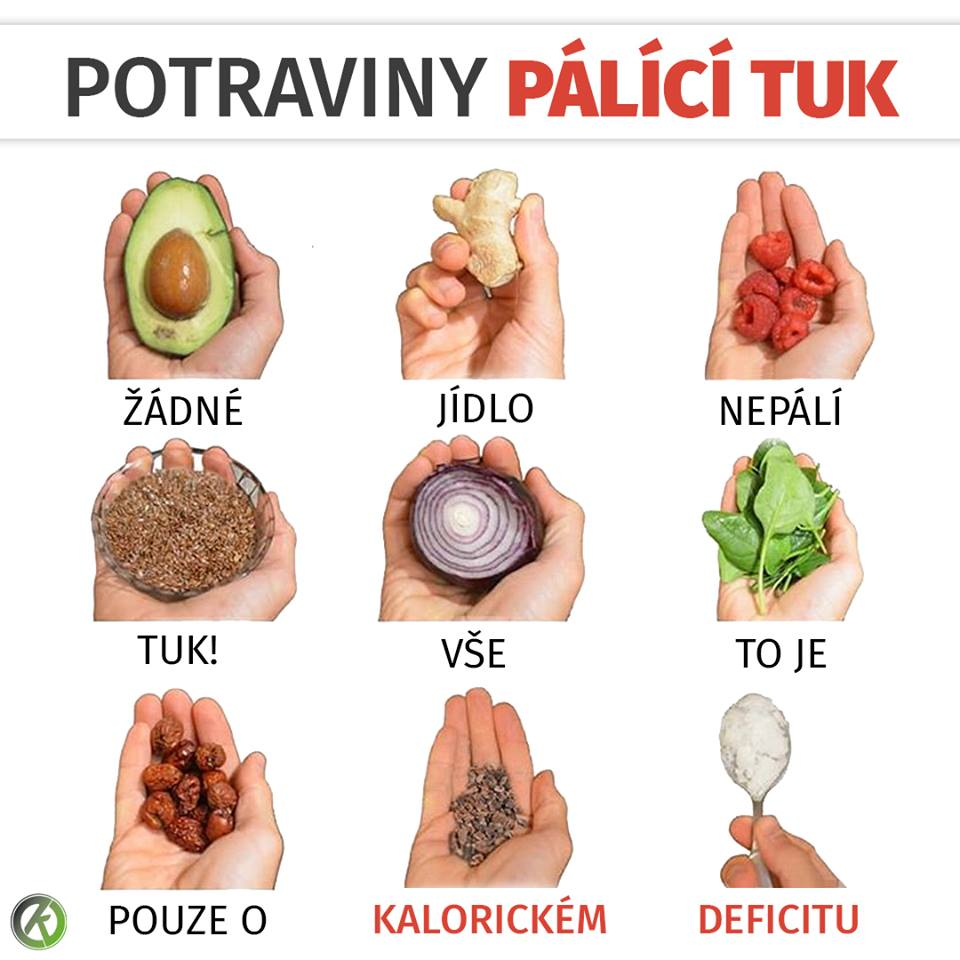
No, we're not testing a new program where you have to somehow light up your screen to see the food because I've written it in invisible font, nor will a table pop up with payment information for you to send money and then I'll reveal the magic food for you. The list is blank becausethere are no negative calorie foods and it's total bullshit! Even though such lists are peeking at you from every corner now that the new year is over, don't be fooled because there isn't much relevant evidence because such foods actually exist. Let's explain the whole principle behind this theory, how metabolism actually works and why no such foods can exist.
HOW DID THE NEGATIVE CALORIE THEORY ACTUALLY COME ABOUT?
First, let's look at how this "nutri fallacy" actually came about. When I say that food contains calories and that calories are the basic unit of energy used by the body, I probably won't surprise any of you. Calories are also consumed by chewing, swallowing, digesting and absorbing nutrients from ingested foods. But what if some foods contain so few calories that by processing them the body burns more calories than they contain? Sounds logical, doesn't it. And that's exactly the idea behind the negative calorie theory.
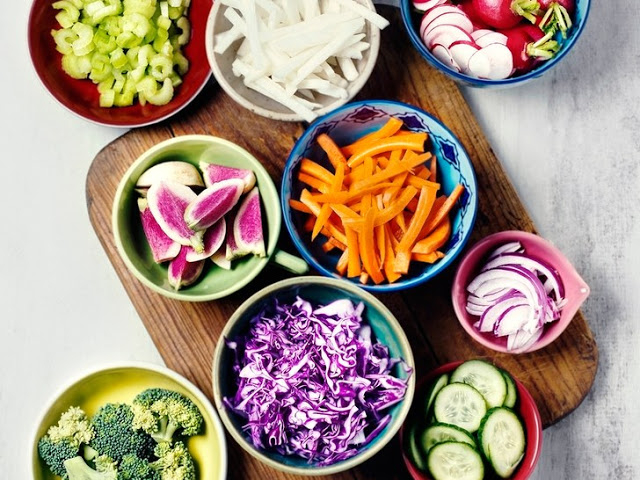
We're not going to lie to ourselves, many of us dream of there being food that we could eat unlimitedly and still not gain weight. Well, I can see the dreamy expressions on your face at the thought of lying in a bathtub full of chocolate, or maybe you could eat 5 hamburgers for dinner and nothing would happen. What's more, the negative calorie theory even goes further by claiming that there are foods that if eaten will promote fat burning. Foods that are often referred to as negative calorie foods are broccoli, cabbage, celery, cucumber, grapefruit, apples, watermelon or even lemons and limes.Celery and cucumber are the most frequent on the list of such foods because they are made up mostly of water and contain a lot of fiber. We'll come back to that later, or we'll remind ourselves again what caloric density is, but for now, let's do a theoretical window on how our metabolism actually works.
WHAT IS METABOLISM?
Metabolism is the sum of all chemical reactions in the body. Metabolism is, among other things, the conversion of energy (i.e. calories) into ATP (adenosine triphosphate), as a substance necessary for the activity of all cells in the body. The metabolic rate is then the number of calories we need to maintain our current body weight. In order to understand the principle of metabolism correctly, you must first understand the equation of energy balance or our oft-mentioned caloric (energy) balance. Caloric balance is an equation where we find caloric intake on one side and caloric expenditure on the other. The sign in between then influences whether we lose weight, gain weight, or maintain.
Intake, in short, represents all the calories we take in as food and drinkin a day . Caloric expenditure then has several components:
- BMR - or basal metabolic rate, which represents the number of calories your body needs to provide all its basic functions, i.e. resting metabolic rate, what your body burns even when you are not very active.
- The thermic effect during exercise - this is simply the calories you burn during your workout or sporting activities.
- The thermic effect of food - this is the number of calories you burn during the digestion and absorption of nutrients from the food you eat.
- The thermic effect of non-exercise activities - this is the calories expended by other conscious movement outside of exercise, in short, performing normal daily activities.
As mentioned in the previous paragraph, this equation and the sign between energy intake and energy expenditure determines the direction in which our body weight, or the amount of stored fat, will move . So, back to the point, how significant are the individual components of expenditure and is it really enough for us to concentrate on some list of foods with "negative calories"? Well, if I'm asking a silly question there, you can probably see that this theory won't be very effective.
WHY CAN'T THERE BE FOODS WITH NEGATIVE CALORIES?
If you're cheering that you can burn calories by eating, then I guess I'm going to have to disappoint you. As we've already covered, it's actually theoretically possible, but there isn't much relevant evidence to support such a theory. In fact, it's not even logical, even though it looks like it at first glance. But ask yourself - what is the main purpose of eating (any) food? Yes, the main purpose is to provide the body with energy. If some foods were indeed negative in calories, by eating them we would be burning more calories than we would be taking in. This would eventually lead to us "consuming ourselves" through starvation and then dying. So this theory doesn't make much sense on deeper reflection, because if it did, we probably wouldn't even be alive as a species.
So thermogenesis induced by food intake is always definitely less than 100% - no food has a negative calorie count, because that would mean we expend more calories processing and digesting it than we take in through eating it. Diet-induced thermogenesis represents the calories we need to digest, absorb, and process macronutrients from the food we eat. Protein has the largest thermogenic effect of all macronutrients, but it 's still only around 20-30%, while carbohydrates are around 5-10% and fat is 0-3%. Protein, carbs and fat have different values, but diet-induced thermogenesis on average accounts for ONLY 10% of all calories burned.
This means that if you eat, say, 2000 calories per day, you will burn about 10%, or only 200 calories, during digestion and absorption of nutrients. In no case will thermogenesis induced by food intake be more than 100%, which would have to be the case if there were actually negative calorie foods.
Wait wait wait, so even a cucumber doesn't have negative calories? No, it really doesn't. If you read my articles, you know the phrase "there is no unhealthy food, only unhealthy amounts". If we apply that to our cucumber, it still contains some nutrients, water, fiber, some calories. 100g of cucumber has about 14 kcal. We've just been told that by digesting it you burn a maximum of 10%, that's about 1.5 calories. So we still have 12.5 calories left. Even though it's a really small number, you should take it into account because the calories taken in add up.
BUT BEWARE, THERE IS A SMALL EXCEPTION!
If I have just destroyed your fantasies of a diet full of cucumbers, broccoli and celery that will make you lose weight, because you have been living under the assumption that these foods have no calories or rather burn calories, I may have one bit of positive news for you . I mean, negative calories don't really exist, but there is a food, a whole group of foods actually, that can keep your metabolism busy. And it's the oft-discussed protein.
Above, we've listed the values of what the percentage of the thermic effect induced by consuming each macronutrient looks like. For protein, the thermic effect is even between 20- 30%, which is 4 times more than carbohydrates and even up to 10 times more than after consuming fat. This is why diets based on increased (but please note, not abnormally high) protein intake are so important for proper metabolic function, fat reduction, muscle building and protection, and health in general. It's important to note that carbohydrates and fats are other NECESSARY components of the diet , and I'm certainly not saying that you should only concentrate on protein intake. If you're a little confused about protein on our website you'll find articles on protein intake levels, whether plant or animal protein is better, andhow to choose protein.
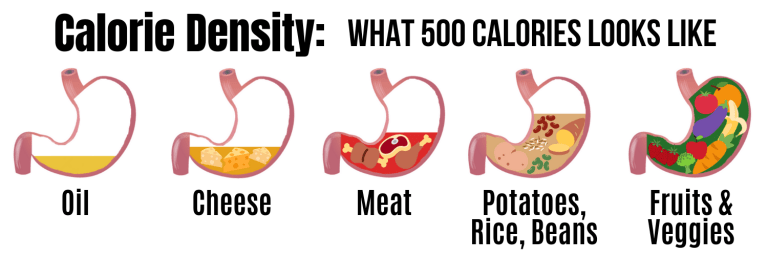
I also mentioned in the introduction about a sort of caloric density. I won't go into too much detail again, but caloric density, or density if you will, is the number of calories a food has per volume. If you focus on consuming low density foods such as vegetables, you can consume more of those foods compared to those that are high density. A good example is cucumber and nuts. If you eat 10g of almonds, you take in about 65 kcal, if you want to take in the same number of calories due to the cucumber, we're at about 500g. So we eat a larger volume for the same caloric intake, thus a greater satiating effect. (This was an illustrative example of course, it depends on nutrients and such.)
DON'T LOOK FOR ANY SHORTCUTS, BECAUSE THERE ARE NONE.
A lot of people look for all sorts of shortcuts on their journey to a slimmer self, and it's really tempting to believe an article that says something like "10 FOODS THAT WILL BURN MORE FAT" or something like that. A lot of people who are not that knowledgeable about nutrition are easily swayed by such articles. And it's basically a human nature. But you know, if something sounds too easy or beautiful, it's usually far from the truth. The diet of those who believe it is suddenly all cucumber, celery, cinnamon, chili and I don't know what else. And the results? No results. Instead of looking for shortcuts, focus on making sure your diet is balanced, varied enough and corresponds with your current goals.
WHAT TO TAKE AWAY FROM THE ARTICLE
No foods have negative calories because that would mean that by processing and digesting them, the body will expend more energy than it took in through eating them, and that would mean that later on the body will start digesting itself. There are no shortcuts in reducing either, and really, neither are negative calorie foods. If your goal is to reduce, don't look for any nonsensical lists of foods you can and can't eat, and instead focus on making sure your diet is balanced, varied, and corresponds with your current goals.Whether or not you lose weight is not influenced by eating foods with imaginary negative calories, but whether your calorie balance is negative, meaning that your output exceeds your intake and you are in a REASONABLE calorie deficit.
Sources:
https://www.ncbi.nlm.nih.gov/pubmed/8400596
https://www.ncbi.nlm.nih.gov/pmc/articles/PMC524030/
https://www.nap.edu/read/10490/chapter/1
https://academic.oup.com/jcem/article/91/9/3598/2656772
https://www.eatright.org/health/weight-loss/fad-diets/negative-calorie-foods-still-count
No posts have been made yet.








