





9 tips to help you make your New Year's resolutions come true this year!
 Author:
 Thousands, maybe even millions of people make a resolution every year to start the year and for most of them it is a resolution about diet, exercise and body changes in general.But few people hit the right target on the first try, set the right intake or intensity of training, the resolution becomes too restrictive or unsustainable for them, they give up after a few weeks and go back to their old ways.
Are you one of the so-called "Januaryers" who start losing weight/exercising in January every year and by February they no longer keep their resolutions? Supposedly it only takes 21 days to form a new habit. Other studies talk about 66 days. But the truth is that this number is highly individual and just because you break the 21 or 66 day mark doesn't mean you've won, in short for some it's 21/66 days, for others it's two months, for others even longer. It's all about starting and sticking with it! Let's break the cycle of the annual "starting in January" in the magical year 2020 and give ourselves some tips that are more than just New Year's resolutions, but a very important point to achieve a healthy body.
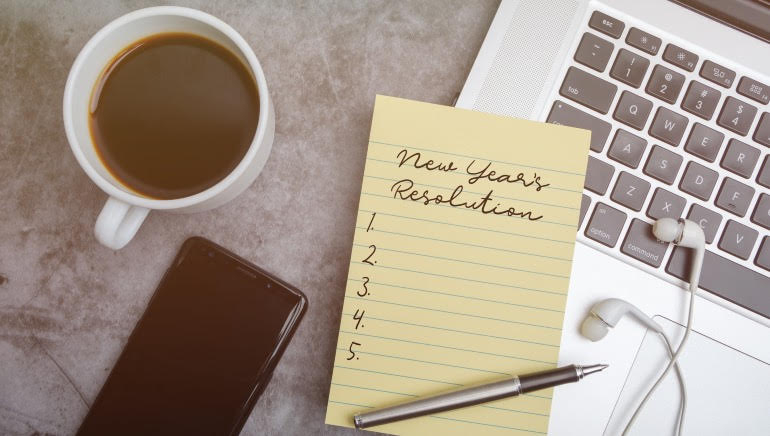
BE CONSCIOUS
Many people give up on resolutions because they have a plan but fail to be consistent enough in following it, or even don't have a plan at all. They just set a goal and don't have a well thought out path to get there. A lot of it also has to do with people making completely unrealistic, inadequate, and unsustainable long-term resolutions, which then makes keeping them more difficult and leads to failure, especially if individuals have no "how" plan. A goal without a plan is like looking for a needle in a haystack. For example, you can start a hardcore diet with insane calorie restriction, but let's pour some clear wine - such a change cannot be long lasting. If you want to gain some fitness or muscle, for example, it's not enough to go to the gym for a month, but you have to be CONSISTENT, going to the gym or running CONSISTENTLY and for a LONG TIME for the changes to take effect. Motivation is important, but if you can't be disciplined enough to keep your New Year's resolutions consistently, there's no point in going through with them.
DON'T WANT EVERYTHING RIGHT AWAY
One of the most common reasons people give up on their resolutions is because they don't see results at the rate they'd like. Look at it this way - you certainly didn't put on your pounds in a week, so you can't expect to get rid of them in a week. Body changes take TIME and PATIENCE (and discipline, of course). Whatever your goal is, expect it to take time to achieve. The length depends on many factors, starting with the size of the goal, but it also just depends on your discipline, consistency and diligence. Yes, it can be demotivating when you see the pounds disappearing before your eyes and you get hell-bent on every few dropped blankets, but trust that the result will be worth it and the feeling of having done it is priceless! Don't push the envelope, your body needs plenty of time to adjust to the new regime and for your diet or training to start working as it should.For some it works straight away, others just need TIME.
EAT FOOD THAT IS REAL FOOD
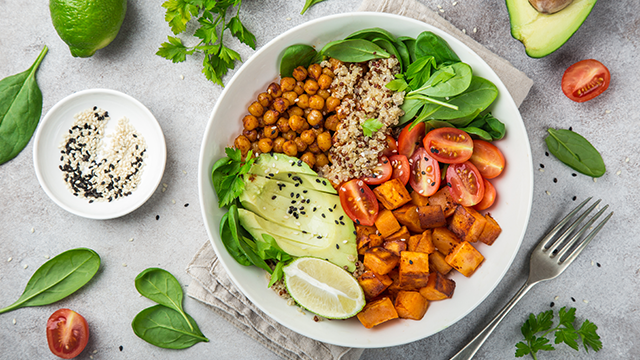
If you read my articles regularly you know that this phrase is a favorite of mine. Why wouldn't it be, one of the biggest keys to health is to eat as little processed food, food with complex chemical ingredients and meal replacements as possible. But what do we mean by "real food"? Fruits, vegetables, ideally locally sourced, nuts, seeds, meat, legumes, fish, white and fermented dairy products as well as natural cereals, in short, food in its most natural form.
Don't follow fashion trends! Powdered food is not a miracle
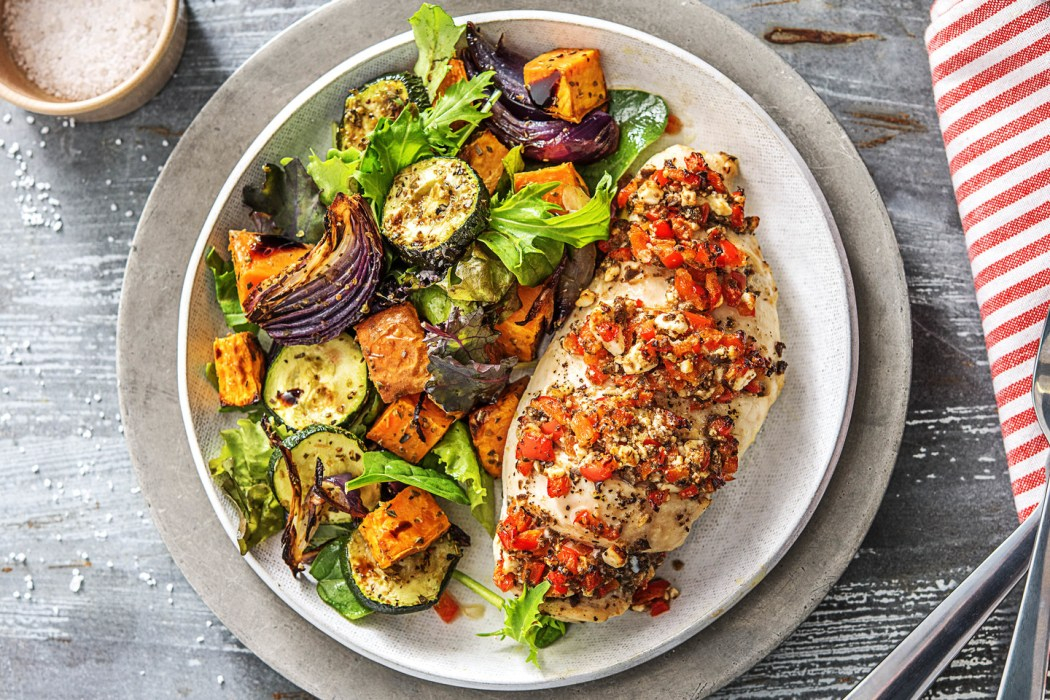
Why is it so important to eat mostly these kinds of foods? A lot of research has supported the notion that a diet based on eating a minimum of processed foods reduces the risk of developing diabetes, heart disease, leads to lower blood pressure, and of course is important for reducing fat stores. (Be warned though, this is not the only principle, so to reduce fat it is not enough to "just" eat unprocessed foods - but more on that later.)
Any dietary change, including restriction of processed foods, should be gradual. For example, if you've been a fan of fast food up until now, it's probably not the best idea to eat only salads at one time. Try to keep your change at a reasonable pace, slow enough that your body has time to adjust, but fast enough that you don't actually change anything. I'll leave a note about quantity, which is absolutely key to achieving your goals. Many people start the New Year by overly restricting not only their favorite foods, but also their total calorie count. Remember that there is no such thing as an unhealthy food, only an unhealthy amount, and that eating too little is not the right technique for long-term results.
DITCH THE DIETS
This point may surprise you, but it's a fact that diets just don't work. In fact, dieting is often some sort of restriction that is usually only sustainable in the short term and usually has little to do with health. Whether it's a detox, low-carb, low-fat, or similar crap like fruit or diets by the stars. Instead of sticking to nonsensical diets, focus on making sure your diet is varied enough, balanced enough, nutritionally rich enough, that it doesn't exclude ANY of the macronutrients, and most importantly and for you, is not a diet for a month, but a way of eating that you will be able to stick to long term, ideally for the rest of your life.
Losing weight is not about following a diet or eliminating such and such or poppy foods or even an entire group of nutrients. Fat reduction is based on a single principle, and that is called CALORIC DEFICIT, that is, consuming fewer calories than we expend. Basically, what this means is that you can eat healthier, but if you consume more calories than your body needs, you will gain weight , and even from a salad if you overdo it. Conversely, if you consume fewer calories than you need, you will lose weight, but you need to approach the deficit sensibly and not make it too pronounced.
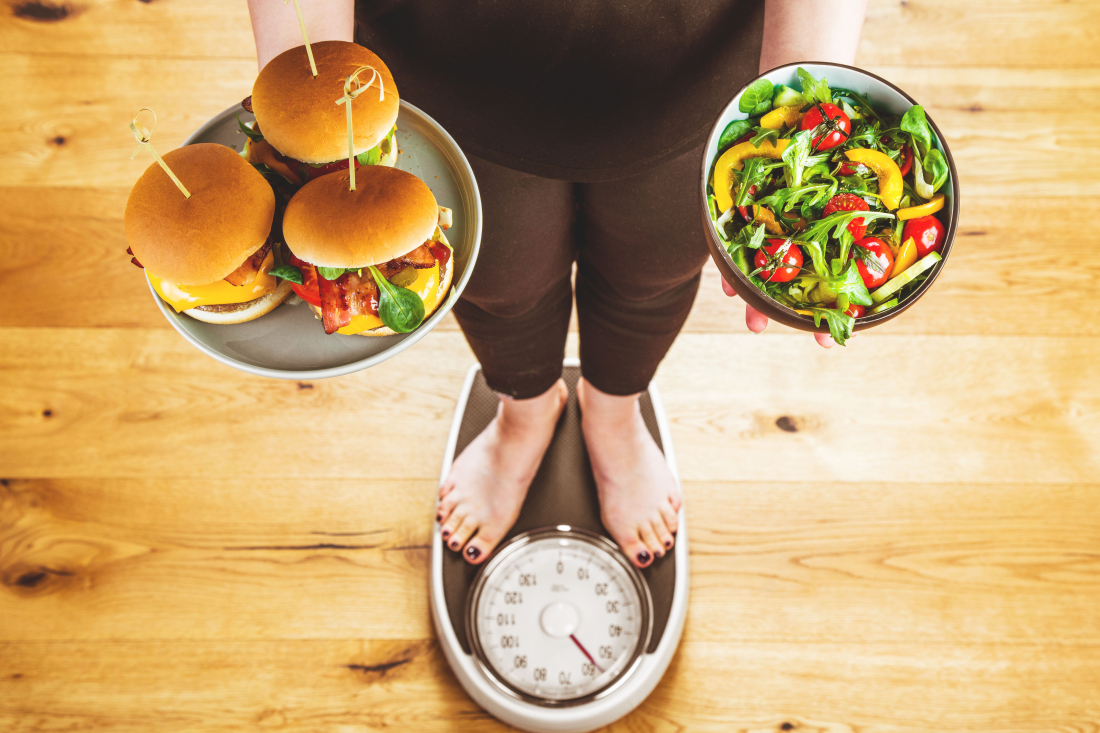
For most people, it is completely incomprehensible that they can eat foods they like, even though they may not be that "clean" and still lose weight. However, the truth is that the most important thing is to give the body as much food as it needs and of the maximum quality that is possible, and as long as the intake still honors the principle of caloric deficit, you can eat pretty much anything. However, setting the right amount of caloric deficit is very crucial and estimating the amount of intake is difficult, but not impossible, especially for newcomers. The ideal way is to figure out your current intake by weighing your food and counting calories and slowly adjust it to your desired state - that is, a caloric deficit for fat reduction or a caloric surplus for weight gain or muscle gain. If this method sounds difficult, you can contact a nutrition coach or simply try to get to know your body and try to adjust your intake by trial and error without weighing and counting. Yes, it can be done, but it will be a more difficult task for newcomers than for those who have been in nutrition for a while.
Recommended
Nebbia Dámský crop top s vysokou podporou INTENSE Mesh 842
Nebbia Tvarující legíny s vysokým pasem AGILE 464

Nebbia Teplákové šortky 6” MUSCLE MOMMY 624

Nebbia Washed-off oversized košile 90s THROWBACK 347
Of course, the quality of the food we eat plays a huge role. It's the same as with a car, if you want it to run well and last a long time you have to put good quality petrol in it, without it the car won't run and if you put some poor quality form in it for a long time it will start to break down. It's the same with the body , good quality food in sufficient quantities is a very important aspect for health. Learn to prepare your food at home because that is the only way to control what you eat, how much you eat and the quality of the ingredients used. Food preparation and cooking at home is one of the other aspects that should not be overlooked and skipped. You don't have to be a top chef, even simple meals can be delicious! If you're lacking inspiration, search the internet or check out our videos!
Video recipes from our #varimefit series
BE ACTIVE AND REDUCE SEDENTARY LIFESTYLE
Recent studies show that people spend much more time sitting than they should. This is partly due to the fact that many people have sedentary jobs and secondly because they simply are not and do not want to be more active. However, a sedentary lifestyle has many negative health effects, including an increased risk of premature mortality and the development of heart disease. Let's get moving! Having a sedentary job doesn't mean you have to sit on your butt all day - park your car a block away or get off the tram two stops early and walk to work, stand up and stretch or walk a few times during the day, don't take the elevator - take the stairs instead, and after work, forget about parking in front of the TV at home and get active!

If you're not a fan of the gym, that's okay - find a sport you enjoy, or use the most basic form of exercise, which is walking - simply, go for a walk and get some fresh air in your lungs. It may sound a bit clichéd, but EVERY MOVEMENT COUNTS. Again, I'll reiterate the first rule about consistency, which is that it's not enough to go exercise for three weeks, but movement should be the order of the day for you on a regular and long-term basis, because being active is another big contributor to overall health. On the other hand, however, I must also point out that less is sometimes more and beware of overtraining or setting disproportionate training intensity. Movement is important, extremely important, but nothing should be overdone and in the case of exercise this is doubly true. And if you can't kick yourself, find a workout buddy to motivate you!
GET ENOUGH QUALITY SLEEP AND REST
Speaking of exercise, we can't forget about rest, which is an integral part of the whole health pyramid. Getting enough quality sleep is then a very influential factor that needs to be taken into account both for weight loss and for health as a whole. Many important processes take place during sleep, including recovery, and lack of sleep leads to an increased risk of developing heart disease, depression and can also affect cravings and levels of hormones such as leptin, ghrelin and cortisol. All of these hormones affect how we eat and therefore our weight. Sleep is the essence of life, and it is not for nothing that it is said that a person sleeps for one third of his life. You may think it's a "shame" to sleep that much of your life, but believe it, that's exactly how much sleep the body really needs to function as it should and for a long time.
How to improve sleep and recovery?
Not only is the duration of sleep important, but also the quality of sleep. Many people are unable to get enough quality sleep due to excess stress, and their body (and of course their weight) suffers greatly as a result. Learn the principles of sleep hygiene, develop certain rituals or habits to teach your body that it's time to go to sleep, and also pay attention to the environment in which you sleep - the bedroom should be dark, ventilated, you should go to bed at the same time regularly, and limit the consumption of alcohol and caffeinated drinks before bedtime.

LEARN TO SPEND MORE TIME OUTDOORS
Thanks to the demands of our time, we tend to minimize or almost completely eliminate being outdoors. We get up in the morning, go to work, and shut ourselves in somewhere indoors in the afternoon rather than going outside. Yet daylight and sunshine are very important. The sun is the best source of vitamin D and it is no wonder that 90% of the world's population is deficient in it because they simply do not spend as much time outdoors as they should. Fresh air and sunshine are also important for the brain, productivity, can serve as important aids in treating depression, and has an overall effect on our mood. And outdoor activities are usually associated with some movement, so more points to the plus side. Don't look for excuses that it's too hot or too cold, a half-hour walk will benefit you in every way!
Stand out from the crowd and improve your life with regular vitamin D supplementation!
STOP HATING AND ABUSING YOUR BODY
A lot of people start the new year with a body resolution because they hate their body and that alone is just wrong. Learn to love yourself - your body is not just some shell, your body is a temple, it's the only place you have to stay your whole life. The better you treat it, the better it will function and believe it or not, the better it will look. Give it plenty of quality nutrients, get moving, get 7-8 hours of sleep every day, try to limit stress, learn to get out in the fresh air more and you'll see results that won't take long to come. Love your body in spite of the flaws it may have. You can change its appearance very easily, but you can't get out of it and marry another one. Hating your own body is really not good.
GIVE YOURSELF INCREMENTAL SMALLER GOALS AND LEARN TO REWARD YOURSELF
We actually hit on this point in the first point on consistency - that a goal without a plan is actually useless. A plan can be the creation of successive small steps, sub-plans, which you will follow gradually and whose completion will lead to the achievement of the overall goal in the shortest possible time. In fact, if you focus only on reaching your ultimate goal, you may be daunted by the length or difficulty of the path that leads to it. But if you set smaller intermediate goals along the way , you will find it much easier to monitor your journey and progress. And if you choose to take this path, remember that every incremental achievement deserves a reward. Did you manage to lift 5 more pounds on the bench or lose 2 pounds in a month? Great! Then buy yourself something to wear, go to the movies, or maybe some higher quality ingredients that you don't use that often. Just be careful though, don't relate it too much to food, lest you keep meeting the same goal over and over again, because your reward is going to be going to the mecca and finishing it off at home with a bucket of ice cream.
WHAT TO TAKE AWAY FROM THE ARTICLE
The New Year doesn't mean anything special, it should be a day like any other. Anyway, for most people it is the start of some new stage, a journey towards a new goal, which is very often related to the figure and how we look. Today, we've talked about a few steps you should take regardless of whether or not you've made a resolution. By using the steps mentioned, such as concentrating on unprocessed foods, getting enough exercise, and getting quality sleep, you will achieve a healthy body, plus you'll develop habits that you'll be able to stick to long-term, as opposed to pointless diets based on pointless macronutrient restriction and the like. Moreover, the mentioned tips are very useful when you are trying to change your appearance! What about you and your New Year's resolutions?
SOURCES:
https://www.ncbi.nlm.nih.gov/pmc/articles/PMC5380896/
https://www.ncbi.nlm.nih.gov/pmc/articles/PMC4960753/
https://www.ncbi.nlm.nih.gov/pmc/articles/PMC3900610/
https://www.ncbi.nlm.nih.gov/pubmed/30639033
https://www.ncbi.nlm.nih.gov/pubmed/29604546
https://onlinelibrary.wiley.com/doi/abs/10.1002/ejsp.674
No posts have been made yet.








